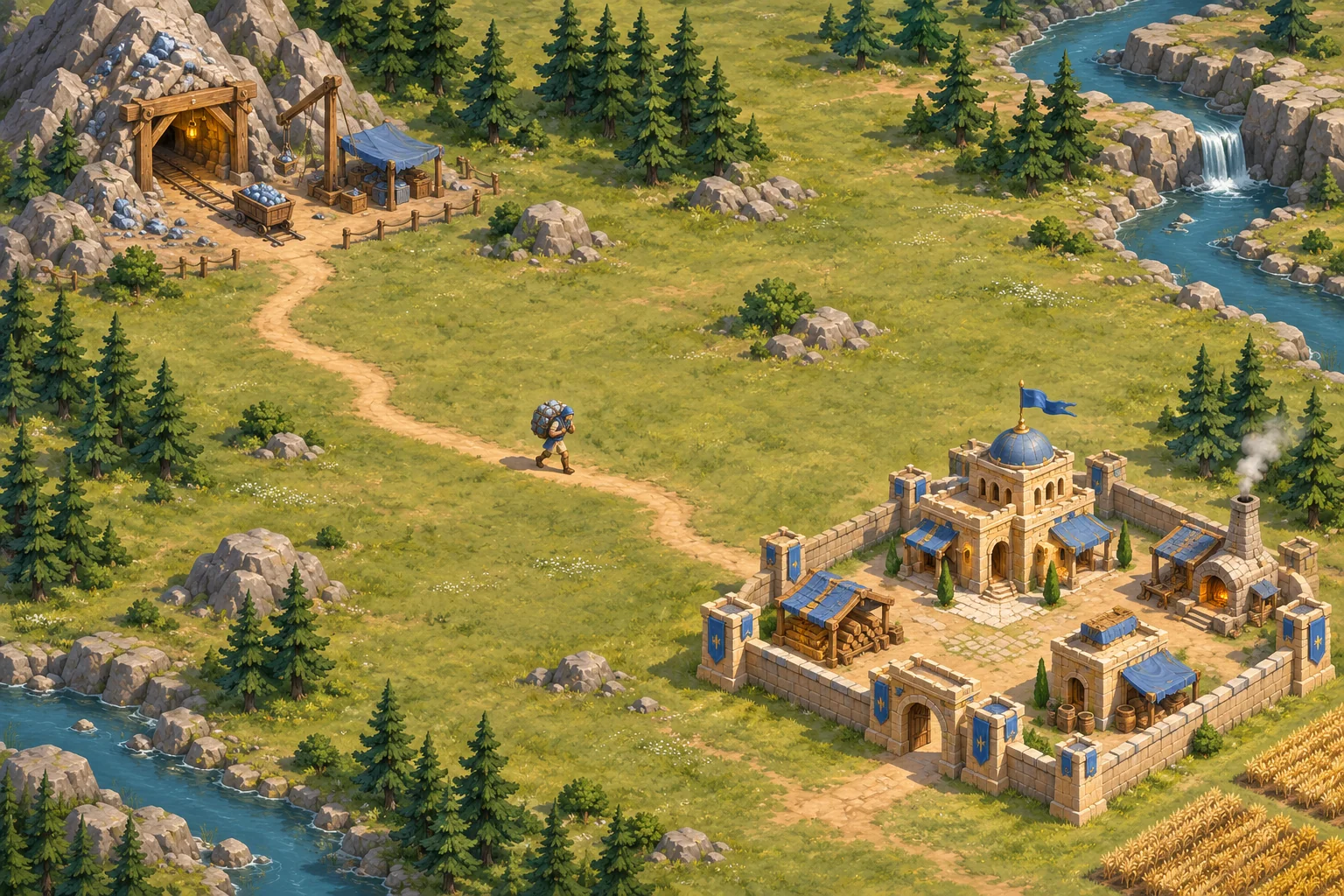
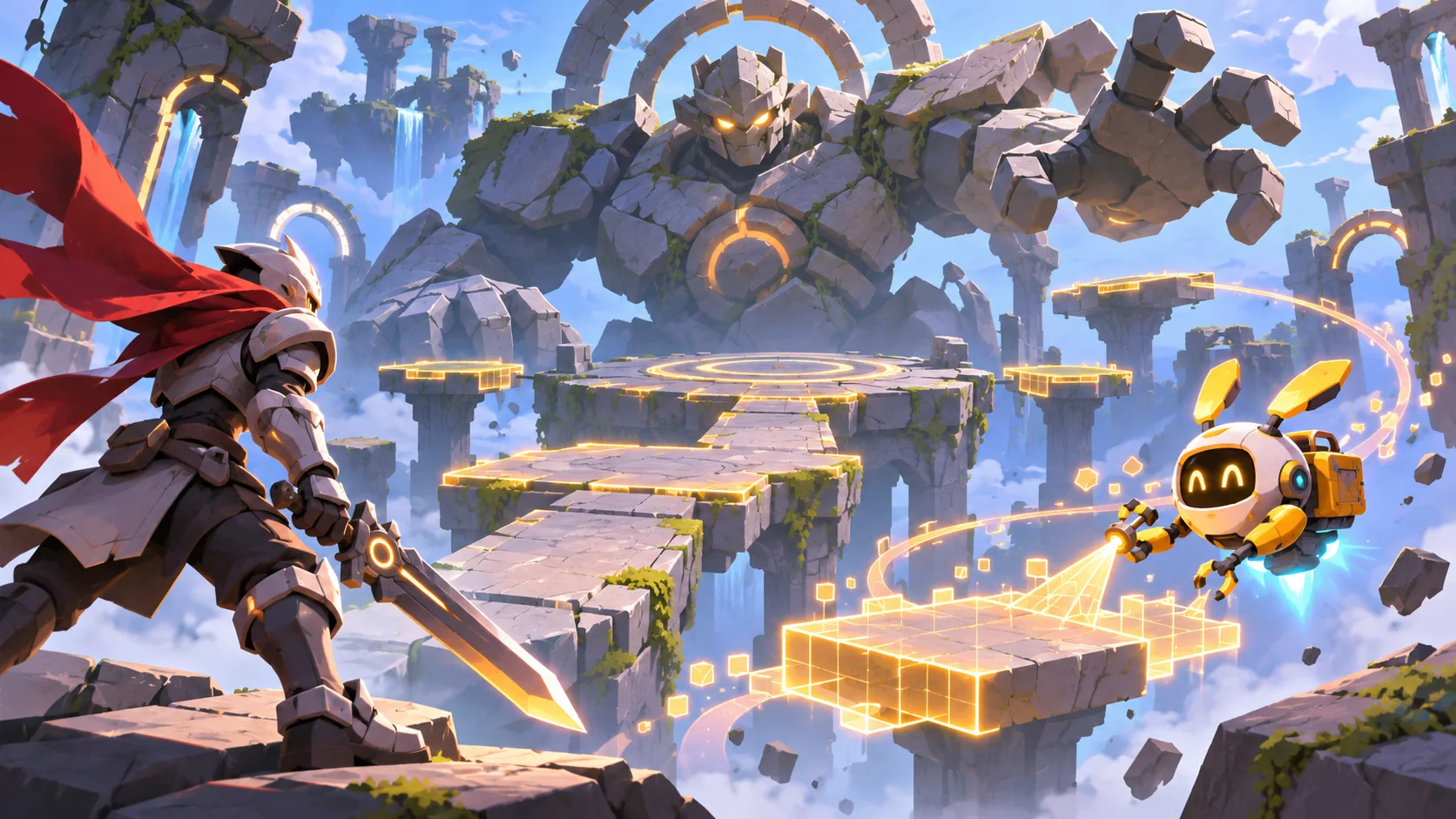
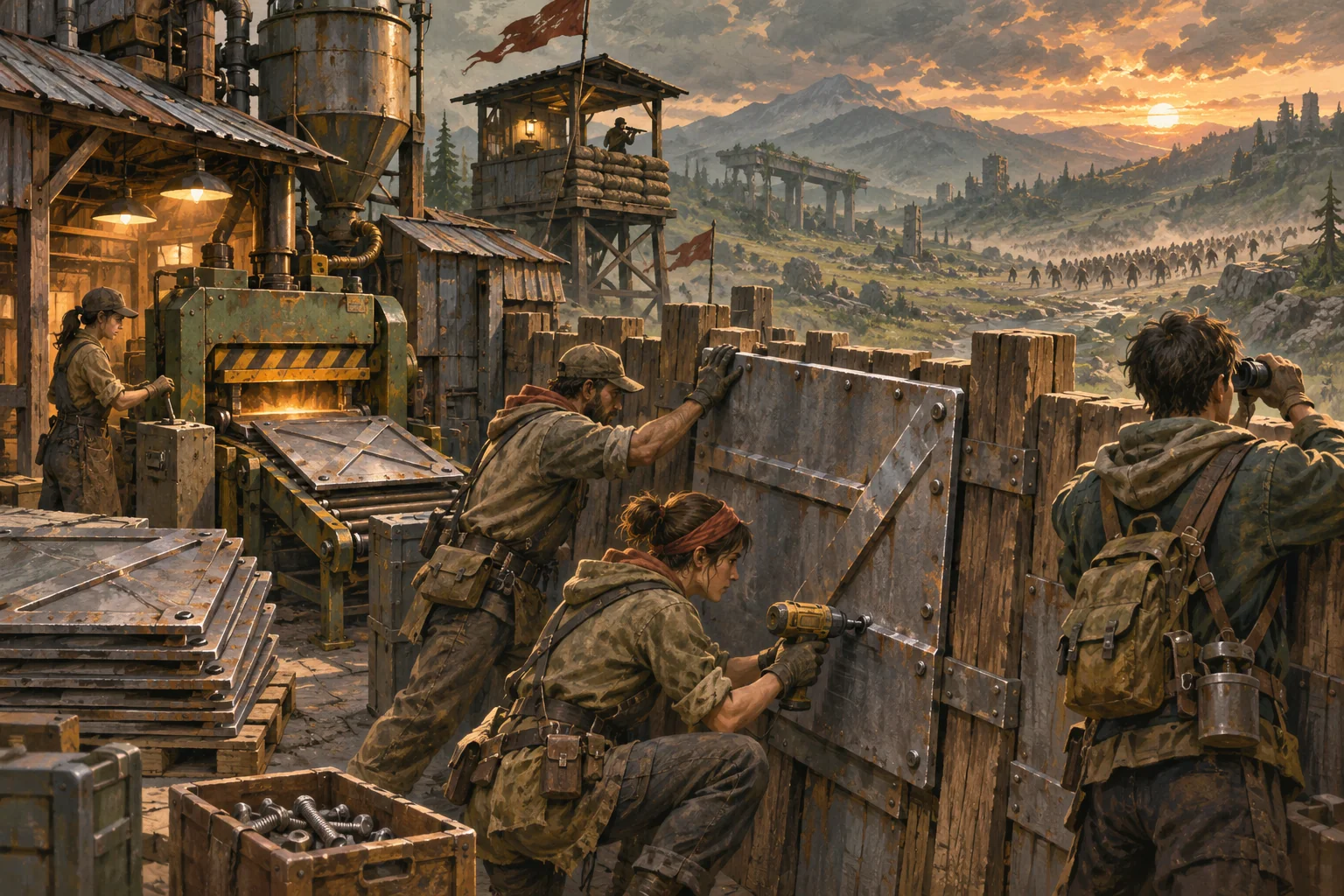
A base-defense survival game can make its factory part of the environment loop. Players scavenge wreckage after a wave, use recovered components to rebuild a wind turbine, then route power to a small factory that presses scrap into barricade plates. The next defense depends on how well the player restores and connects those systems.
Start with one turbine, one factory and a fixed amount of scrap. Compare production with the factory disconnected from the power line and after the player links it to the turbine. This deterministic capacity check verifies the production rule; it does not establish that the survival economy is balanced or sustainable.
Connect recovered materials to a powered defense loop
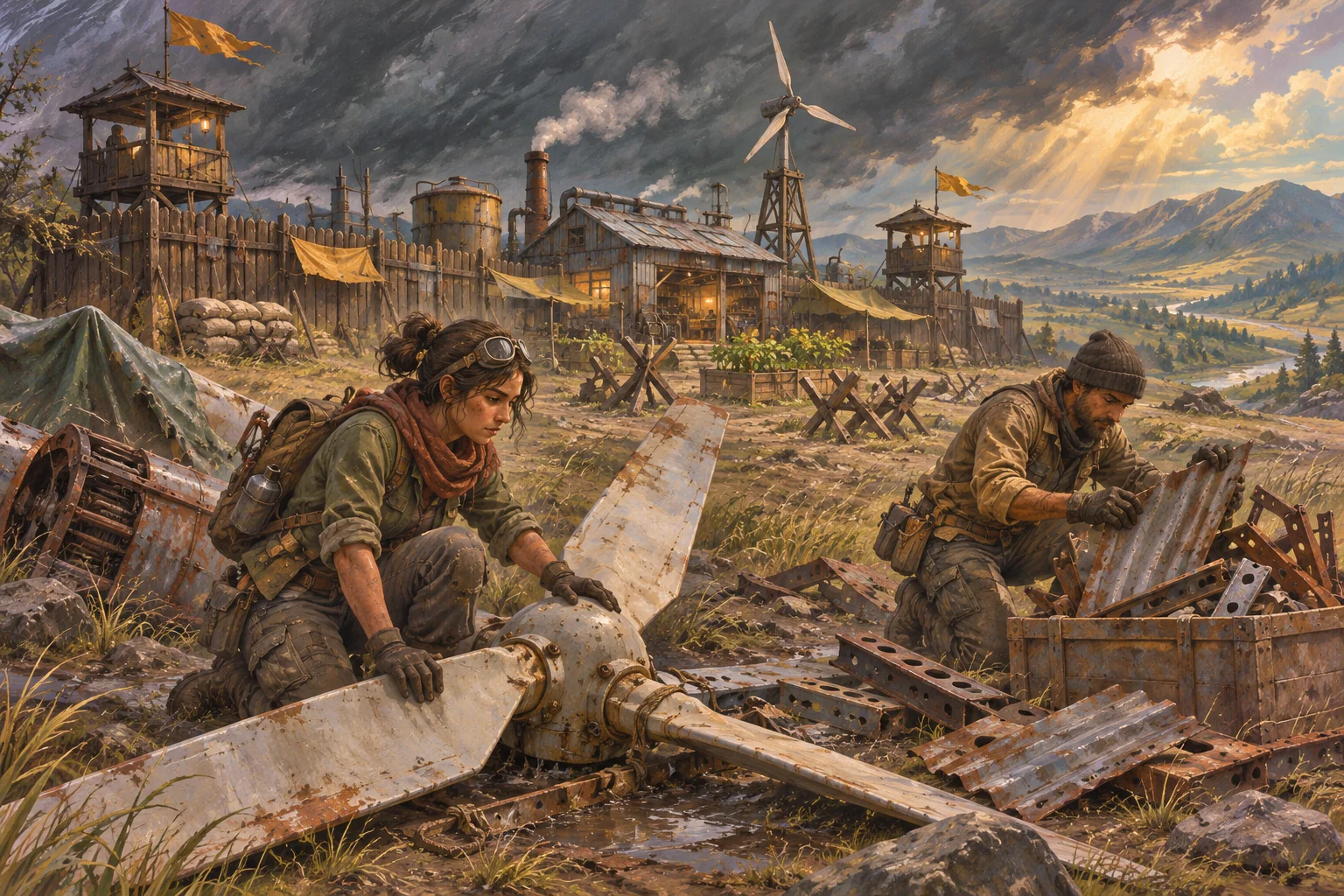
Give wreckage a clear use. Salvaged rotor parts and wiring restore a wind turbine; scrap metal feeds the factory. The turbine generates three power units during a steady wind tick, while the factory needs two units and one scrap unit to produce a barricade plate.
Show power as a routed resource rather than an automatic global pool. A cable links the turbine to the factory, and the machine displays whether it has enough power and materials for the next batch. If the player connects a battery or another defense later, make each consumer's demand visible.
Use the production phase between waves to gather wreckage, place a machine and route a cable. Keep wind output, scrap quantity and factory recipe fixed while checking the first batch. Add storms, storage loss or alternative energy sources only after the base loop is readable.
Power the factory before the next wave
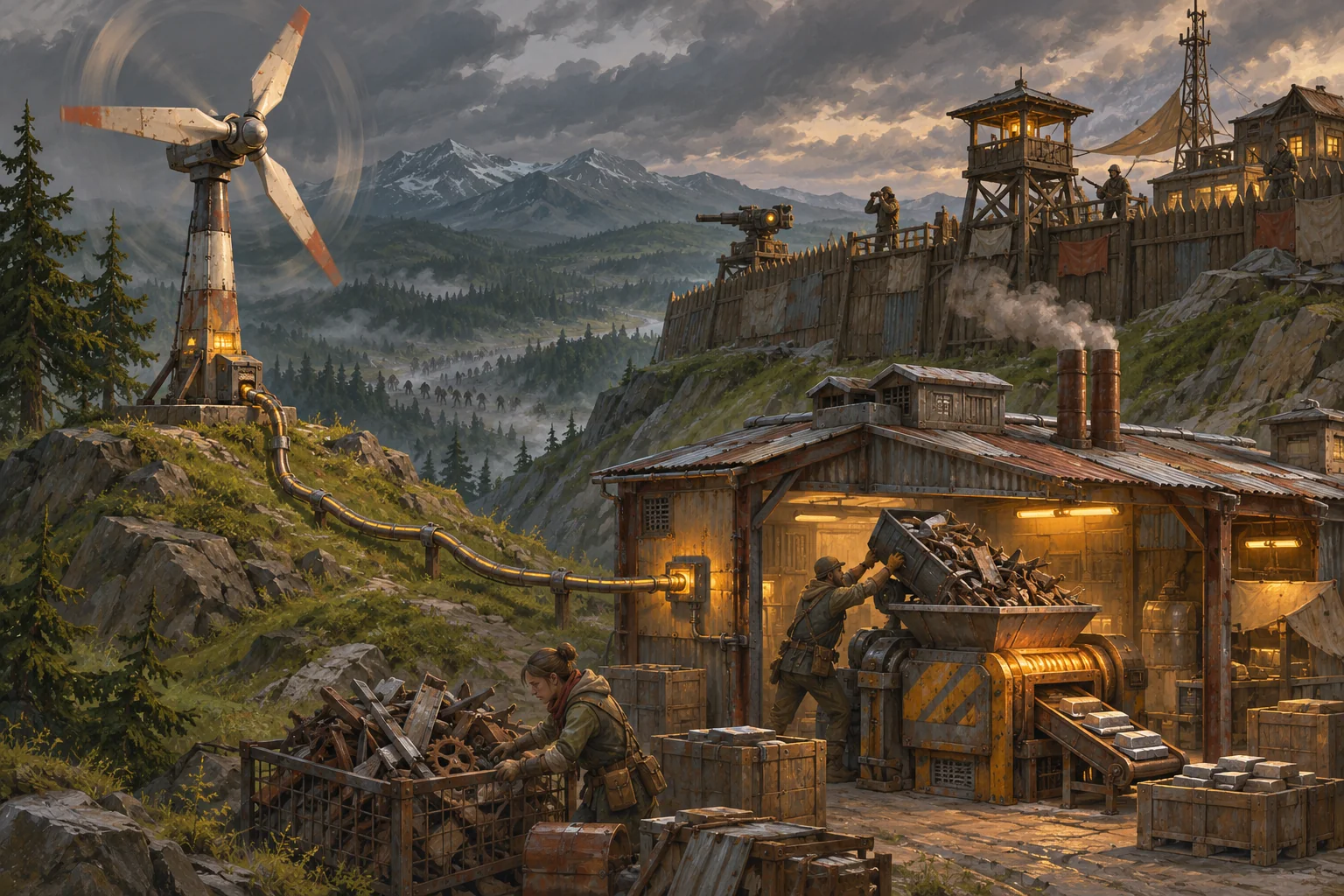
The player has one scrap unit, a rebuilt turbine producing three power and a factory that needs two power for one plate. In the first setup, the machine sits outside the cable network. It receives zero power, remains idle and produces no barricade part despite the available wind and scrap.
Change only the connection: add one cable from the turbine to the factory. The network now supplies three power, the factory consumes two and one scrap, and it produces one plate for the next defense. Keep the wind tick, materials, recipe and wave fixed.
This deterministic model verifies power routing and recipe inputs. It does not test whether the factory cost is fair, whether wind availability feels reliable or whether players can defend the base while managing production. Playtest the loop across several waves before tuning storage and machine costs.
Ask AI to prototype a salvage-powered base factory
Show recovered input, turbine output, cable connections and factory demand before production.
Change only whether the factory is connected while keeping wind and scrap fixed.
Create an original base-defense survival prototype with one wind turbine and one scrap factory. Recovered wreckage provides 1 scrap; a rebuilt turbine produces 3 power per steady wind tick; the factory consumes 2 power and 1 scrap to make 1 barricade plate. Compare the factory disconnected from the turbine with the same factory connected by cable. Keep wind, scrap, recipe and next wave fixed. Show routed power and output. Do not claim this capacity check proves economy balance or environmental sustainability.
Make recovered resources prepare the next defense
A powered factory connects environmental recovery to the survival loop when its output helps the player face an upcoming wave. Show where scrap comes from, how energy reaches the machine and what each batch creates. Once a single turbine-to-factory chain works, test storage, outages and competing power demands across a longer defense run.
Prototype a base-defense survival game with SEELE's AI game maker
Frequently asked questions
How can a factory fit into a base-defense survival loop?
Make its products useful before an upcoming wave. The player can recover scrap, power a machine and produce barricade parts or repairs between attacks. Show the inputs, power demand and output so the factory creates a planning choice rather than free supplies.
Why route wind power instead of making it automatic?
Routing makes placement and energy demand part of the defense plan. A turbine can power one factory or another machine, and visible cables help players understand why production stops. Start with a small network before adding storage or competing loads.
Does a factory capacity model prove the survival economy is balanced?
No. It verifies that a machine has enough routed power and materials for a batch under fixed rules. It cannot tell whether wind is reliable, production costs feel fair or players can manage the base under attack. Playtest multiple waves before tuning the economy.