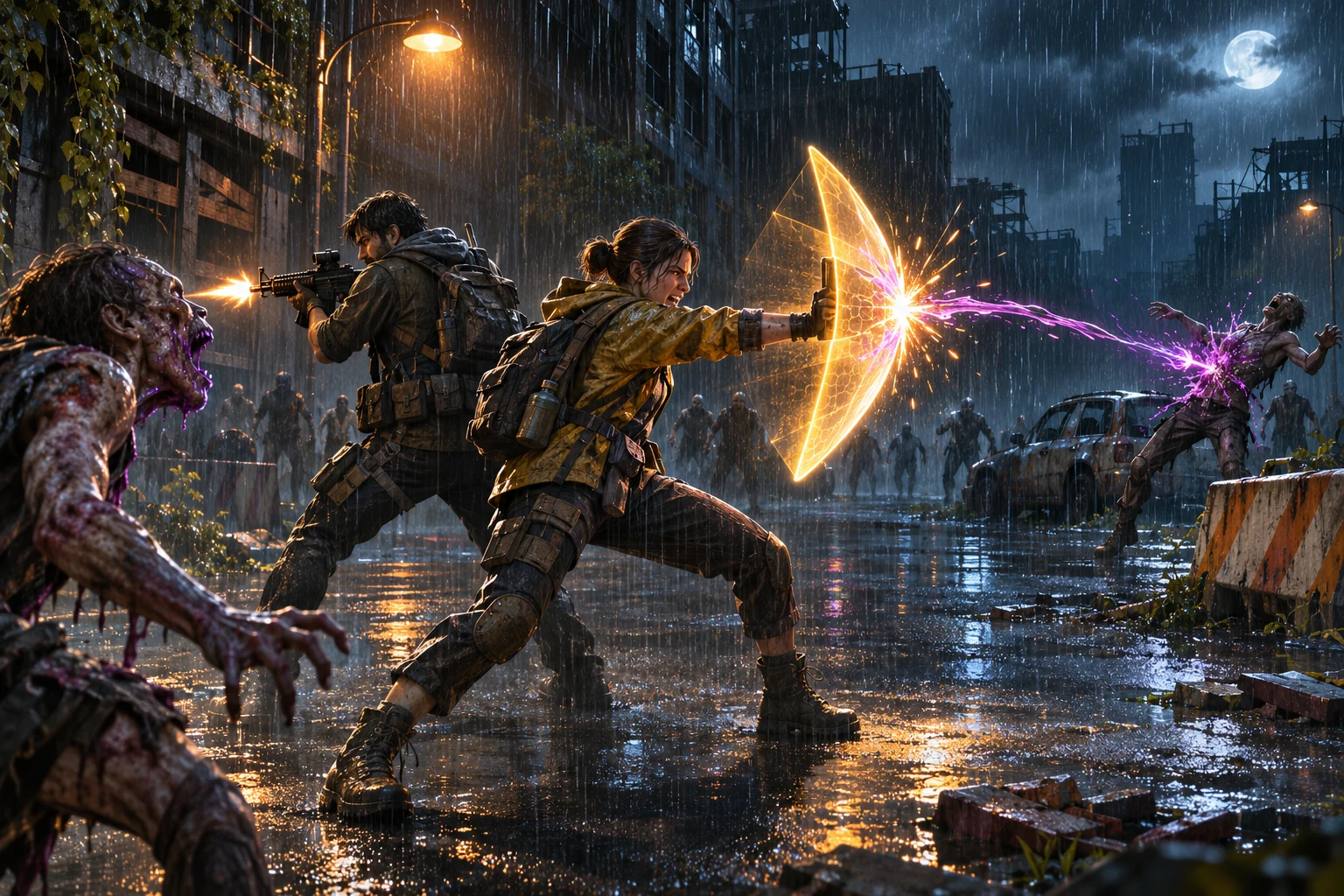
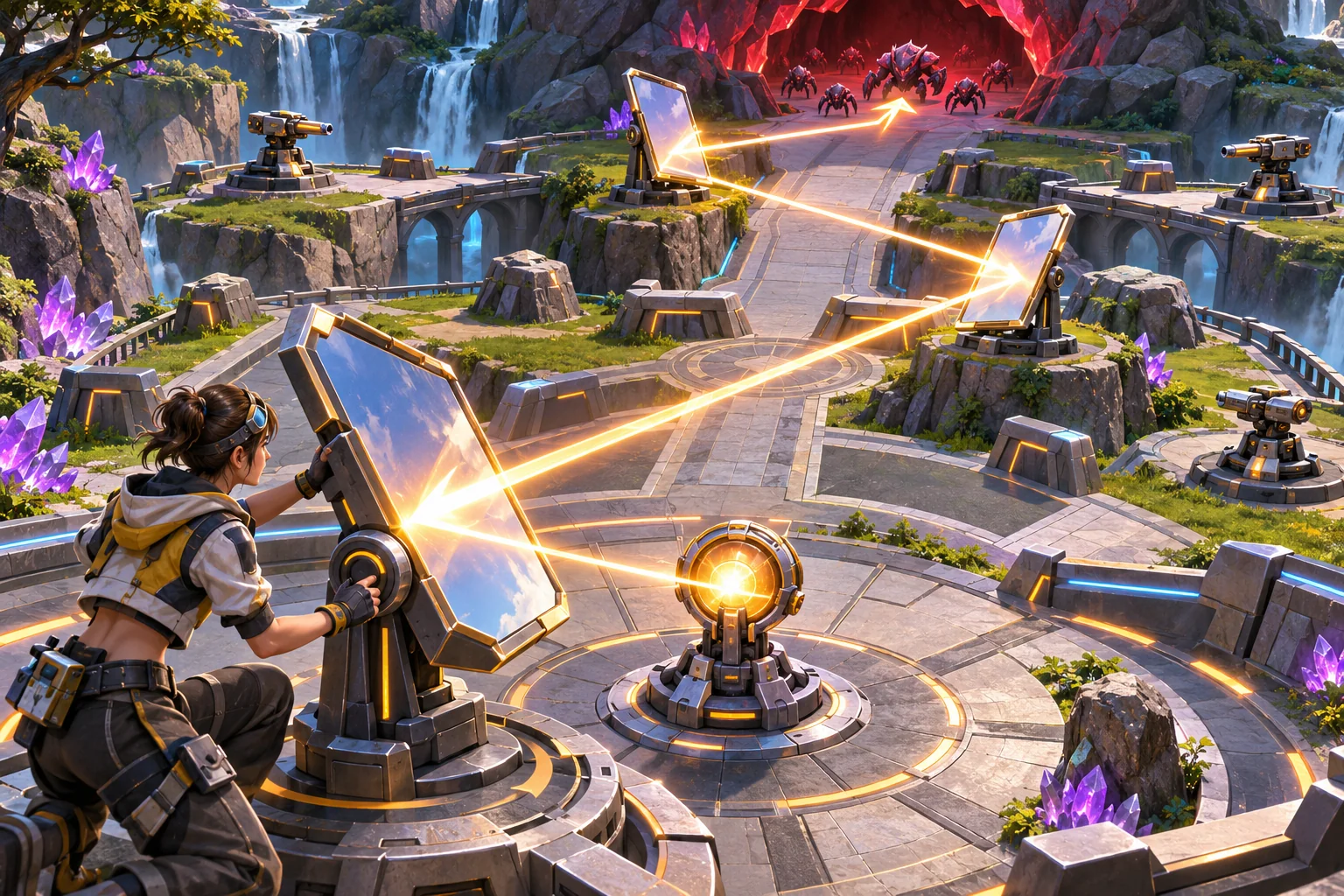
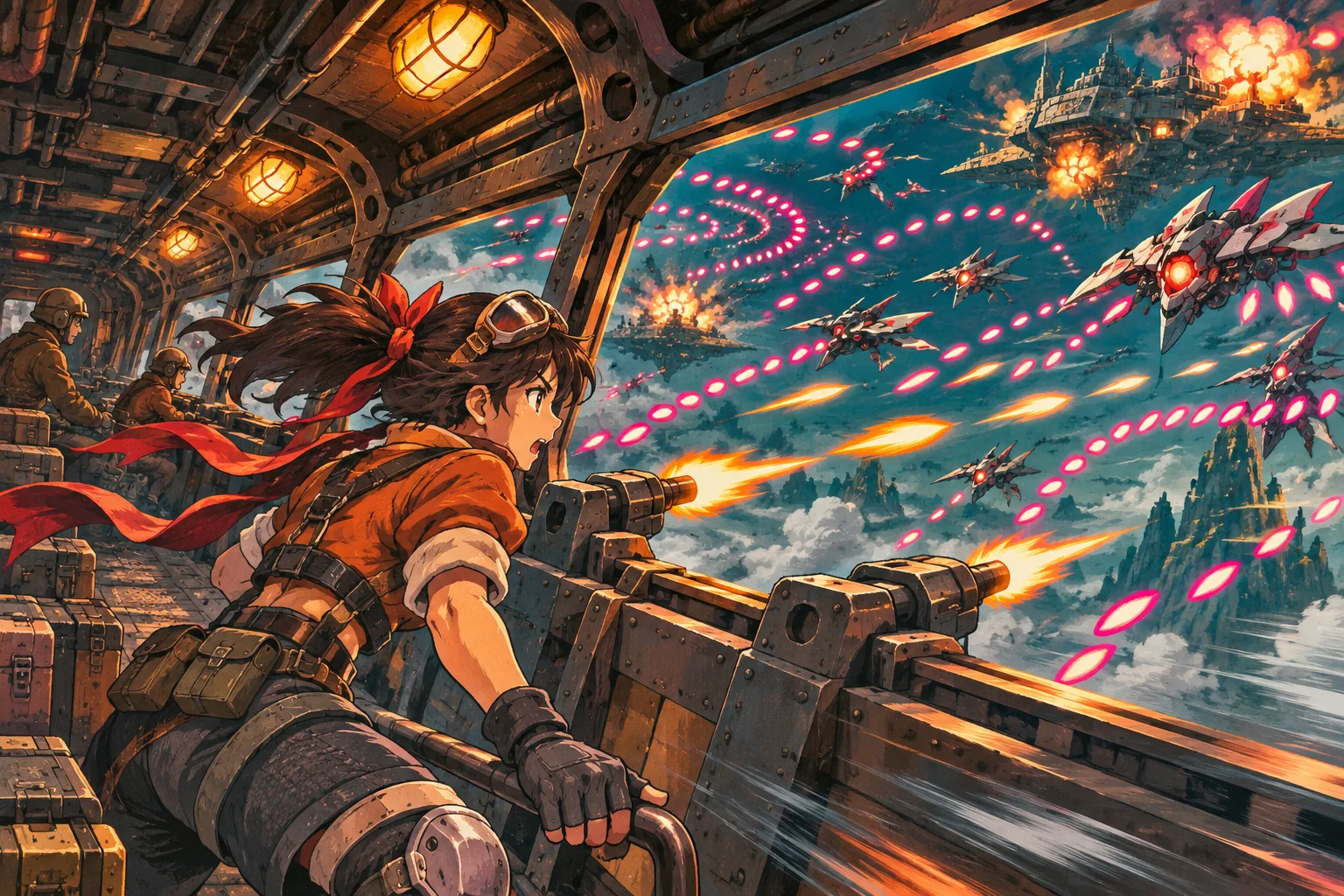
A boomer shooter can make enemy attacks part of the player's offense. Instead of only dodging, the player reads a projectile, times a deflection and chooses where it travels next. That creates a compact combat loop: approach, recognize the shot, redirect it, then move before the next attack.
Start with a single slow projectile, a clear deflection window and one enemy behind the player. Compare the same shot without input and after a timed redirect. A deterministic geometry check can verify direction and target intersection; it cannot tell you whether the timing feels fair in a fast real-time encounter.
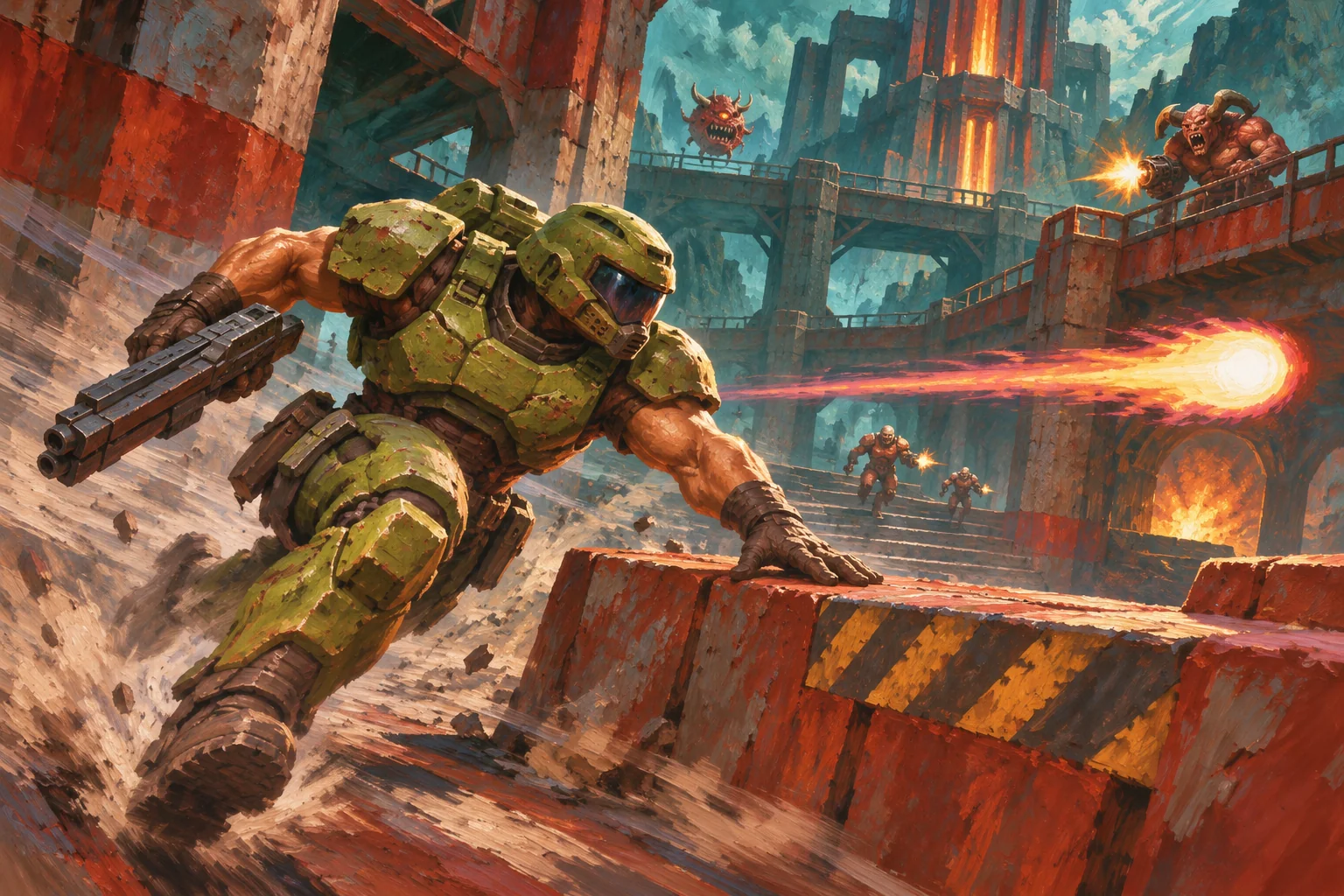
Make deflection readable in a fast arena
Give the incoming attack a consistent speed and a visible wind-up. A brief glow or sound cue can mark when the projectile is eligible for deflection. Keep ordinary dodge movement available so players can choose between avoiding danger and taking the risk of turning it around.
On a valid input, preserve the projectile's identity and speed but replace its direction with the player's chosen aim direction. Limit the action with a short timing window, cooldown or charge. On a miss, let the projectile continue along its original path; do not silently award a successful counter.
Use a two-enemy test room before adding more weapons. Keep projectile origin, speed, player position and target positions fixed. First record the original trajectory, then change only the deflection input and aim. Add fast shots, multiple angles and crowd pressure after the basic interaction is understandable.

Redirect one shot toward a second enemy
Place the player at x=1, a projectile at x=3 moving left at 10 units per second, and a second enemy at x=6. Without a deflection, the projectile crosses the player's position and continues left, away from the second enemy. Keep the starting positions, speed and simulation interval fixed.
Now deflect at the same marked moment and aim right. The projectile keeps its speed but changes direction; its path crosses the second enemy at x=6. The player has converted an incoming attack into an opportunity to damage another target. No extra damage, slow motion or enemy movement is needed for this test.
This deterministic line check verifies the direction change and target intersection only. It does not prove that the cue is visible, the timing window is forgiving, or the combat stays balanced when several enemies fire. Playtest with varied angles and real movement before choosing cooldowns and damage.

Ask AI to prototype a projectile redirect
Show the projectile's original path, the deflection window and its new aim direction.
Change only whether the player deflects; keep positions, speed and timing fixed.
Create a fast boomer shooter prototype with a timed projectile deflection. Put the player at x=1, an enemy projectile at x=3 moving left at 10 units per second, and a second enemy at x=6. In the baseline, the shot passes the player and travels away from the second enemy. In the variant, a valid deflection preserves projectile speed and redirects it right so it intersects the second enemy. Keep positions and simulation timing fixed. Make the cue and input window readable. Treat this as a geometry check, not proof of combat balance or feel.
Let enemy fire create a movement decision
Redirectable attacks work when players can read the incoming shot, understand when deflection is possible and choose a useful direction. First verify one fixed trajectory and target. Then playtest different speeds, angles, cooldowns and enemy groups to see whether redirection supports fast movement without replacing dodging.
Prototype a boomer shooter with SEELE's AI game maker
Frequently asked questions
How does projectile deflection fit a boomer shooter?
It adds a short offensive choice to the movement loop. Players can dodge a shot safely or risk a timed deflection and aim it toward another enemy. Clear cues and a consistent rule help the action stay readable at speed. Give the action a cooldown or limited charge so dodging remains a useful alternative, and show when the deflection window opens.
What should happen when a deflection misses?
Let the original attack continue on its established path unless the game clearly defines another failure result. A miss should not secretly redirect or cancel the projectile. Consistent outcomes help players learn timing and make later attempts deliberate. Preserve clear feedback.
Does a line test prove the mechanic is balanced?
No. A fixed geometry test verifies only that direction changes and the shot reaches a target. It does not measure cue clarity, timing fairness, enemy pressure or damage balance. Test with real movement and varied encounters before tuning those values.