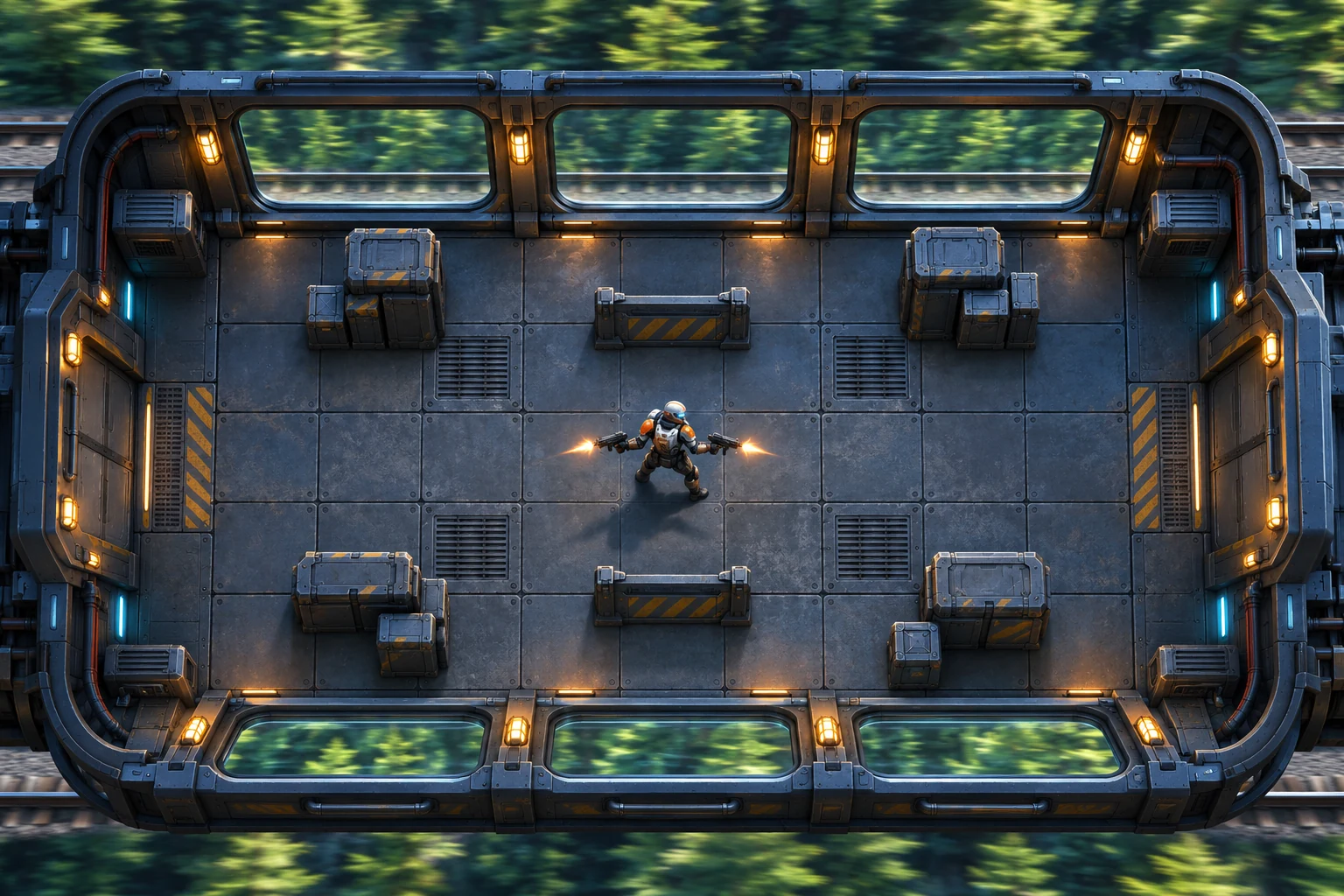
A bullet hell shooter inside a moving vehicle can make the arena itself part of the combat. The vehicle follows a route through danger while the player shifts between interior lanes to avoid projectile patterns and line up shots through firing ports. Each movement choice changes both safety and attack angle.
Begin with two lanes, one fixed vehicle speed and one repeating projectile pattern. Compare a stationary player lane with a timed shift. A deterministic path check can show whether the shift avoids a projectile and aligns with a port; it cannot establish that the pattern feels fair at game speed.
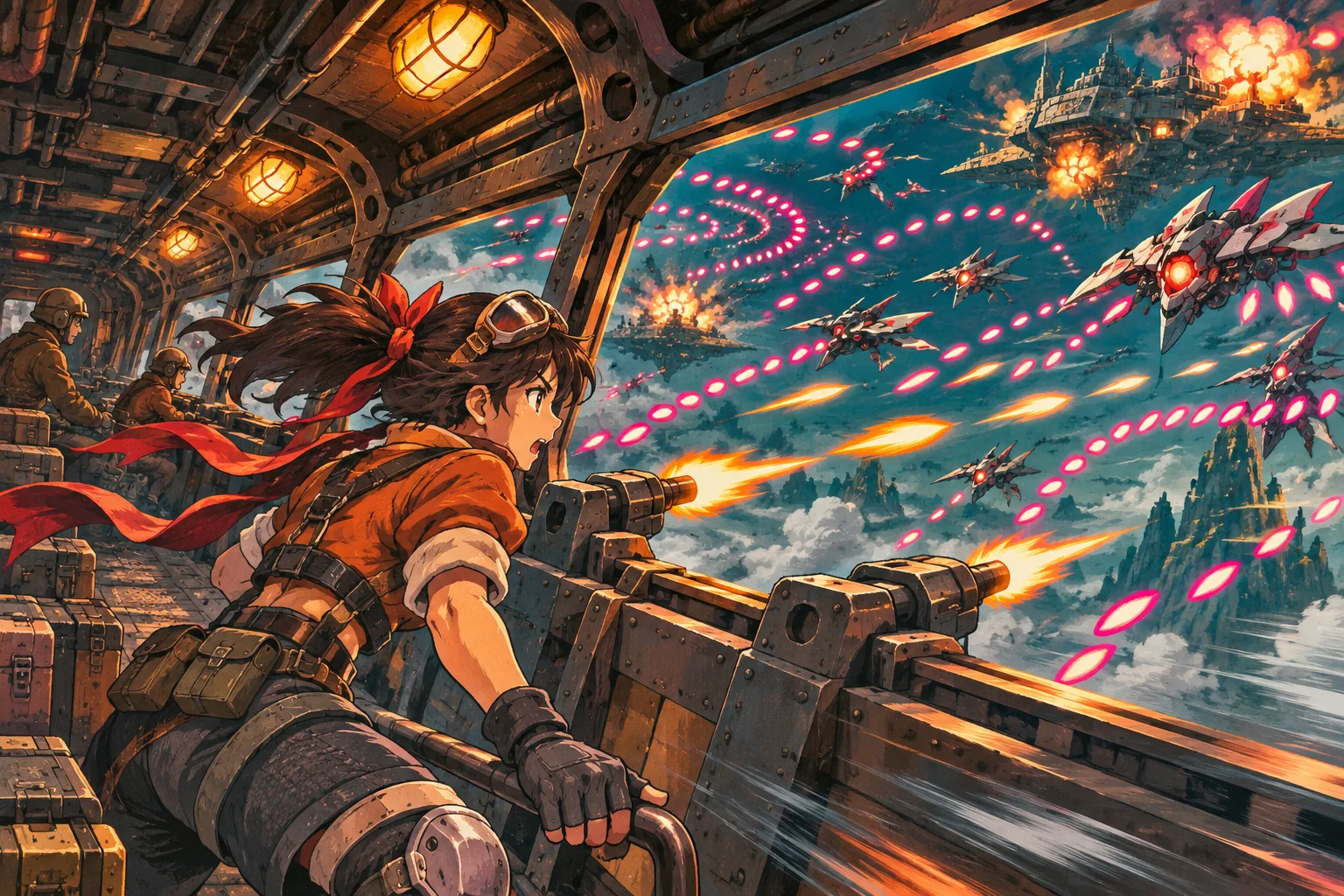
Make lane changes answer the moving pattern
Treat the vehicle interior as a compact playfield with clear lanes and visible firing ports. The vehicle moves continuously along its route, but the player can shift lanes during a short input window. Keep the control response consistent so the player can read the pattern instead of guessing how long movement takes.
Give each lane a useful tradeoff. One can have a clear firing angle but cross an incoming pattern; another can be safer while temporarily losing the target. Telegraph projectile lanes early enough for the player to choose, and make the vehicle's forward motion visible through windows or passing scenery.
Test one pattern before adding speed or more lanes. Fix the vehicle position over the test interval, projectile speed and firing-port location. First record the player's path without input, then change only lane timing. Add overlapping patterns only after the basic shift is legible.
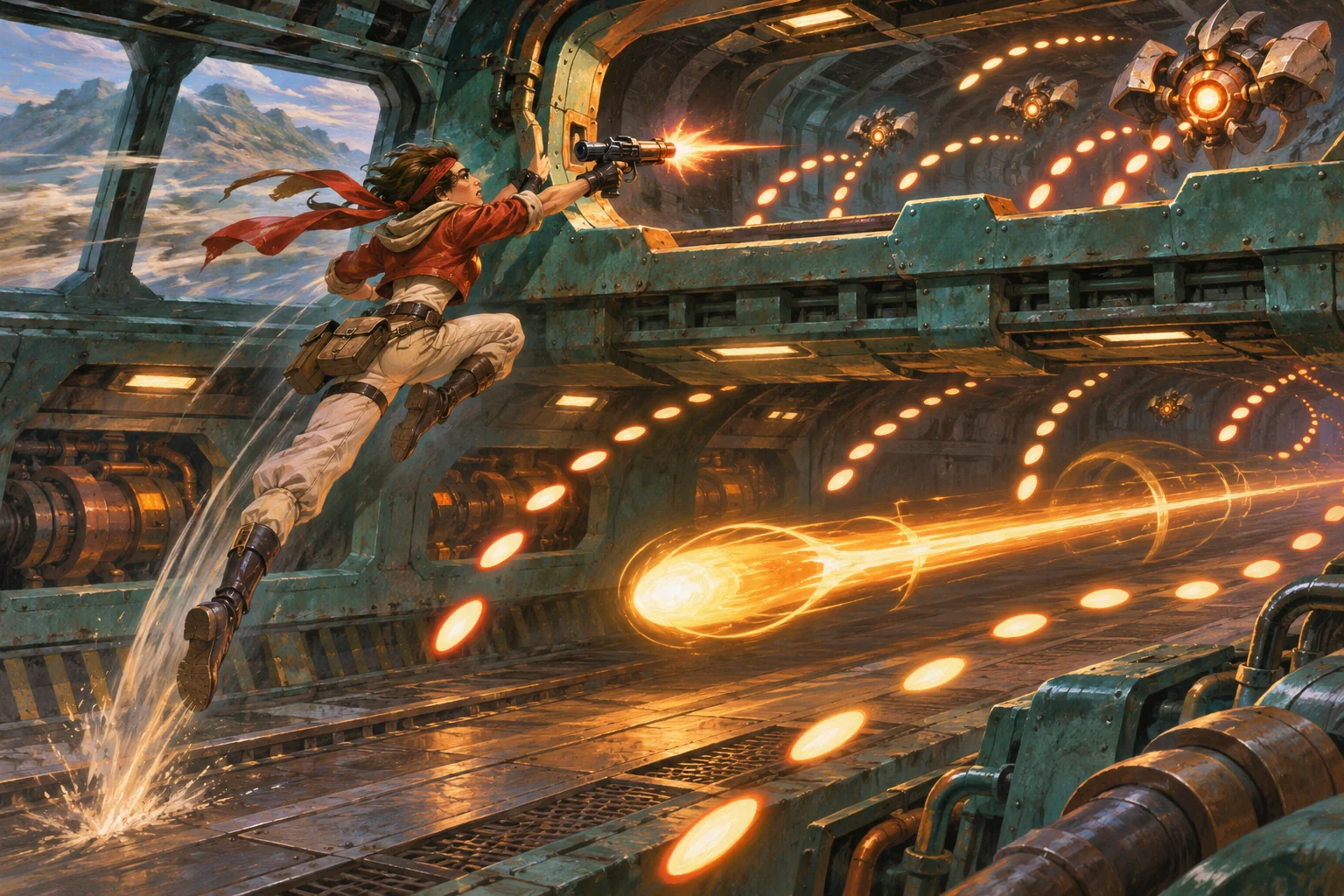
Shift lanes to clear a projectile and line up a shot
Place the player in the lower lane at y=0, an incoming projectile moving across that lane, and a firing port aimed at a target in the upper lane. With no shift, the player intersects the projectile path and the port does not align with the target. Keep vehicle and projectile motion fixed during the comparison.
At the marked interval, shift the player to the upper lane. The player clears the lower-lane projectile and lines up with the firing port. The moving vehicle keeps the same route speed; only the player's lane changes. This gives one action both defensive and offensive value.
This deterministic geometry check verifies separation and alignment only. It does not measure reaction time, visual clarity, difficulty or whether players can track multiple patterns. Playtest at full speed before adjusting warning time, lane distance and enemy fire.
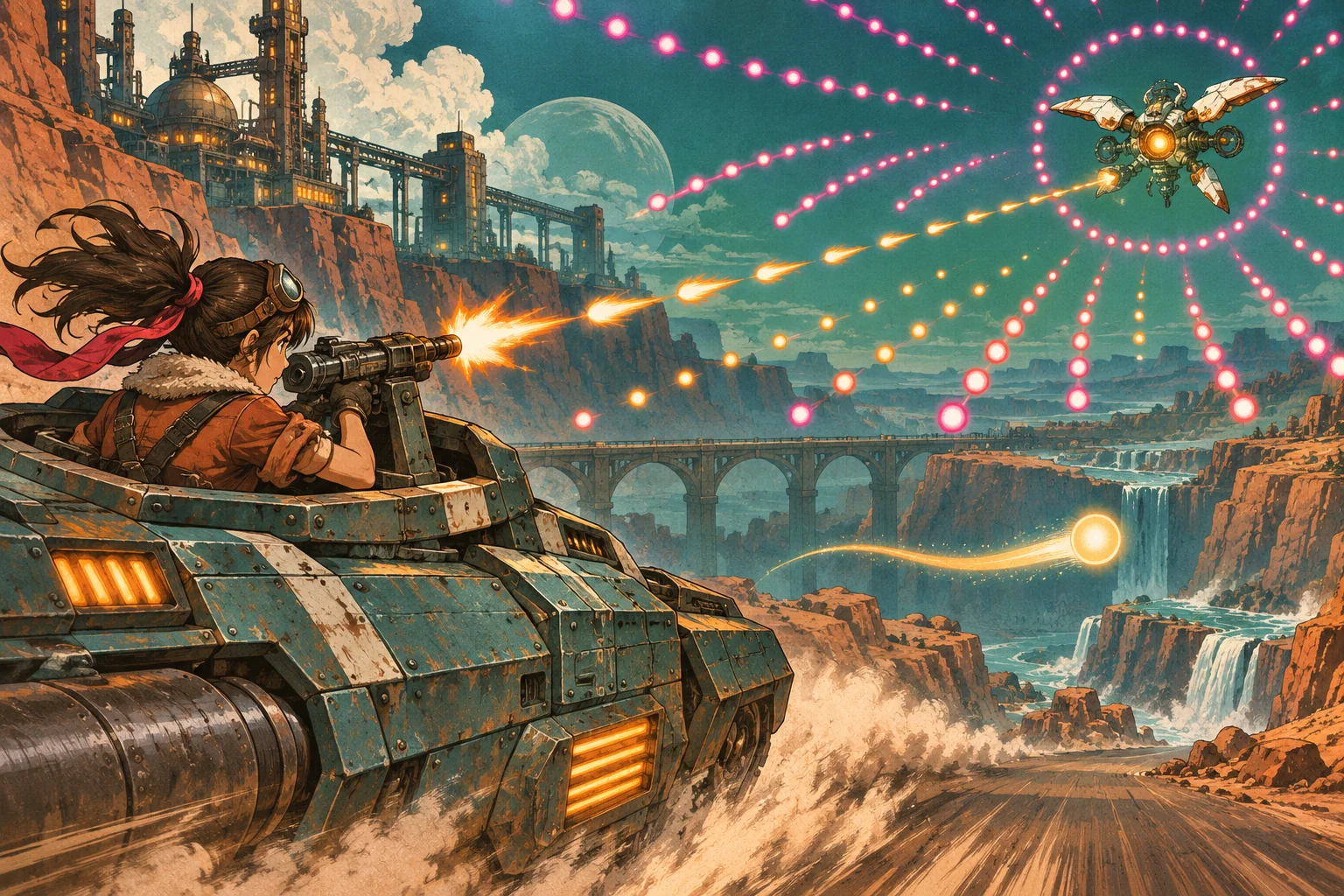
Ask AI to prototype a moving-vehicle bullet hell
Show the vehicle route, interior lanes, incoming projectile path and firing-port alignment.
Change only the player's lane shift; keep route and projectile timing fixed.
Create a bullet hell shooter set inside a moving vehicle. The vehicle follows a fixed route; the player can shift between two interior lanes. Put an incoming projectile across the lower lane and a firing port aligned with a target from the upper lane. Compare no shift with a timed shift to the upper lane. Keep vehicle speed, projectile timing and positions fixed. Make warnings and lane transitions readable. Treat geometry checks as setup evidence, not proof of difficulty or feel.
Make the moving arena change each combat decision
A vehicle-based bullet hell works when the route, projectile pattern and lane controls remain readable together. Verify one lane shift that changes both evasion and aim before increasing pattern density. Then playtest warning times and overlapping attacks at full speed; a static geometry check cannot show whether the challenge feels fair.
Prototype a bullet hell shooter with SEELE's AI game maker
Frequently asked questions
How can a moving vehicle affect bullet hell combat?
Use the vehicle as the arena and let its route frame where projectiles and targets appear. Lane changes can help the player evade one pattern while aligning with a firing port. Keep the route and attack cues visible so movement remains readable. Keep the firing ports and warnings visible while the vehicle moves.
Why should lane changes affect both dodging and aiming?
One action can create a useful tradeoff: a safer lane may lose a firing angle, while an exposed lane may line up a shot. Showing both effects makes movement a deliberate combat choice rather than a purely defensive escape. Preserve the alternate dodge.
Does a geometry check prove a bullet pattern is fair?
No. It verifies only that paths separate or align under fixed positions and timing. It cannot measure reaction time, cue clarity, difficulty or player attention. Playtest at full speed with overlapping patterns before tuning the encounter. Test overlapping patterns. Test more patterns.