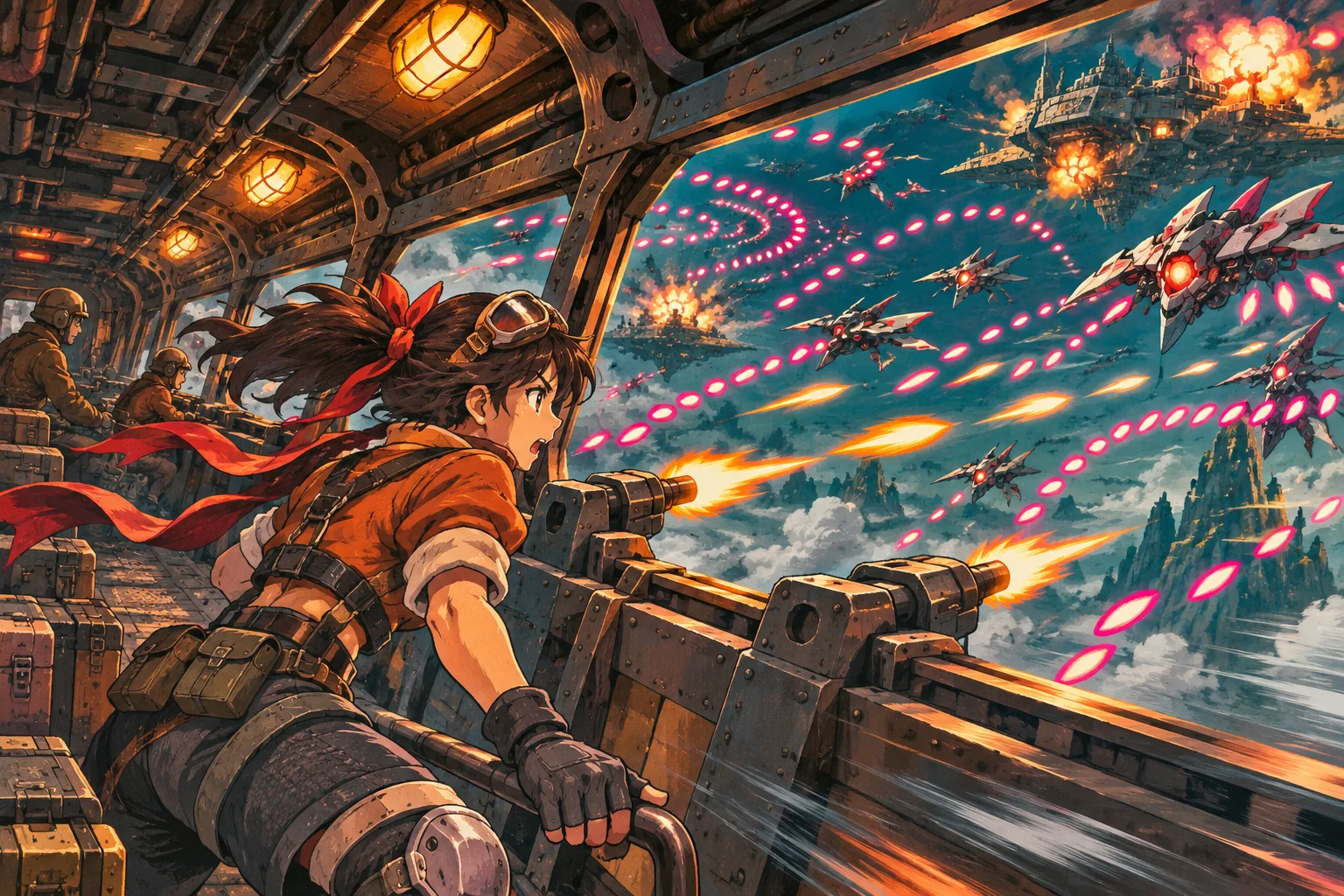
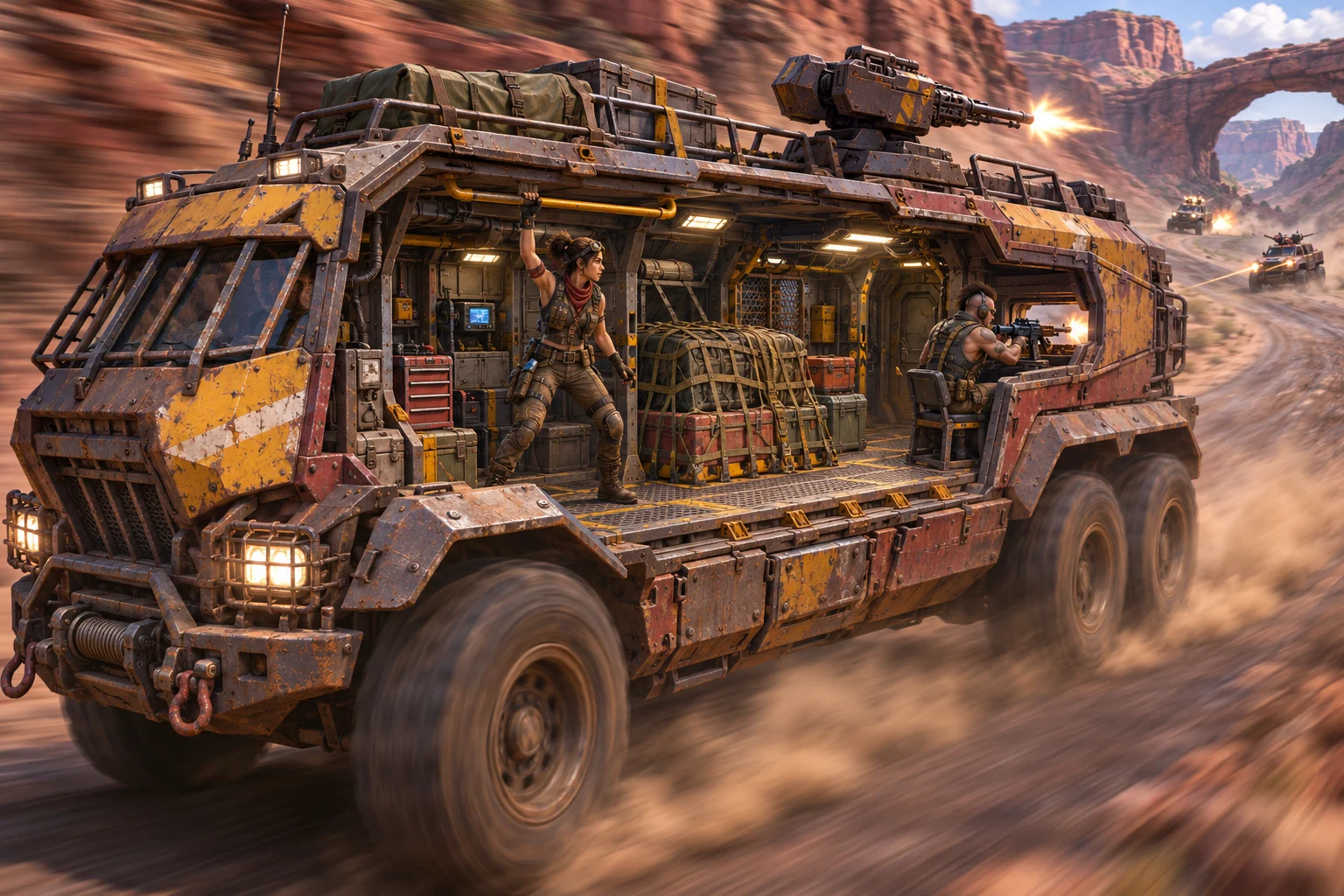
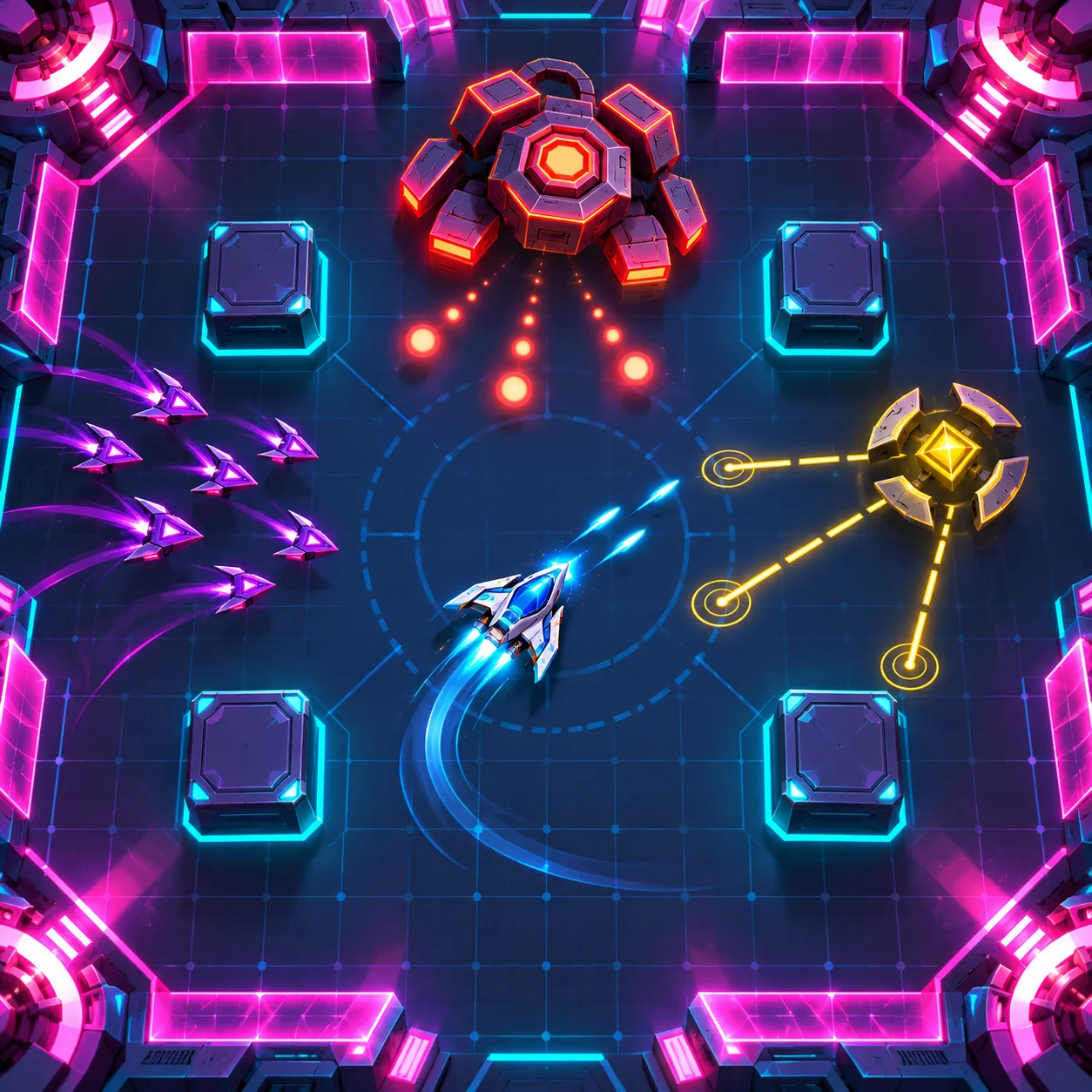
In the fictional Nightline, the railcar advances four route units each second while combat takes place inside a stable 8-by-5 cabin grid. The player starts at (2,2), moves right once and up twice, and ends at (3,4) after three seconds. A raider at (5,2) has four health. Two shots deal two damage each while the aim stick stays on that raider, even as the movement stick changes direction. The vehicle reaches route progress 12, and the engine remains at integrity 5. The test checks that cabin movement, aim direction, and vehicle motion are separate variables. Nightline and its numbers are fictional; the local test verifies only this input and encounter setup.
Separate cabin movement, aim, and vehicle motion
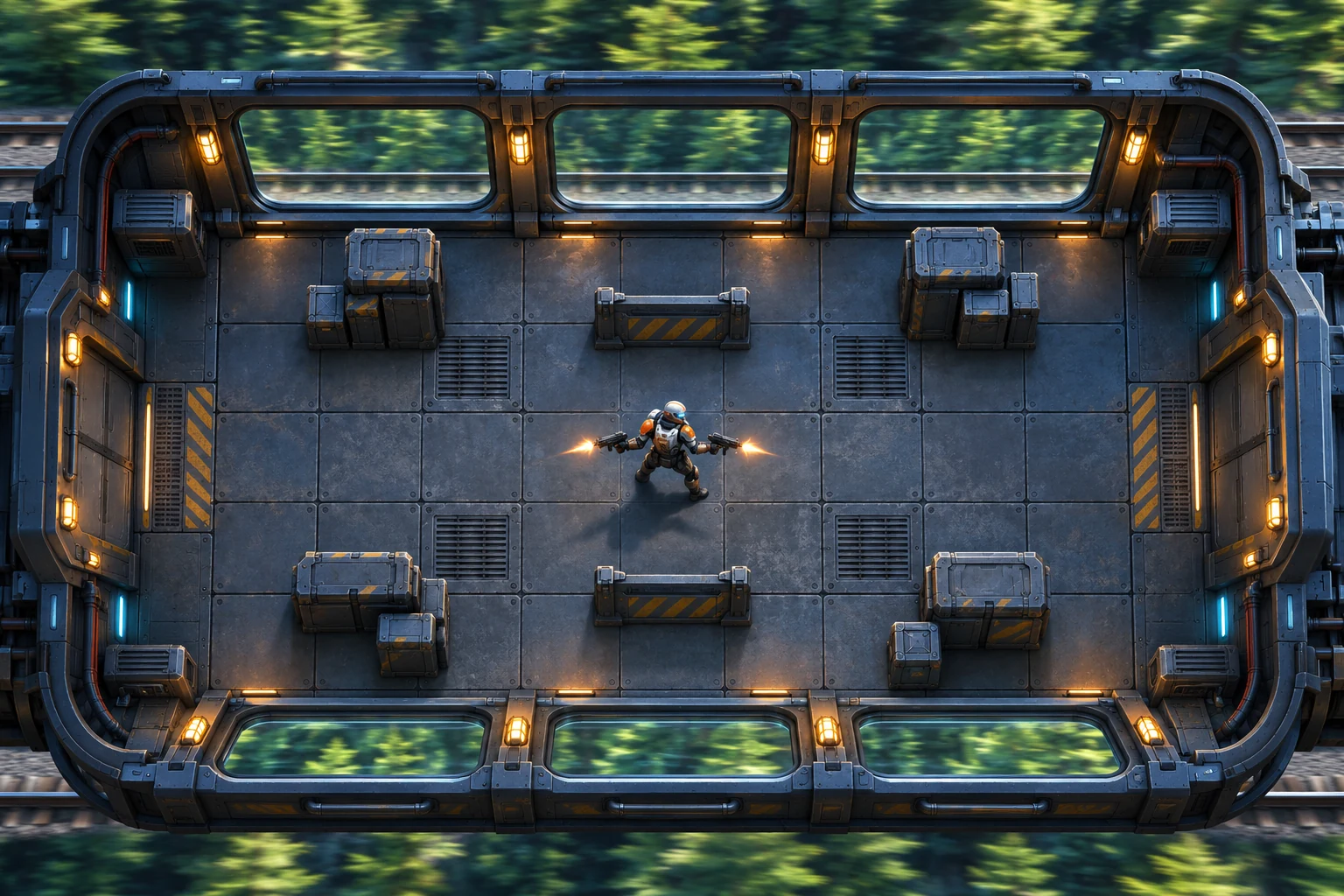
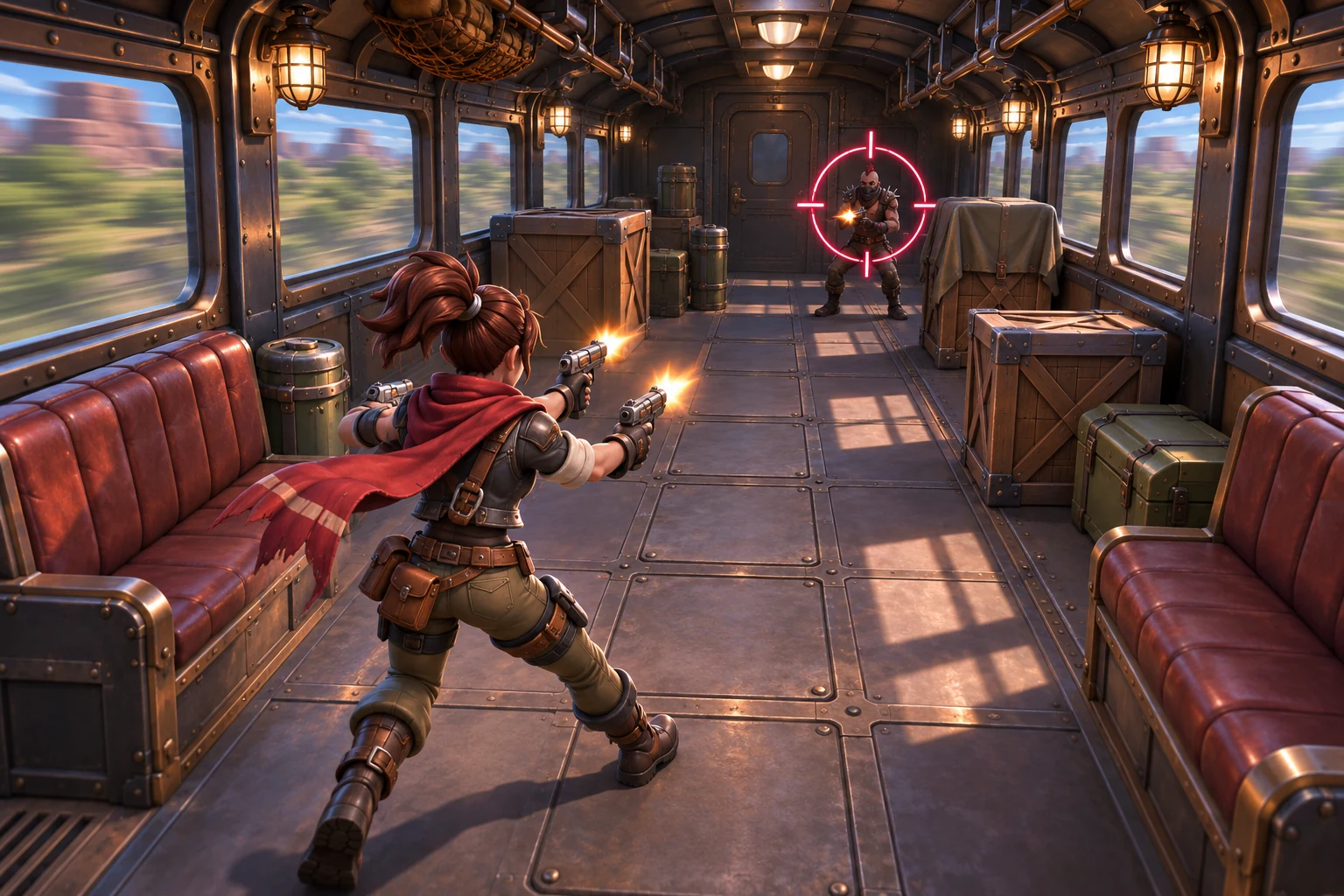
Use the cabin as a local 8-by-5 grid. The player position is stored in cabin coordinates, the reticle points to a cabin target, and the vehicle tracks route progress separately. At four route units per second, a three-second encounter advances the car by 12 units. That movement must not shift the player or enemy inside the cabin or rotate the aim stick automatically.
Place the player at (2,2) and a raider at (5,2) with four health. Each shot deals two damage. During the encounter, move right once and up twice to end at (3,4), aim at the raider, and fire twice. The raider should be defeated while route progress reaches 12 and engine integrity stays at 5. Track each value in the test log so coupled controls cannot silently pass.
Keep the moving interior readable during combat
Anchor threats and cover to cabin coordinates. Animate windows, trackside scenery, and a route indicator to show that the vehicle is moving, but do not parallax the combat grid itself. Keep the movement stick on the left and the aim-and-fire stick on the right. Aiming should remain on the selected cabin target while the player moves around an obstacle or steps into a neighboring tile.
Give the engine a visible integrity meter and let a surviving raider damage it once after the third second. This creates a reason to aim accurately without adding a second moving coordinate system. Pause the encounter only when it ends; do not snap the player back to a world position when the railcar crosses a route marker. The player’s cabin position and reticle remain stable relative to the car.
Compare independent controls with a coupled-input control
Run the exact three-second case with independent sticks enabled. Movement changes the local player coordinate from (2,2) to (3,4), aim stays on the raider at (5,2), two shots remove its four health, the car advances 12 route units, and engine integrity remains 5. This is the passing encounter. Log the movement input and aim target separately on every tick.
Repeat with a control that turns the reticle whenever the movement stick changes. The right-and-up path pulls aim off the raider; at least one shot misses, leaving the raider alive to hit the engine after three seconds. The control fails the no-damage objective. The comparison isolates the dual-stick rule: the car can keep moving, the player can reposition inside it, and aim can stay on a separate target. Nightline and outcomes are fictional; the local test checks only these coordinates and state changes.
Ask an AI game maker to verify independent twin-stick controls
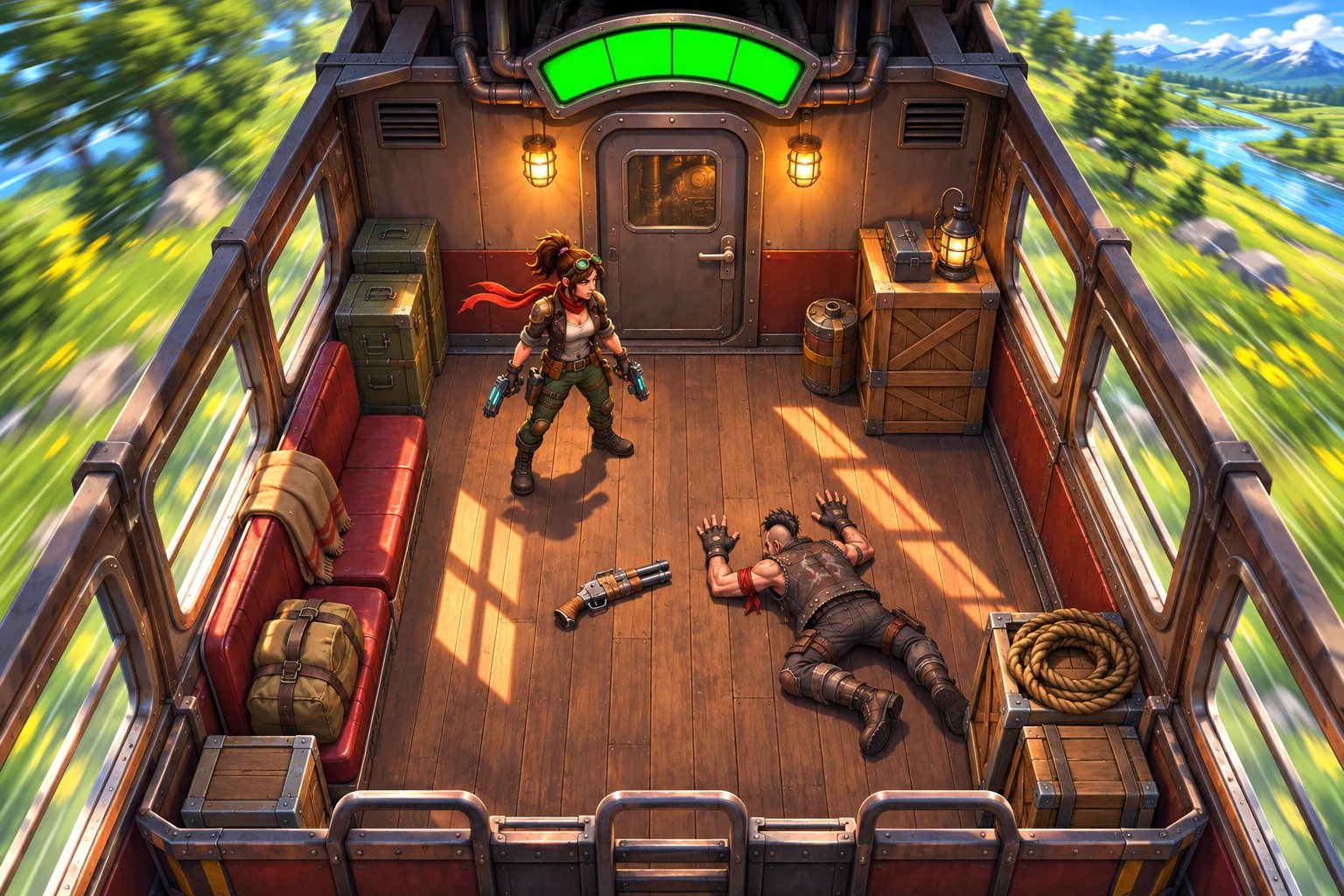
Create a twin-stick shooter encounter inside fictional Nightline railcar with a stable 8-by-5 cabin grid. Vehicle route progress advances 4 units per second. Player starts at (2,2); raider at (5,2) has 4 health; each shot deals 2. For three seconds, move right once and up twice to end at (3,4), keep aim on the raider, and fire twice. The car must reach route progress 12 while the raider is defeated and engine integrity stays 5. Store cabin position, aim target, and vehicle progress separately. Add a coupled-aim control case that misses when movement changes.
Run three ticks with movement inputs right, up, up and two shots aimed at (5,2). Verify player (3,4), raider health 0, route progress 12, and engine integrity 5. Compare with aim coupled to movement; the raider should survive long enough to damage the engine. Keep enemy and cover coordinates local to the cabin.
FAQ
How do I make twin-stick controls work inside a moving vehicle?
Store the player, enemies, and cover in vehicle-local coordinates, then track the vehicle’s route progress separately. Let one stick move the player around the cabin and the other aim at a cabin target. Vehicle motion can update windows and the route display without moving the combat grid.
How can I keep movement and aiming independent?
Read movement and aim from separate inputs and update their state separately each tick. Test a case where the player moves in one direction while firing at a target in another. Log the cabin coordinate and aim target so an accidental coupling is visible. and rerun when it changes.
What should a moving-vehicle shooter prototype measure?
Record vehicle progress, local player position, aim target, shots, enemy health, and engine integrity. Compare an independent-stick run with a control that rotates aim when movement changes. The same encounter and damage rules should apply to both runs. to make the results comparable.