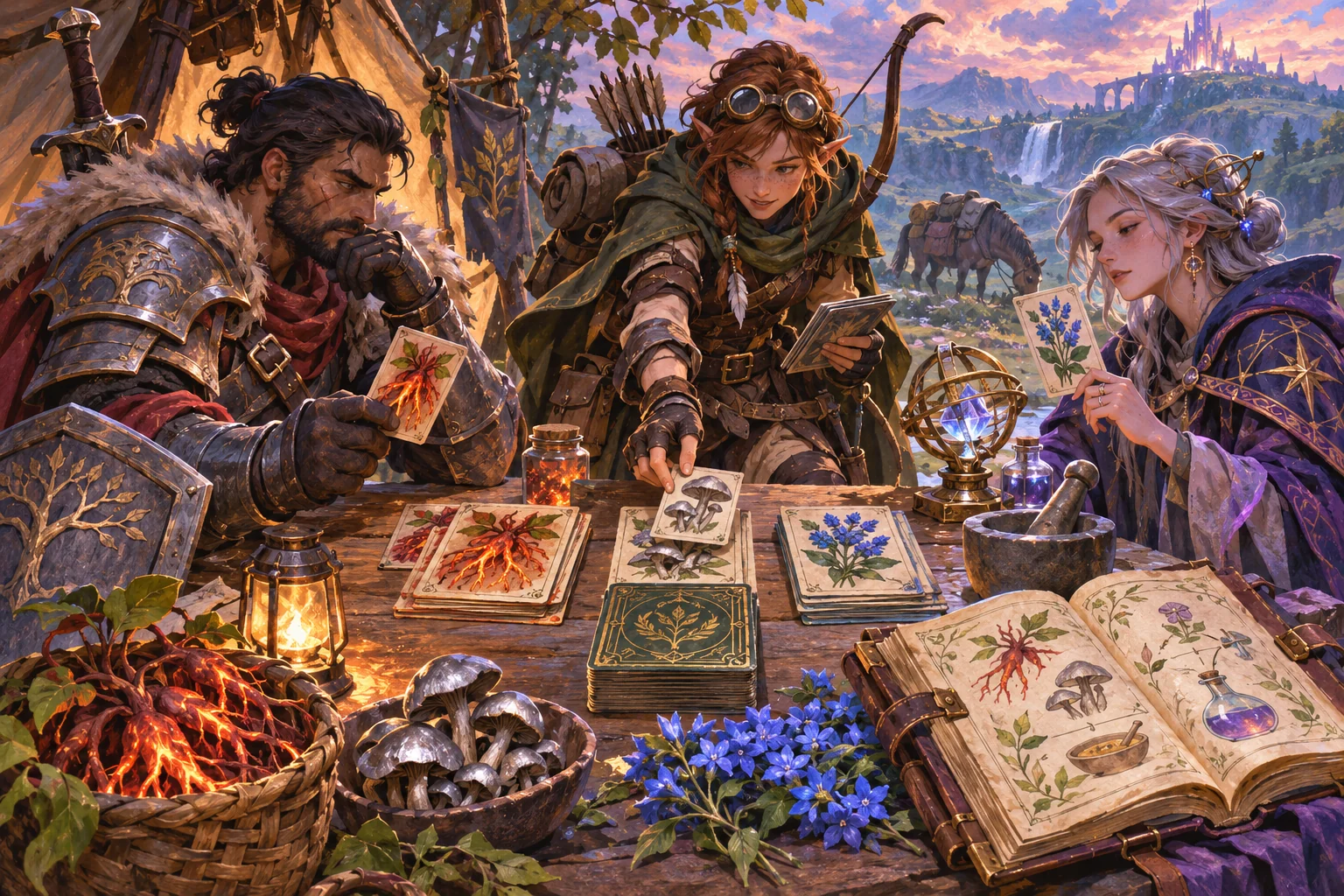
At Lantern & Lark, the morning rush and the expedition board share one inventory. A customer orders juniper tea and an oat bun; a barista who serves the correct order earns one sealed tea flask for the three-person party leaving at dusk. The adjoining store sells trail rations and restocks the cafe's dried berries, so the owner must decide whether to reserve stock for customers or for explorers.
That link makes the cafe more than a shop beside an adventure game. Customers create the ingredients and earned supplies that shape the next trip, while the expedition brings back route notes and specialty goods that can change tomorrow's menu. Start with one recipe, one store shelf and one short route, then replay the route with only the cafe's prepared flask changed.
Give the cafe, store and party one shared supply ledger
Track dried berries, oat flour, coins and travel rations in one inventory. A standard juniper tea order consumes one scoop of berries and earns its sale price; after three correctly served orders in the morning shift, add one sealed flask to the expedition shelf. The store can sell berries to visitors or reserve them for the cafe, but never duplicate stock. Show each action as a ledger entry so a player can see why a recipe or supply is unavailable.
Keep the first menu small: juniper tea and oat buns. Put the cafe counter, a compact general-store shelf and the expedition board in the same room. The board accepts a party of three, a route and the day's available supplies. The shop connects the loops through actual stock decisions, while the cafe earns the flask through service rather than granting a vague popularity bonus.
Make staffing choices matter before the party departs
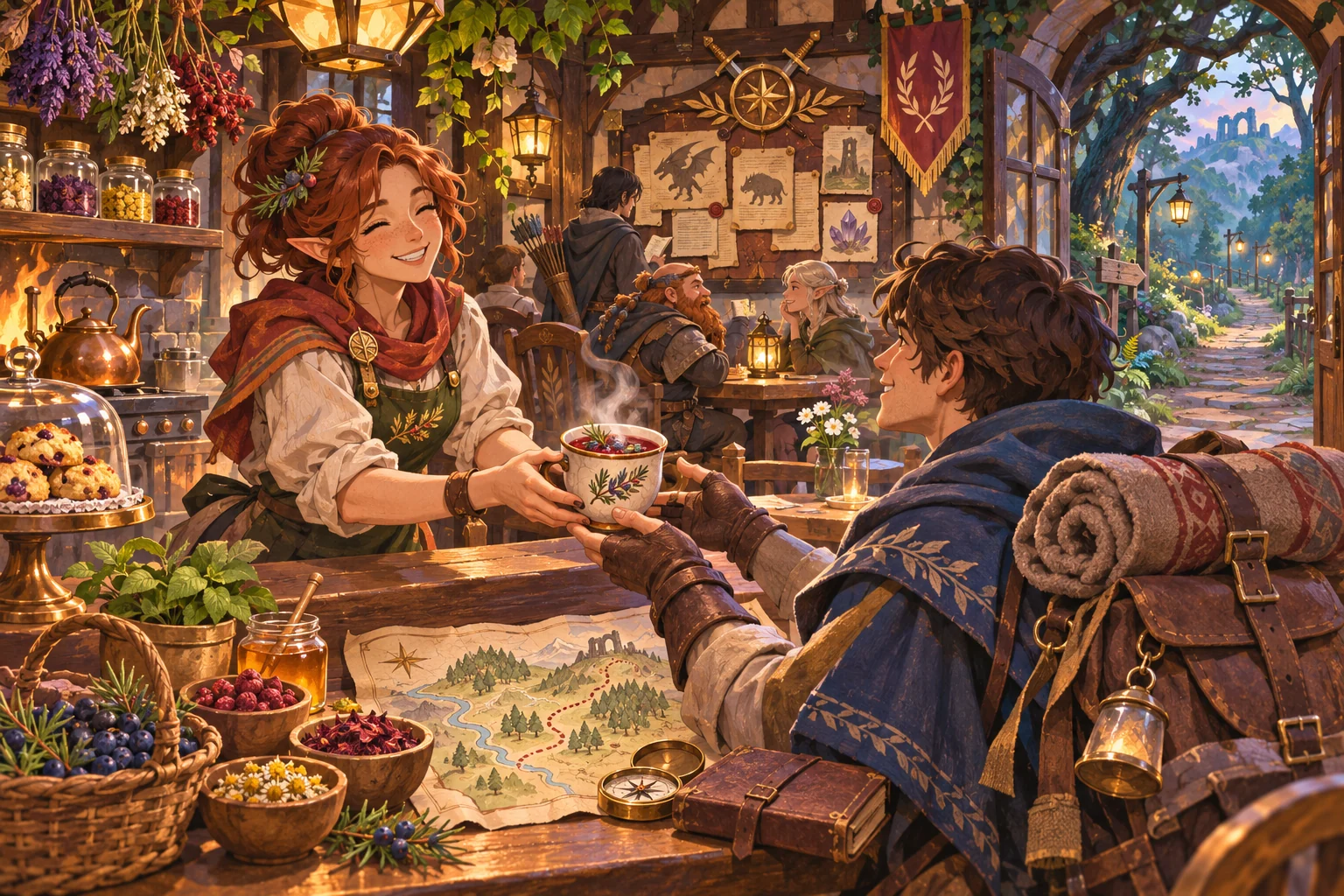
Give each worker a clear shift role. The barista prepares tea and serves orders; the runner restocks the store and packs the expedition shelf. With only one worker, the player must pause one station or accept a missed order. Keep customer patience visible and let a missed order reduce earnings, not erase previously earned supplies. This gives staffing a readable trade-off without turning a small prototype into a scheduling spreadsheet.
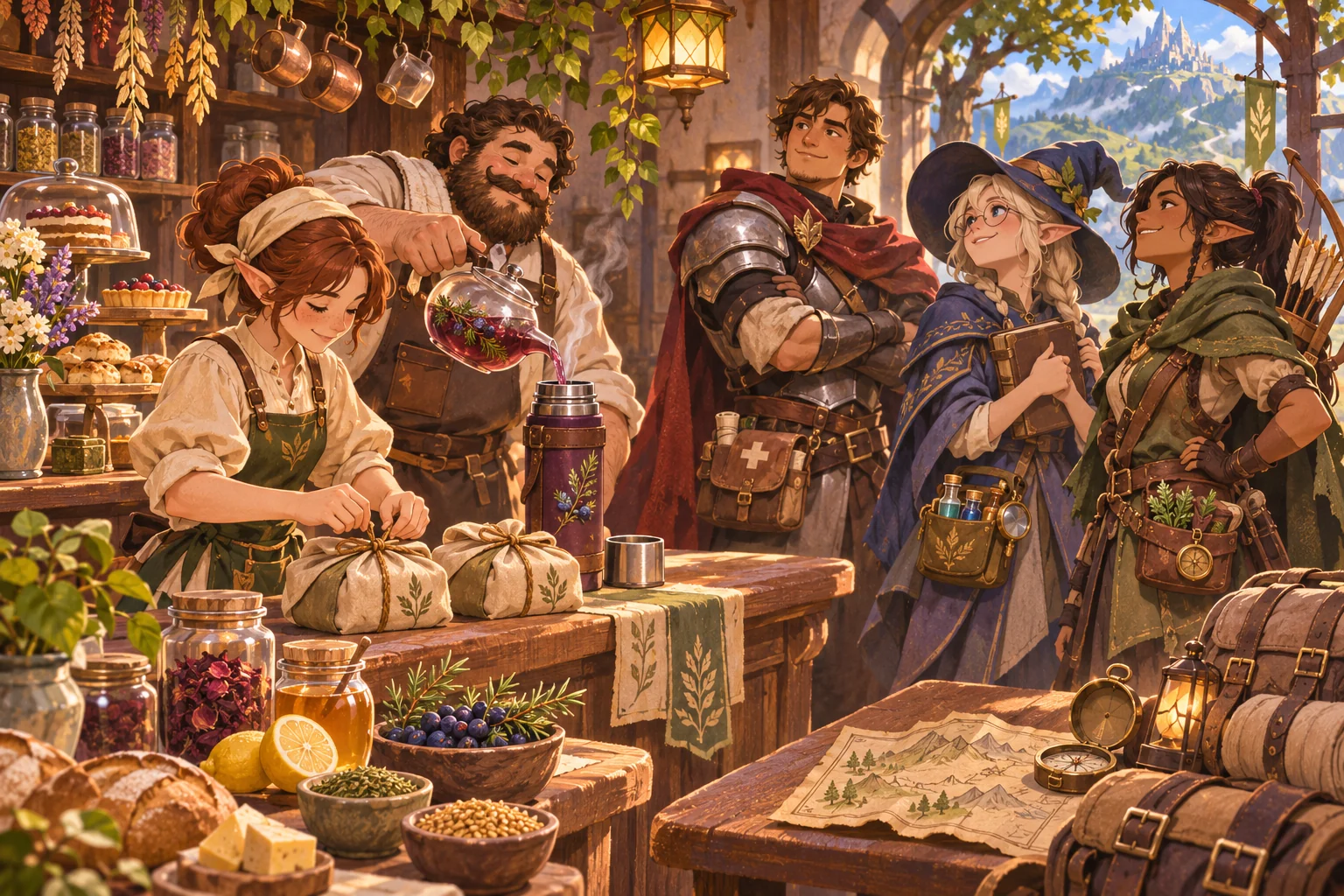
Before departure, the player chooses three party members, checks the route card and packs at most one flask. Route notes return with the party and unlock one new ingredient request for a later day. Put the departure board next to the counter so cafe performance, inventory and expedition readiness are visible in one glance. Avoid adding a separate guild menu that hides the link between service and preparation.
Test one cafe order against an otherwise identical expedition
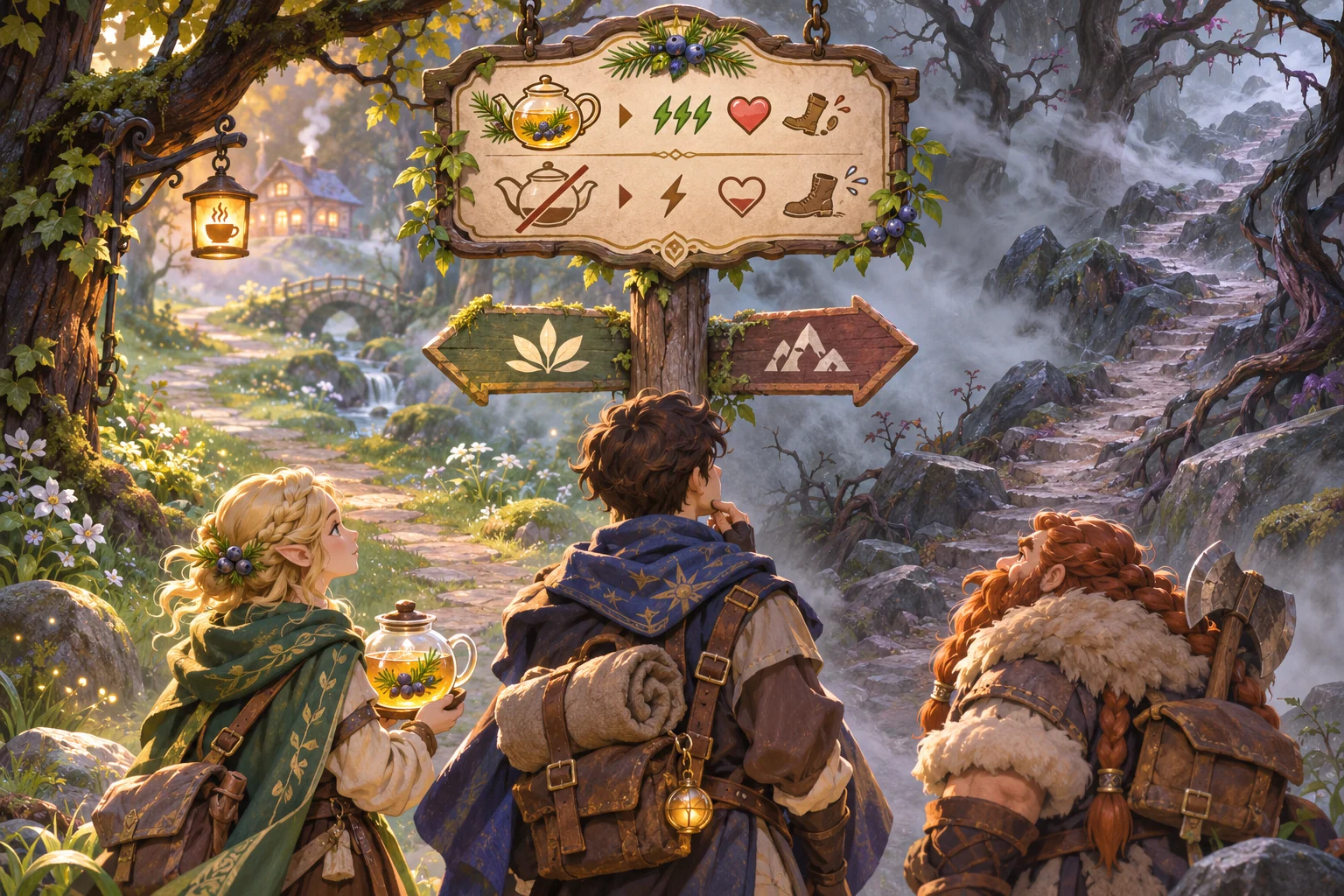
Use a short three-leg marsh route with one fixed party, map, seed and movement policy. Start each run at fatigue 0; each leg adds one fatigue, and reaching 3 forces a rest before the shrine. The tea flask cancels one fatigue on the muddy second leg. In the first run, the cafe serves fewer than three correct tea orders, so the party leaves without a flask: fatigue reaches 3 on leg three and the shrine visit moves to day two.
Reset the same party and route, then serve the three tea orders and pack the earned flask. Use it on the muddy leg; fatigue ends at 2, below the rest threshold, and the party reaches the shrine on day one. Record order count, stock consumed, flask packed, fatigue per leg and arrival day. This small paper-simulated replay changes only the cafe-earned supply. If the result feels automatic, raise ingredient cost or offer a competing store sale before adding more recipes.
Prompt a small cafe-to-adventure prototype
Build the shared ledger and one complete day before expanding. Confirm that selling ingredients, preparing recipes and packing the party all subtract from the same stock, then replay the route with and without the earned flask. Add another menu item only when it creates a distinct supply choice.
Create a compact cafe management game that is also the party's adventure hub. Use one shared inventory for dried berries, oat flour, coins and rations. The cafe menu has juniper tea and oat buns; three correctly served tea orders during the morning shift earn one flask, consuming the same berries shown on the store shelf. The player assigns a barista and a runner, manages customer patience, chooses a three-member party and packs at most one flask before a fixed three-leg marsh route. Each route leg adds one fatigue; fatigue 3 forces a rest before the shrine, while the flask cancels one fatigue on the muddy second leg. Add a reset and compare the same party, map, seed and movement choices with the flask absent versus packed. Log orders, stock changes, fatigue by leg and arrival day. Keep the cafe counter, store shelf and departure board in one readable hub.
SEELE's free AI Game Maker describes generating a playable first version from a text prompt, testing it in a browser and refining it with follow-up prompts. Use that general workflow to inspect the shared inventory and matched route replay; the cafe rules here are a fictional prototype design.
Build the cafe-and-expedition prototype in SEELE
Frequently asked questions
How can a cafe management game work as an adventure hub?
Connect customer service to supplies the party can actually pack. For example, three correctly served juniper tea orders earn one flask, while the cafe and store draw berries from the same inventory. The departure board then uses that stock when preparing a route.
How do I keep cafe and store inventory consistent?
Use one shared ledger for ingredients, finished recipes and travel goods. Every sale, recipe and packed item should add or subtract a visible quantity from that ledger. Do not create a second copy of an ingredient when the player opens the store or adventure screen.
What should I measure in the first cafe-to-expedition test?
Keep the party, route, map seed and movement choices fixed, then compare a run with and without a cafe-earned supply. Record orders, stock consumed, item packed, fatigue by route leg and arrival time. If nothing changes, make the supply effect or service requirement more actionable.