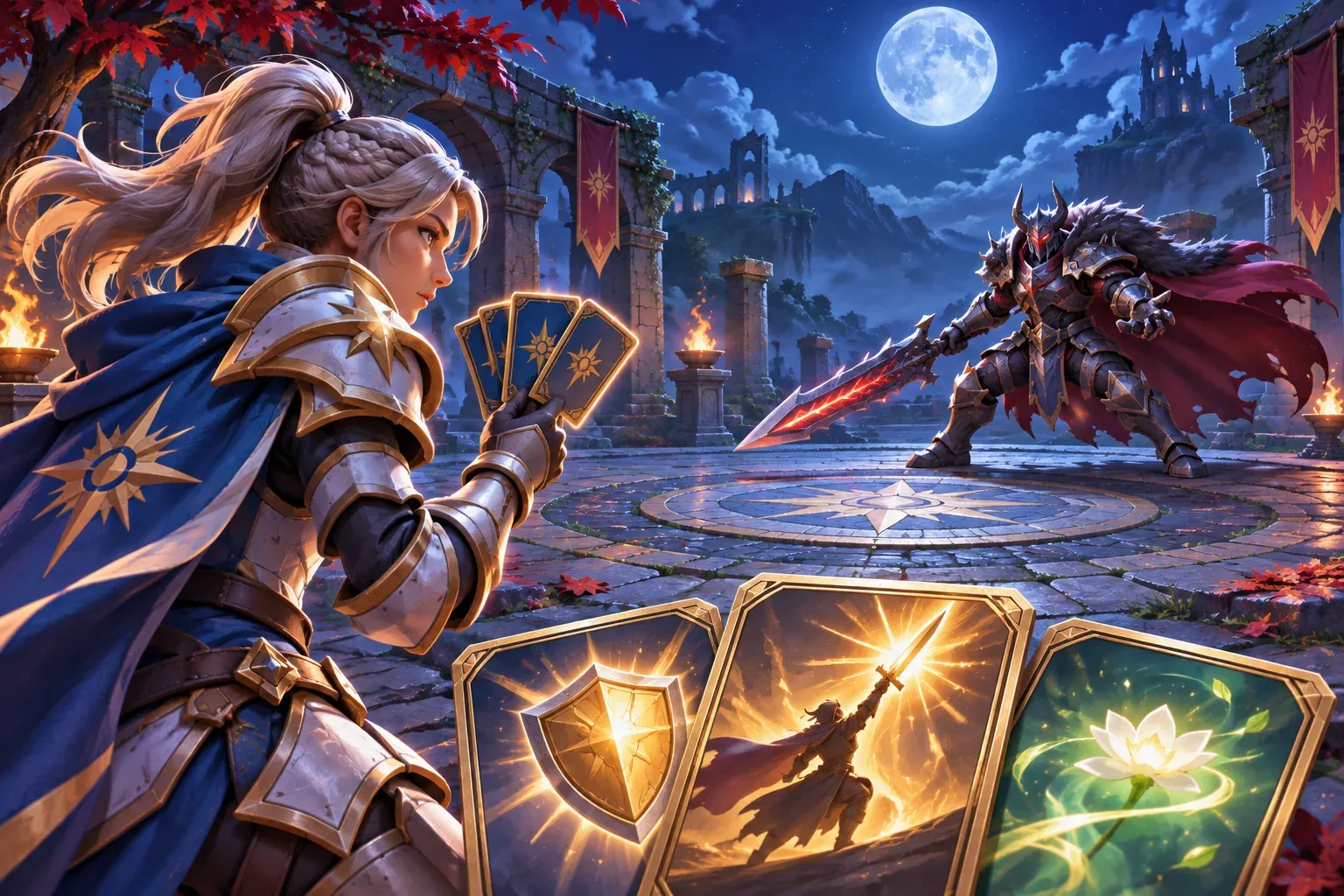
On the road to Bracken Keep, a 12-card deck is made mostly of ingredients: emberroot, iron mushroom and blue sage. Each ingredient can be played alone for a small effect or held with a second ingredient to craft a role recipe. The same emberroot-and-mushroom pair becomes Iron Broth for a Guardian, Smoke Wrap for a Scout or Cinder Tonic for an Arcanist.
That makes the deck a pantry and a combat hand at once. Spending an ingredient now may prevent a stronger recipe later, while the active role changes what a pair can do. Start with three ingredients, three role recipes and one enemy intent. Replay the same hand against the same attack, comparing two basic plays with a crafted recipe.
Build the deck around ingredients with useful single-card effects
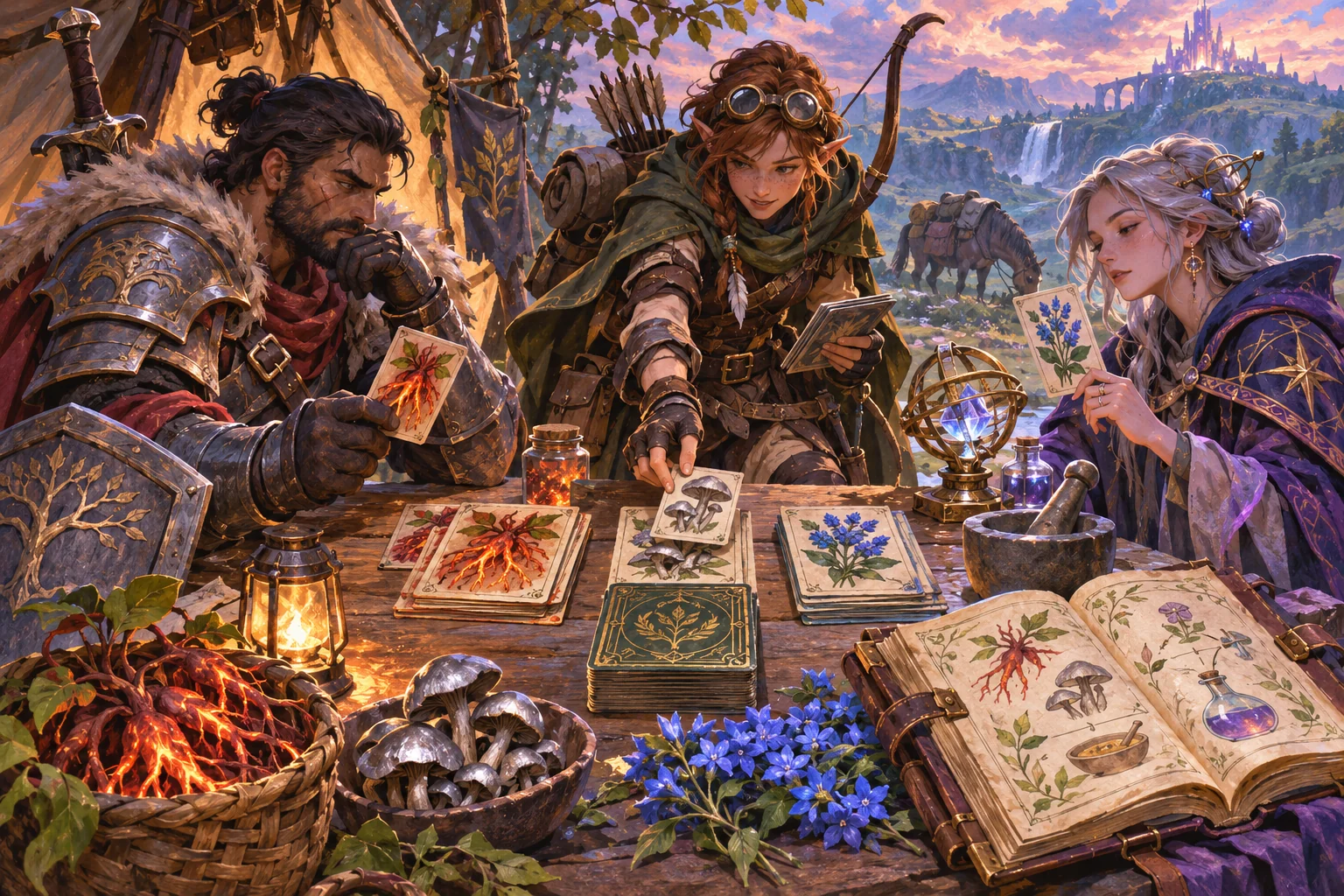
Use a 12-card starter deck with four emberroot, four iron mushrooms and four blue sage. Played alone, emberroot deals 1 damage, iron mushroom grants 1 guard and blue sage draws one card then discards one. Ingredient cards are not dead pieces: every card has a modest immediate use and can also become a recipe input.
When two ingredients are in hand, the player may spend both to craft the active role's matching recipe. The recipe resolves immediately and does not enter the discard pile. Show available pairs, the role result and the ingredients being consumed before confirmation. Keep the opening recipe matrix small so players can plan around the next enemy intent.
Let character roles change what the same ingredients create
For emberroot plus iron mushroom, the Guardian crafts Iron Broth for 6 guard, the Scout crafts Smoke Wrap to evade the next hit and draw one card, and the Arcanist crafts Cinder Tonic to deal 3 burn damage over the next two turns. All three recipes consume the same pair, but answer different combat needs.
Place the recipe book beside the character card and enemy intent. The Guardian can absorb a large announced strike; the Scout can avoid it while replacing a card; the Arcanist can race a low-health enemy. Avoid giving every role the same recipe with a different name. Role identity should change the tactical value of the ingredient pair.
Test a crafted recipe against the same enemy intent
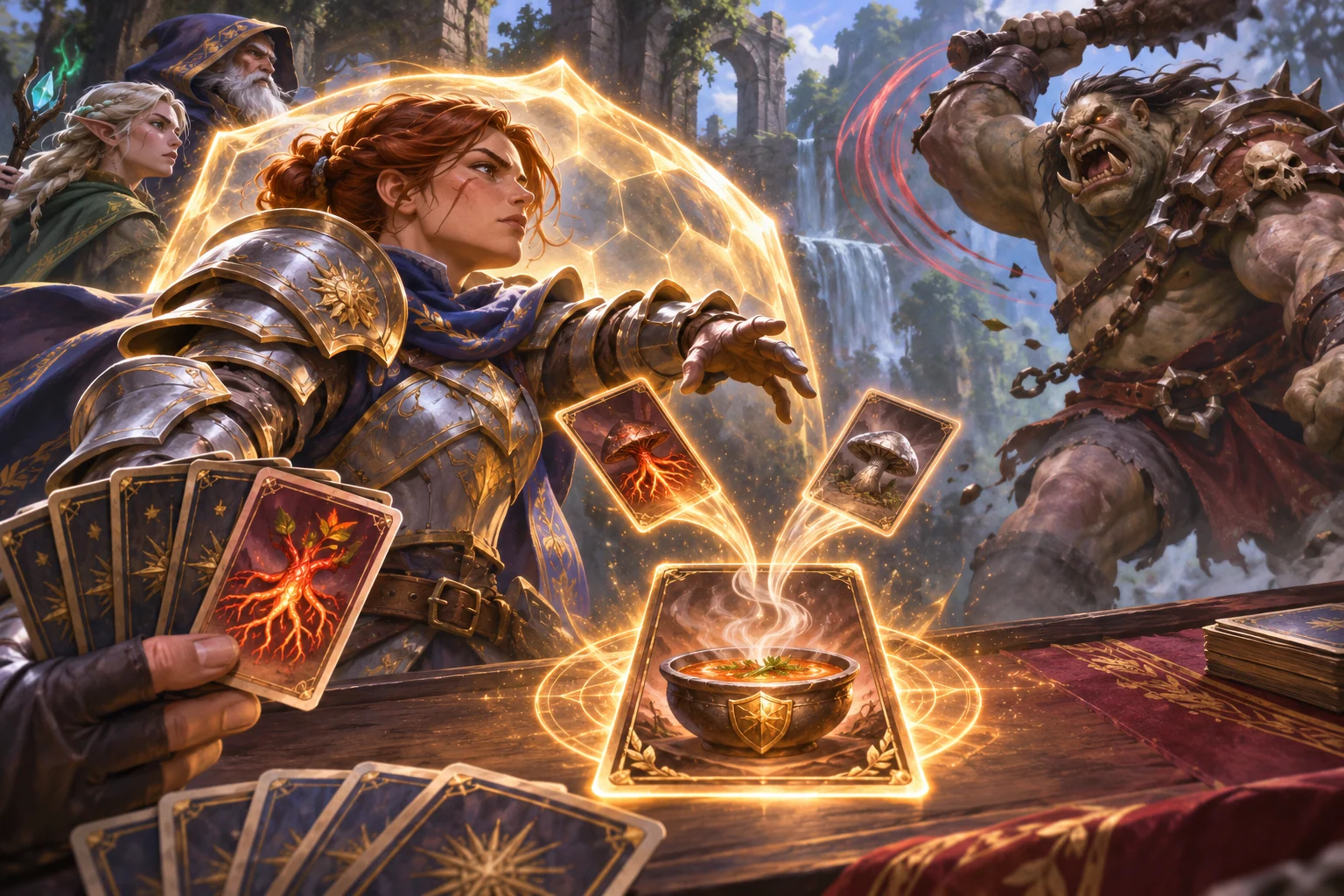
Fix a three-turn encounter with one ogre that announces a 6-damage strike on turn one. Start with the same hand: emberroot and iron mushroom plus three other cards. In the basic-play baseline, emberroot deals 1 and iron mushroom grants 1 guard; the ogre's strike lands for 5 damage after guard.
Reset the same encounter as Guardian and craft Iron Broth from the pair. Its 6 guard absorbs the announced strike, so the player takes 0 damage; both ingredient cards are spent and the other three cards remain. This paper-simulated iteration changes the pair's use, not enemy intent or hand. Record incoming damage, recipe value, cards spent and next-turn hand. If crafting is always correct, increase the value of playing ingredients alone or add a later enemy intent that rewards saving them.
Prompt a small ingredient-deck RPG prototype
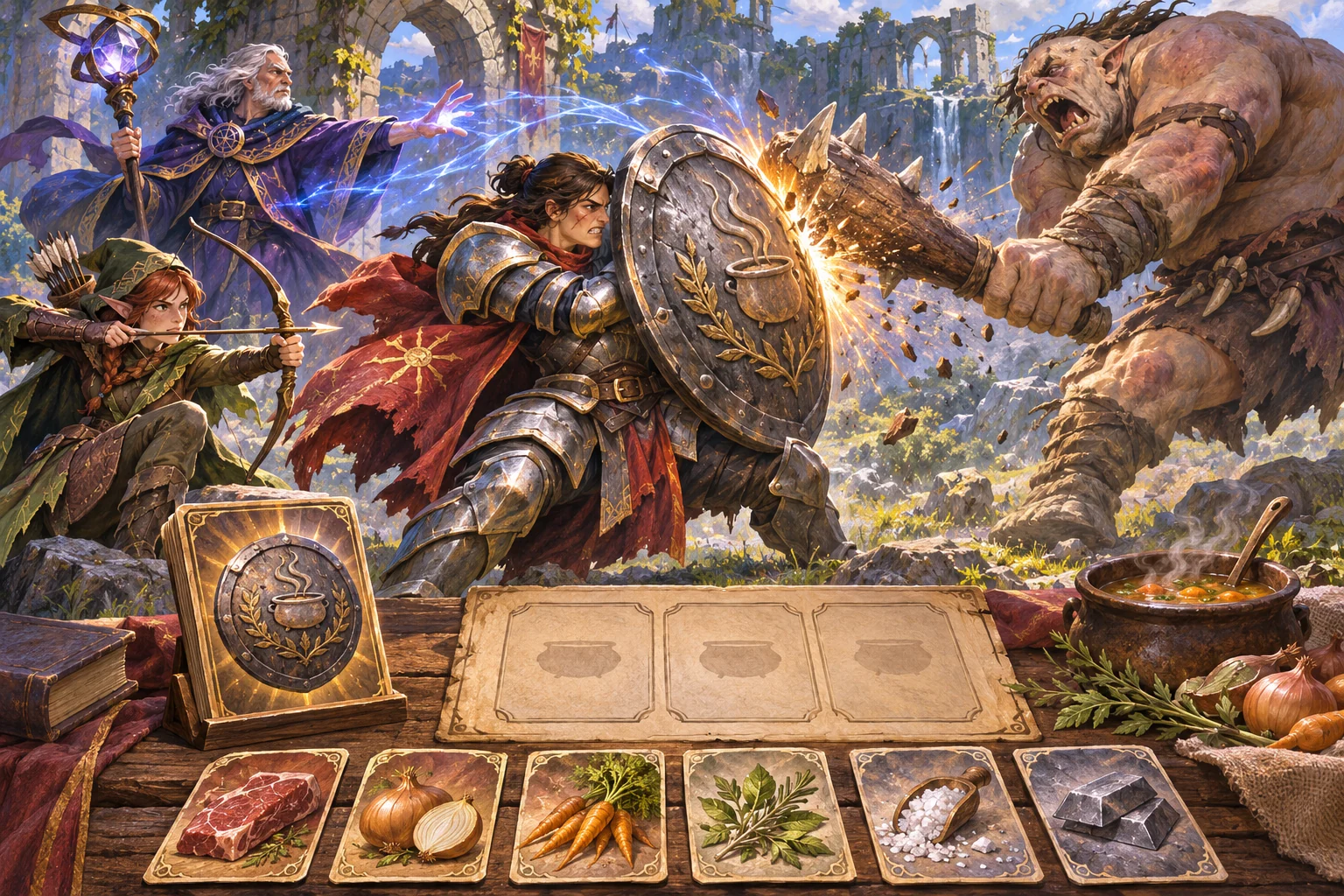
Implement the ingredient hand, role recipe lookup and enemy intent before adding more cards. Make spending visible and keep the same ingredient pair available in a reset encounter so role recipes can be compared fairly.
Create a compact card-battling RPG with a 12-card ingredient deck: four emberroot, four iron mushrooms and four blue sage. Played alone, emberroot deals 1 damage, iron mushroom grants 1 guard, and blue sage draws one then discards one. Combining two ingredient cards consumes both and immediately resolves a recipe based on the active role: Guardian + emberroot + iron mushroom = Iron Broth for 6 guard; Scout = Smoke Wrap to evade the next hit and draw one; Arcanist = Cinder Tonic for 3 burn damage over two turns. Show an ogre intent for a 6-damage strike. Add reset and compare playing the two ingredients separately versus crafting, with the same hand and enemy intent. Log cards spent, damage, guard, recipe and next hand.
SEELE's official AI Game Maker page describes creating a playable first version from a prompt, testing it in a browser and refining it with follow-up prompts. Use that general workflow to inspect ingredient spending and role recipes; the RPG rules here are fictional design guidance.
Build the ingredient-deck RPG in SEELE
Frequently asked questions
How do crafting ingredients work in a card-battling RPG deck?
Give each ingredient a useful single-card effect and let pairs become recipe inputs. For example, emberroot can deal 1 damage alone, while emberroot plus iron mushroom can create a stronger recipe based on the active character role. Keep each recipe cost visible during play.
How do I make ingredient decks feel different by character role?
Keep the ingredient pair consistent but change its recipe result by role. A Guardian might gain guard, a Scout evade and draw, and an Arcanist deal burn damage. The role should change the tactical choice, not just the recipe name.
What should I measure in the first crafting-card test?
Fix the hand and enemy intent, then compare playing ingredients separately with crafting them. Record cards spent, incoming damage, guard, recipe value and the next hand. Adjust basic effects if crafting is always the best move. Repeat the same setup across several encounters.