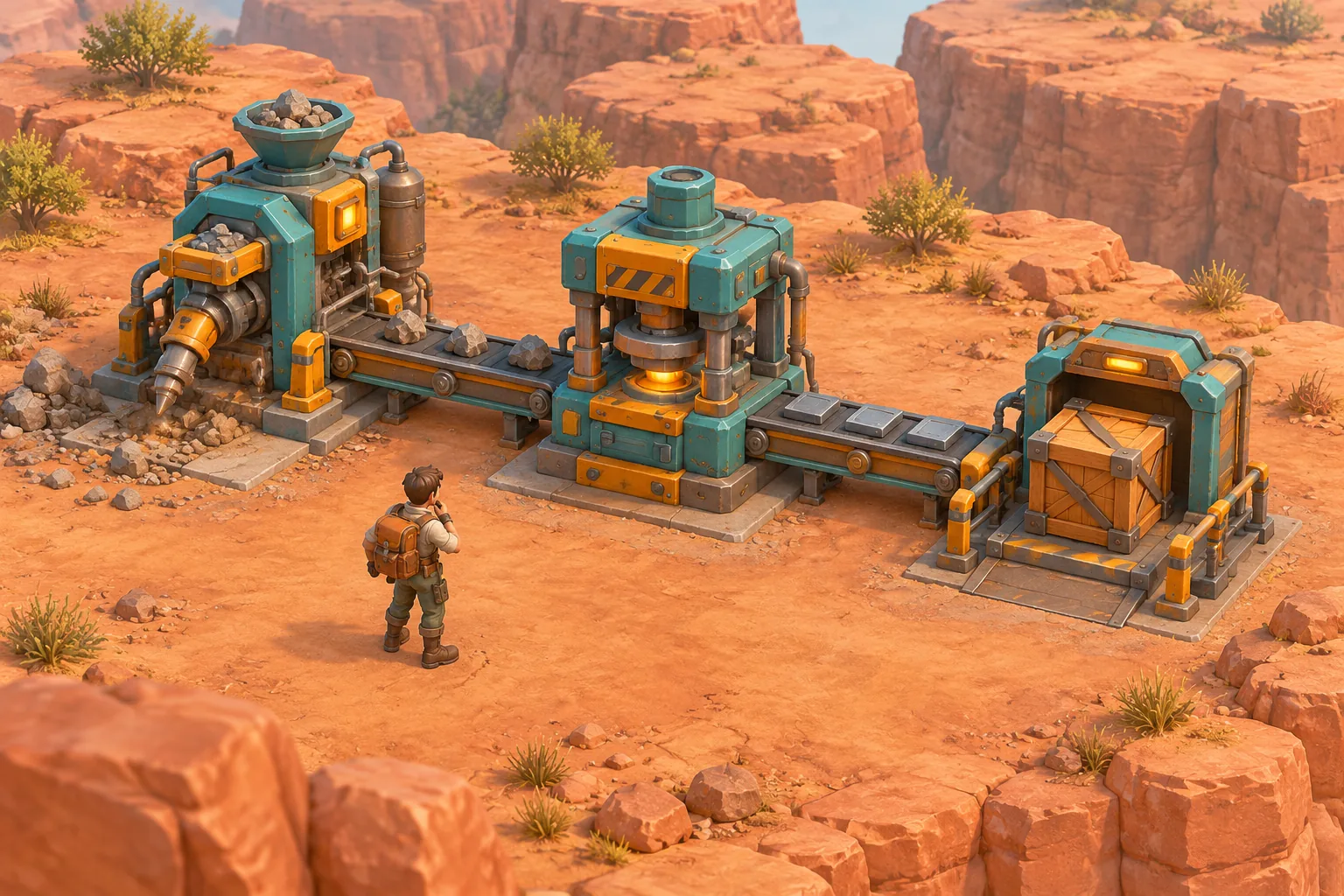
In the Cloud Foundry, a crystal mine, smelter and assembly shop sit on three islands that drift apart and together. A cable pod carries ore only when two dock beacons align. The mine produces two ore per tick, the pod holds three, and its buffer holds six. The smelter needs three ore for two alloy; the assembly shop needs two alloy for one gear.
That timing turns transport into part of the factory plan. A full buffer can stop extraction, while an empty smelter starves the assembly line. Start with one drifting link and a six-tick schedule. Compare a phase-blind dispatch pulse with one that watches the dock window, then trace delivered ore through the production chain.
Model island alignment as a transport window
Give the mine-to-smelter link a repeating six-tick cycle. Its docks align on ticks 2, 4 and 6; a cargo pod can launch only during an open window and carries up to three ore. The mine makes two ore each tick and stores at most six in its buffer. Show the next alignment, pod capacity and buffer level on the same network card.
When the buffer reaches six, pause extraction rather than deleting ore. A blocked launch should explain whether the dock is closed, the pod is full or the downstream buffer is occupied. The player can then adjust the dispatch phase or add a relay island, instead of guessing why production stopped.

Let transport timing shape the production chain
The smelter converts each three ore into two alloy, and the assembly shop turns each two alloy into one gear. Keep recipes visible beside the island graph. A relay buffer can hold six ore, while the smelter buffer holds two alloy; these capacities reveal whether the next bottleneck is mining, transport or processing.
Use one route per pod and a small dispatch schedule before adding branching networks. The player can choose which island receives a limited shipment, but production should not teleport between islands. Show inventory changes at departure and arrival so throughput can be traced across the whole chain.

Compare a phase-blind schedule with dock-aware dispatch
Fix six ticks of mine output at two ore per tick, a three-ore pod, a six-ore buffer and docks open on even ticks. A phase-blind controller tries only on ticks 1, 3 and 5. All three attempts miss the window; the buffer reaches six by tick 3 and extraction pauses, so no ore reaches the smelter during this run.
Reset with the same production and dock cycle. A dock-aware controller launches three ore on ticks 2, 4 and 6. Nine ore arrive; the smelter makes six alloy and the assembly shop makes three gears. This paper-simulated replay changes only the dispatch phase. Record missed windows, buffer occupancy, ore delivered, alloy processed and finished gears. If timing dominates every other choice, add a second pod or a small relay buffer and replay.
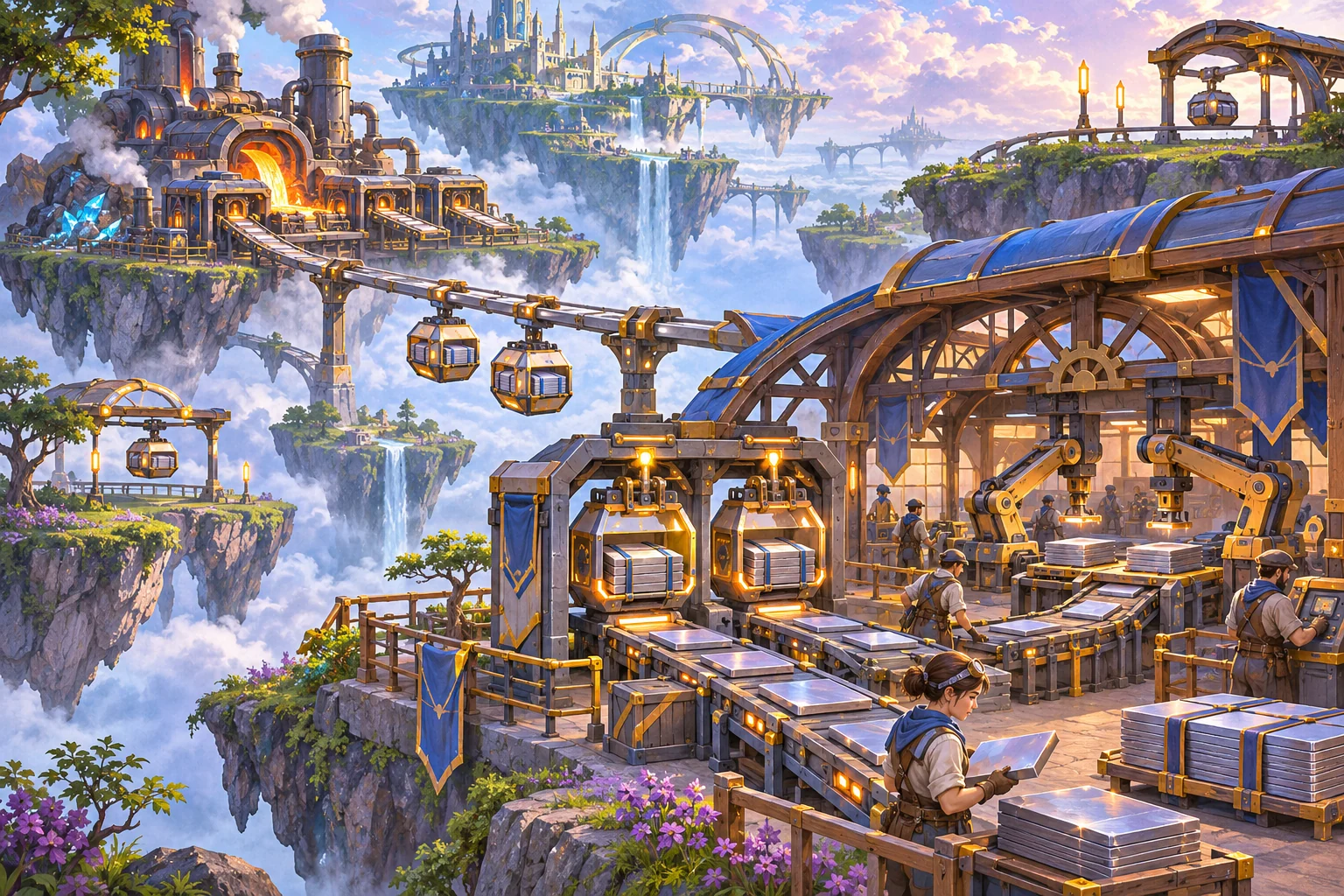
Prompt a small floating-island factory prototype
Build a mine, one cable route, a smelter and an assembly shop. Confirm that buffers fill, extraction pauses safely and recipes consume delivered goods before adding more islands or branching belts.
Create a compact factory automation game across three drifting islands: crystal mine, smelter and assembly shop. The mine produces 2 ore per tick; its buffer holds 6. Cable docks align on ticks 2, 4 and 6 of a repeating six-tick cycle, and a pod carries up to 3 ore. A smelter converts 3 ore into 2 alloy; assembly converts 2 alloy into 1 gear. Pause extraction safely when the buffer is full. Add reset and compare a phase-blind dispatch attempt on ticks 1, 3 and 5 with dock-aware launches on ticks 2, 4 and 6, using the same production cycle. Log missed windows, buffer levels, ore delivered, alloy and gears. Make the next dock window and pod capacity visible.
SEELE's official AI Game Maker page describes generating a playable first version from a text prompt, testing it in a browser and refining it with follow-up prompts. Use that general workflow to inspect dock timing, buffers and chain throughput; the island economy here is fictional design guidance.
Build the floating-island factory in SEELE
Frequently asked questions
How do transport windows work in a floating-island factory game?
Give each cable link a repeating alignment cycle and allow a pod to depart only when both docks are open. Show the next window, pod capacity and buffer level so players can plan production around the crossing. Add a clear schedule preview.
How can I prevent island factories from losing resources when a pod is delayed?
Use a visible bounded buffer and pause upstream extraction when it fills. Explain whether a launch missed alignment, a pod filled or a downstream buffer blocked delivery; do not silently delete stored goods. Pause extraction instead of discarding stock. until capacity returns.
What should the first throughput test measure?
Hold mine output, pod capacity, buffer size and dock cycle fixed, then compare dispatch schedules. Record missed windows, ore delivered, processed alloy and finished goods to locate the bottleneck. Compare final output and idle time for each station. to spot bottlenecks.