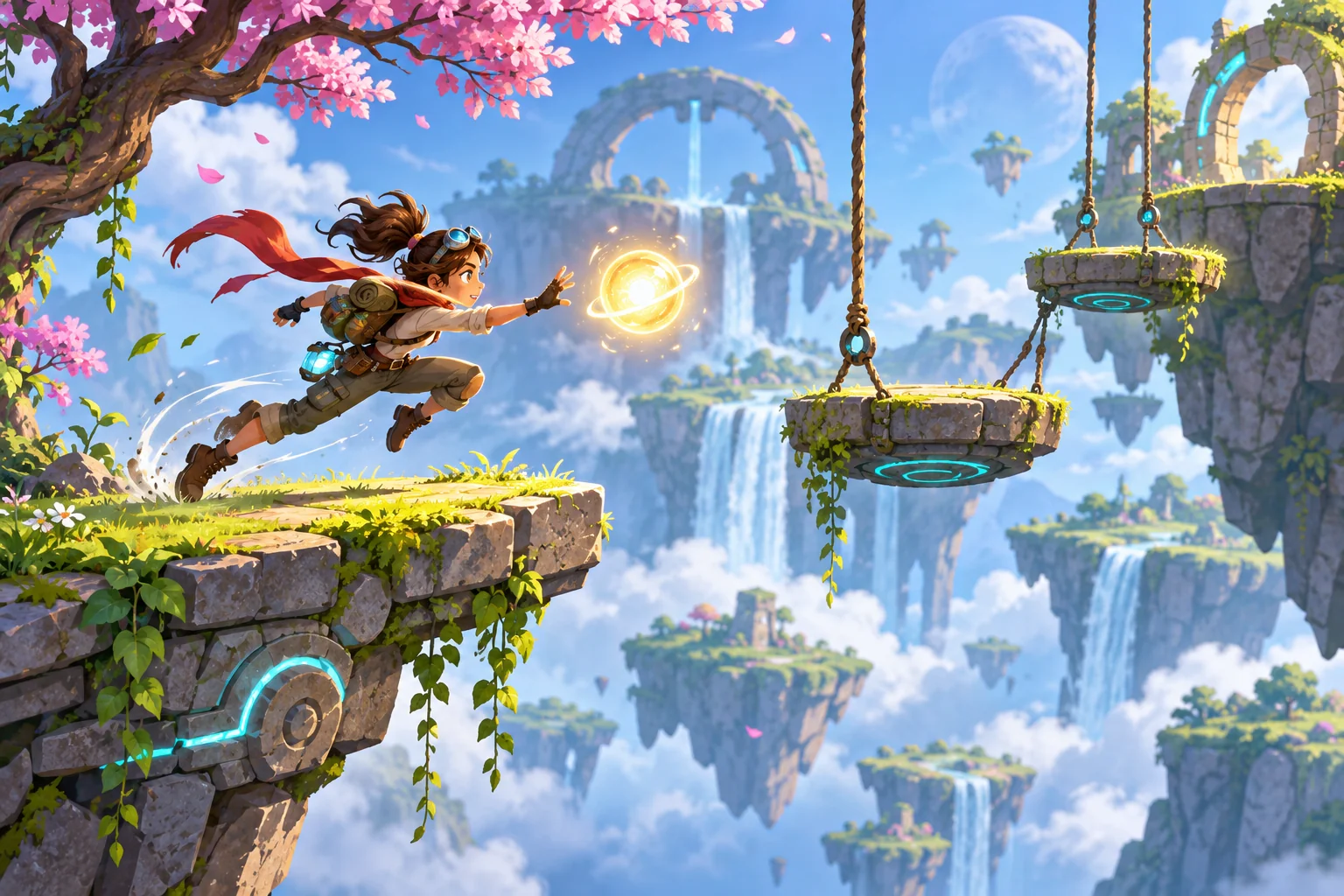
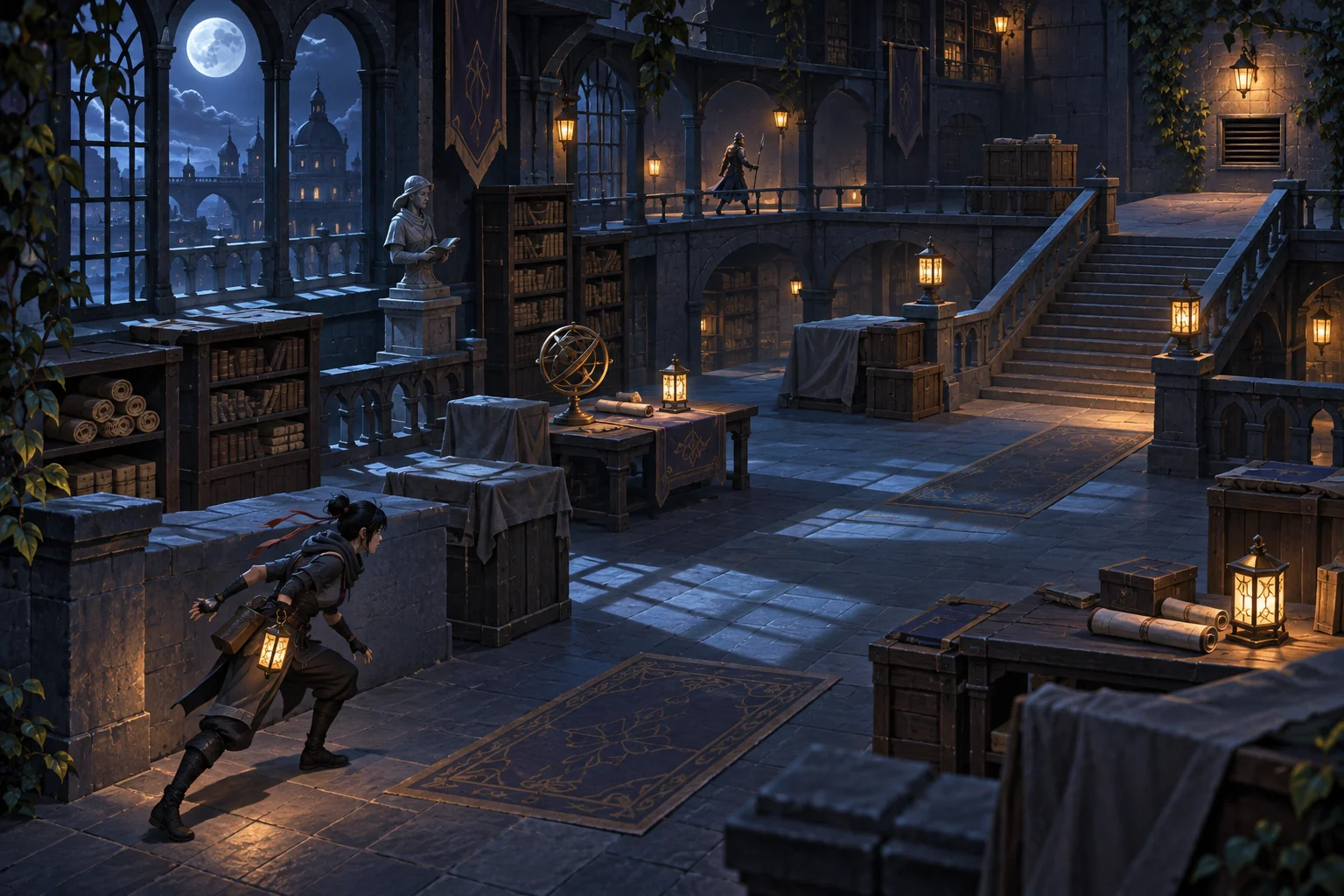
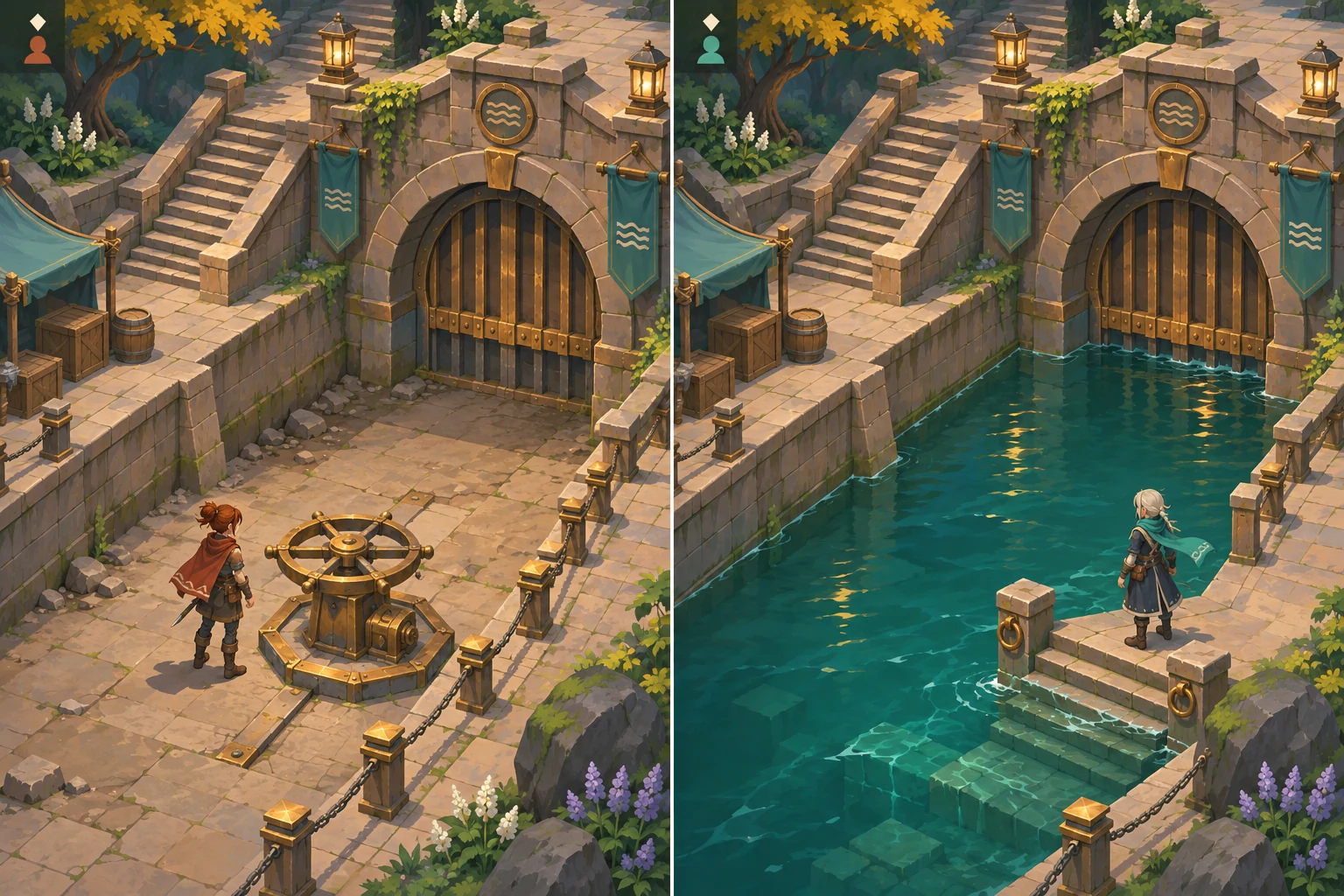
In the fictional Skyrail Ruins, two heroes share one energy meter. Collecting a spark adds one energy, up to three. Dash spends two energy to cross a three-tile gap; Climber spends one to wall-run two tiles. Switching heroes preserves the shared balance, so players can chain the abilities after collecting enough energy. The local test compares a spark-powered route with a control that skips pickups. Heroes, values, and stage are fictional.
Define the shared meter and movement costs
Start with one energy and cap the shared meter at three. A spark adds one. Dash uses two energy to clear a three-tile gap; Climber uses one to wall-run two tiles. Show each cost beside the ability and update the same meter whichever hero is active, so switching cannot duplicate or refill energy.
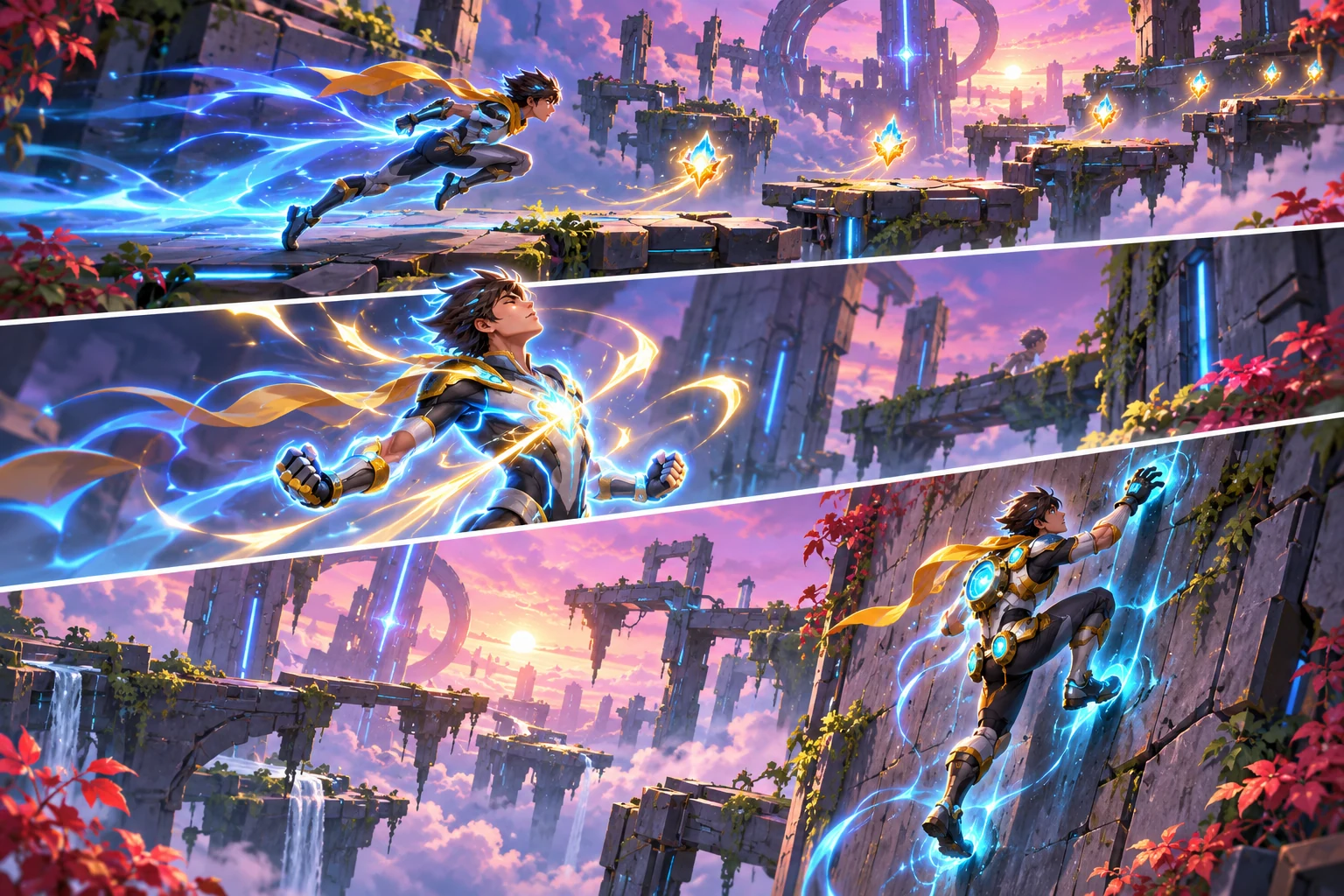
Place two sparks before a gap and a climbable wall. The route requires collecting both sparks, switching to Dash to cross, then switching to Climber for the wall-run. That sequence uses the shared balance deliberately: pickups fund movement and character choice determines which obstacle can be passed.
Switch heroes without resetting energy
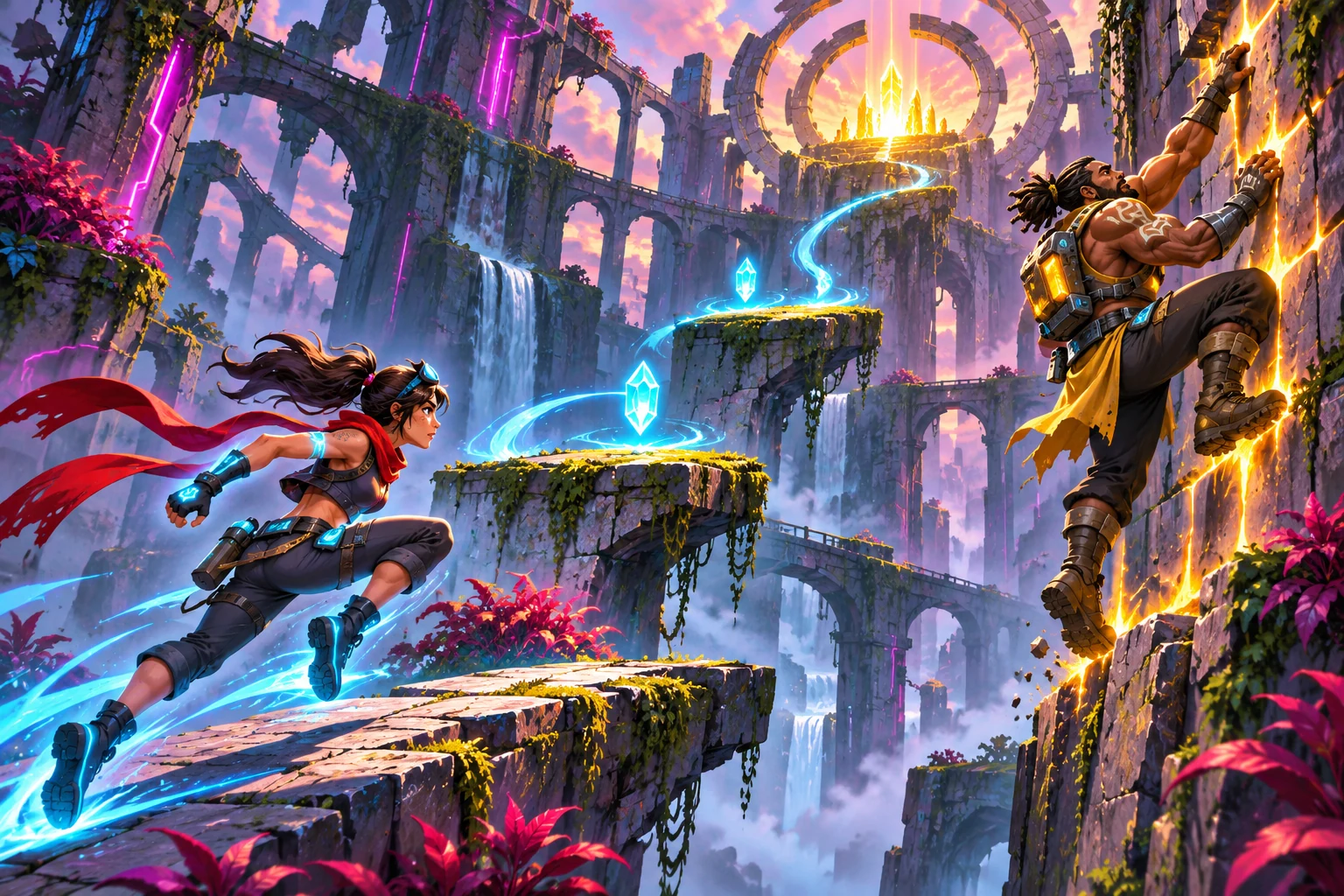
Keep switching immediate, but preserve energy, position, and obstacle state. When Dash crosses the gap for two energy, one remains. Switch to Climber and spend that last point on the wall-run. Make the active hero visible and disable an ability when its cost exceeds the meter.
Use complementary abilities instead of giving both heroes the same movement. Dash is the only one who crosses the wide gap; Climber is the only one who can scale the marked wall. The route then asks players to collect, switch, and spend in a readable order rather than button-mash through every obstacle.
Compare the powered route with a no-pickup control
In the powered run, start at one energy, collect two sparks to reach three, spend two on Dash, then switch and spend one on Climber. The party reaches the goal with zero energy. Log pickup count, active hero, each cost, and the meter after every action.
For the control, keep the stage and starting energy the same but skip the sparks. Dash has only one energy and cannot cross the gap; switching to Climber does not restore the shared meter. The goal remains unreachable until energy is collected. This fictional fixture tests only meter and movement rules.

Ask an AI game maker to prototype energy-powered character switching
Create an action platformer called Skyrail Ruins with two switchable heroes sharing one energy meter capped at 3. Start at 1. Sparks add 1. Dash spends 2 to cross a 3-tile gap. Climber spends 1 to wall-run 2 tiles. Switching preserves energy and position. Place two sparks before the route; require Dash across the gap then Climber up the wall. Show active hero and energy costs.
Test a powered run: collect two sparks to reach 3 energy, Dash across the gap for 2, switch to Climber and wall-run for the last 1. In a control, skip pickups and verify Dash cannot cross with only 1 energy; switching must not refill the meter. Log costs and positions.
FAQ
How should a character-switching game use collected energy?
Use one shared meter and make every ability show its cost before activation. Pickups add energy, while switching changes the available movement without resetting the balance. This lets players plan a sequence, such as powering a dash and then a wall-run, instead of treating each character as a separate refillable resource.
How do I balance different movement abilities?
Give each hero a clear obstacle role and test the route with the same energy budget. One can cross a wide gap while another climbs a marked wall. Keep the costs visible, limit meter capacity, and ensure switching changes the available action without duplicating energy or bypassing the obstacle rules.
What should I test in an energy-powered action prototype?
Check pickup values, meter caps, ability costs, switch behavior, and movement distance. Replay a route with the required pickups and with them skipped. Record the active hero, energy before and after each action, position, blocked moves, and whether the goal is reachable in both runs.