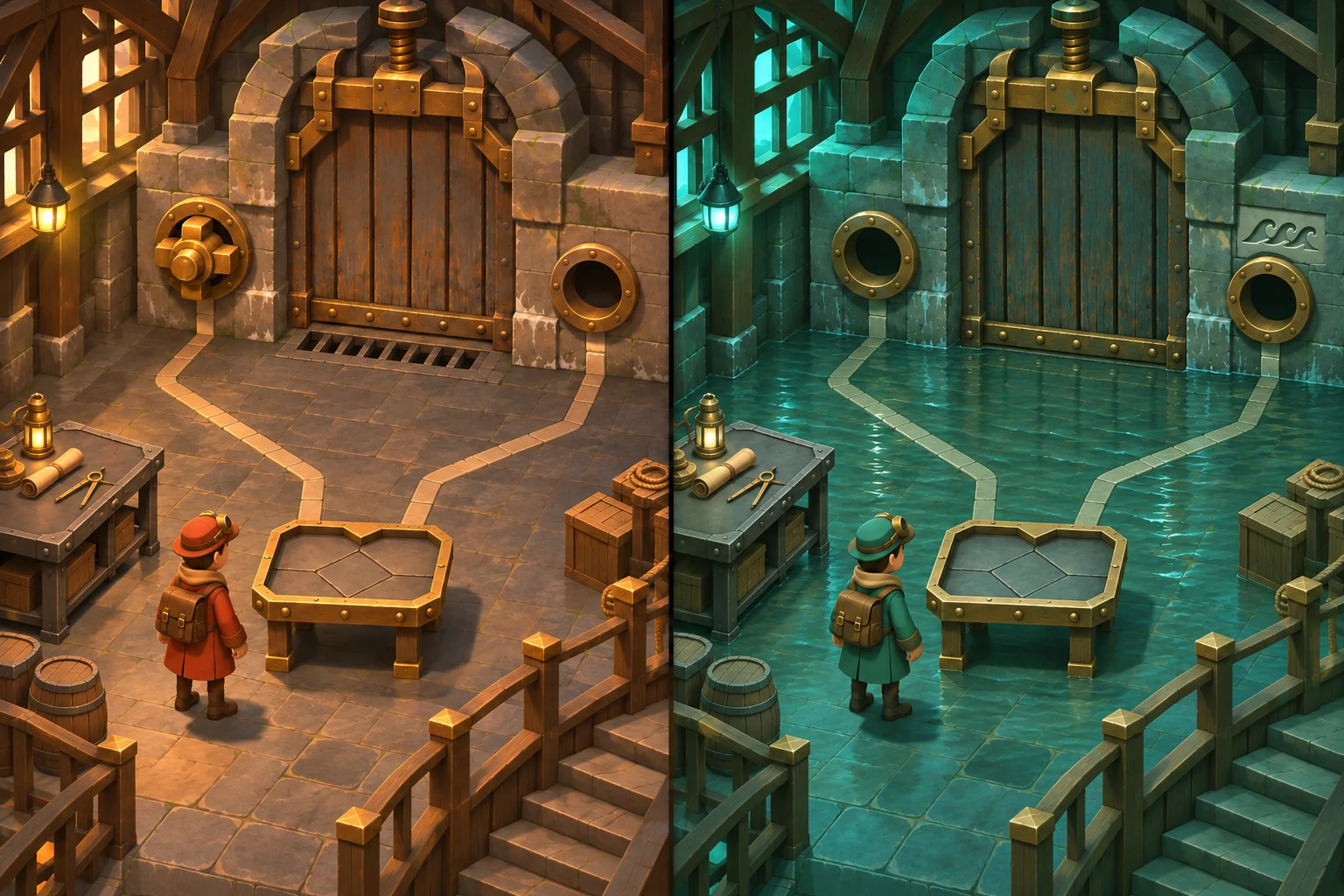
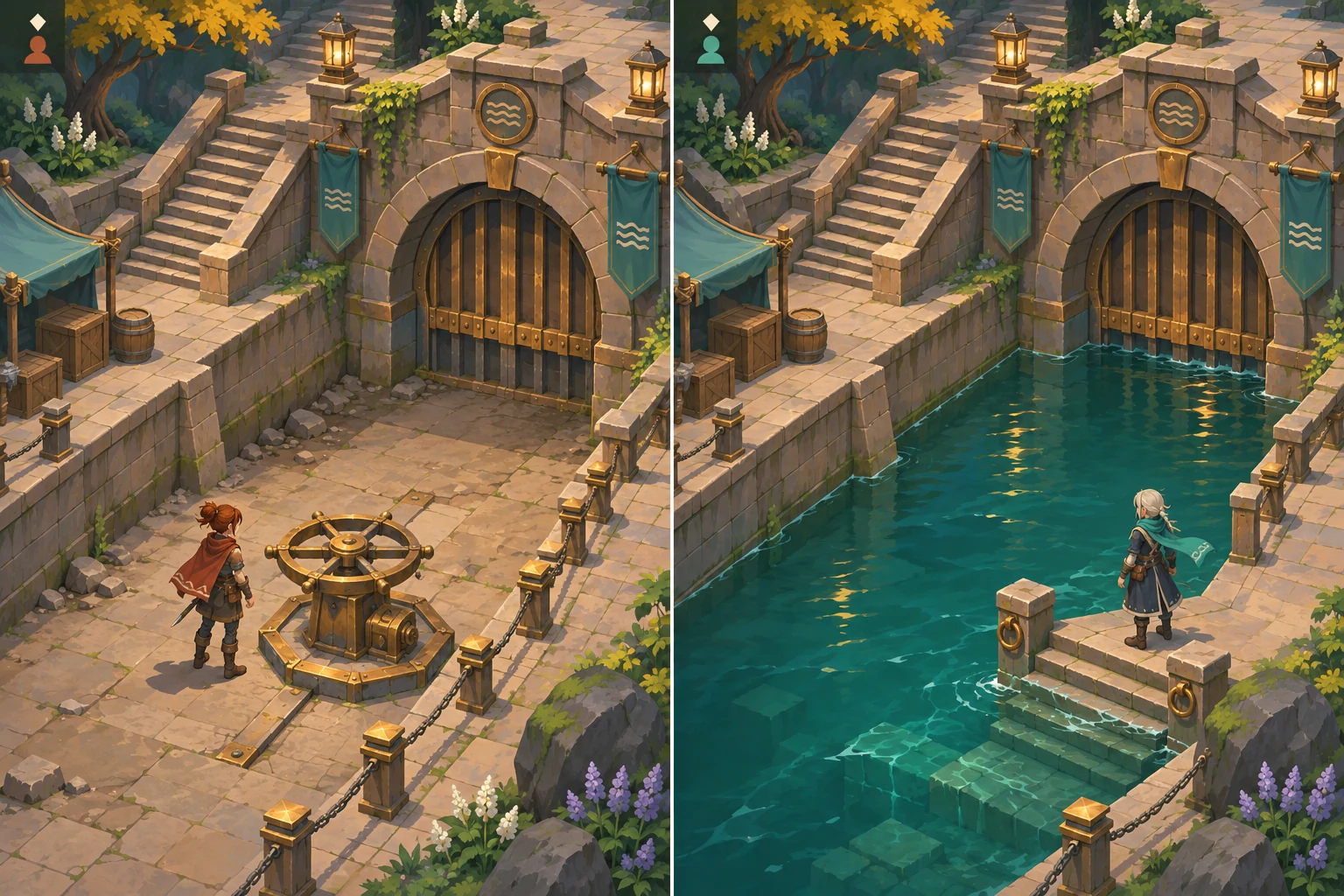
Make the two heroes depend on each other. In the fictional Bellwater district, Wren can release the sluice brake in the dry world. Only Iona can cross the changed current in the flooded world. That difference gives you a first room to prototype before you add a second neighborhood.
Build one room on both sides of the sluice
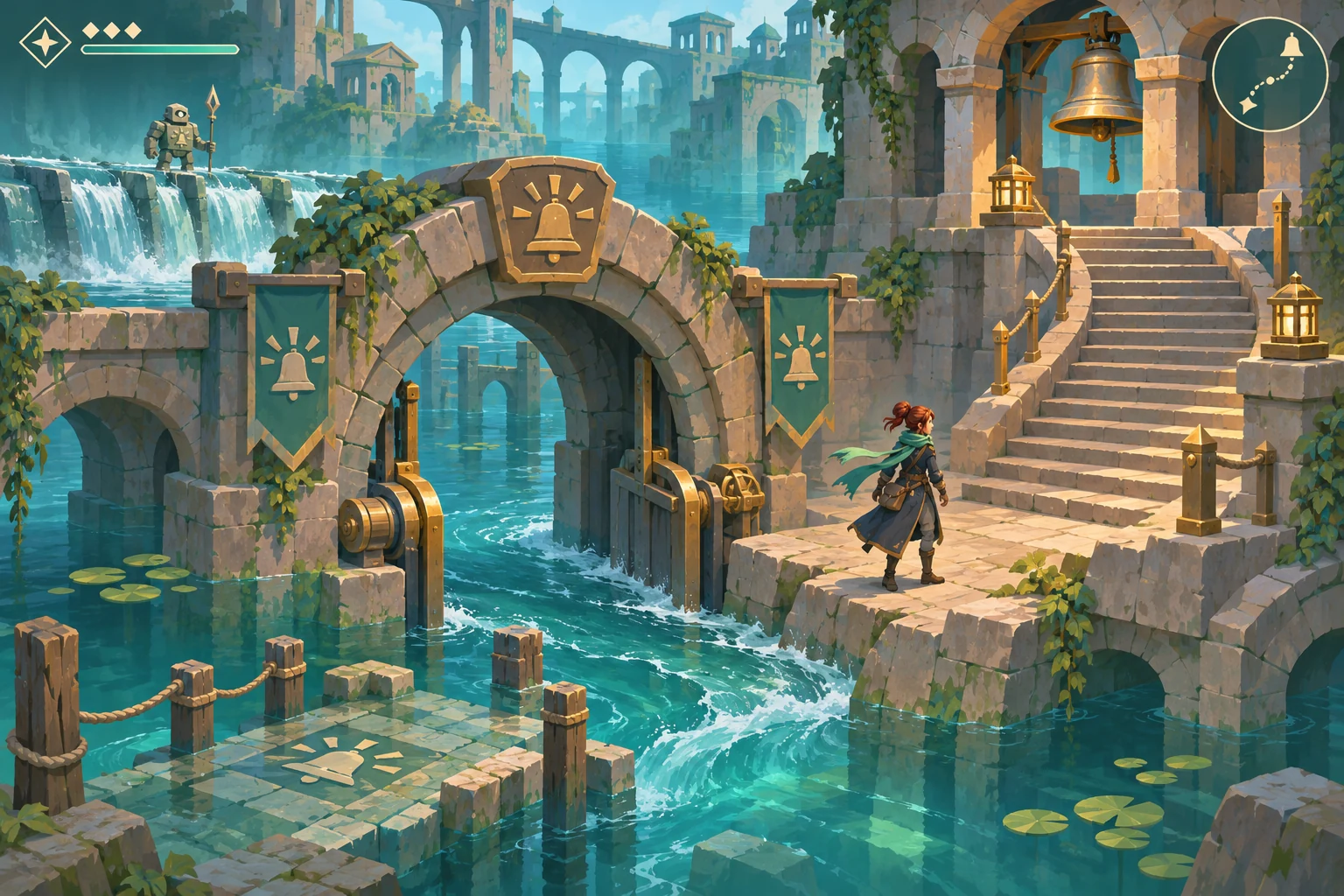
Use the same stair, circular arch and checkpoint marker in both versions. Wren takes the lower path through the drained canal and parries a guard to get to the brake. Iona starts on a half-submerged landing. Once the brake is released, the current opens a route to the spillway. She crosses, draws the stone sentinel onto the exposed ledge, dodges its lunge and rings the bell.
Keep the heroes' controls familiar. Both get move, attack and dodge. Give Wren a parry and Iona a dash across the changed current. After the bell, unlock a longer dash for an optional ledge. The room must work with her original dash, so the upgrade cannot hide a broken crossing.
Carry the brake state across the switch
Keep position, health and enemies local to each scene. Share just the brake flag and the cleared checkpoint. Show a lit lamp when Wren releases the brake, then let the checkpoint commit that change. Switch only there during the first prototype. On arrival, update the water and path before the player takes control.
If you build in Godot, an Autoload can hold values across scene changes. Save the committed checkpoint separately if it must survive closing the game. Make the destination marker point to a safe landing in both scenes. Copying coordinates directly can drop Iona into water when the two versions have different floor heights.
Retry the flooded side after a defeat
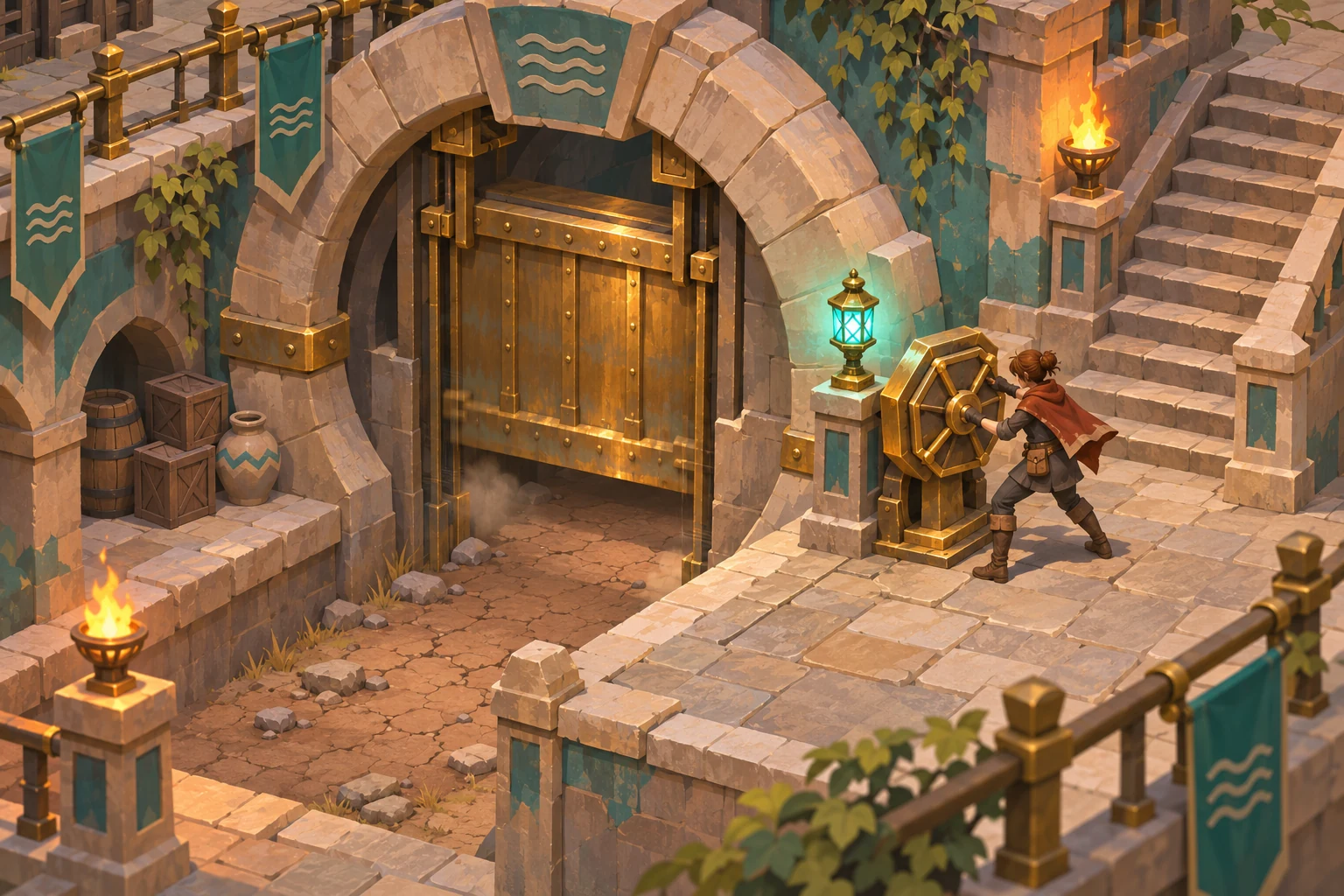
Run the same transition twice in a tiny state model. Open the brake, commit at the checkpoint, switch to Iona, then force a defeat. In the baseline test, retrying set the brake back to closed and the route disappeared. In the revised test, it restored the committed brake flag and respawned the sentinel. The local Python fixture passed four checks, including that an uncommitted brake release stays lost.
That result covers the rules in the fixture. In your playable build, put the same save point immediately before the crossing, then check whether the lamp, current and usable path agree after a retry. Ring the bell only after the sentinel is defeated. If the path looks open but collision still blocks it, fix the state update before tuning combat.
Give AI a one-room brief and a retry rule
Prototype one isometric action RPG room in two versions, dry Bellwater and flooded Bellwater. Add Wren with a parry and Iona with a dash. Place the same arch, stair and checkpoint in both versions. Wren can release the brake in the dry canal. Commit the flag at the checkpoint. On switching to Iona, open the spillway path if the flag is set. Add one sentinel and one bell. After defeat, respawn the local sentinel and restore the committed flag. Show the current and path before handing control back.
If the first build loses the route on retry, ask for one change to the reset. Restore the checkpoint's brake value before rebuilding the flooded room. Keep the encounter and both movement kits fixed for the retest.
FAQ
Should I let players switch heroes anywhere?
Start with a fixed checkpoint so both scenes have a known safe landing and an obvious place to commit the brake flag. Try wider switching once that version works. If you allow it during an attack, define how hit recovery and enemy timing behave on both sides.
Do both world versions need separate maps?
They can start from the same layout. Give each shared landmark a stable identifier and change just what the mechanic needs, such as water height, a traversable edge and enemy placement. Separate the collision state per version so a path never inherits the wrong floor.
What should I verify before adding another district?
Verify the first crossing is blocked before the brake and available after committing it. Then retry after defeat and confirm the route survives but the sentinel returns. Finally run the crossing with the starting dash so the optional movement upgrade never becomes a hidden requirement.