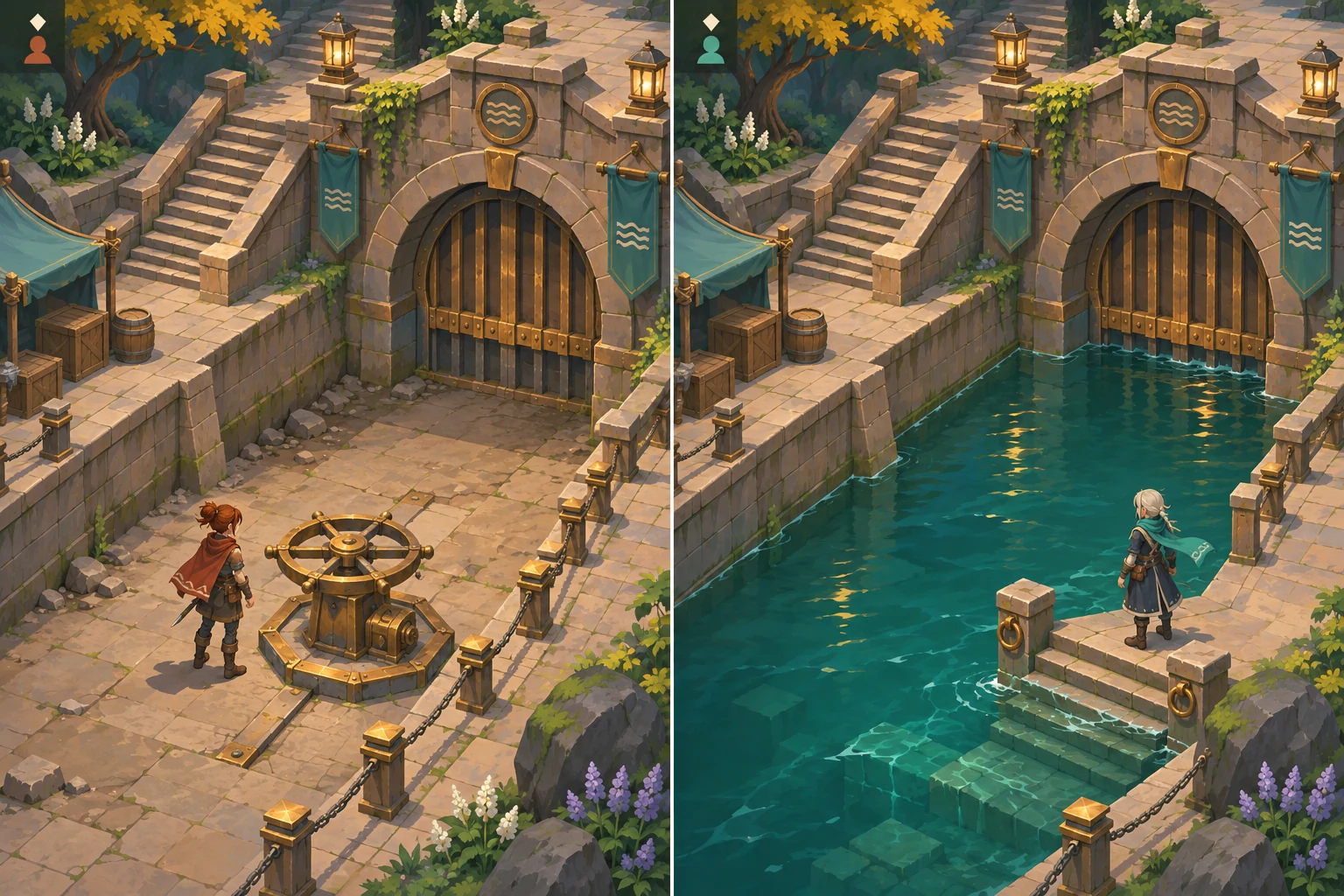
A turn-based RPG can make teamwork depend on what each character sees. Keep one shared map, but give each character a different terrain layer. A bridge may be solid for one hero and absent for the other. Their turns can reveal a route that neither could use alone.
Define a shared map and two character layers
Create a small map with a start tile, a rune switch, a stone bridge and a destination. Character A sees the stone bridge as walkable. Character B sees a spectral stepping path on different tiles. Store the shared turn number and each character’s position separately.
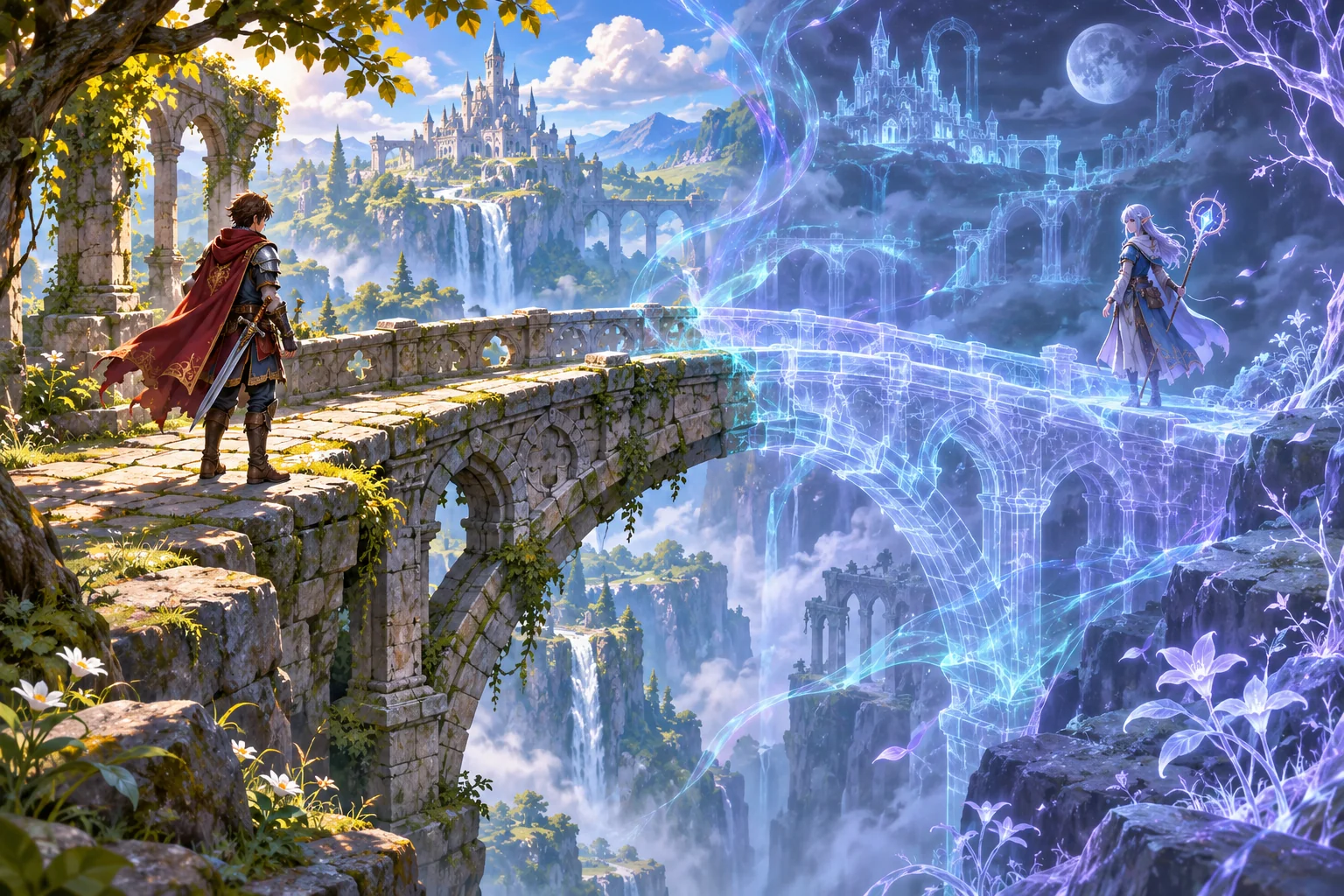
Show each character’s current layer before movement. Do not move the bridge globally when switching characters; the map coordinate stays shared while visibility and walkability depend on the active character.
Make movement legality depend on the active character
On Character A’s turn, the stone bridge is traversable and the spectral tiles are blocked. On Character B’s turn, the spectral route is traversable and the stone bridge is hidden. Activating the rune can reveal a shared checkpoint, but it should not erase the distinction between the two terrain layers.
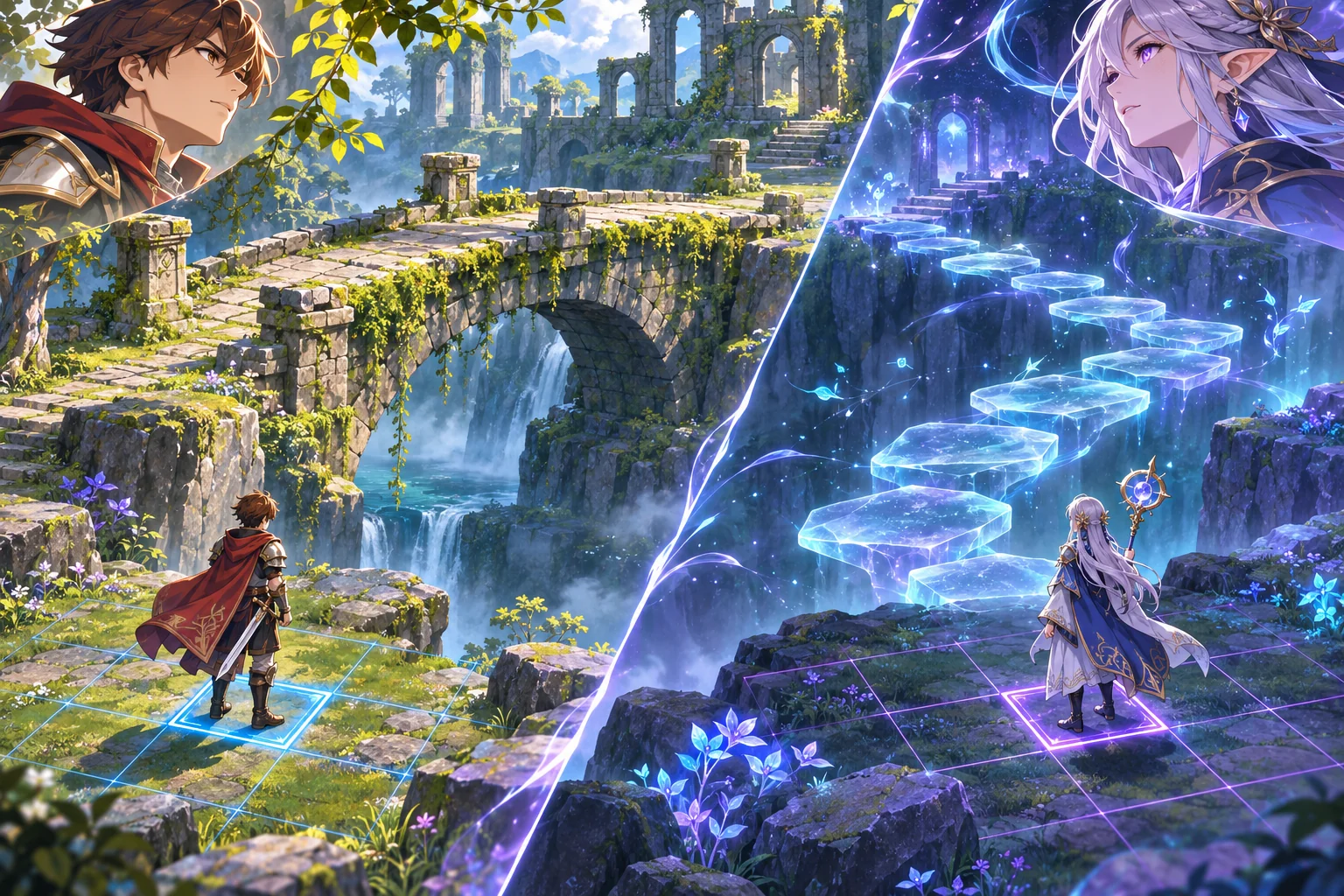
Keep turn order predictable: move one character, switch, then move the other. Their positions persist when control changes. This lets the player coordinate the two views instead of treating the second character as a temporary camera filter.
Replay the same tiles from both views
The local rules check uses one map coordinate set and two walkability layers. A can cross the stone bridge but cannot enter B’s spectral tiles. B can cross the spectral path but cannot use the hidden stone bridge. Switching characters changes which tiles are legal without changing the shared map or either saved position.
| Character | Stone bridge | Spectral path | Position persists on switch? |
|---|---|---|---|
| A | Walkable | Blocked | Yes |
| B | Hidden | Walkable | Yes |
This deterministic check verifies visibility flags and movement legality only. It does not model combat, pathfinding AI, narrative branches, enemy turns or a complete RPG. Add those systems after the two layers remain distinct through character switches.
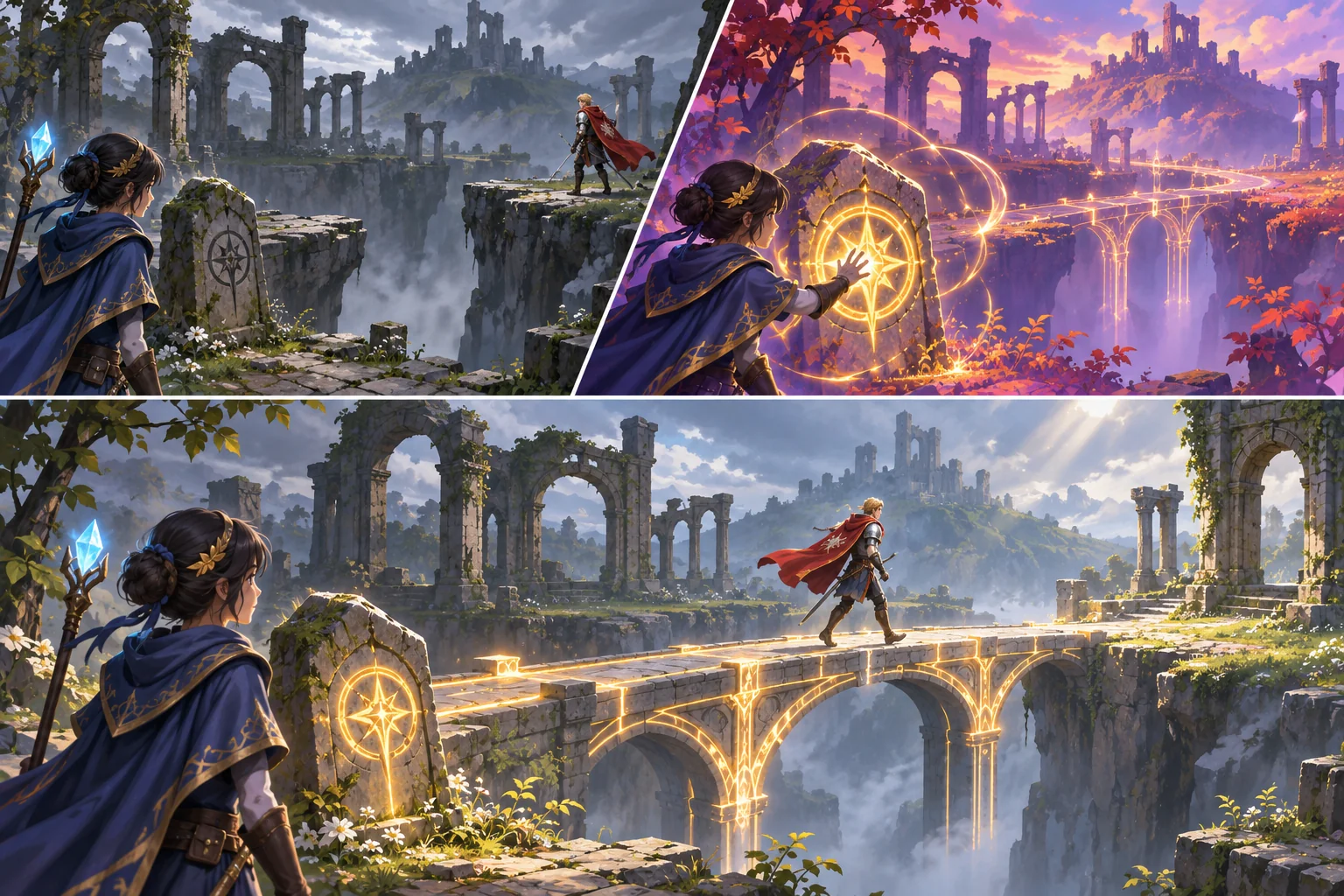
Prompt for a dual-world turn-based prototype
Ask an AI game maker for a turn-based RPG with two characters on one shared tile map. Character A sees and can cross a stone bridge; Character B sees and can cross a spectral route on different tiles. Preserve both positions when switching turns and make movement legal only on the active character’s visible layer. Add a rune checkpoint and reset to compare each view.
Once the layer rules work, add enemies or story consequences one at a time. Keep the first test focused on character-specific terrain and coordinated movement.
Start a turn-based RPG prototype in SEELE
Frequently asked questions
Is this one map or two separate maps?
Use one shared coordinate map with character-specific visibility and walkability layers. A single map keeps the turn order and positions connected, while the layers explain why one character can cross a tile that the other cannot. This is easier to compare than maintaining unrelated level copies.
Should character positions change when switching views?
No. Save each character’s position and restore control without moving either one. The active character changes which terrain layer is visible and legal. Persistent positions let players plan a route together instead of making a view switch act like a teleport.
What should I test before adding combat?
Check the same bridge and spectral tiles for both characters, then switch back and forth. Confirm each layer’s legal movement and that both positions remain fixed. This isolates the dual-world rule before combat, enemy AI or narrative conditions create extra state.