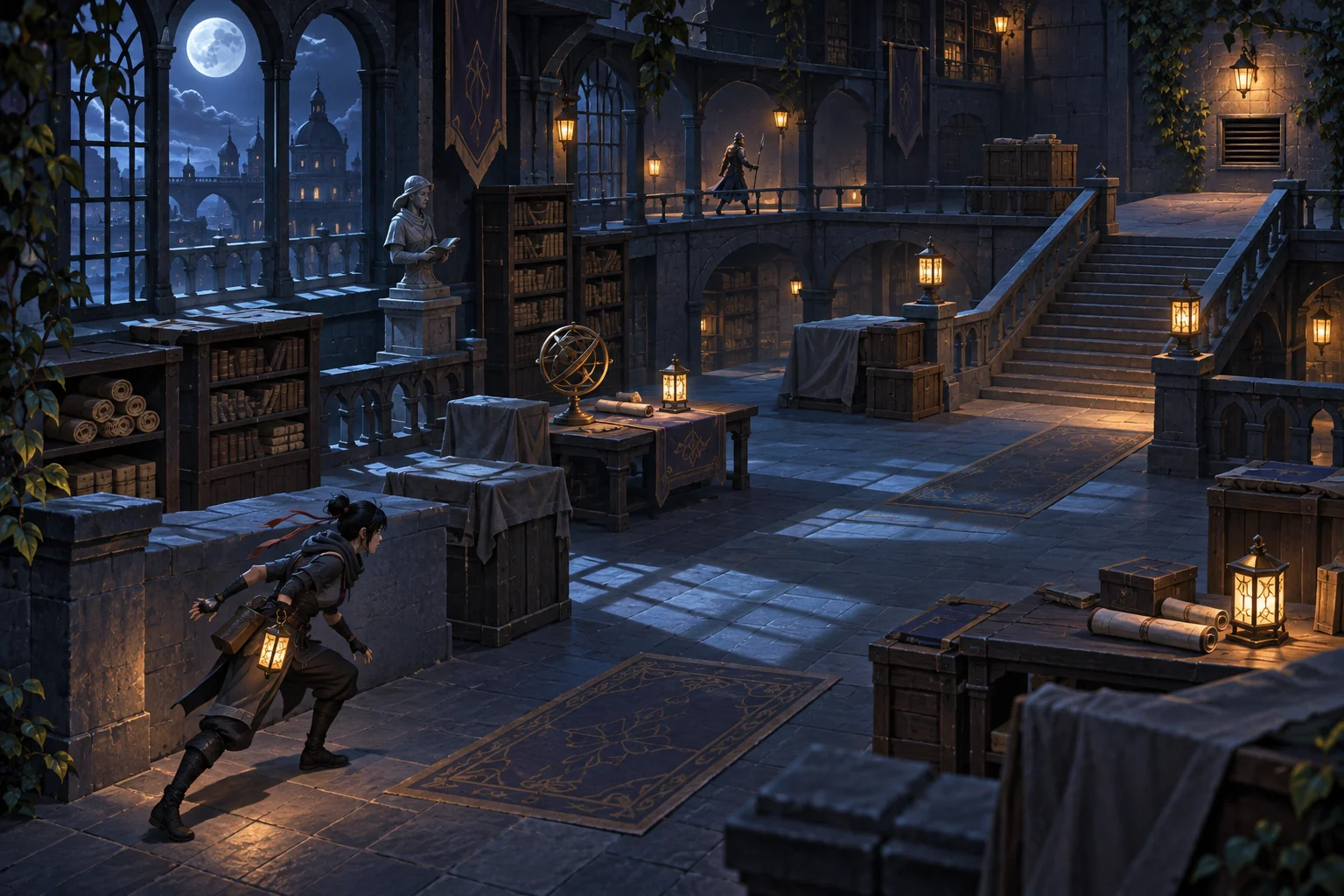
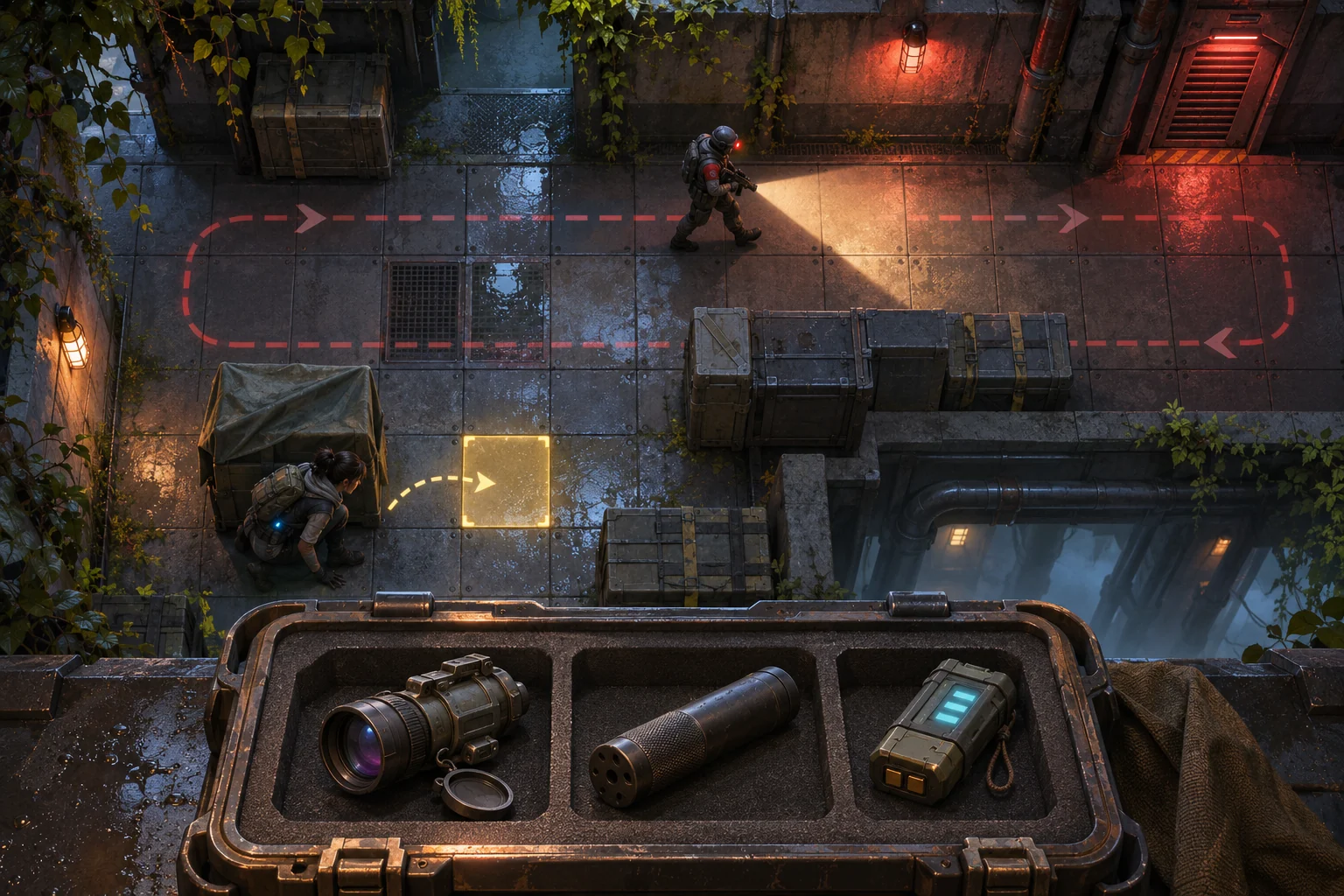
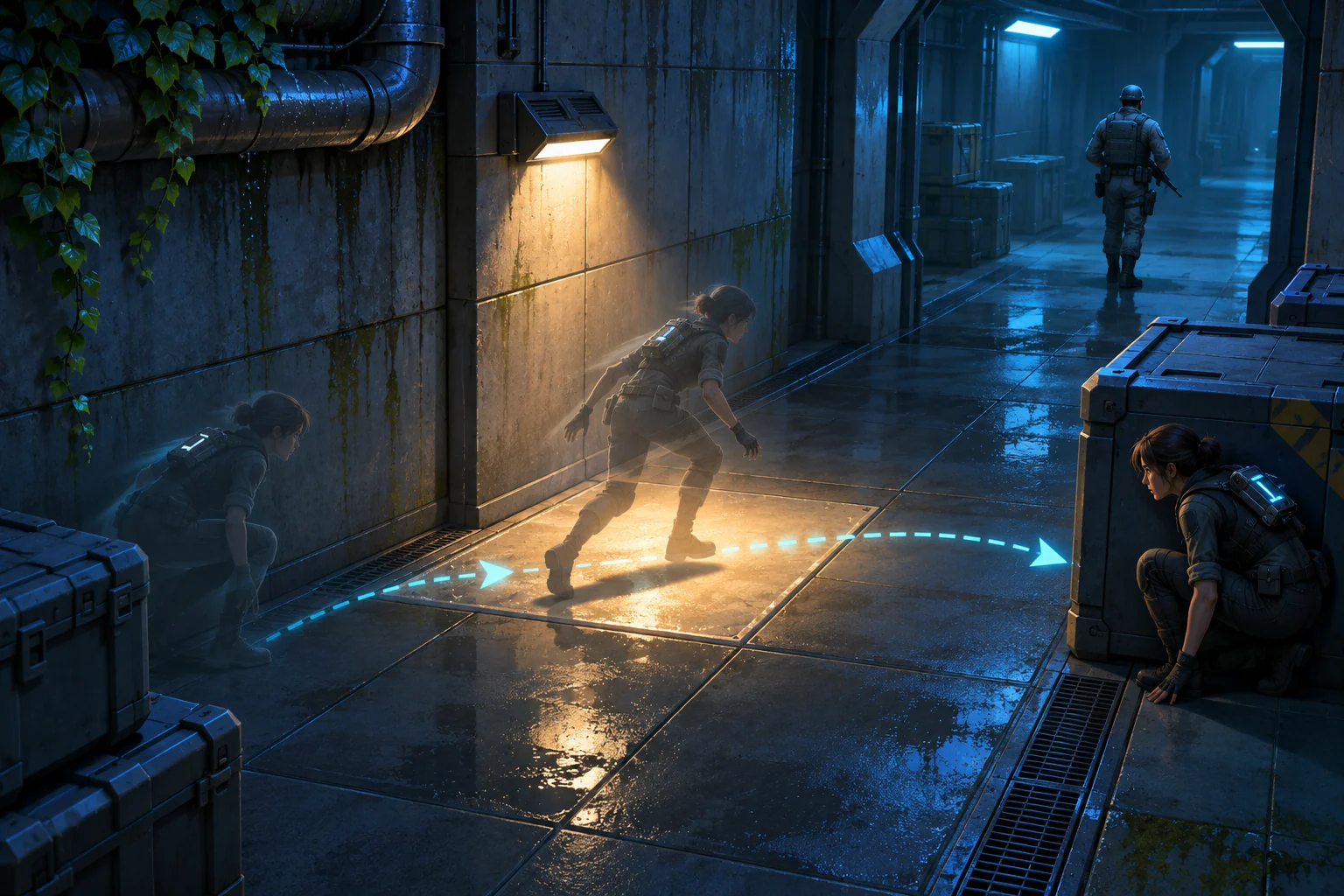
A scout must cross a three-tile corridor while one guard patrols between cover points. Each unit has three component slots: optic, dampener and battery. The parts change what the scout can see or how quietly it can move, so the loadout is part of the turn-by-turn plan.
Give each module a clear stealth job
The optic reveals the guard's next patrol tile but uses one battery charge. The dampener makes one move quiet, then needs a turn to cool. The battery can power the optic or a one-turn jammer. Keep the three slots visible and show which action each module can support.
Use one guard, three corridor tiles and two cover points. Show noise and visibility separately: noise attracts the guard, while visibility exposes the scout in a lit tile. This makes the component trade-off readable before a move.
Plan the turn order around patrol and power
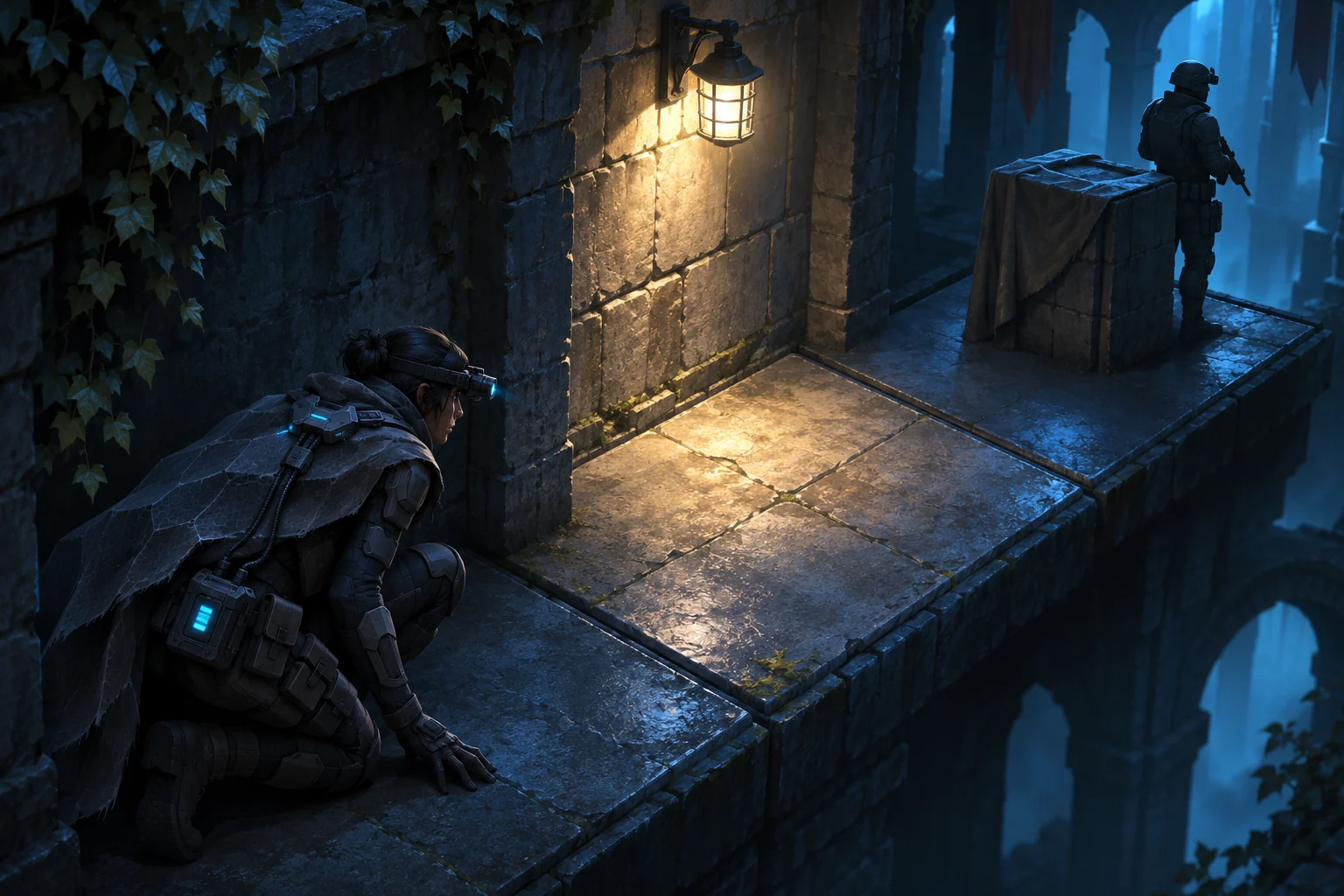
At the start of a turn, inspect the patrol, choose one module action and move one tile. The optic spends charge to reveal the next guard tile. The dampener suppresses one move but cannot also power the optic that turn if the battery is empty.
A jammer can hold the guard for one turn, but using it spends the same battery charge as the optic. Let the player see the patrol state, battery and noise result before advancing the turn.
Replay the corridor with two component plans
The deterministic mission has three turns and one lit middle tile. The optic-first plan spends charge to reveal the guard, then crosses without a dampener; the scout is detected in the lit tile. The revised optic-plus-dampener plan uses the reveal, stays quiet on the crossing and reaches cover unseen, but gives up the second reveal because the battery is spent.
Reset the same patrol route, starting charge and scout position before each run. The replay checks charge use, visibility and detection. A future human playtest should test whether the choice between information and quiet movement feels fair.
Prompt AI for one modular stealth mission
Start with one scout, one guard, three tiles and three components. Add more unit types only after players can connect a module choice to the patrol outcome.
Create a turn-based stealth mission with one scout, one guard, three corridor tiles and two cover points. Give the scout three component slots: optic reveals the next patrol tile for one battery charge; dampener makes one move quiet and then cools for a turn; battery powers optic or a one-turn jammer. Show noise separately from visibility. Run a three-turn patrol, add reset and display detection clearly.
SEELE's free game maker describes starting from a text prompt and refining a first version with follow-up requests. Use this mission to inspect component trade-offs and detection before adding more units.
Start the modular stealth prototype in SEELE
Frequently asked questions
Should components be usable every turn?
Give each module a clear limit such as battery cost or a cooldown. A quiet move is easier to plan when the player can see when the dampener becomes available again and whether the battery is already committed to the optic. Start with one use rule per component so the loadout stays readable.
How do I keep stealth information fair?
Show what the optic reveals and when the patrol advances. Keep revealed information consistent for the rest of the turn, then update it after the guard moves. This lets players plan without implying that the patrol will remain in a revealed tile forever.
How can I test whether the loadout matters?
Replay the same patrol, scout position and battery with two component plans. Compare tiles revealed, noise, detection and final cover. If both plans resolve the same way, adjust a module's cost or effect until the trade-off changes the route. Keep the guard path fixed so the comparison stays useful.