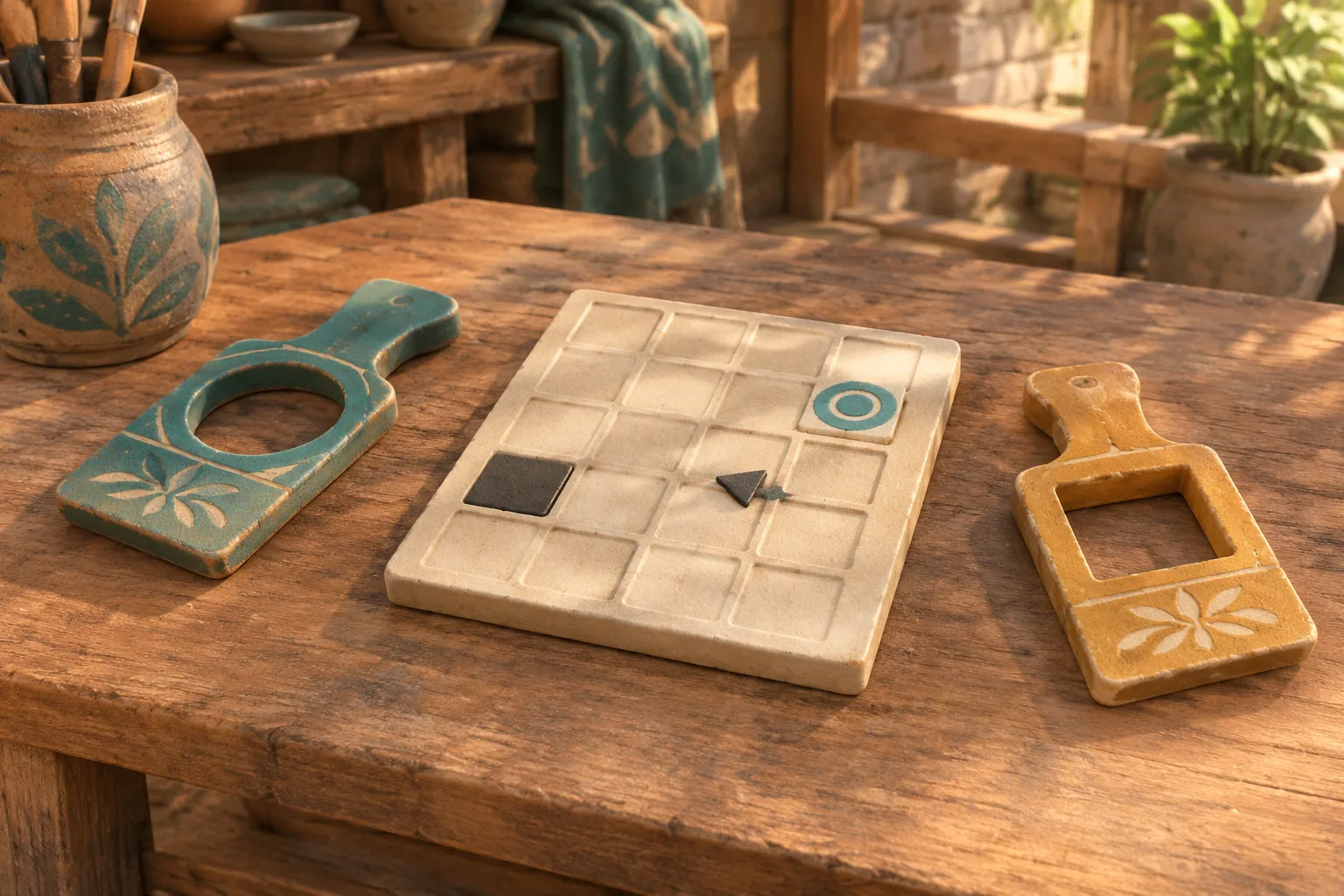
Let the player inspect one request before they decide what to carry. Put a part that fits either recipe beside two parts that lead to different results. If the player takes the wrong one, let them see whether they are missing an ingredient or have already built something that does not fit the job.
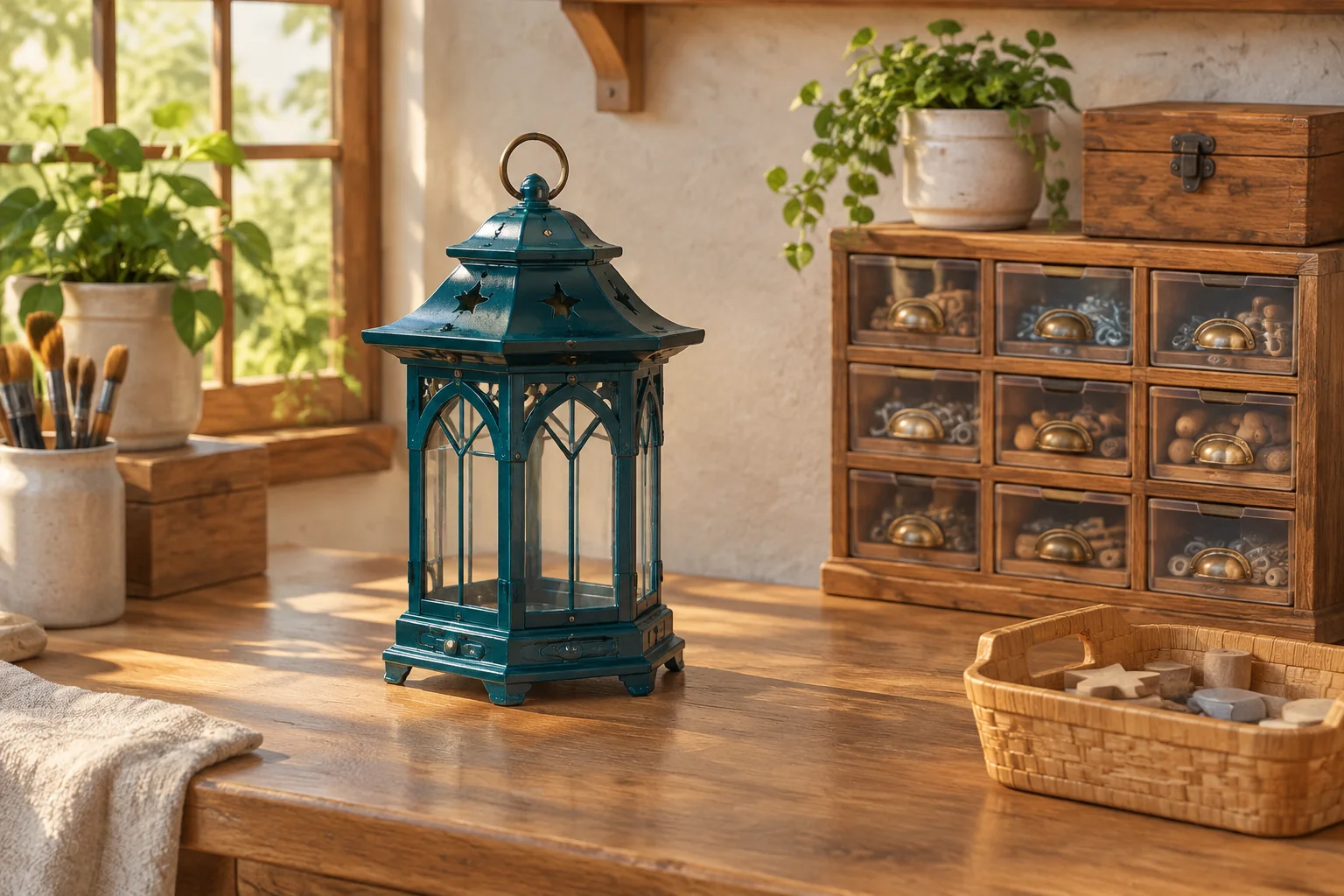
In the fictional Lamplight Ledger, a community workshop needs to light a decorative lantern for a display. Its inspection card calls for an Amber Cartridge. The cabinet has a Silver Core and two filters, but the player can carry only two parts on the one collection visit.
Let a request guide a collection trip
PQube describes Potion Permit as a game about assessing a resident’s symptoms, gathering ingredients and brewing a potion. The official Steam listing credits MassHive Media and PQube and describes the same in-game premise. Take the connection between a request and the materials it calls for. Lamplight Ledger applies it to an original decorative object.
Start at the bench with no request recorded, no cartridge and an empty basket. Inspecting the lantern records Amber for free. The player can inspect before or after visiting the cabinet. That choice matters because the cabinet can only be visited once in a run.
Define the basket and recipes
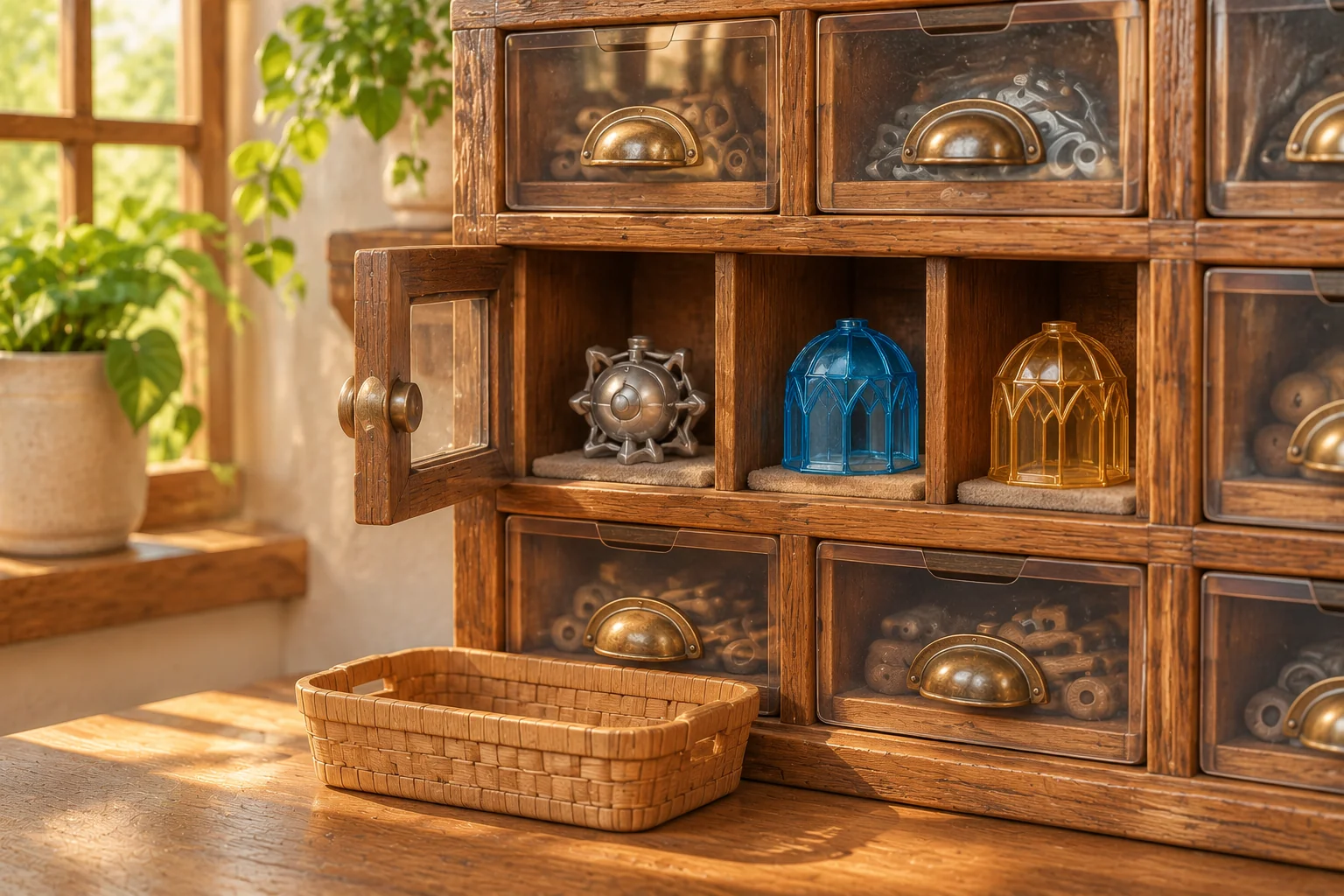
Stock the cabinet with one Silver Core, one Blue Filter and one Amber Filter. Let the player take parts one by one. If the basket is full or a bin is empty, reject the pickup and keep the remaining stock where it is. Returning to the bench closes the visit.
| Cartridge | Parts it consumes | Fit check for this job |
|---|---|---|
| Amber | Silver Core and Amber Filter | Matches the recorded request. |
| Blue | Silver Core and Blue Filter | Can be assembled, but does not match the request. |
Assembly consumes parts only if both are present and the output slot is empty. Fit checks the recorded request and the finished cartridge. A rejected fit leaves the cartridge in the output slot. This distinction lets the player understand why a valid recipe can still be wrong for the job.
Replay a targeted and untargeted trip
| Plan | What reaches the bench | What happens next |
|---|---|---|
| Inspect first | Record Amber. Take Silver and Amber and return with both parts. | Assemble Amber. The basket is empty. Fit it to light the lantern. |
| Collect first | Take Silver and Blue. The third pickup, Amber, is rejected. Return with Silver and Blue. | Inspect Amber. Assemble Amber rejects because its filter is missing. The basket is unchanged. |
| Try a valid but mismatched output | Start with the returned Silver and Blue parts. | Assemble Blue. Fit rejects. Blue stays in the output slot and the lantern remains unlit. |
Give the player a way to close an unfinished job after returning. The report can show a missing filter or a mismatched cartridge without undoing the collection. Reset restores the empty basket, all three bins and the one visit.
Give AI one full workshop job
Give the SEELE workspace the written fixture and ask for a browser draft with a request card, three bins, a basket and a cartridge slot. Check the counts after each pickup and the result of both fit attempts before adding more requests.
Build an original browser workshop game called Lamplight Ledger.
Start at the bench with the lantern unlit, no request recorded,
one cabinet visit, an empty two-part basket, and an empty output slot.

Inspect at the bench records Amber. Permit inspection before or after
the one cabinet visit. Stock one Silver Core, Blue Filter and Amber Filter.
Take one available part only if the basket has room.
Returning to the bench closes the cabinet for this run.

Assemble Amber from Silver plus Amber, or Blue from Silver plus Blue.
Consume parts only on a valid recipe and empty output slot.
Fit requires the recorded request and a matching cartridge.
Reject mismatches without consuming the output.
On success, consume the output and light the lantern amber.

Permit Finish Incomplete after returning. Freeze either ending.
Show request, stock, basket and output. Reset everything.
Use original props and art.
Try taking Amber as the third part at capacity two. Its bin should still contain the filter. Check that trying Assemble Amber with Silver and Blue leaves both parts in the basket. A separate test should show that the matching cartridge cannot be fitted before the request is recorded.
Change only the basket capacity
Change the basket from two parts to three. Replay the same collection-first trip. Take Silver, Blue and then Amber. All three now fit. Return, record Amber and assemble its cartridge. That uses Silver and Amber, leaving Blue in the basket. Fit the cartridge and finish with an amber light.
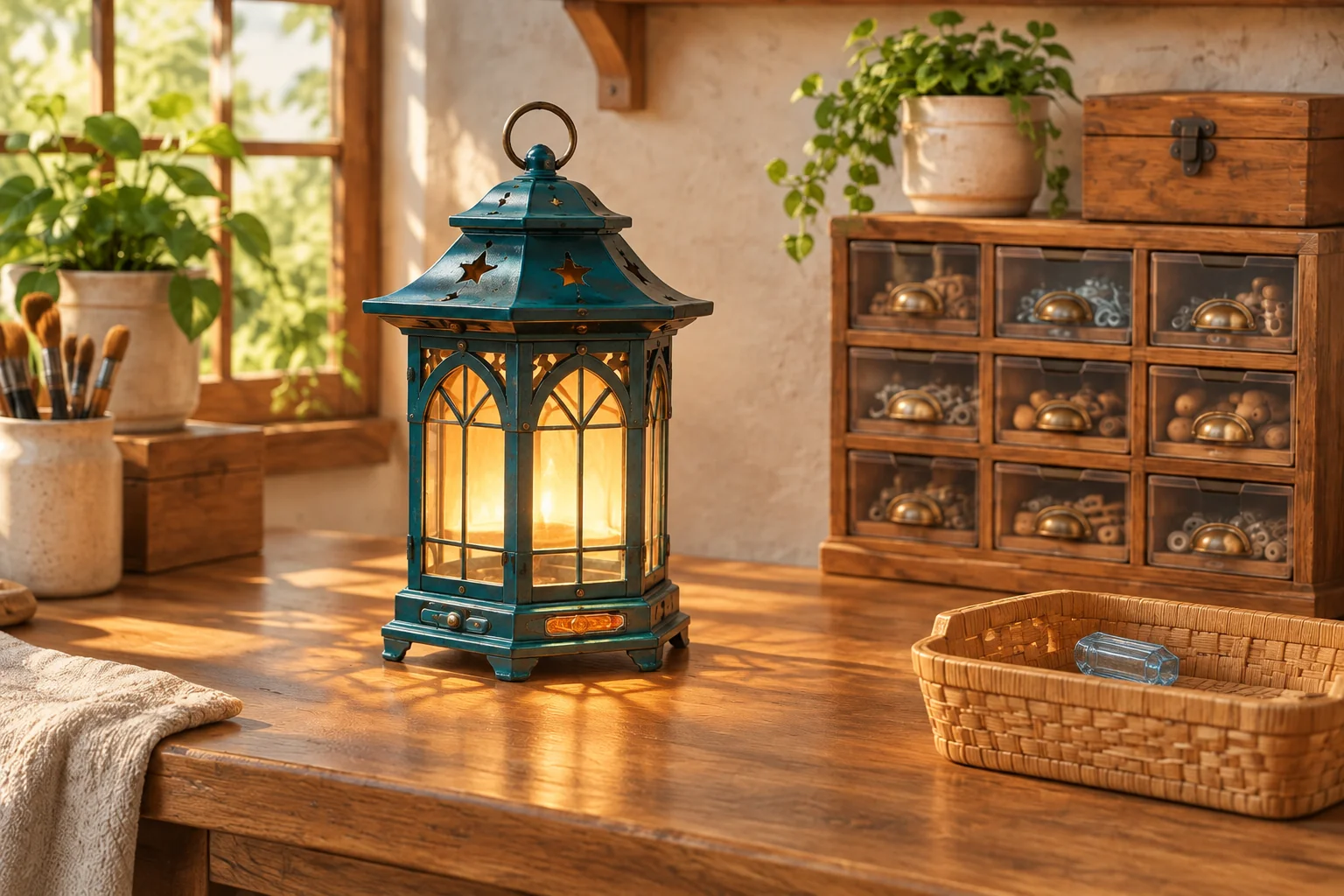
Keep the cabinet visit, stock and recipes fixed. More space lets the player recover from an unfocused collection, while the inspect-first plan still finishes without taking a spare filter. Use the guide to revising one rule at a time to compare those outcomes.
Finish one workshop request
Start your original cozy crafting game with SEELE’s AI Game Maker. Give one request a visible result and check what remains in stock, the basket and the output slot after each choice.
Frequently asked questions
Why let the player inspect before collecting?
Inspection gives the player a reason to choose one part over another. Make the request available before the only visit and keep it readable afterward. A player who collects first should still be able to see what they brought back and why it falls short.
Should a failed recipe consume parts?
Reserve consumption for an accepted assembly. If a required part is missing, leave the basket unchanged and identify what is missing. This lets the player distinguish an invalid recipe from a finished cartridge that simply does not fit the lantern request.
What should happen to a mismatched cartridge?
Keep it in the output slot when the player tries to fit it. Explain which cartridge the lantern calls for. If the prototype has no recycling action, offer an unfinished report and a clear reset rather than silently converting the part.
When should I add a second workshop request?
Add one after the first request makes the trip and recipe easy to explain. The next job could reuse the shared component and call for the other filter. Check that the player can still tell which parts belong to each request.