Give each memory a place in the world
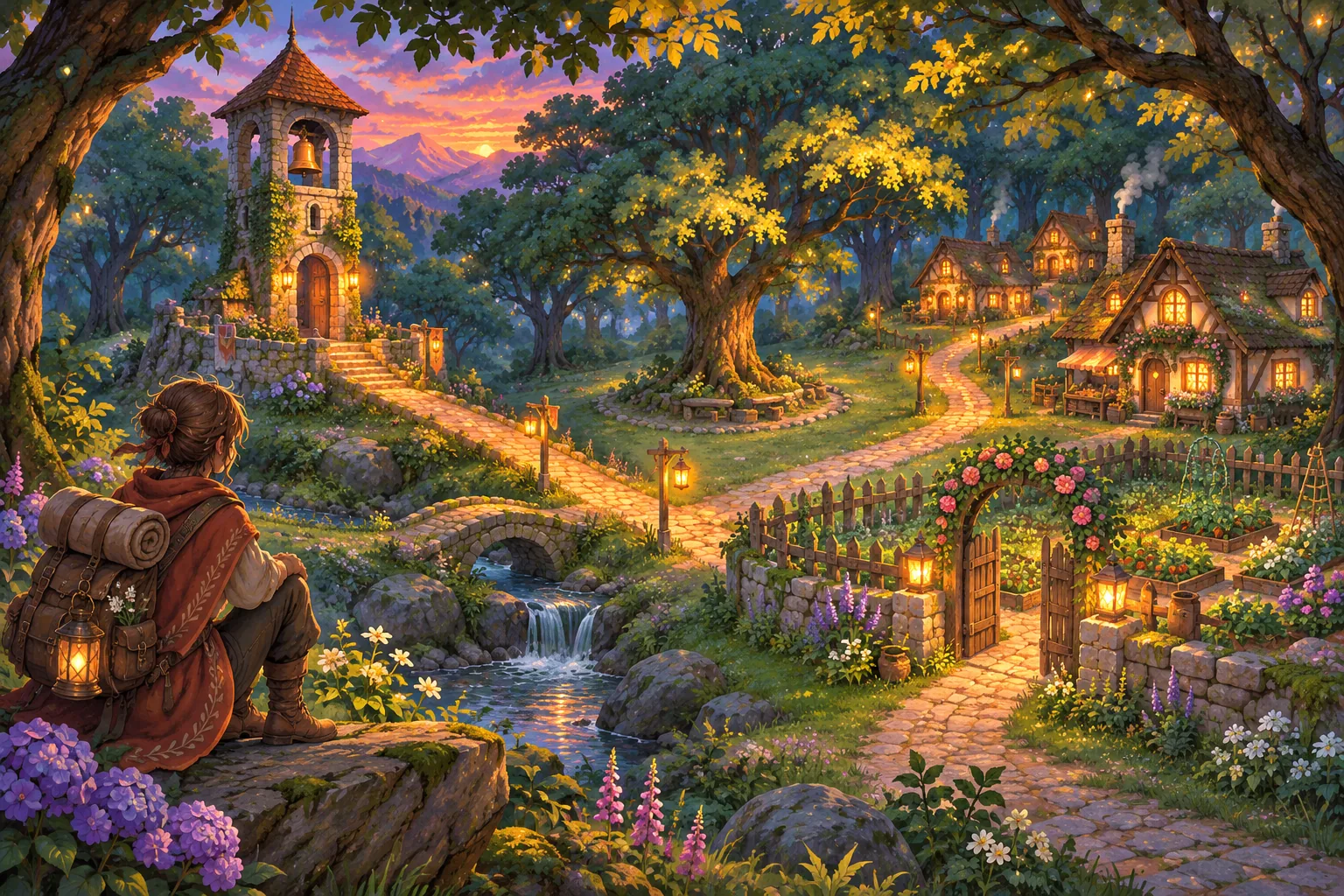
In fictional Quiet Lantern, the player follows a misty trail between a village, bell tower and garden. Two keepsakes are hidden along the route. Finding the bell memory restores a short path to the tower; finding the garden memory opens a loop back to the village. A memory changes both what the character remembers and where the player can walk next.

Keep each find optional at first. The player can reach the bell tower by the old stone road, while collecting a keepsake opens a gentler shortcut and reveals a brief memory scene. The map preview should show the new path in a distinct warm color and name the memory that restored it. That makes exploration feel consequential without requiring every player to find every item.
Tie a discovered object to one map change
Store a stable memory ID, its landmark, whether it has been collected, the scene it restores and the edge it unlocks. When the pickup event fires, record the ID once, show the memory scene and enable its route edge. Replaying the pickup should not add a second edge or replay the scene unless the player explicitly reopens the journal.
The local graph test begins with the village path open and the tower route locked. Recording the bell memory makes the tower reachable. The garden memory then opens the return loop. The test also records the bell ID twice and verifies that reachability and route count stay unchanged the second time. This deterministic check covers progression data only; it does not test exploration feel, scene timing, save files or player discovery.
Let the map reward curiosity without hiding the story
Keep the main story readable even when a player misses an optional memory. Use the journal to show an empty silhouette, the remembered landmark and the route it can restore. Once found, let the player revisit the scene from the journal. This separates discovery from replay and keeps a quiet exploration pace.

Prototype one memory and one shortcut first
Begin with a small map graph, one collectible ID, one short memory scene and one locked route edge. Check the starting map, collect once, revisit the pickup, and reload the saved state. Godot signals can notify another node when a pickup event occurs; its official guide describes connecting and handling signals. SEELE AI Game Maker offers a prompt-based entry point for a game concept. Neither source verifies Quiet Lantern's design.
Create an original cozy RPG map with a village, bell tower and garden. Add a collectible bell memory that restores a short story scene and opens one named route edge. Record pickup IDs so revisiting the fragment does not duplicate the path. Show locked and restored routes in the map, with optional memories clearly marked.
Start a fictional cozy RPG in SEELE · Godot signals documentation
Frequently asked questions
How can a memory affect exploration beyond its story scene?
Link each collected memory to a specific landmark and one route change. A restored bridge, gate or footpath gives the player a visible reason to explore, while the journal can preserve the story for later review. Keep the main objective reachable without every optional find so exploration stays inviting rather than mandatory.
How do I avoid unlocking the same route twice?
Assign each memory a stable ID and store collected IDs in the save state. When a pickup event arrives, check the ID before changing the map. If it is already recorded, leave the route graph and journal state unchanged. Test both a repeated event in one session and loading a save after the memory was found.
Should a player be able to revisit a memory scene?
Yes, if the story moment is short and the player can choose when to replay it. Save the discovery once, then let the journal open a recap without replaying the pickup reward. That keeps scene access convenient while preventing duplicate route unlocks or repeated collection effects.