Give the player a reward that stores a charge when they dodge a hazard. Two rooms later, let another reward spend two charges to hit both targets with one Pulse. If the player chooses protection instead, they can clear the same room one target at a time. The difference comes from how the rewards change the actions the player already has.
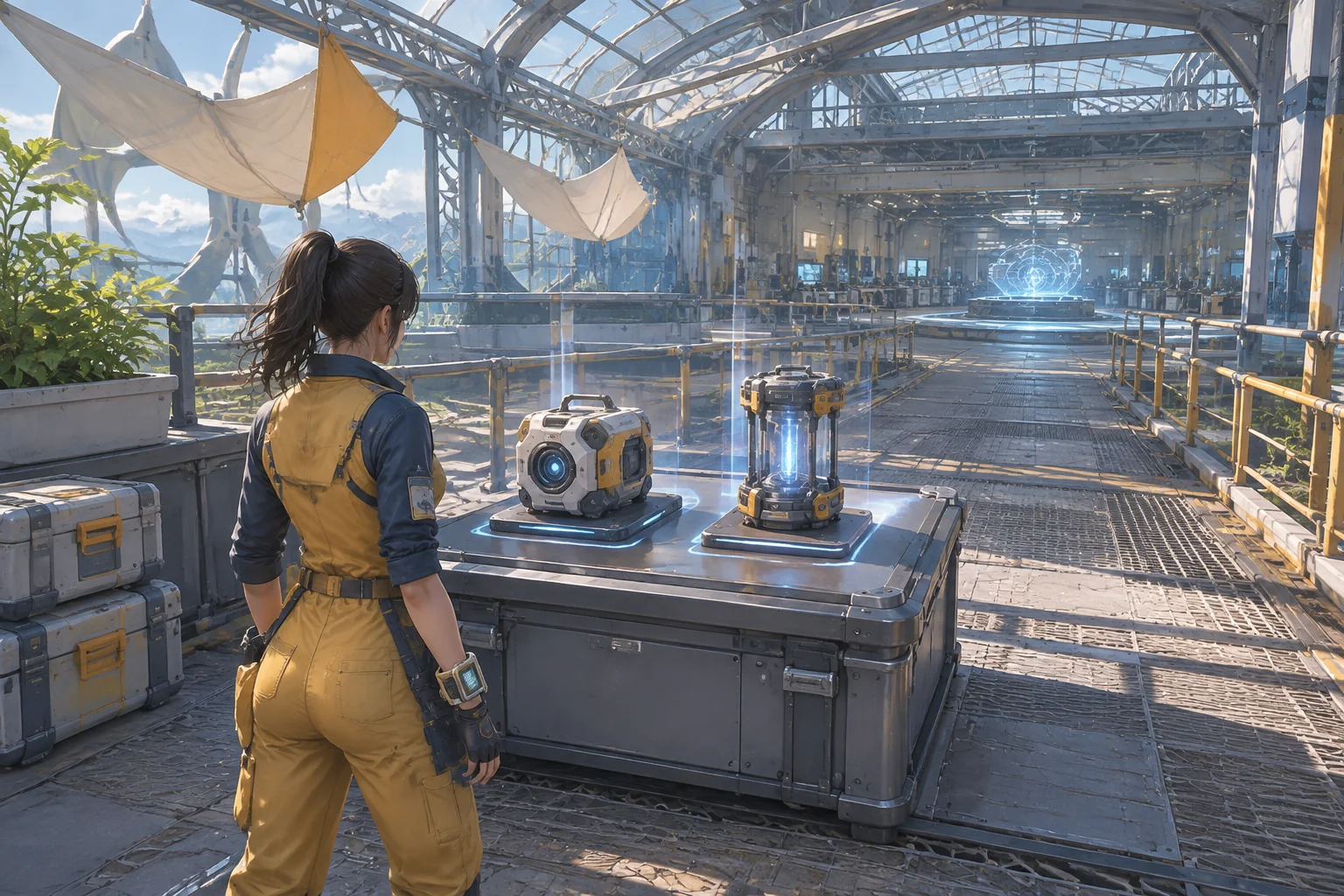
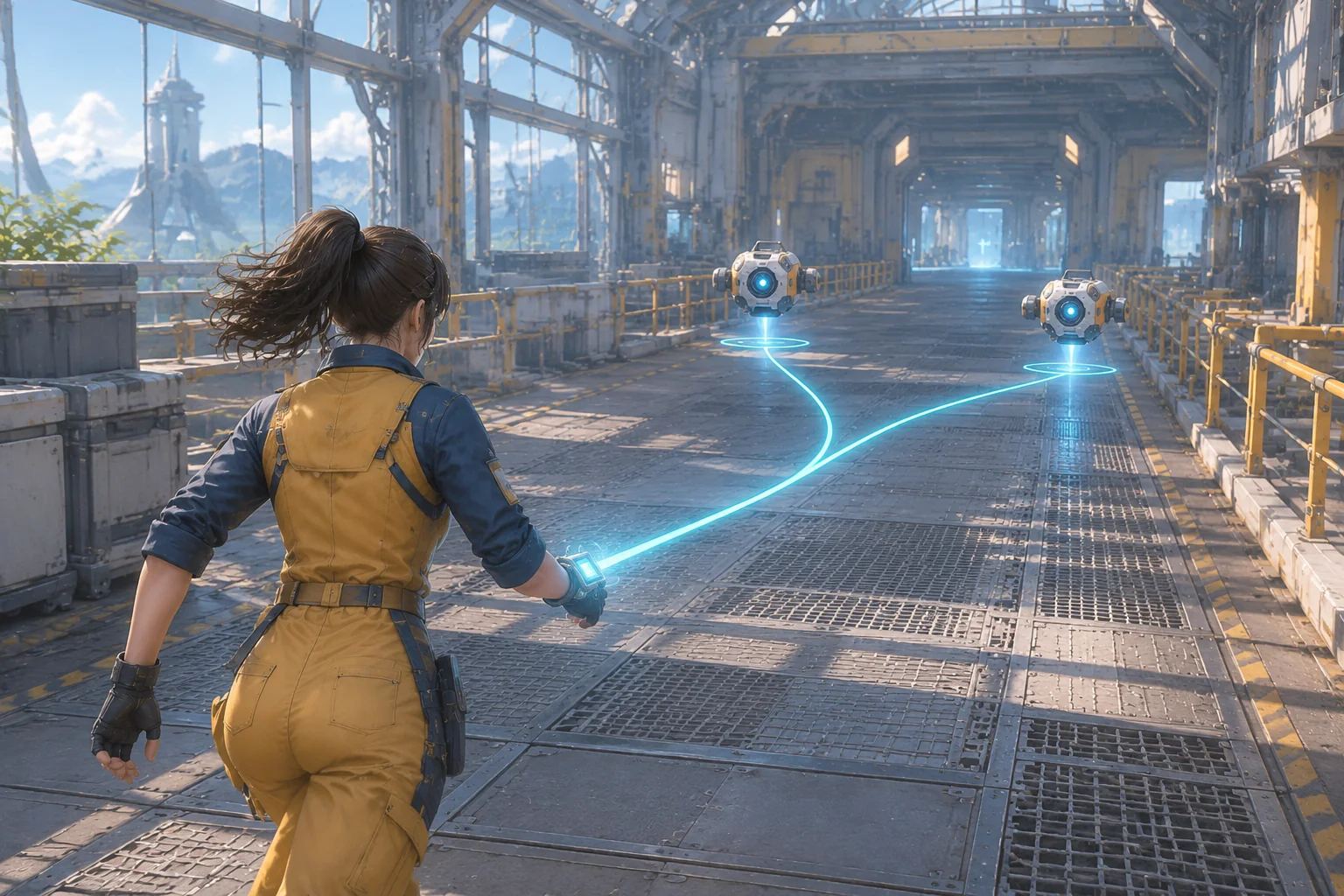
Switchyard Sprint is a fictional action roguelite prototype set in a daylight wind research facility. The runner carries a wrist tool and picks up two modules during a three-room run. The fixed room order lets you check when those modules work together.
Let an early choice change a later one
Supergiant Games describes Hades as a roguelike dungeon crawler where players combine powers from different Olympians as they play. The studio’s update notes also describe choosing Boons. See Supergiant’s Hades FAQ and official Hades update notes.
In Switchyard Sprint, every build starts with Dodge and Pulse. The first reward can make dodging a way to store charge. The second can turn that charge into a two-target Pulse. Each choice also has a defensive alternative, so the player has another way to survive the last sweep.
Specify the fixed run and reward triggers
Start with one integrity and zero charge. Allow one accepted action per combat beat. Dodge avoids the scheduled sweep for that beat. Pulse disables one chosen live, exposed target. A Pulse aimed at a shielded, absent or disabled target is rejected without advancing the beat or spending charge. Targets take one hit and cause no damage of their own.
| Room | Fixed events | After clearing |
|---|---|---|
| Practice | One quiet beat and one exposed target. | Choose Slipstream Coil or Ground Guard. |
| Intake | Sweeps on beats 1 and 2. Beat 3 is quiet and exposes the only target. | Choose Fork Relay or Spare Clip. |
| Final | Two exposed targets throughout. Beat 1 is quiet. Beat 2 sweeps. | Finish the run. |
- Slipstream Coil stores one charge for each sweep actually dodged, up to two. A Dodge on a quiet beat gives zero charge. Charge carries to the next room.
- Ground Guard absorbs the first otherwise unavoided sweep hit in each subsequent room.
- Fork Relay activates automatically when a valid Pulse starts with two charge and two exposed, live targets. It spends both charges and disables both targets. If either condition is missing, the Pulse affects only the selected target and spends no charge.
- Spare Clip absorbs one otherwise unavoided sweep hit in the final room. If both protection rewards apply, Ground Guard absorbs the hit first and leaves Spare Clip available.
Apply the player action first, then resolve the sweep. An unblocked sweep costs one integrity. At zero integrity the run fails, even if the action disabled the last target. A surviving runner with every target disabled clears the room. Otherwise, exhausting the room’s beats ends the run. Pause combat while the player makes a reward choice.

Replay the four reward pairs
Clear Practice with Pulse. In Intake, Dodge on beats 1 and 2, then Pulse on beat 3. Coil enters Final with two charge. Guard enters with zero. In Final, Pulse left first and Pulse right if a second beat is needed. The target positions and the input order stay fixed.
| Reward pair | What happens in Final |
|---|---|
| Coil and Relay | Beat 1 Pulse spends both charges and disables both targets. Clears before the sweep. |
| Coil and Clip | Two Pulses disable both targets. Clip absorbs the sweep on beat 2. Clears with two unused charge. |
| Guard and Relay | Relay stays inactive at zero charge. Two Pulses disable the targets. Guard absorbs the sweep on beat 2. |
| Guard and Clip | Two Pulses disable the targets. Guard absorbs the sweep on beat 2, leaving Clip available. |
All four combinations finish with one integrity under these conditions. The difference is visible in how they get there. Coil and Relay finish in one beat. The other pairs take two beats and depend on protection.
Give AI the complete interaction
Use a small prototype prompt with room schedules and terminal checks. Keep every choice and outcome on screen long enough for the player to see why it happened.
Make an original three-room prototype called Switchyard Sprint.
Start in Practice with one integrity, zero charge, and no modules.
Accept one action per beat. Dodge avoids a sweep for this beat.
Pulse disables a selected live, exposed target. Reject any invalid
Pulse without changing the beat, charge, protection, or targets.

Practice has one quiet beat and one exposed target. After clear,
choose Coil or Guard. Intake sweeps on beats 1 and 2 and exposes
its sole target on quiet beat 3. After clear, choose Relay or Clip.
Pause combat during choices. Final has two exposed targets, one
quiet beat, then one sweep beat.

Coil gains one charge per actual sweep Dodge, capped at two.
Quiet Dodge adds nothing. Charge carries between rooms.
Relay automatically spends two charge if a valid Pulse starts
with two exposed, live targets, then disables both.
Without those conditions Pulse disables just its selected target.
Guard absorbs one hit per subsequent room. Clip absorbs one hit
in Final. Apply Guard before Clip if both are ready.

Apply the action, then resolve the sweep. An unblocked sweep
costs one integrity. Check integrity loss before checking room
clear. A surviving runner clears when no live target remains.
If targets remain at the room's beat limit, fail. After Final
clear, finish the run. Reset restores the initial state.
Check a shielded target on Intake beat 1 and the Guard and Clip pair on Final beat 2. The first input should leave the beat unchanged. The second should consume only Guard. Use SEELE’s first-build guide to isolate the next change.
Remove one sweep and replay
Remove only the sweep on Intake beat 2 and keep both Dodge inputs. The second Dodge is now quiet, so Coil and Relay enter Final with one charge. Beat 1 Pulse disables only the left target and keeps the charge. Beat 2 Pulse disables the right target, but the sweep drops integrity to zero before clear can register.
Coil and Clip still clear under that same change because Clip absorbs the final sweep. Record the charge, live targets and integrity after each beat. The two results predict how the stated rules resolve when a charging opportunity disappears.
Start your original action roguelite with SEELE’s AI game maker.
Frequently asked questions
What should the first reward change?
Choose an action the player already knows. In this example, Dodge still avoids a sweep. Coil adds a charge when the player avoids an actual hazard, so the first choice also gives them a reason to look at the next room’s sweep pattern.
How can I show why the combo did not trigger?
Display the charge and eligible targets before Pulse, then show which targets it disabled. The player should be able to distinguish one charge from two and tell when a target is shielded. A clear reason helps them decide whether to spend another beat on preparation.
Why keep the first test run fixed?
A fixed run lets you compare rewards while rooms, targets, and player inputs stay the same. You can also repeat an invalid input and check that it leaves the same state. Once the conditions work, vary one part of the run and record which outcome changes.
What should I vary after this fixture?
Try moving a charging opportunity or adding a room with only one exposed target. Both ask the player to reconsider the Relay while preserving the same activation rule. Keep the original fixture available so changes to encounter design do not hide a regression in the combo.