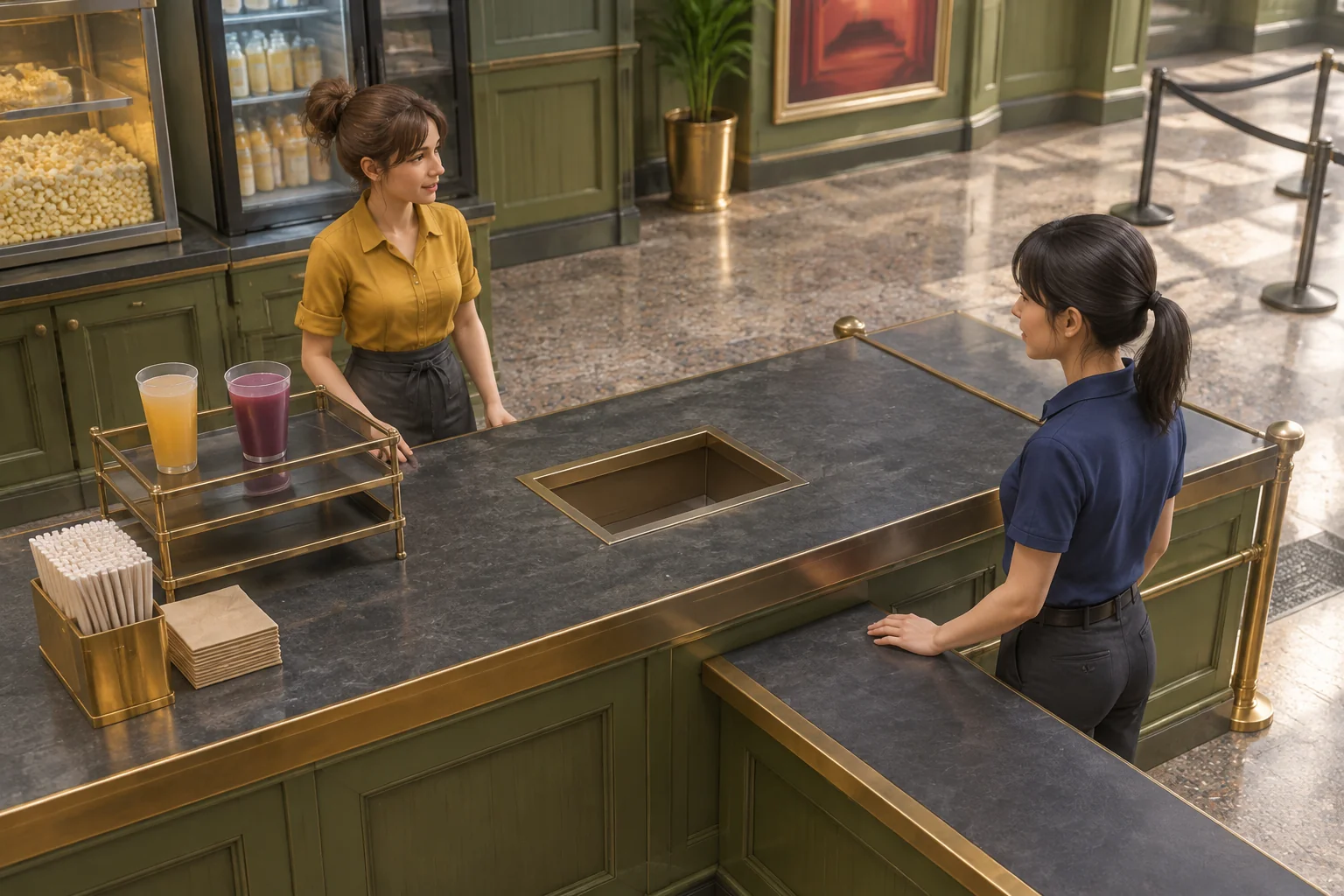
To make an original co-op management game inspired by Overcooked, give two players one shared place to hand things over. In this fictional theater foyer booth, Prep has a Citrus cup and a Berry cup. Service needs Citrus first. If Prep puts Berry on the only pass, Service cannot use it yet. The team has to clear the slot before it can serve the right order.
Build that handoff before adding more equipment. It gives the players a reason to coordinate what they place, what they take back, and when they refill.
Turn a shared task into a game of your own
Ghost Town Games describes the original Overcooked as a co-op game about preparing, cooking, and serving orders as a team. Team17’s 2016 launch announcement also describes working together in couch co-op.
Use the general idea that one player’s work sets up the other player’s next move. Give your version a different setting, objects, and rules. The theater booth has one pass between Prep and Service. Both players see the same order queue, with Citrus due on beat four and Berry due on beat six.
Give the two roles one shared pass
Start with the pass empty and both cups on the Prep rack. Each role submits one action per beat. Wait until both have submitted before advancing. Both actions check the same state at the start of the beat, then their valid effects resolve. An invalid action still uses the beat and leaves the other role’s valid action intact.
| Role | Action | What the action checks |
|---|---|---|
| Prep | Place Citrus or Berry | The chosen cup is on the rack and the pass is empty at beat start. |
| Prep | Retrieve | The cup on the pass differs from the first unserved order. Return it to the rack. |
| Service | Serve | The cup on the pass matches the first unserved order. Deliver it once and advance the queue. |
| Either | Hold | Use the beat without applying an effect for that role. |
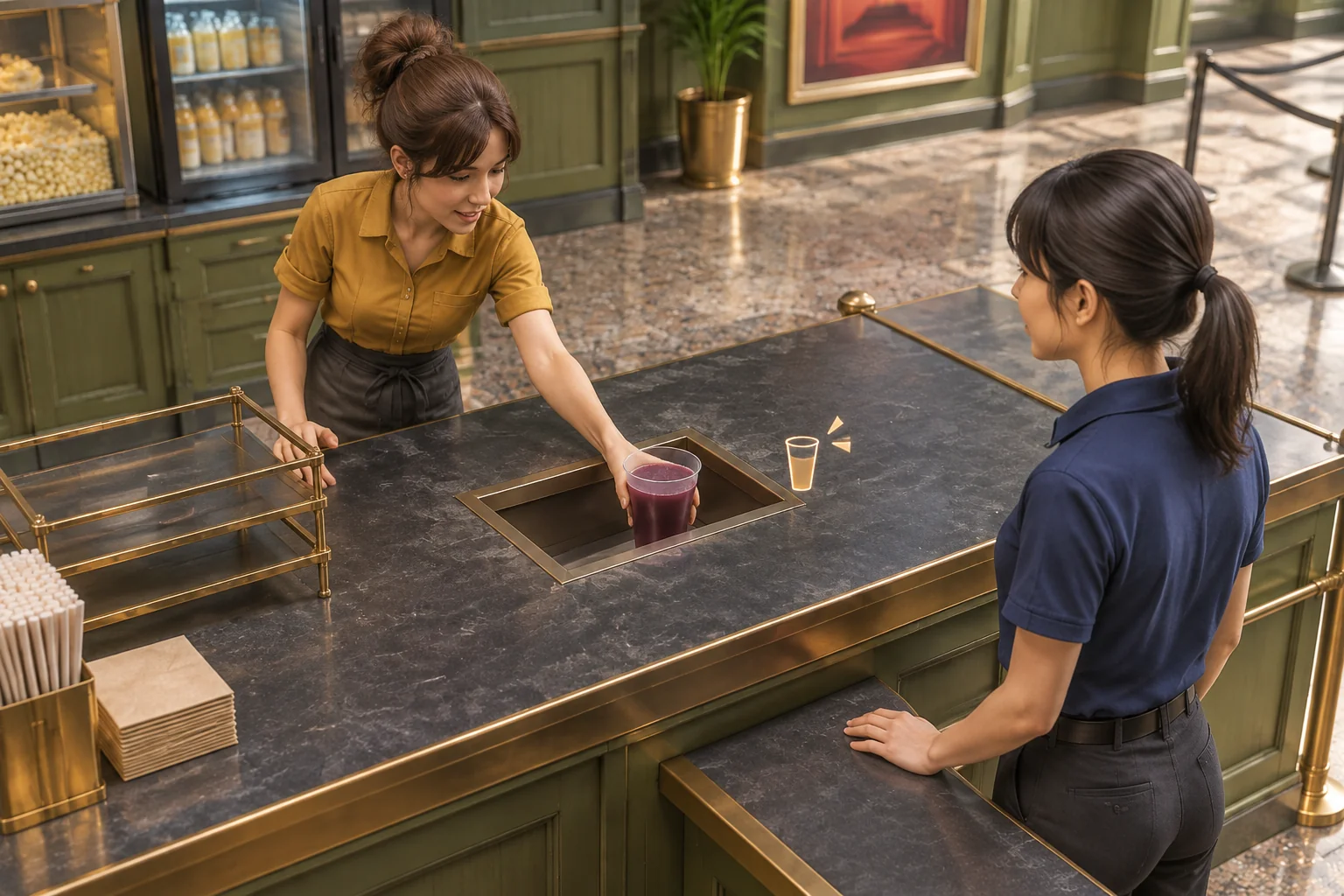
Retrieve and Serve cannot both be valid for the same cup. One requires a mismatch and the other a match. A cup placed on an empty pass also has to wait until the next beat before it can be served. These checks let the two roles act independently while sharing one slot.
Replay a direct handoff and a wrong-first recovery
Try the direct order first, then deliberately put Berry on the pass. Keep the order queue the same in both runs. A service on the due beat counts because the game checks deadlines after resolving the actions.
| Beat | Direct handoff | Wrong-first recovery |
|---|---|---|
| 1 | Prep places Citrus. Service holds. | Prep places Berry. Service holds. |
| 2 | Prep holds. Service serves Citrus. | Prep retrieves Berry. Service tries Serve, but Berry is the wrong cup. |
| 3 | Prep places Berry. Service holds. | Prep places Citrus. Service holds. |
| 4 | Prep holds. Service serves Berry and finishes. | Service serves Citrus on its deadline. Prep’s attempt to place Berry is blocked because the pass started full. |
| 5 | Finished. | Prep places Berry. Service holds. |
| 6 | Finished. | Prep holds. Service serves Berry on its deadline and finishes. |
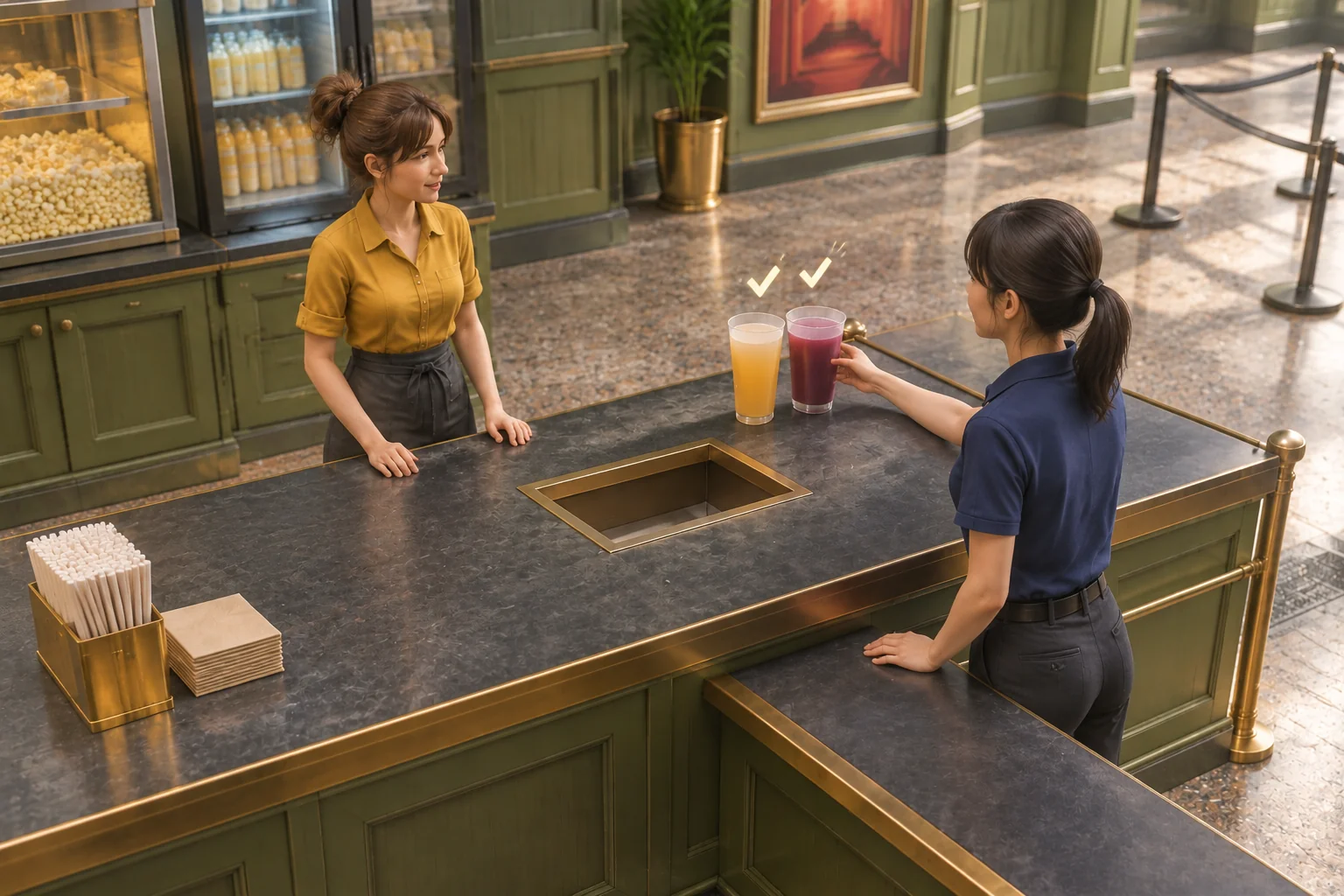
After the blocked refill on beat four, both players should see that Citrus was served and Berry stayed on the rack. Those are two outcomes on one beat. If they hold again on beat six instead of serving Berry, the run ends with just Citrus fulfilled.
Give AI one pass and two deadlines
Ask for a local fixture with two sets of controls and a shared order display. Include the reason each attempted action was accepted or blocked so you can trace a wrong handoff.
Build an original two-role theater booth game.
Start at beat 0. One Citrus and one Berry cup are on the Prep rack.
Use one empty shared pass. Order Citrus is due at beat 4,
then Berry at beat 6. Both players see the queue.

Advance after both submit one action. Check both against the
state at beat start. Prep can Place an available cup only on
an empty pass, or Retrieve a cup that mismatches the head order.
Service can Serve a matching cup. Either role can Hold.
Apply valid effects. Invalid actions leave the other effect intact.

After resolving, check deadlines. Serve on the due beat counts.
Finish after both orders, or on a missed deadline. Move a served
cup off the pass and credit it once. Reset the rack, pass,
delivered cups, queue, clock and pending commands.
Submit only one input and check that the beat stays put. Try serving Berry first, then confirm that Prep can retrieve it on the same beat. Run the direct and recovered traces, and compare the pass and rack after beat four. Reset from both a finish and a missed deadline.
Change only when Prep can refill
Allow Prep to place an available cup in a slot that Service successfully clears on the same beat. Service still checks the original cup. A wrong Serve cannot make room, and a newly placed cup cannot be served immediately.
Repeat the wrong-first route through beat four. Service serves Citrus and Prep’s Berry placement now fills the vacated pass. On beat five, Prep holds and Service serves Berry. Recovery finishes one beat sooner. The direct route still finishes on beat four.
The worksheet isolates the refill rule. In a working build, check whether both players can tell when the slot is available again. The guide to replaying a build after one change can help keep that comparison focused.
Make the first handoff easy to diagnose
Start with a visible pass, two orders, and a clear recovery action. Start your original co-op management game with SEELE’s AI game maker and use the two handoff traces to check the first scene.
Frequently asked questions
How can both players see who can use the pass?
Give the slot its own visible state and show each role’s pending action near their controls. Indicate whether the slot is occupied and which order is next. Use a shape or label as well as color so the cue works when colors are hard to distinguish.
When should Prep be able to undo a handoff?
Let Prep retrieve the item when recovery is part of the puzzle. Make the item return to a visible place and keep the cost of the action clear. If the team can retry, show the next order again so they know what to place instead.
Can I test this without a networked session?
Yes. Use two local controls that submit to the same fixture and wait for both before resolving. You can check the queue, refill and deadline rules that way. Test disconnection, input arrival and recovery separately if you later add remote play.
What should I change when adding a third order?
Start by changing what the new order needs or when it is due. Keep the pass and existing controls fixed. Replay the original two orders first, then check whether the extra order creates a different handoff decision without making the recovery unreadable.