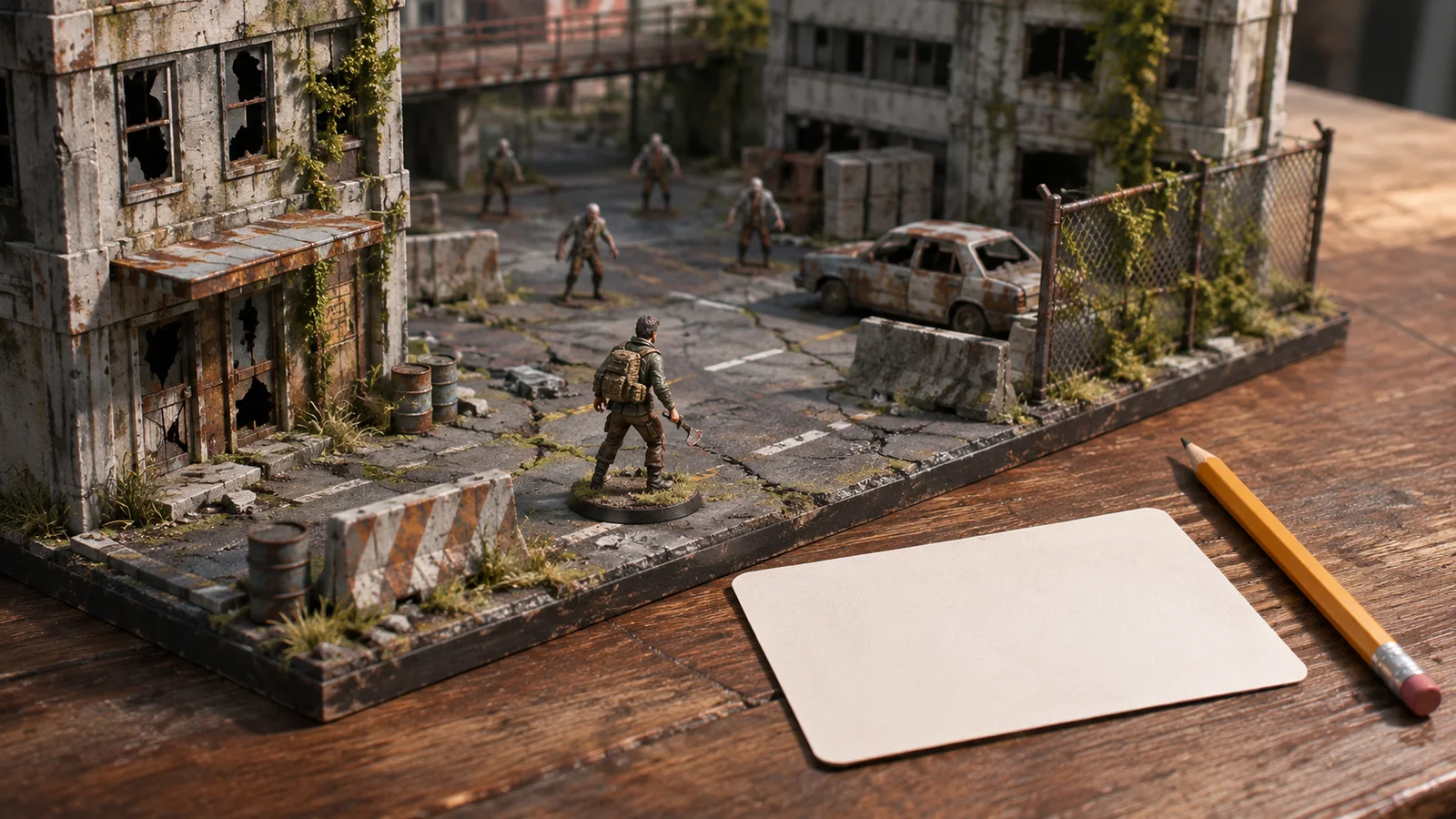
Give the restaurant layout one route it has to support. Run the same trip from pickup to table and then to the wash nook before and after moving one object. Show the cost of each leg so the player can tell whether an edit shortened the route or simply changed how the room looks.
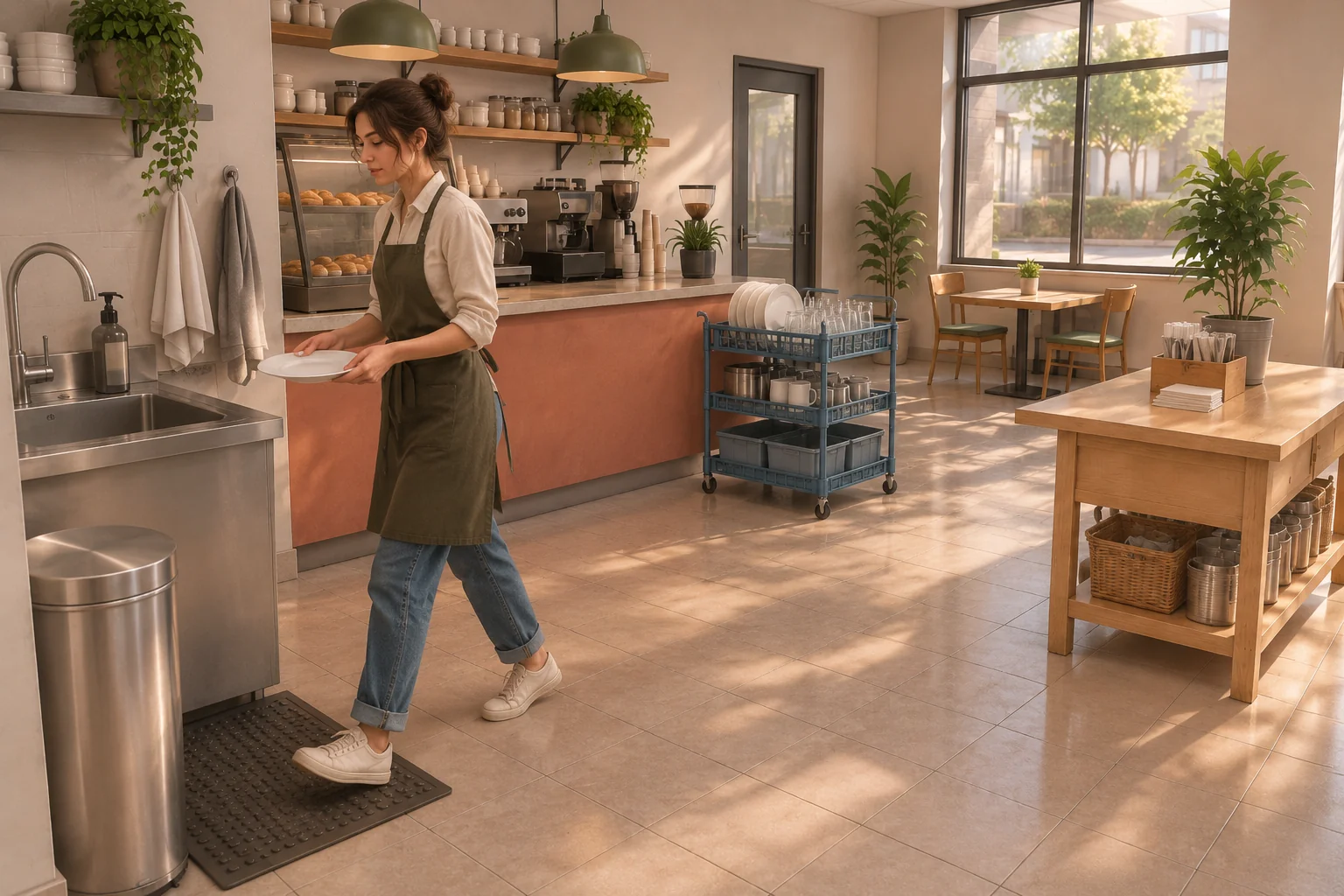
In the fictional Corner Plate, a wheeled dish rack sits in the middle of a small cafe. The player can leave it there or park it against the wall before a dry service. The test has a budget of ten walking steps and uses the same pickup, table and wash markers in both layouts.
Give the layout one testable job
The official PlateUp! press kit describes choosing appliances, arranging a restaurant and rearranging it between gameplay days. Publisher Yogscast Games also describes choosing equipment and laying out the kitchen. Use the interval between services to let players try a layout change. The cafe and walking test below are original.
Keep planning separate from the test. In Plan, the player chooses a rack position and can preview the routes for free. Once Test starts, lock the rack in place until the route finishes. If the player wants to try another placement, return to Plan and run the same trip from the beginning.
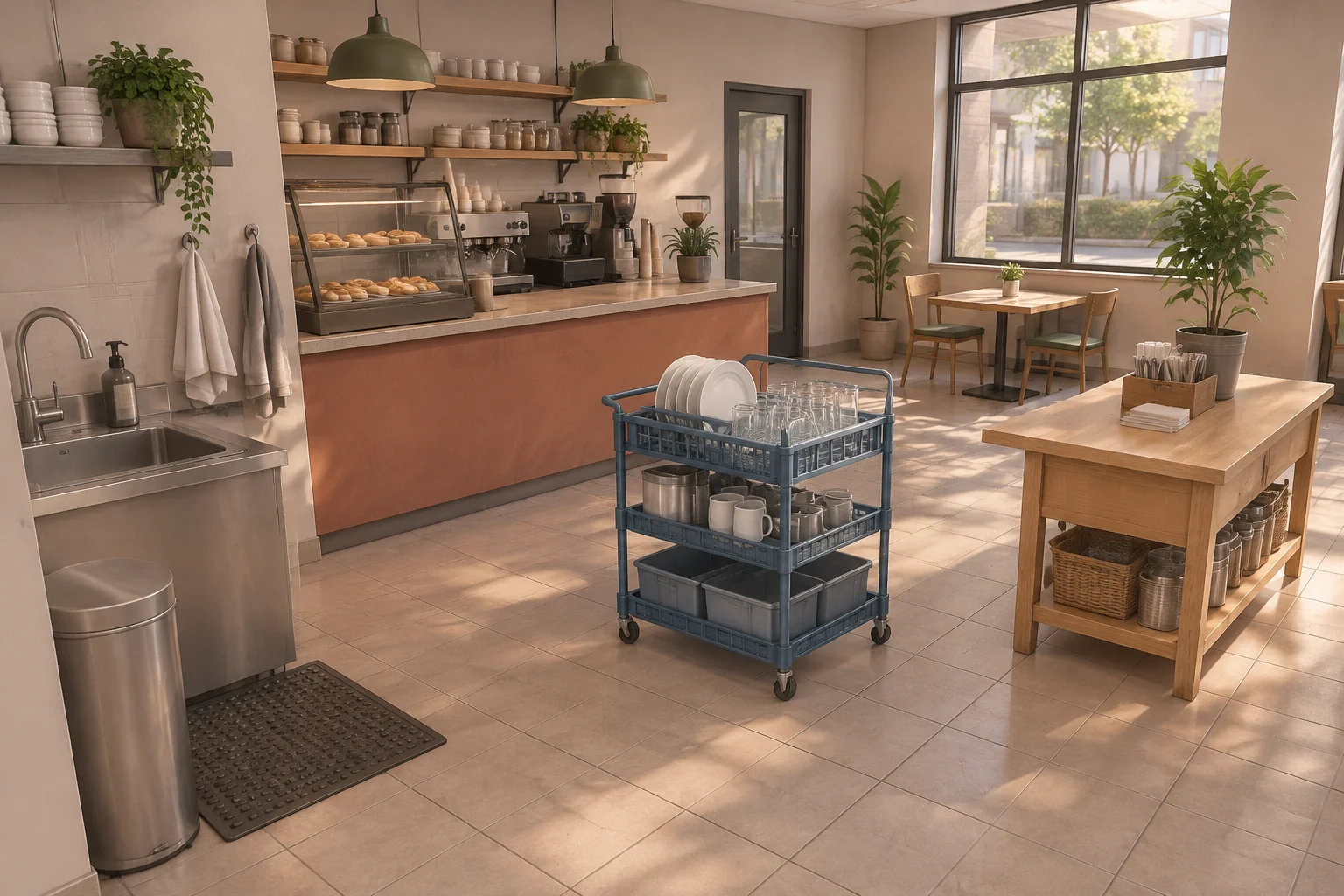
Set the parking cells and the route
Use five columns and three rows. Count columns from left to right and rows from top to bottom. Every cell is walkable except the one holding the rack. The pickup, table and wash nook are markers on walkable cells.
| Marker or rack position | Cell | Purpose |
|---|---|---|
| Pickup | (1,2) | Start the walking test. |
| Serve | (5,2) | End the first leg and start the return. |
| Wash | (1,3) | End the return and check the budget. |
| Middle or Wall | (3,2) or (3,1) | Block the selected rack cell. |
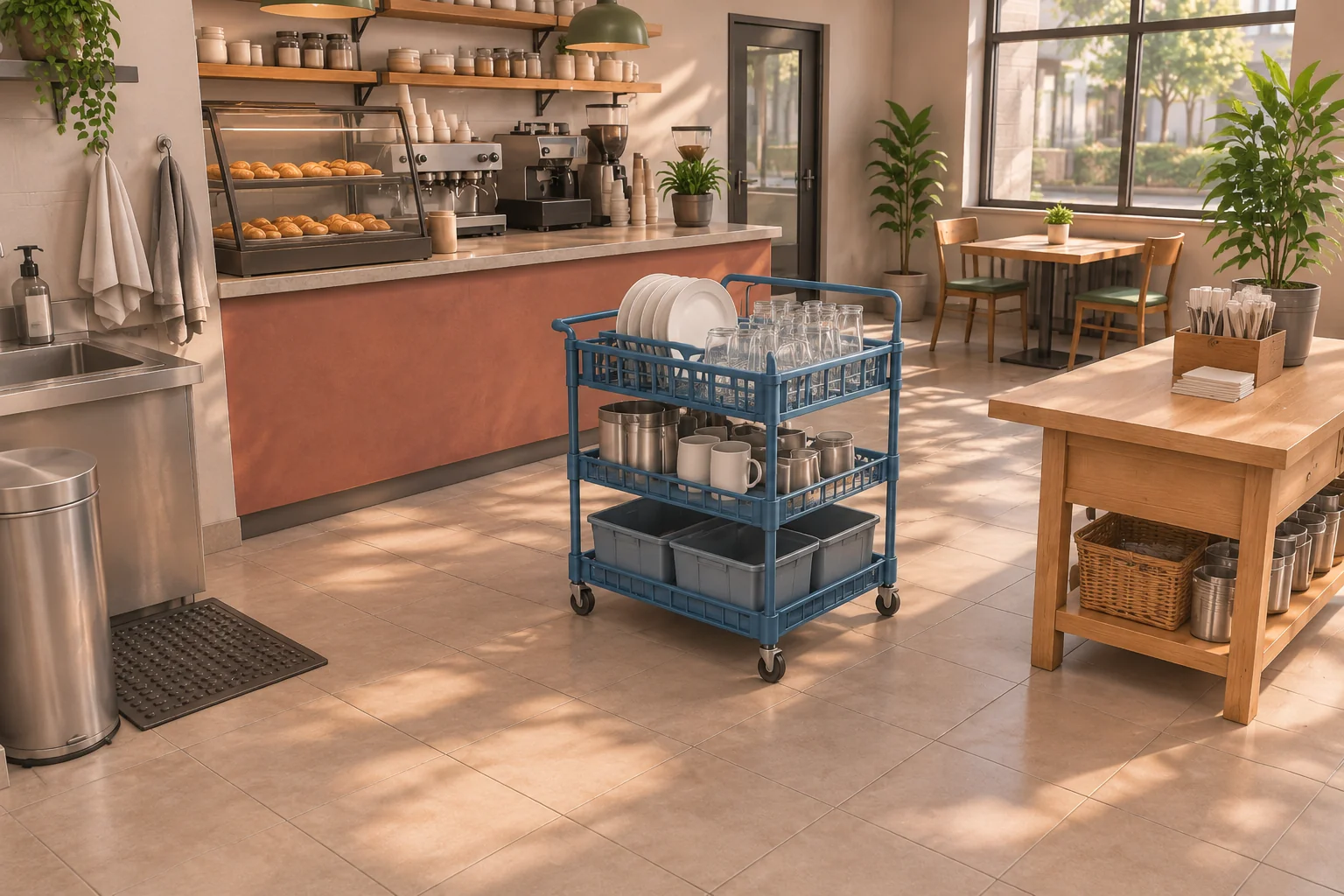
Find the shortest path for each leg. A step moves one cell in a cardinal direction. If two shortest routes exist, explore neighbors in Down, Right, Up, Left order. Count the links walked and give the interactions no step cost. Finish both legs before checking the ten-step budget. If a leg cannot be reached, report that separately without assigning it an artificial length.
Replay the same service in two layouts
| Rack position | Pickup to Serve | Serve to Wash | Total |
|---|---|---|---|
| Middle | Down, right four, up. Six steps. | Down, left four. Five steps. | Eleven. Over by one. |
| Wall | Right four. Four steps. | Down, left four. Five steps. | Nine. One spare. |
In Middle, the rack blocks the direct route in row two. The test goes around it through row three, then comes back up to Serve. Park the rack at Wall and row two is open. The return leg is already using row three in both layouts, so it stays five steps. That difference is visible in the log even if both routes look busy in motion.
Give AI one layout to check
Give the SEELE workspace the written fixture and ask for a browser draft with a Plan view, a walking marker and a per-leg log. Check the route on the board before adding cooking or customer behavior.
Build an original browser layout game called Corner Plate.
Use five columns and three rows. Down increases row.
Pickup is (1,2), Serve is (5,2), and Wash is (1,3).
Start in Plan with the rack at Middle (3,2).
Allow the rack at Middle or Wall (3,1). Block only its cell.

Preview shortest cardinal paths for free. Explore neighbors
Down, Right, Up, Left to break ties. Count walked links only.
Start Test from Pickup at zero steps. Lock the rack until the
test ends. Walk Pickup to Serve and then Serve to Wash.
No step cost for the interactions themselves.

Show the cells and count for each leg. If blocked, name the leg.
Otherwise finish both legs and compare the total with 10.
Allow Return to Plan and test from Pickup again.
Reject invalid parking and edits during Test.
Reset to the initial Plan. Use original art and controls.
Check that a second test starts at zero and keeps the new rack position. If the totals disagree, inspect the route by leg. Verify that the test counts transitions between cells and excludes the starting cell and the endpoint interactions.
Move only the Serve marker
Keep the rack at Middle and move Serve from (5,2) to (4,2). The outward leg still detours through row three, but now goes right three times instead of four. It takes five steps. The return takes four. The same rack placement now finishes in nine steps, with one to spare.
The endpoint change shortens both legs while the rack detour remains. Compare that with moving the rack, which only shortened the outward leg. Keep the board and budget fixed and use the guide to revising one rule at a time to isolate the difference.
Finish one layout test
Start your original restaurant layout game with SEELE’s AI Game Maker. Pick one service route and one object the player can move. Make the test report show where the steps changed.
Frequently asked questions
What should count as a walking step?
Count one step each time the staff marker moves to an adjacent cell. The starting cell costs nothing. Keep pickup, serving and wash interactions separate so readers can compare what changed in the layout without mixing in a different service rule.
Why rerun the same service after moving a rack?
A repeat isolates the effect of the edit. Start in the same place, use the same stops and keep the budget fixed. If only the outward leg changes, the player can see where the original layout added walking and why.
How should the game handle equal paths?
Choose a stable neighbor order and document it. Equal paths cost the same, but a stable choice makes a diagram or replay easier to compare. Show the chosen path after the test so the player can tell which side of an object the marker used.
When should I add a second table?
Add one when it creates a new layout choice that the first service cannot show. Test its route separately before combining the trips. Keep the per-leg logs visible so the player can still identify the rack or destination that changed the walk.