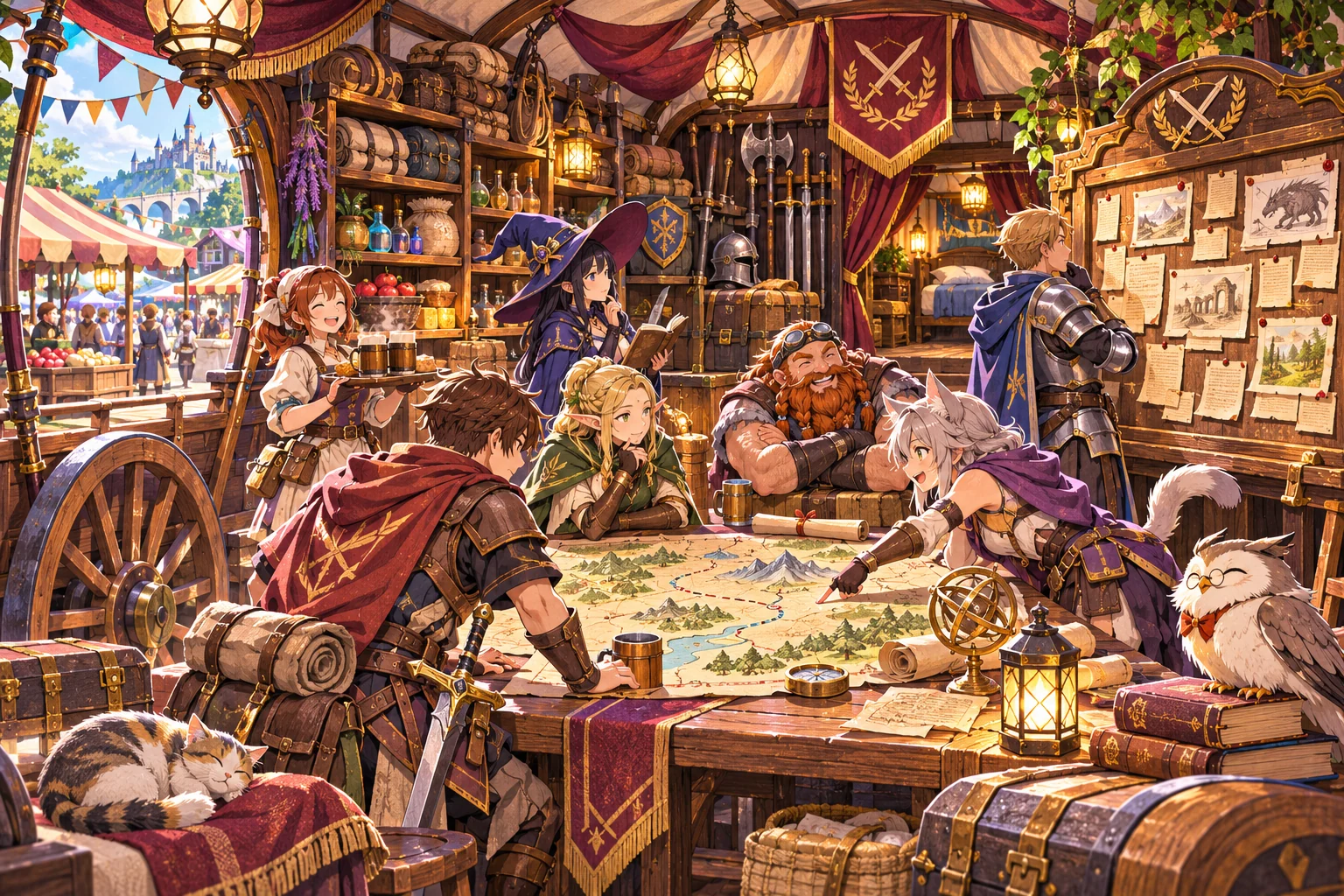
A caravan called the Wayfarer Cart is the guild's headquarters. It stores shared supplies, gives adventurers a place to prepare, serves customers and hosts the mission board. Before each market day, the player chooses where to park. Beacon Ford attracts lookout applicants and a ridge-survey contract; Pine Quarry draws porter applicants and a timber-recovery job.
That makes travel a management decision. A stop changes which customers arrive, whom the guild can recruit and which local work becomes available. The player must weigh the cost of moving the shop against a region's opportunities, then use the roster and stock to prepare for the contract. Keep gold, supplies, applicants and missions visible in a caravan ledger.
Make the traveling shop the guild’s working headquarters
Give the caravan four practical jobs: store shared stock, stage adventurers, host market customers and display local contracts. At the start of a day, let the player review gold, provisions, open missions and the roster in the shop ledger. Then choose the next stop and pay its travel cost before opening the market.
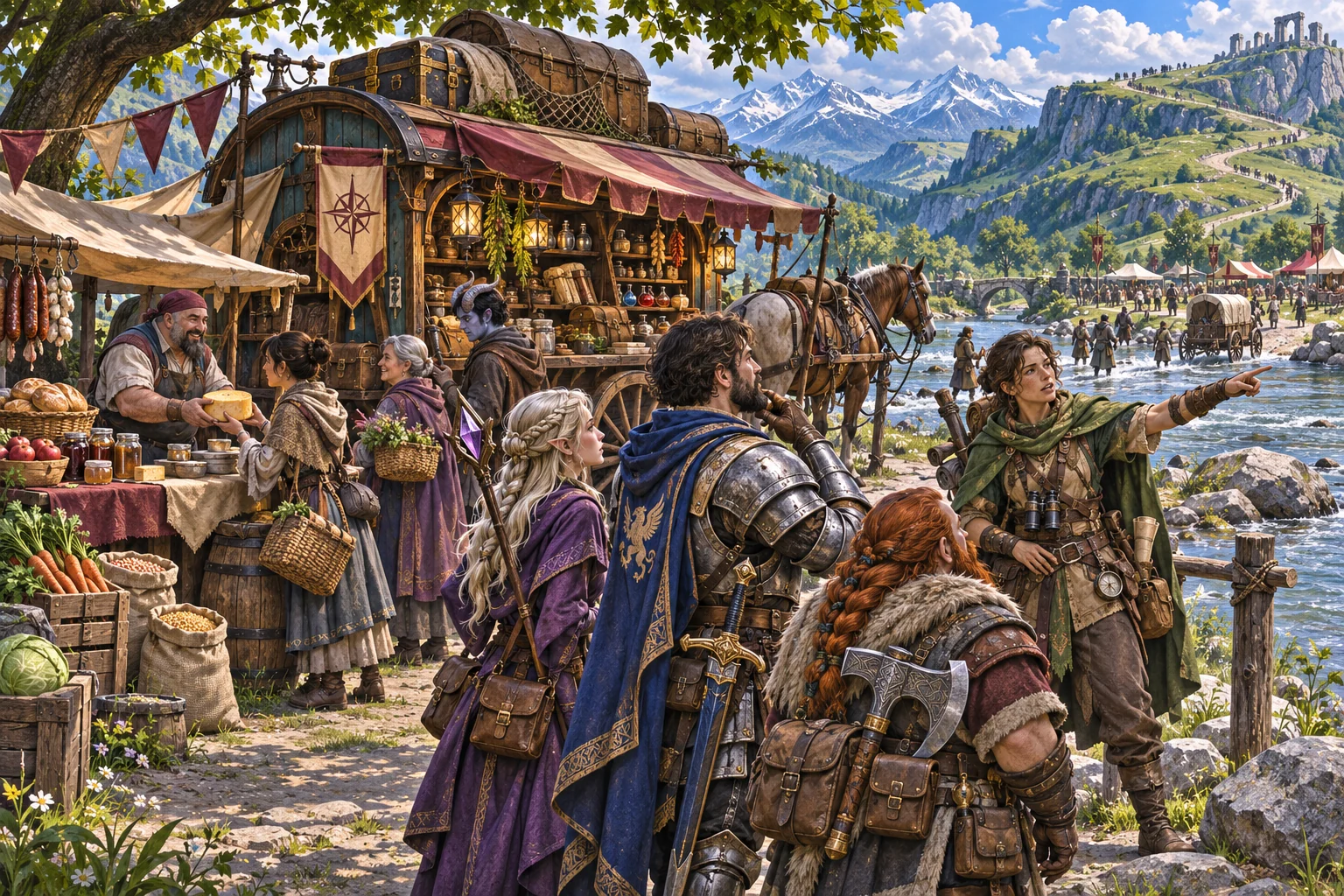
At Beacon Ford, a ridge lookout may ask to join and a survey mission appears. At Pine Quarry, a porter is available and workers post a timber-recovery contract. The caravan remains the same guild base in both places, but its visitors and board change with the route. This makes the shop's location matter beyond its scenery.
Connect customers, recruitment and mission preparation
Treat the market as part of guild management. Customers buy or trade for a small set of carried goods; the resulting gold can cover travel or recruitment. Applicants bring a clear field role, and the player can compare that role with the current roster before offering a contract. Avoid generating an unlimited market: show a fixed visitor list for each stop and day.
Before accepting local work, let the player assign adventurers and spend supplies from the caravan's shared stock. A lookout can reveal a safe ridge route, while a porter can carry an extra timber bundle. The mission board should state the requirement and reward so players can see whether their current party is ready or whether a different stop would better support the guild.
Compare two stops with the same guild state
Reset the same day with 40 gold, six provisions, the same three adventurers and identical stock. At Beacon Ford, market visitors introduce a lookout applicant and post a ridge-survey contract. The lookout can scout the pass, making the safe route available. At Pine Quarry, visitors introduce a porter applicant and post a timber-recovery contract instead. The porter can carry an extra bundle on the quarry route.
Record stop, travel cost, customers, applicant, contract, recruitment choice and remaining stock. Keep gold and roster fixed so the location is the changed variable. The player can recruit locally or keep the gold for supplies. If both stops produce the same applicant and mission, strengthen their regional tables or give the contracts distinct requirements.

Prompt a first version with two meaningful destinations
Start with one traveling shop, two stops, three adventurers, a small stock list and two local contracts. Ask for an explicit travel cost, a fixed set of customers, one applicant and one mission per stop, and a ledger that updates after each choice. Add more regions after the location decision changes the guild's options in a way players can trace.
Create a guild-management RPG based in a traveling shop called the Wayfarer Cart. The caravan stores shared gold, provisions and goods, stages three adventurers, hosts customers and displays local missions. Each day let the player choose a stop and pay a travel cost. Beacon Ford generates a lookout applicant and a ridge-survey contract; the lookout scouts a safe pass. Pine Quarry generates a porter applicant and a timber-recovery contract; the porter carries an extra bundle. Start with 40 gold, six provisions and identical stock. Show recruitment, mission assignment, market trades and a ledger after each choice. Include a reset and compare both stops with the same starting guild state.
SEELE's free game maker describes starting from a text prompt and refining a first version with follow-up requests. Use that general workflow to inspect the stop choice, recruitment pool and shared-stock ledger before adding destinations.
Start the traveling-shop guild RPG in SEELE
Frequently asked questions
How can a traveling shop work as a guild base?
Give the caravan practical systems the guild uses every day: shared storage, adventurer staging, customer trading and a mission board. Let the player review stock and roster before choosing the next stop. The shop then anchors management decisions instead of serving only as a moving backdrop.
How should different stops change guild management?
Give each location a distinct visitor pool, recruit and contract. Beacon Ford can offer a lookout and ridge survey, while Pine Quarry offers a porter and timber recovery. Show travel costs and the resulting ledger so the player can compare local opportunity with the stock and gold spent to reach it.
What should I test in the first location comparison?
Reset the same gold, stock, roster and day, then change only the caravan stop. Record customers, applicant, mission, travel cost and remaining supplies. If both stops lead to the same choices, give their local markets or contract requirements more distinct outcomes.