In Afterimage Match, each moved gem remembers its previous cell for one move. When a match clears, the moved pieces leave faint afterimages in their former positions. An afterimage acts as a wildcard for one later match, then disappears. Players can plan a short chain by choosing where a gem came from, not only where it lands. The one-turn limit keeps the board from filling with permanent helper tiles.
Make previous positions part of the puzzle
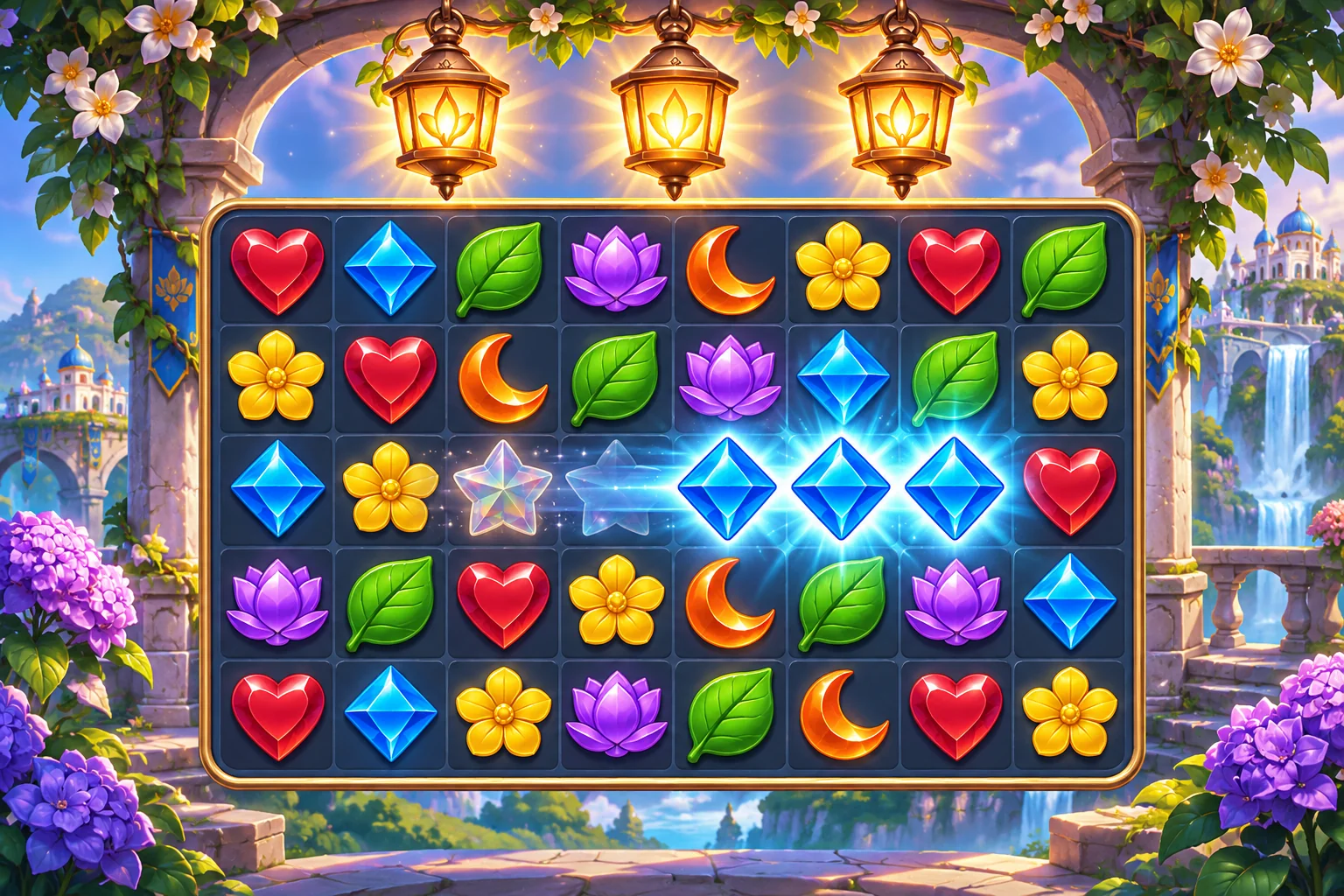
Start with a small board, a visible move counter and one clear level goal. When the player moves a gem into a match, record its former cell. After the matched gems clear, place a one-turn echo at that cell. During the next move, the echo can count as any color in a match; after that move resolves, remove it whether it was used or not.
| Board event | Memory rule | Puzzle effect |
|---|---|---|
| Gem moves | Store its previous cell | Position matters beyond the landing square |
| Match clears | Leave an afterimage | Prepare one temporary chain |
| Next move resolves | Echo expires | Prevents permanent wildcard stockpiles |
Show the echo with a distinct outline and remaining lifetime. It should be different from a normal gem and from an empty cell. Keep the move counter and level objective visible so players can decide whether using an echo is worth spending a turn.
Let memory bridge one planned chain
Use an afterimage as a one-move wildcard, not as a permanent gem. A player might complete a red row, leaving an echo that lets two blue gems match on the next move. If the player makes another move without using the echo, it expires. This creates a deliberate setup choice while keeping match resolution easy to predict.
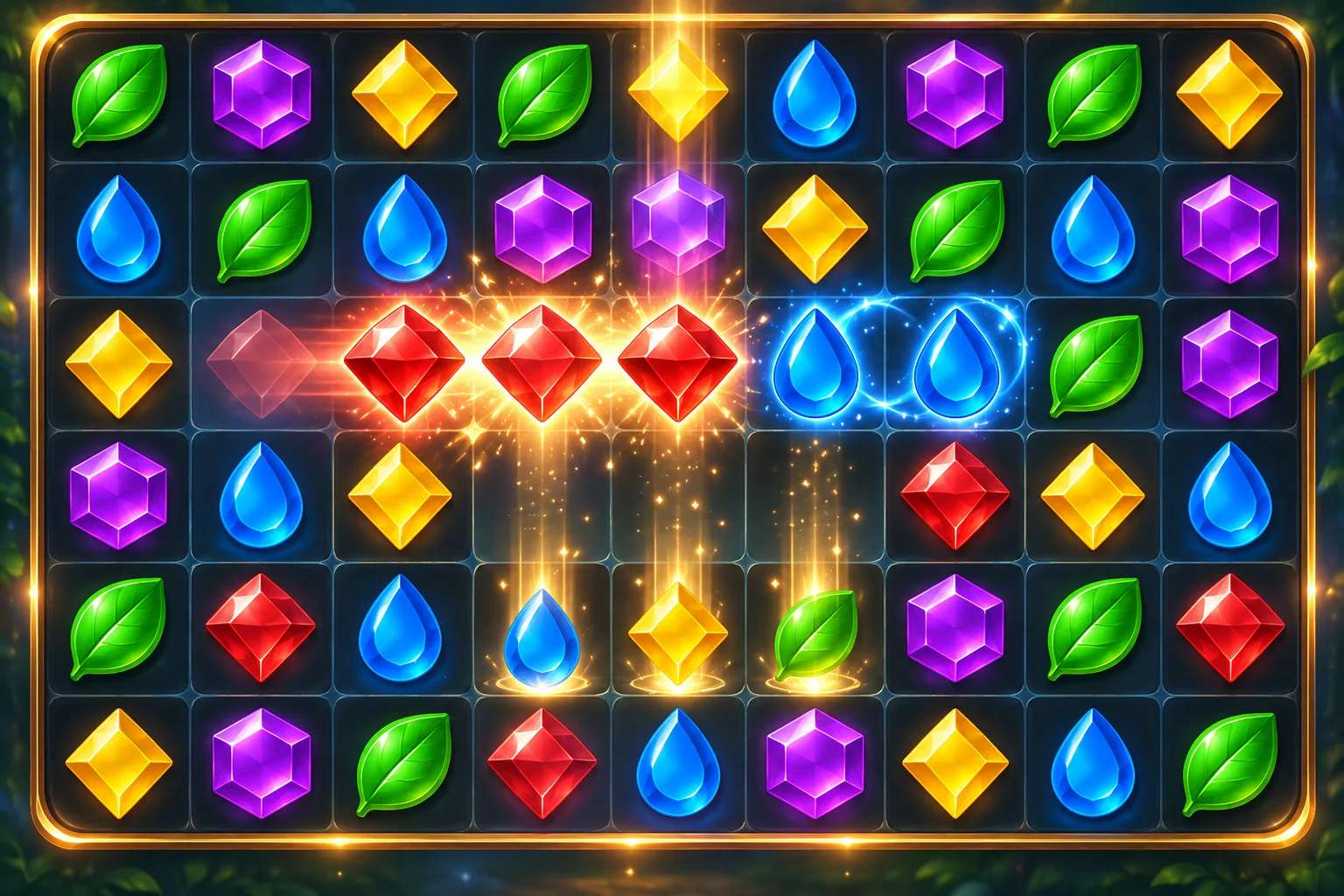
Resolve the board in a stable order: validate the swap, find matches, clear matched pieces, place echoes at recorded former cells, then advance the move and expire unused echoes. Do not let an echo create an endless cascade by renewing itself. A new match can create a new echo only from gems moved in that action.
Replay the memory and expiration rule
The deterministic 3x3 board starts with a row of three red gems after a legal move. Clearing it leaves an echo at the moved gem’s previous cell. On the next move, that echo bridges a pair of blue gems to make a chain. If the next move passes without using the echo, it expires and the same blue pair no longer matches. This checks one-turn memory only, not a full solver or level balance.
| Case | Echo state | Result |
|---|---|---|
| Red match clears | Echo created | Former cell is remembered |
| Blue pair uses echo next move | Active wildcard | Chain clears |
| One move passes unused | Expired | Blue pair stays unmatched |
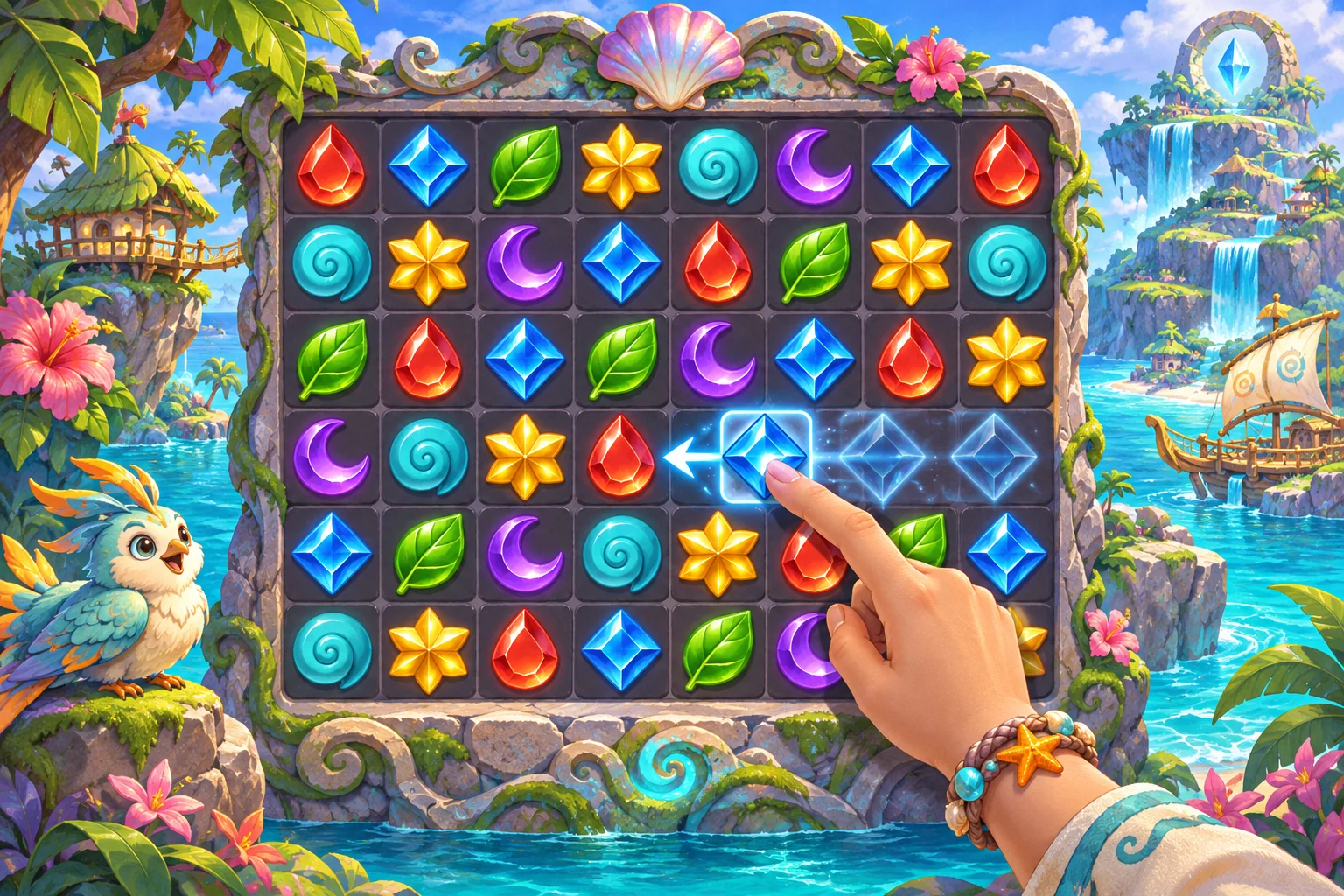
In a playable build, test if the echo outline, lifetime and move order are clear. Try boards with multiple matches and check that a single memory marker does not resolve twice. The local example verifies a simple chain, not difficulty or player understanding.
Start with a small board
Ask an AI game maker for a compact match-3 board, a move limit, one level objective and one-turn position echoes. Show a gem’s former cell after a match, let the echo bridge one later match, then remove it at the end of that move. Add multi-step cascades only after the player can predict the memory rule.
Create Afterimage Match, a match-3 puzzle prototype where each moved gem remembers its previous cell for one move. When a match clears, leave a faint afterimage in the moved gem’s former position. Let that echo act as a wildcard for one match on the next move, then remove it whether used or not. Show the move counter and a clear level goal. Resolve swaps and matches in a stable order; do not let echoes renew themselves or create endless cascades. Add a safe reset and a small tutorial board.
Start a match-3 puzzle prototype in SEELE
Frequently asked questions
How can remembered positions create new match-3 puzzles?
Record a moved gem’s former cell and leave a temporary marker when the match clears. That marker can bridge a later match, so players plan both the destination and the path a gem took. A short lifetime keeps the board readable, prevents stored wildcards, and makes the chain opportunity easier to predict.
Should an afterimage remain on the board indefinitely?
No. Give it a clear one-move lifetime and remove it after the next move resolves, even if it was unused. This prevents players from accumulating permanent wildcards and makes the chain opportunity predictable. The interface should show the echo fading before it expires, so its timing is easy to read.
What should I test for a position-memory mechanic?
Replay a fixed board to verify where echoes appear, whether they help one next match and when they expire. Also test multiple matches and simultaneous clears in a playable build. Confirm an echo cannot renew itself or count twice. A local example checks the rule, not the full solver, player understanding, or level difficulty.