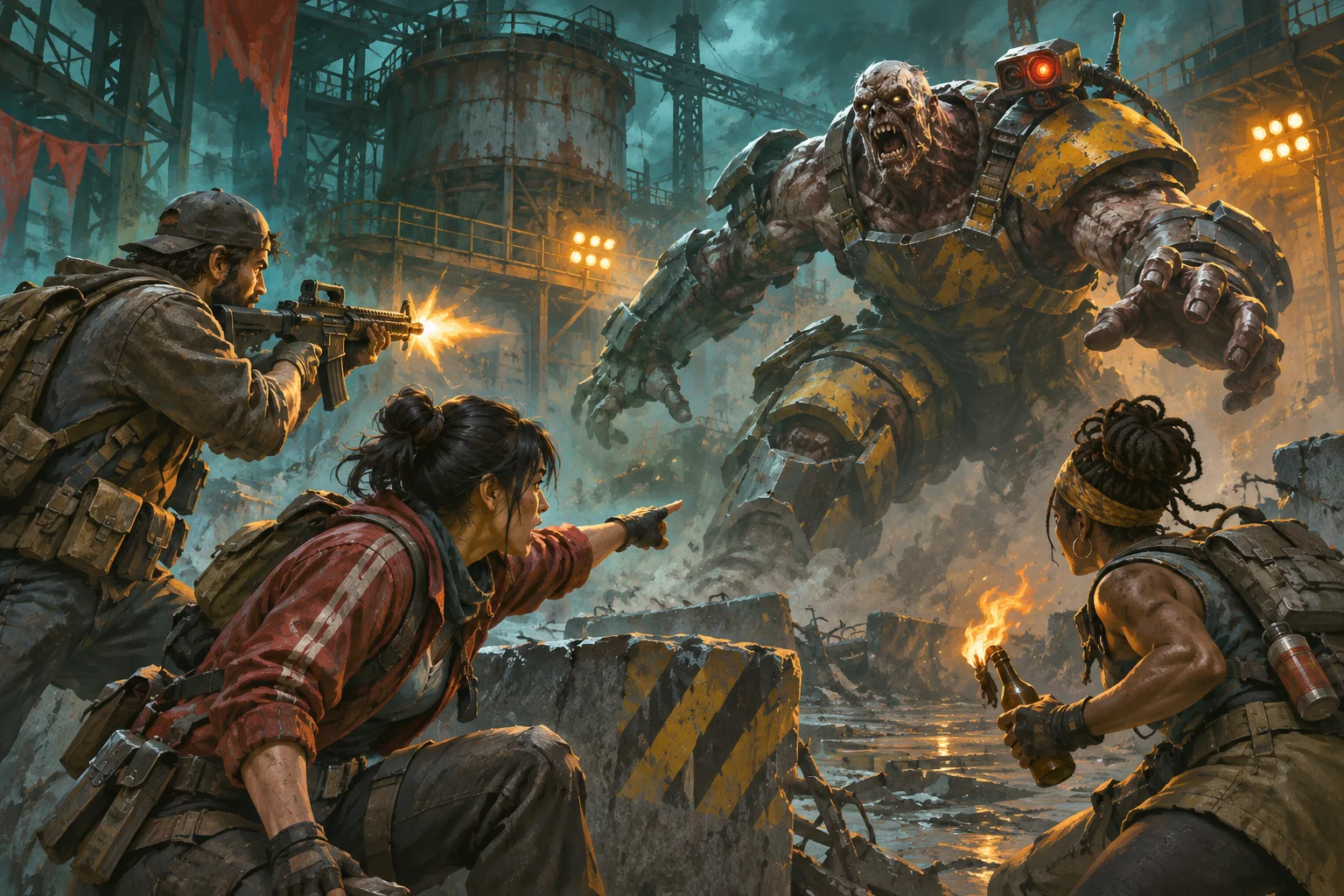
A mech shooter can make the gap between fights a meaningful decision. After each encounter, let the player rebuild one arena module and reconnect one energy conduit. That repair can open a safer lane or power a weapon for the next fight. Keep the arena small so the consequence is visible.
Set up the damaged arena and intermission
Use three floor modules: a central platform, a north lane and a south lane. Begin with the north plate broken and the energy conduit disconnected. The mech starts at the central platform. Between encounters, freeze combat and show the available repair points. The player may restore either lane and choose one conduit connection.
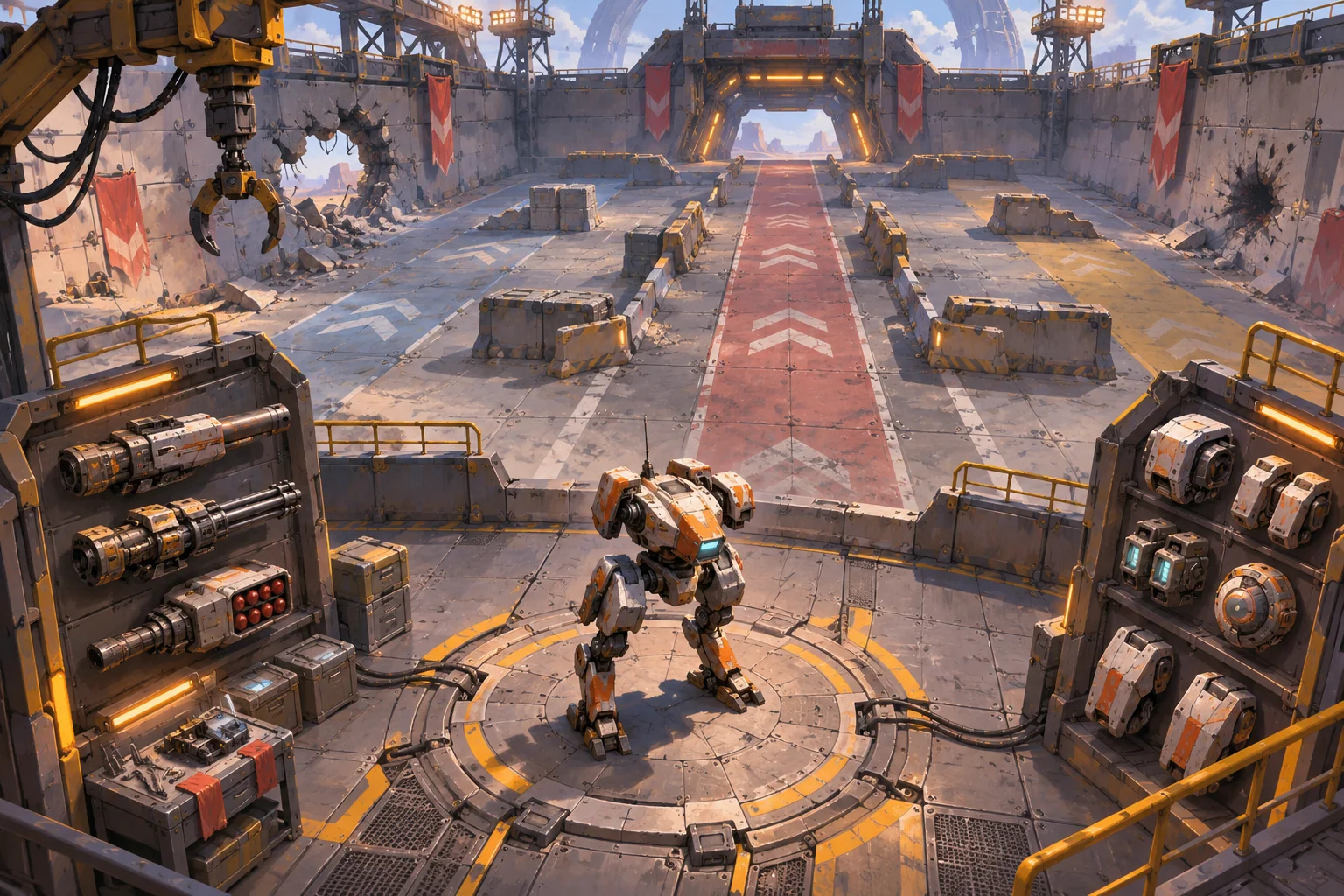
Treat the intermission as a short planning phase. Display which floor piece will be replaced and where the conduit will run. Keep the same mech, arena footprint and starting point for each comparison so the repair is the main variable.
Make the rebuild change both route and power
Connect the north conduit to the weapon node and the cannon receives energy for the next fight. That choice leaves the north lane unavailable if its floor module is still broken. Alternatively, repair the south floor and route the conduit through its node. The south path becomes usable, but the cannon stays unpowered.
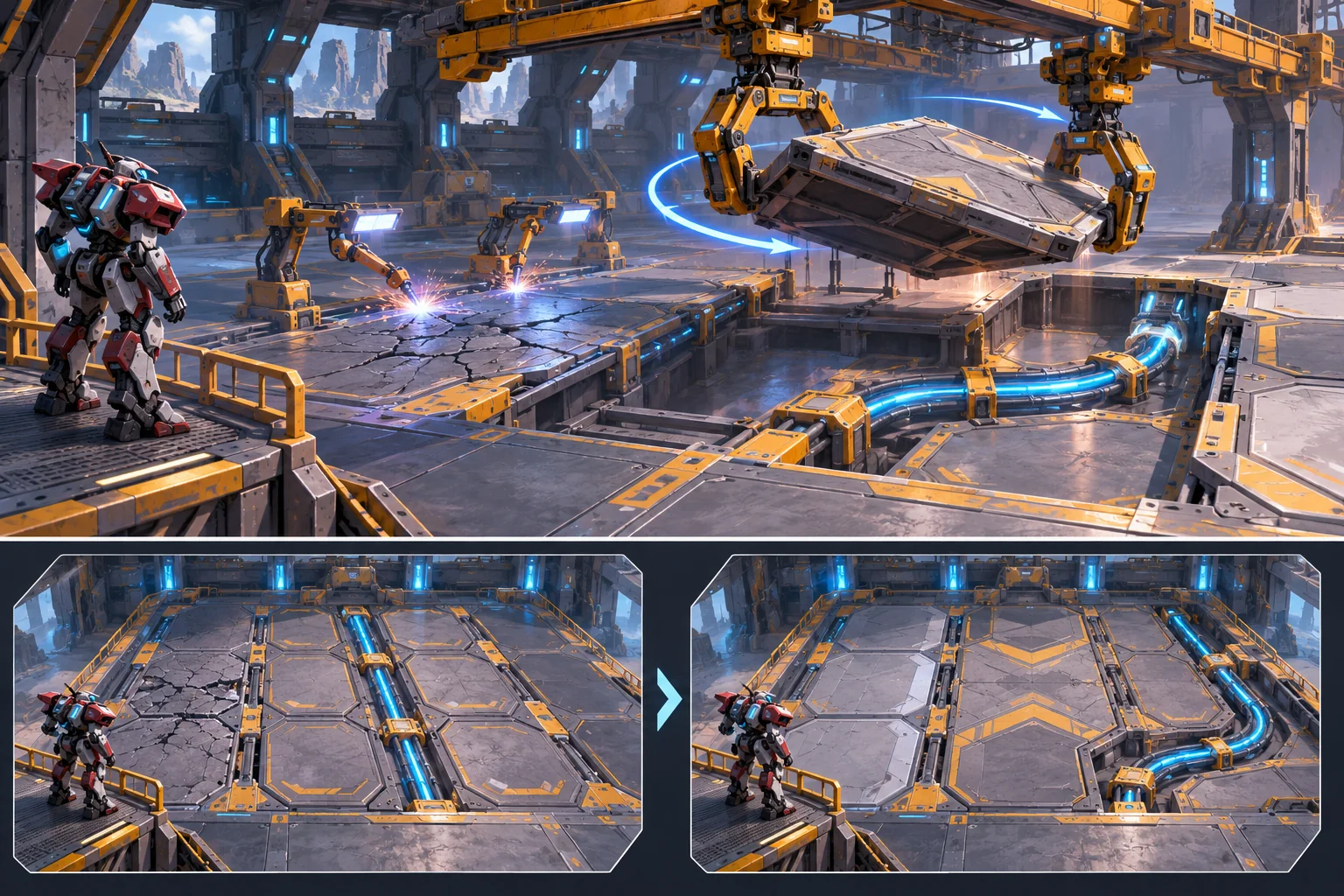
The arena rebuild should persist across the encounter boundary. Reset temporary combat damage when the next fight begins, but keep the chosen module and conduit state. This distinction makes repair choices legible without implying that every object or enemy state carries over.
Replay two repairs with the same arena
The local rules replay uses a graph of three modules and two conduit nodes. In the north-power case, the cannon is energized and the broken lane remains closed. In the south-route case, the route is traversable but the cannon cannot fire its powered shot. Both cases keep the mech at the same start node.
| Repair choice | North lane | South lane | Cannon energy |
|---|---|---|---|
| North conduit | Broken | Open | Powered |
| South floor and conduit | Broken | Open | Unpowered |
This check verifies graph reachability and a simple energy gate only. It does not model collision, weapon damage, enemy tactics, animation or balance. If your prototype uses another grid or energy rule, replace the example values and replay the same two choices.
Prompt for one rebuild decision
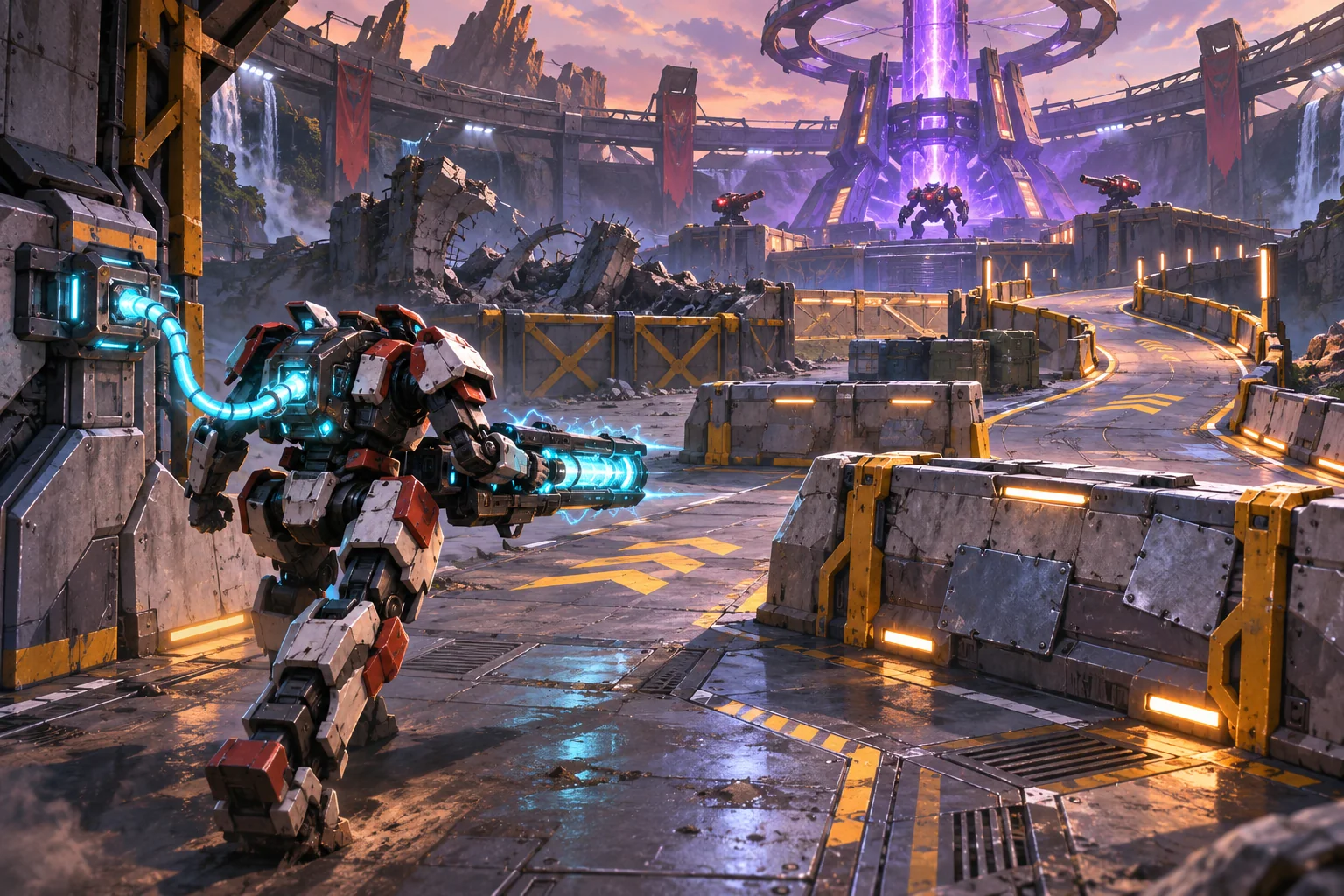
Ask an AI game maker for a compact mech shooter with three modular floor sections, two conduit nodes and a planning phase after each encounter. Let the player repair the north energy line to power a cannon or restore the south route instead. Preserve the chosen repair for the next fight, reset temporary damage, and add a reset to compare both outcomes.
Start with visible tiles and a single energy indicator. Add weapon tuning only after both repair choices produce the expected route and power state. That keeps the first experiment focused on how arena work changes the next encounter.
Start a mech shooter prototype in SEELE
Frequently asked questions
What should persist after an encounter?
Keep the selected floor module and conduit connection through the next encounter so the rebuild has a practical consequence. Temporary damage can reset at the boundary. State explicitly which values persist; otherwise players may not know whether a broken route or powered weapon is part of the next fight.
How can a repair affect weapon energy?
Connect a conduit node to one weapon node and make that connection a clear gate for the powered shot. In this example, the north repair energizes the cannon while leaving a lane closed. The south repair opens a route but leaves the cannon without that energy connection.
What should I test before adding combat balance?
Replay both repair choices with the same arena, mech start and encounter inputs. Confirm the expected lane reachability and cannon energy state, then reset and compare. This isolates the rebuild rule before collision details, enemy behavior or damage numbers make the result harder to read.