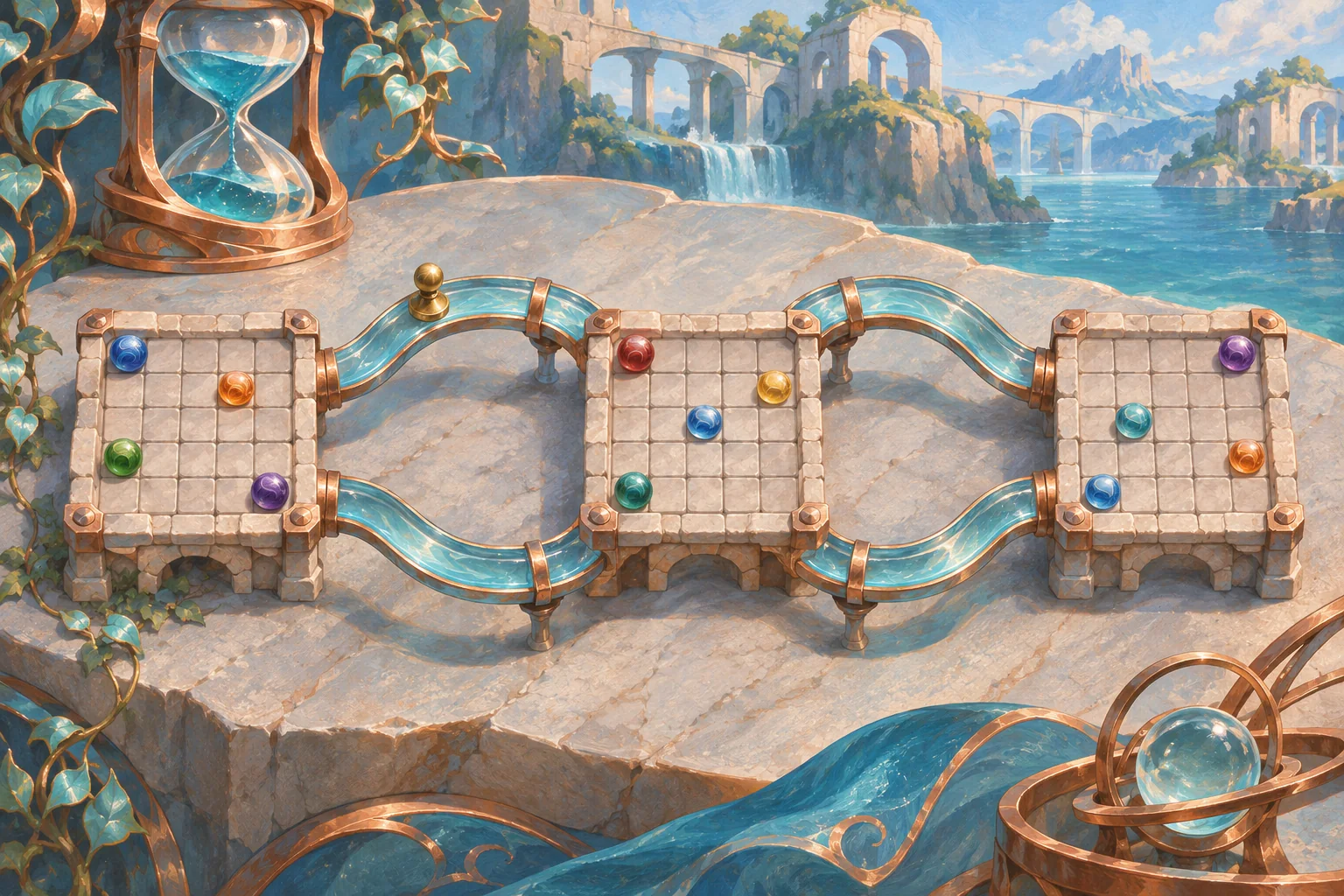
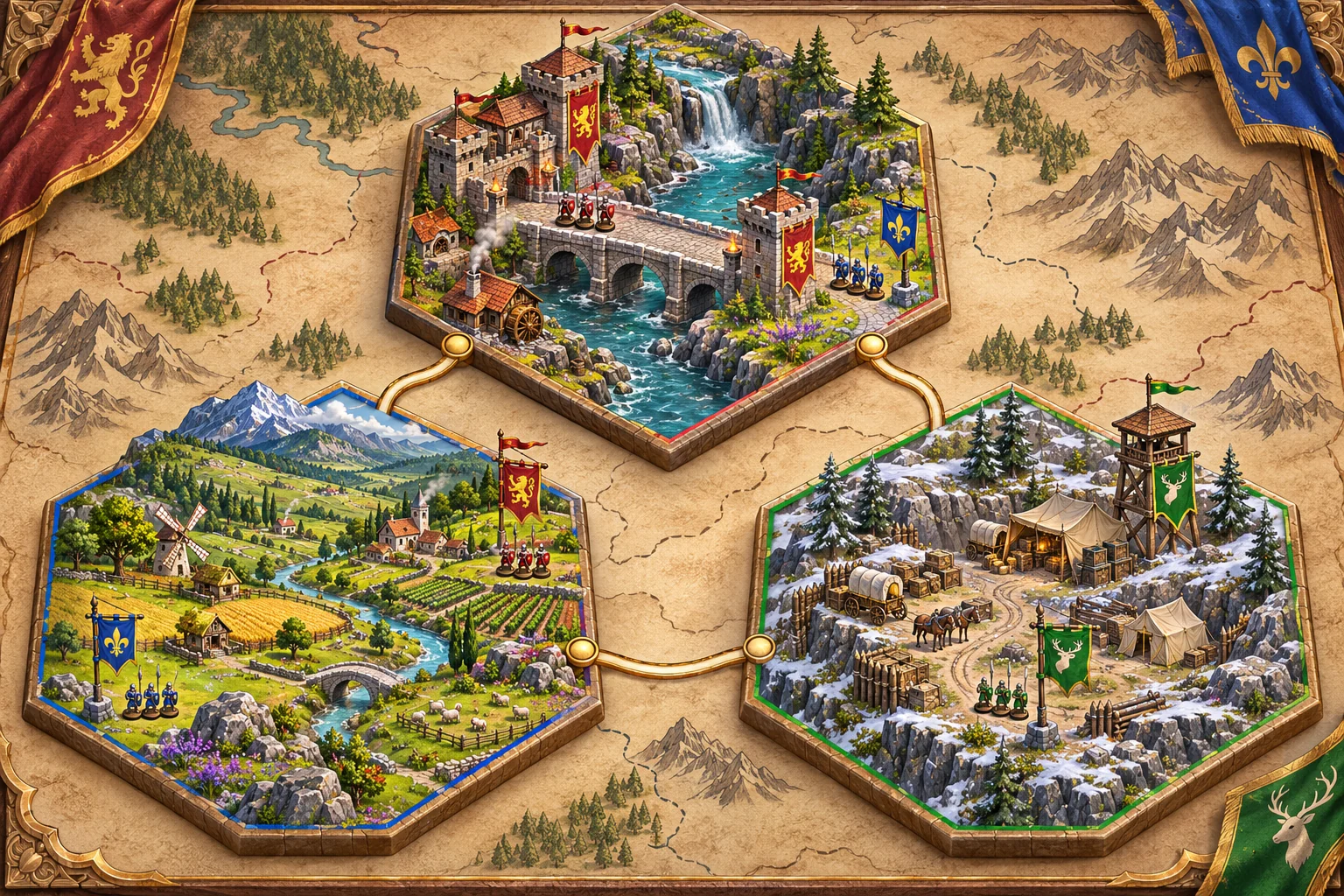
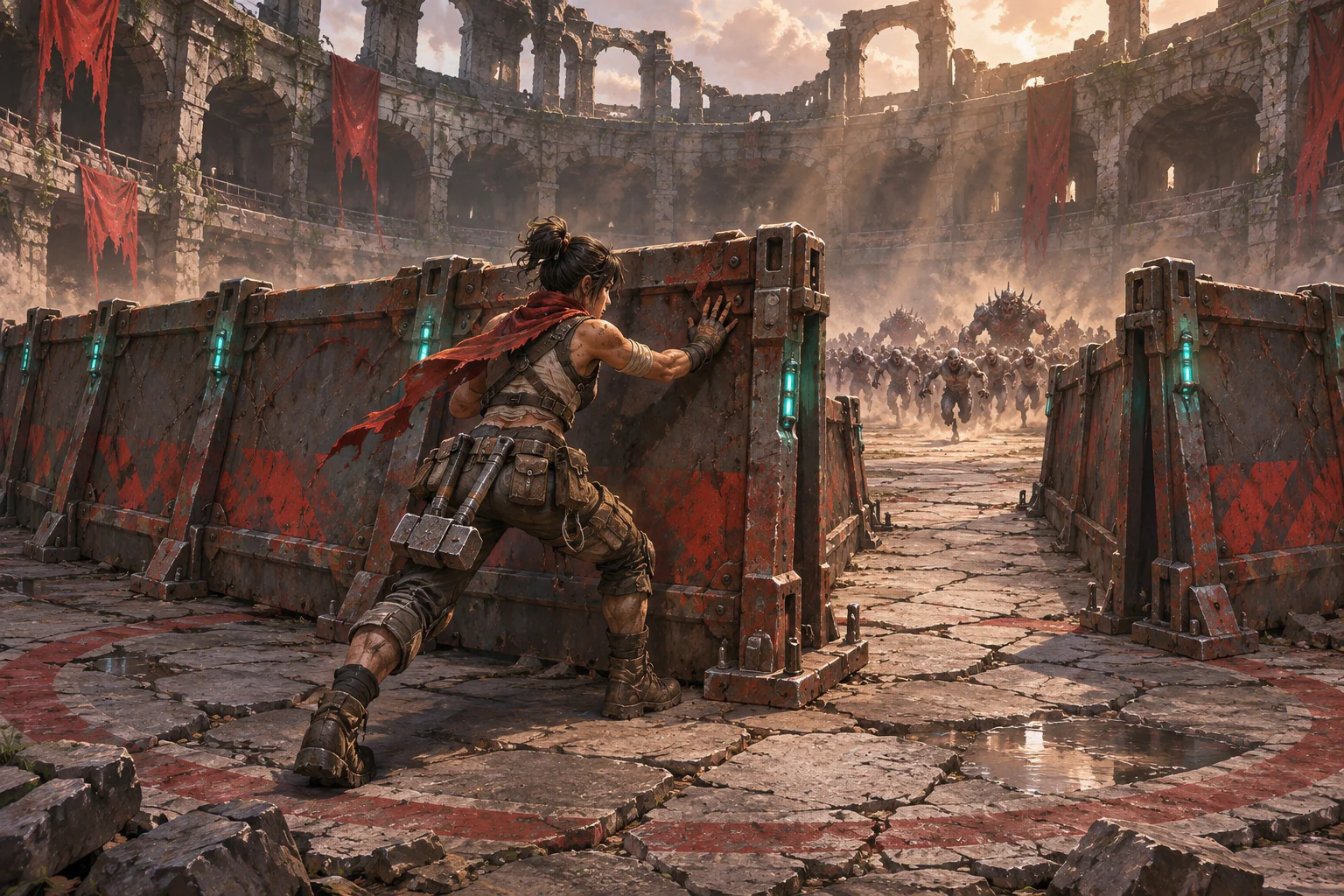
An auto-battler campaign can feel like a journey when each encounter is a small map connected to the next. Players set formation and equipment, then watch combat resolve automatically. The campaign decision happens between battles: choose which map to enter, what reward to pursue and whether the squad needs a rest before continuing.
Carry unit health across the map chain so route choices have consequences. Begin with one guard who leaves the first fight wounded, then compare a direct route with a connected rest node before the same next battle. This deterministic model checks persistent state and route effects; it does not establish campaign pacing or battle balance.
Connect small maps through persistent squad state
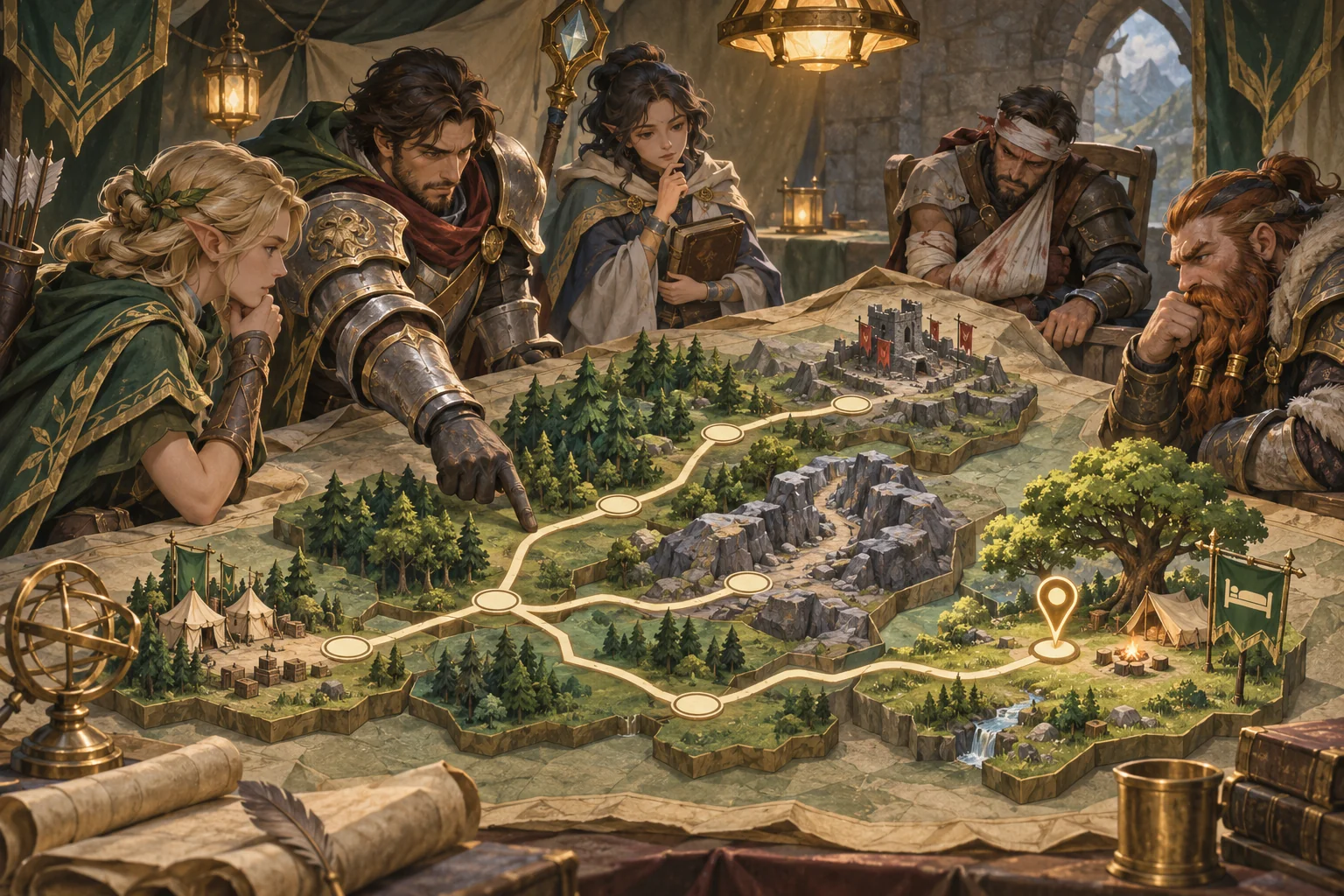
Represent each map as a node with one encounter, a terrain tag and one or two exits. The player sees the next connected nodes before choosing. The auto-battler resolves movement, target selection and attacks from the current formation; after victory, surviving units keep their remaining health.
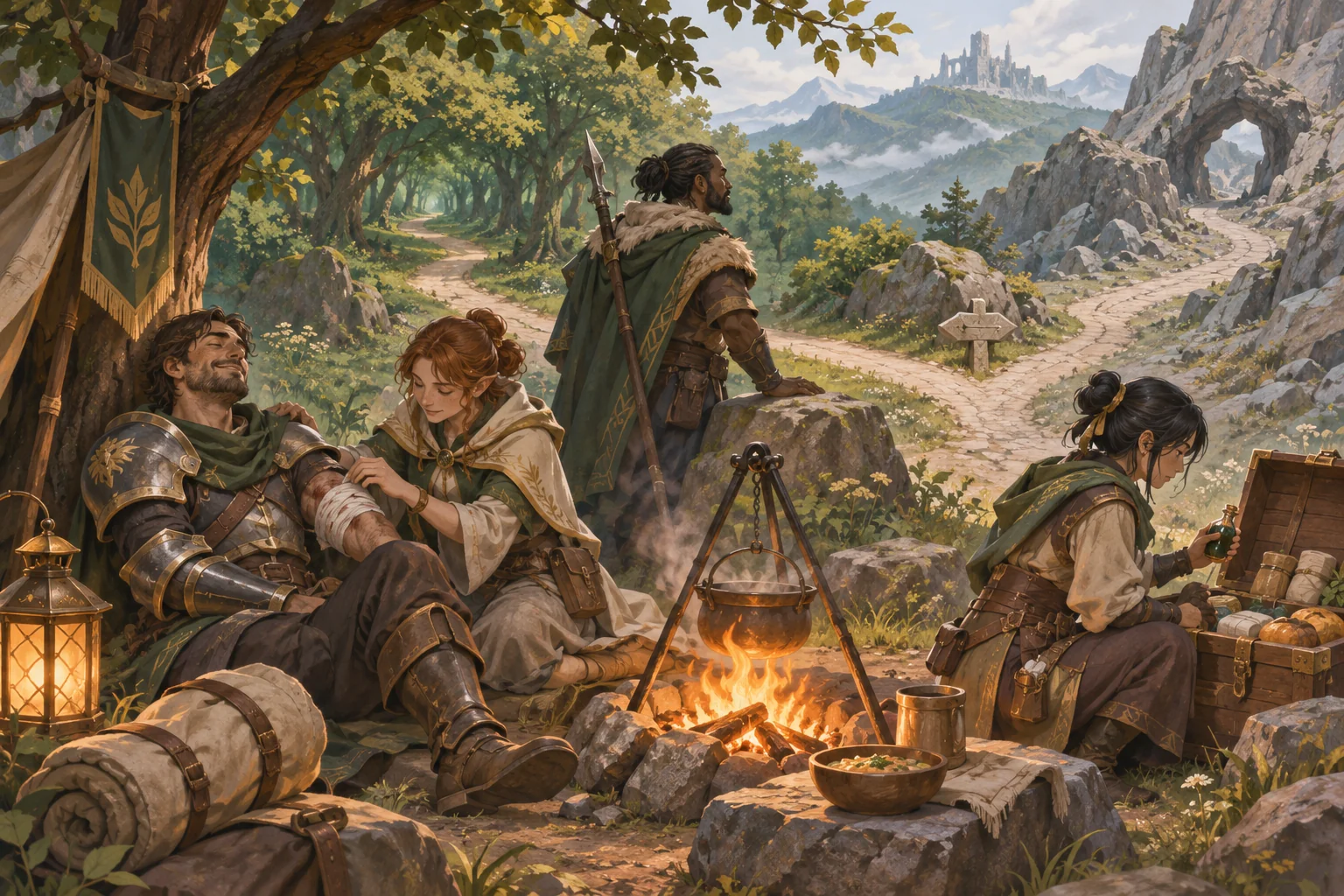
Use rest sites as explicit route nodes instead of a free reset between fights. A rest map can restore two health to a unit but costs a branch choice or reward opportunity. Show the unit's current and recovered health on the route screen so the player understands why an extra stop may matter.
Keep the squad, first battle result and next enemy wave fixed while testing the first route decision. Add more maps, events or recruit choices only after the player can trace how one node changes readiness for the next automatic fight.
See Godot's Resource documentation for reusable map-node, unit-state and route data definitions.
Check whether a rest map changes survival
The first auto-battle leaves the guard at two health. The next fixed enemy wave deals three damage to that guard. On the direct map link, no recovery occurs before combat, so the guard is knocked out when the wave resolves.
Change only the route: insert a connected rest map that restores two health before the next fight. The guard enters at four health and survives the same three-damage attack with one health remaining. Keep formation, targeting, enemy damage and all other units unchanged.
This deterministic state check verifies that health carries between maps and the rest node updates it. It does not test whether players enjoy the route tradeoff, whether the rest cost is fair or whether the full campaign stays varied. Test those questions across longer map sequences.
Ask AI to prototype a connected-map auto-battler
Show map exits, squad health and the rest node's recovery before the player chooses a route.
Change only the route while keeping squad formation and enemy damage fixed.
Create an original auto-battler campaign using connected small map nodes. The squad enters a first automatic battle; afterward the guard has 2 health. A fixed next enemy deals 3 damage to the guard. Compare a direct map link with a rest node that restores 2 health before the next fight. With no rest, the guard is knocked out; after rest, the guard enters at 4 and survives with 1. Keep formation, targeting and enemy damage fixed. Show route choices and persistent health. Do not claim this state check proves campaign balance or pacing.
Make every map choice prepare the next fight
Connected small maps give an auto-battler campaign structure between automatic encounters. Let squad condition, terrain or rewards persist so choosing the next node changes what the player brings forward. Once a direct path and a rest branch produce visible differences, playtest longer routes to tune the cost and rhythm of recovery.
Prototype an auto-battler campaign with SEELE's AI game maker
Frequently asked questions
What makes small maps feel connected in an auto-battler campaign?
Give each map clear exits and carry squad state forward. Health, a terrain effect or a reward can change what the team brings into the next automatic fight. Show those links and persistent details on a route screen between encounters.
Should units recover fully after every battle?
Not automatically if route choices are meant to matter. Persistent health can make a rest node useful, but show its recovery and opportunity cost clearly. Start with one modest recovery rule and check how it changes readiness for the next fixed encounter.
Does a health model prove that the campaign is well paced?
No. It verifies that health persists and a rest node updates it under fixed combat results. It cannot show whether players value the route, whether recovery feels fair or whether maps repeat too much. Those questions need playtests across a longer campaign path.