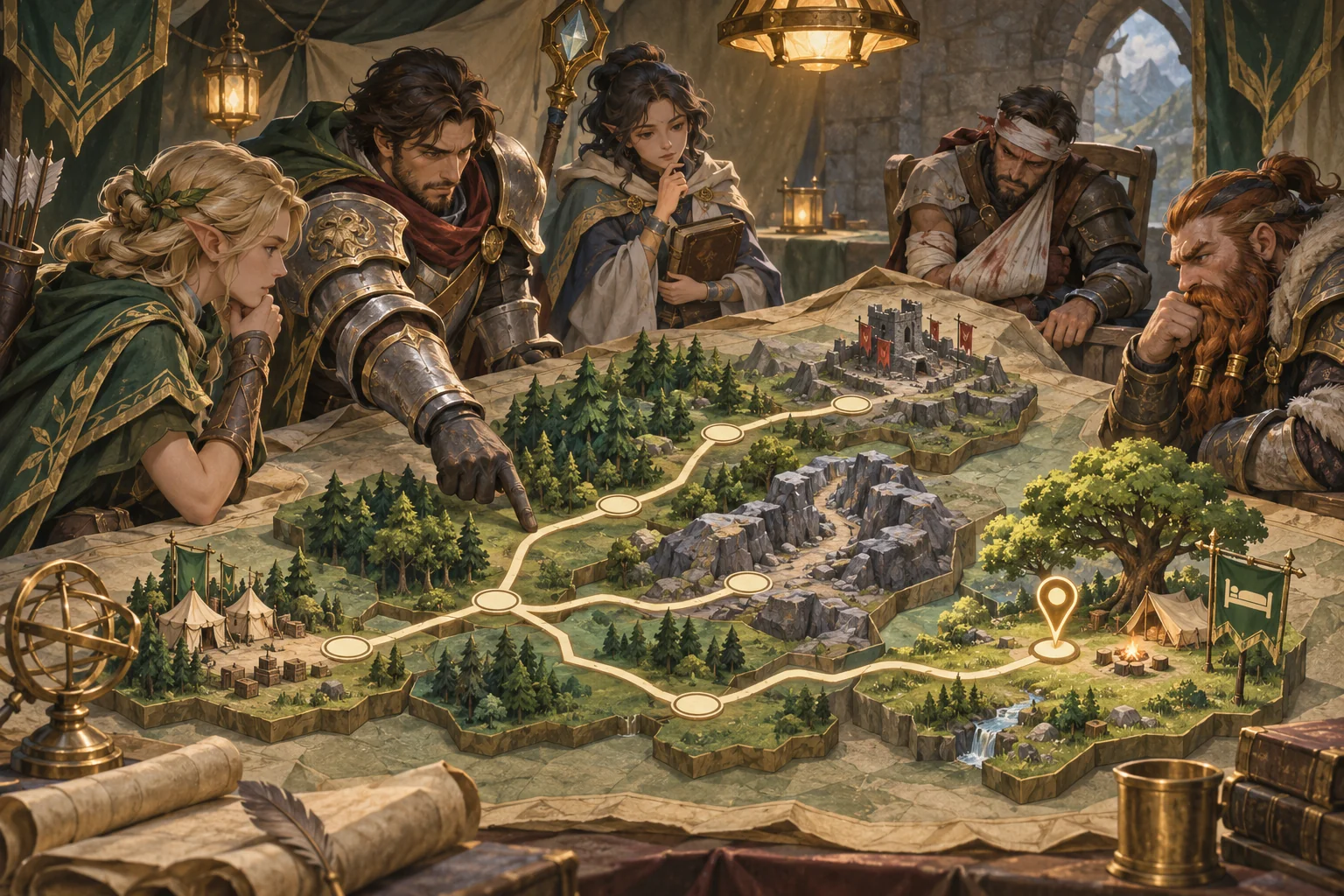
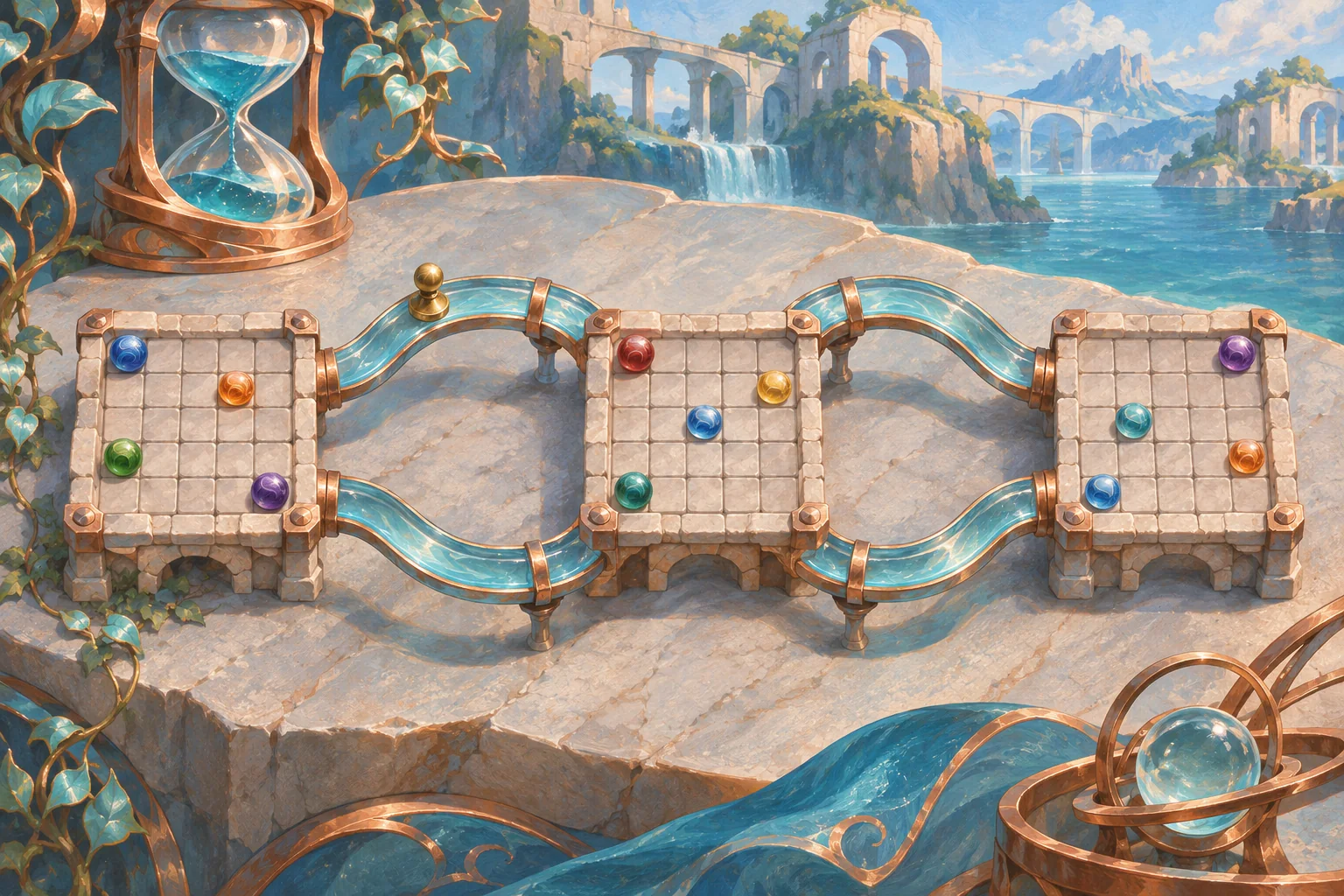
A campaign moves through a bridge, a valley and a supply depot. Each map is small, but territory, unit condition and fuel carry forward. The bridge mission therefore changes which route is open and how much fuel the next force begins with.
Connect small maps with visible campaign links
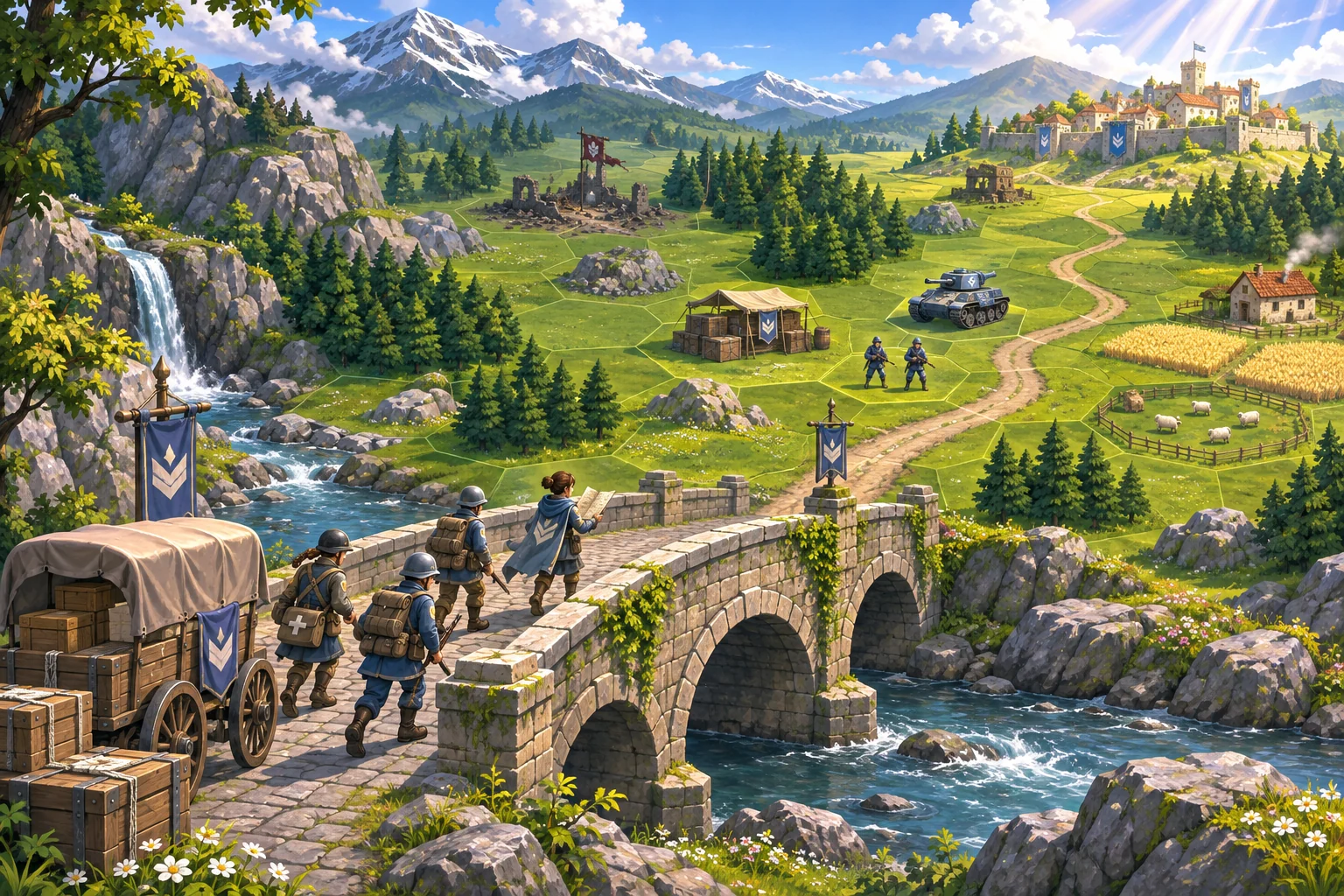
Use three compact maps: Bridge connects directly to Valley and indirectly to the Depot. Mark the two exits on the Bridge map and show the connection before the player commits. Capture control points to secure the direct route; damaging the bridge closes it.
Keep the tactical space readable with a small squad and clear cover. A campaign strip between maps should show territory held, surviving units, fuel and the next available operation.
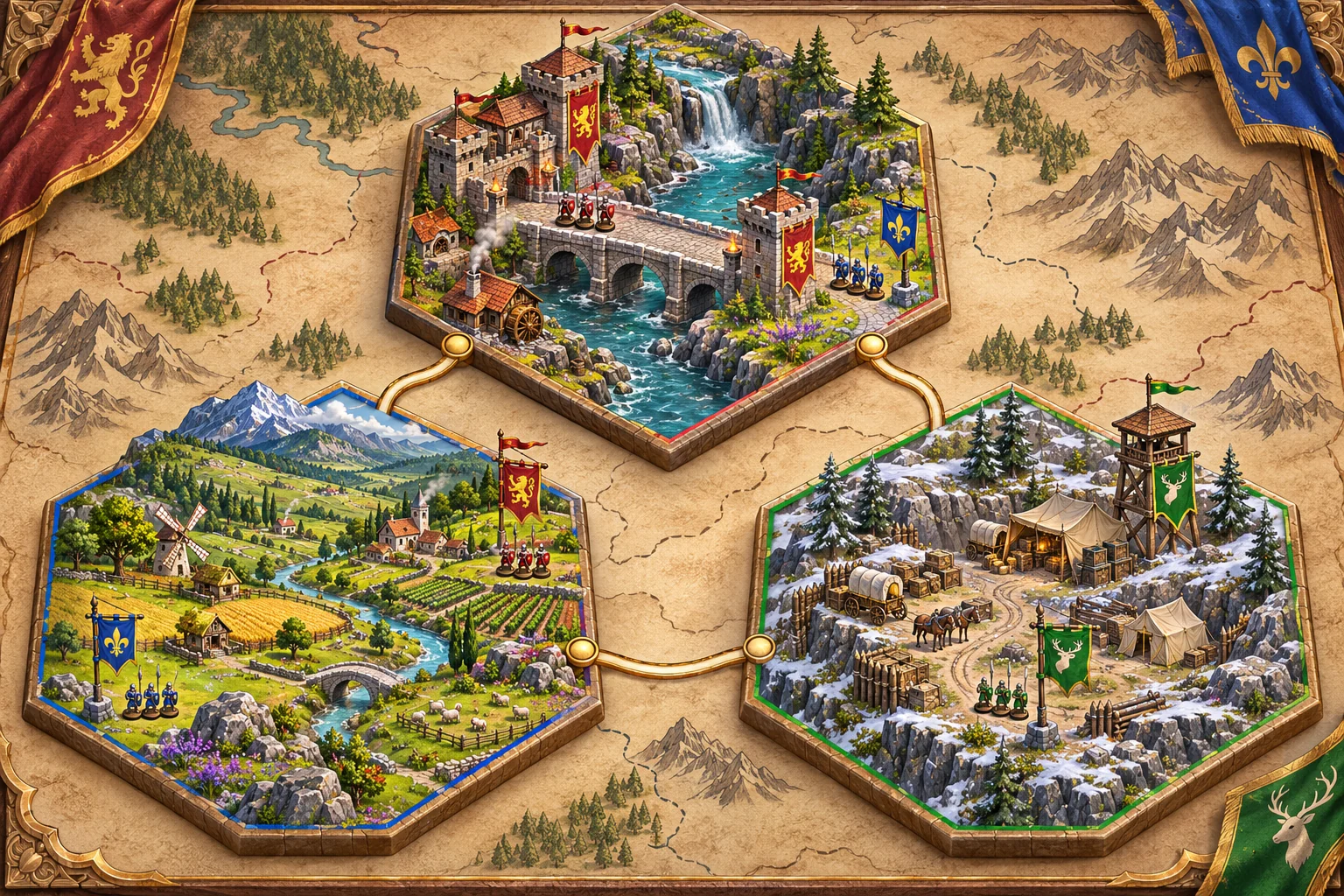
Carry territory and logistics into the next map
After the Bridge operation, transfer captured control points, surviving units and remaining fuel. An intact bridge opens the Valley route and carries two fuel. A destroyed bridge forces the longer Depot route and carries only one fuel. Show the route and supplies before deployment.
Keep unit condition persistent too. A damaged squad can still deploy, but begin the next map with less health. This makes the result of the previous operation matter without requiring a large battlefield.
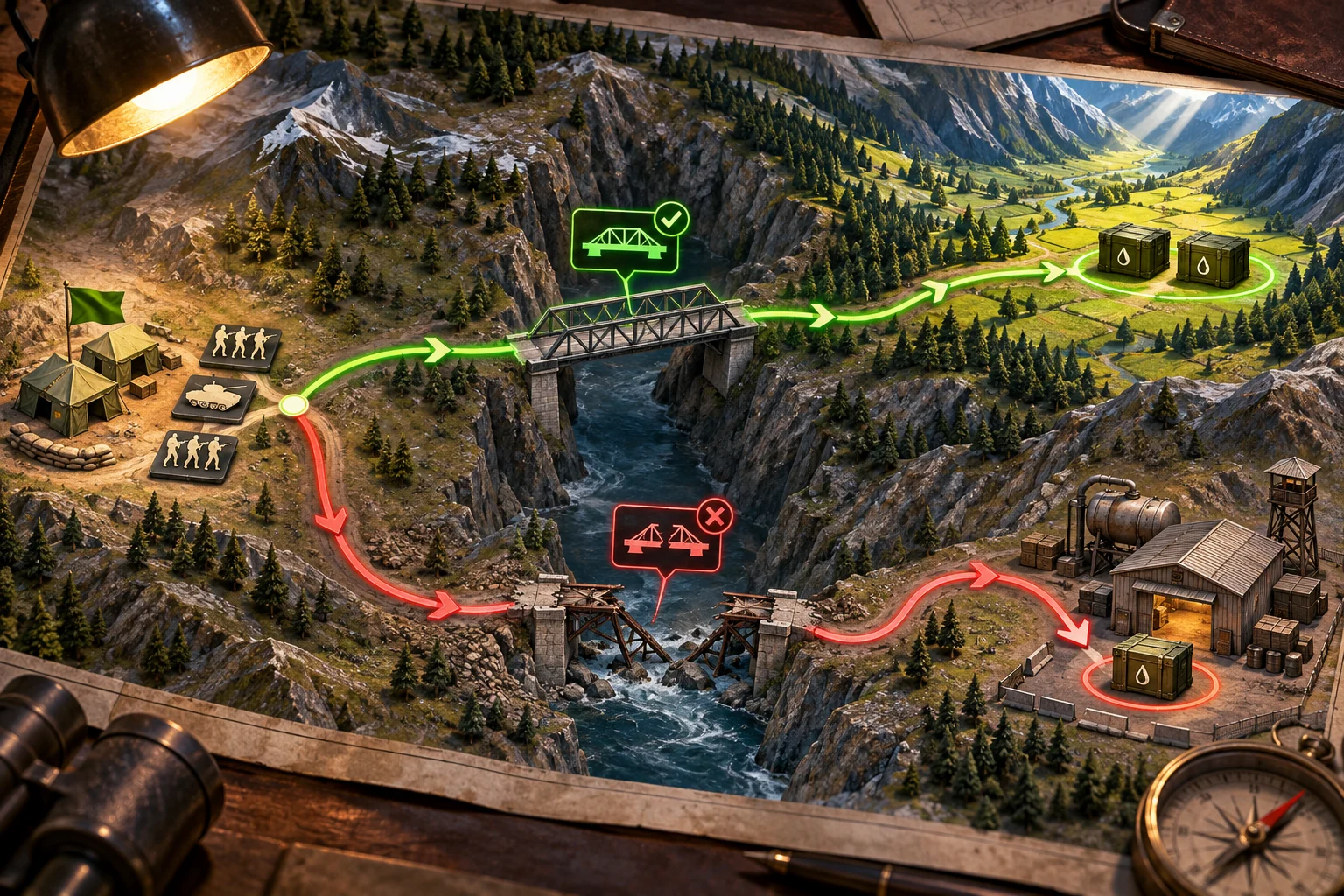
Replay the bridge operation with two outcomes
The deterministic replay begins with the same squad, fuel and Bridge map. Capturing both control points without destroying the span opens the direct Valley route and transfers two fuel. Destroying the span closes Valley, sends the force to the Depot and transfers one fuel. Both operations preserve surviving units.
Reset the same deployment and turn order before each replay. The test checks territory, bridge state, route selection and fuel transfer. A future human playtest should check whether the campaign consequence is understandable before the first operation ends.
Prompt AI for a three-map campaign
Start with three compact maps and one bridge decision. Add units and routes only after players can see how one operation changes the next.
Create a turn-based war campaign with three small maps: Bridge, Valley and Supply Depot. Bridge connects directly to Valley and indirectly to Depot. Track captured control points, surviving units, unit condition and fuel across maps. Capturing the bridge intact opens Valley and transfers two fuel; destroying it forces Depot and transfers one fuel. Show campaign state between operations, deployment choices and reset.
SEELE's free game maker describes starting from a text prompt and refining a first version with follow-up requests. Use this campaign to inspect territory and supply transfer before expanding the map network.
Start the connected-map war campaign in SEELE
Frequently asked questions
How many maps should a first campaign include?
Start with a few connected maps that have clear relationships, such as a bridge leading to a valley or depot. A small network makes it easier to see how one operation affects the next. Add branches after route state and campaign logistics are working.
What should carry between maps?
Begin with territory, surviving units, unit condition and one supply resource such as fuel. Show each value before deployment so players can connect the previous result to the next mission. Add more persistent systems only when the current state is easy to follow.
How do I test whether the campaign connection matters?
Replay the same bridge operation with the span intact and destroyed. Compare the next route, starting fuel and available units. If both outcomes lead to the same deployment, change the route or supply transfer so the operation has a visible campaign consequence.