Make every reactor cell count
A mech shooter becomes easier to design when a loadout decision and a combat decision share the same resource. In this fictional arena, fit a Rail Lance and Pulse Jets, read the Warden’s attack lane, dash clear, fire during its exposed-core window, then use the recovery interval to recharge. A six-point mount budget narrows the build; a six-cell capacitor makes each repeat matter. The Foundry Relay encounter and its numbers are an original paper design, not a real game, SEELE output, or measured playtest.
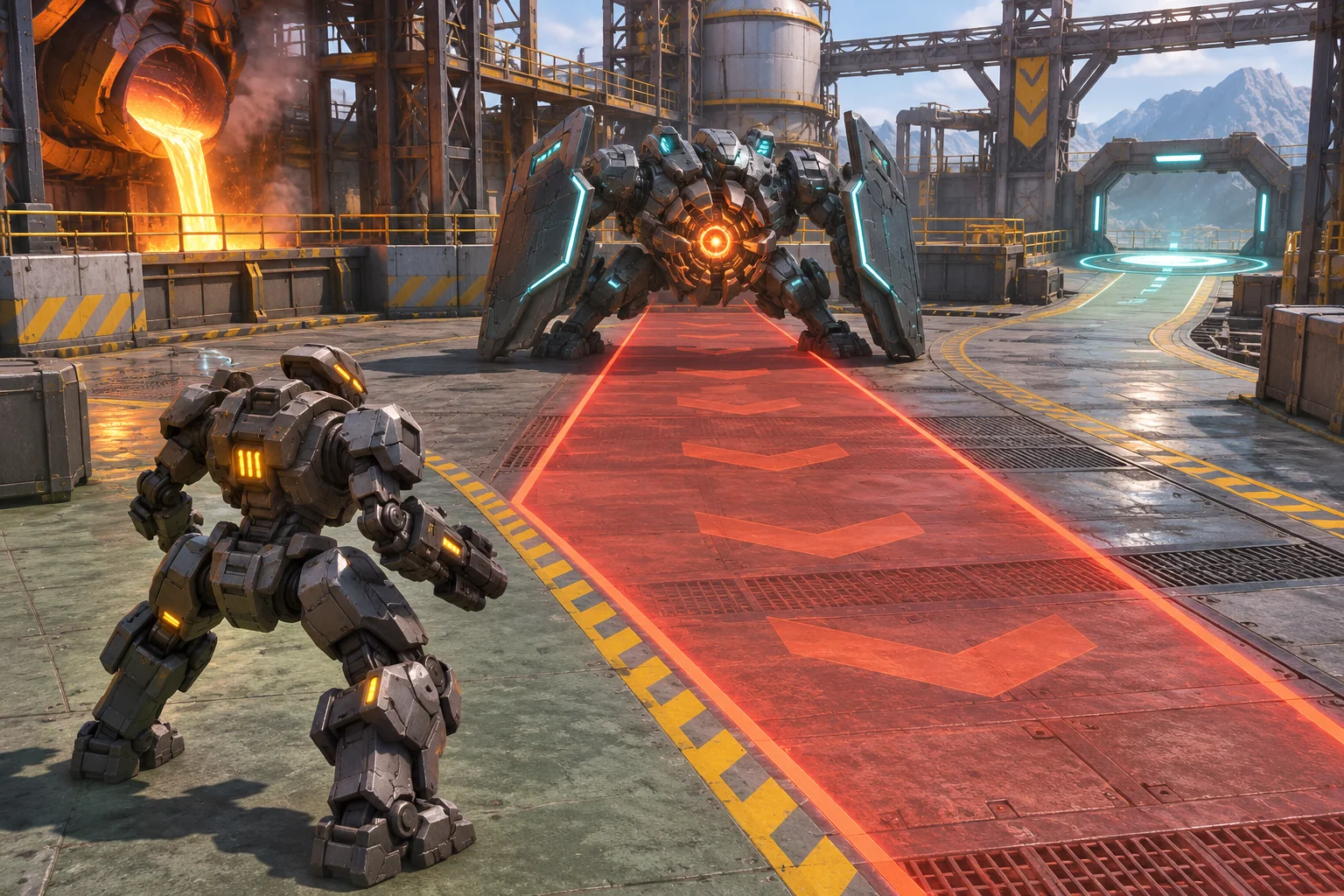
The prototype goal is modest: disable one shielded Warden and reach the extraction pad. The first version needs one enemy pattern, one weapon window, one dodge, and a visible energy meter. It does not need a squad, a loot economy, or a sprawling hangar. The small loop is the testable design target; every number below is a proposed rule that you can replace when you have evidence from a real build.
Choose a frame before deploying
Start with six mount points and make the trade visible. A weapon consumes space that could have held a utility module, so the player should be able to say what the chosen pair is for. The example uses a four-point Rail Lance plus two-point Pulse Jets: one focused shot for the exposed core and one fast lane-crossing dash. That fit uses all six points without introducing extra systems.
| Loadout | Mount cost | Decision it supports | First-slice use |
|---|---|---|---|
| Rail Lance + Pulse Jets | 4 + 2 = 6 | Spend a short burst to punish an opening, then evade a marked lane. | Use this pair to teach the tell → dash → shot → recovery cycle. |
| Twin Repeaters + Barrier Emitter | 3 + 3 = 6 | Trade a focused strike for a steadier firing option and a defensive tool. | Keep this as a later comparison; do not ask the first prototype to implement both builds. |
These costs are fictional design parameters, not recommendations for every mech game. They help answer one question: does the player want a strong window-specific attack with a movement tool, or a different weapon-and-defense pairing? Keep the second combination on paper until the first one can be read and reviewed. If the first build asks for two loadouts, upgrades, and a boss at once, it becomes harder to tell which rule needs revision.
Write the shot and energy rules
Define the encounter in states before you write a long genre prompt. Foundry Relay uses a six-cell capacitor. A Pulse Jets dash costs two cells and clears one marked attack lane. A Rail Lance shot costs two cells and adds two marks to an exposed core. The Warden has six marks, so it takes three successful shot windows to disable it. It telegraphs for 1.5 seconds, fires down the marked lane, then exposes its core for three seconds. Its next tell starts after a four-second recovery interval.
Recharge is deliberately constrained in this example: count it only during that four-second recovery, and only while the mech is not firing, shielding, or dashing. The numbers make a repeatable energy puzzle. They do not describe a physical reactor or a universal combat system. Two lane hits disable the mech and restart the same arena at six cells, with no permanent loss or currency. The extraction pad lights only after the Warden is down.
Use the following as a first-build brief. It names the player’s action, the attack timing, the resource costs, what to leave out, and the checks that would matter in a later playable build. The controls and values are example choices, not confirmed SEELE conventions.
Create one compact third-person mech-shooter arena called Foundry Relay. The player pilots a graphite-gray mech and must disable one shielded Warden, then reach a lit extraction pad. Keep the enemy, marked attack lane, safe floor, and route to the exit visible in one readable arena.

Fit exactly six mount points: Rail Lance costs four and Pulse Jets cost two. Use a six-cell capacitor. A Pulse Jets dash costs two cells and clears one marked attack lane. A Rail Lance shot costs two cells and adds two marks to the Warden’s exposed core. The Warden needs six marks to go down.

Encounter order: show a 1.5-second targeting tell with the attack lane visible; fire down that lane; expose the core for three seconds; then wait four seconds before the next tell. The player can dash during the tell and fire once during the exposed-core window. Recharge only during the four-second recovery, at one cell per two seconds in version zero. Stop recharge whenever a weapon, shield, or dash is active. Two attack hits disable the mech and restart the same arena with six cells.

After the Warden reaches six marks, turn off its core and light the extraction pad. Do not add enemies, upgrades, crafting, currency, squad commands, extra arenas, or a second loadout to this first build. Return the control list, the state order, a six-cell ledger for each attack cycle, and a short checklist.

Review the result by checking that the lane appears before the attack, dash and shot each subtract exactly two cells once, the core opens only after the attack, each Lance shot adds two of six marks, and recharge happens only during recovery. Check the reset and extraction sequence too. If a rule is missing or ambiguous, list it rather than silently inventing behavior.
This prompt is useful because it gives a reviewer concrete questions instead of asking for “a cool mech shooter.” If the result changes the attack order, spends cells twice, or leaves the core exposed indefinitely, you know which rule to clarify. You still need to inspect any actual output; the wording of a prompt cannot prove that a requested mechanic works.
Read the tell, spend, and recover
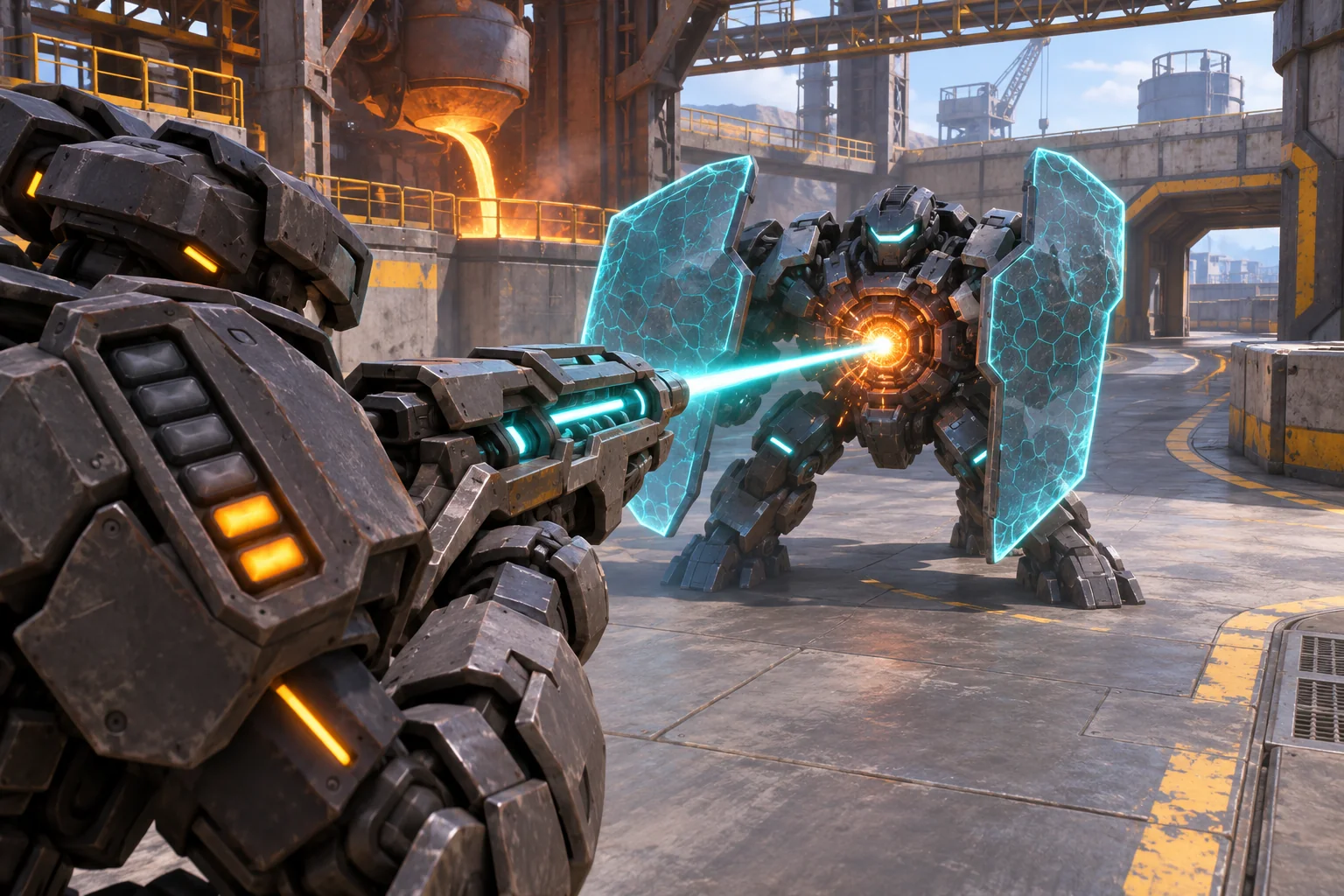
Resolve the lane before the opening. The Warden marks the floor for 1.5 seconds; the mech spends two cells to dash outside that lane. Once the Warden fires and the orange core is exposed, the Rail Lance spends two more cells to add two marks. Then the player waits through the four-second recovery. The fictional state after both actions is four dark cells and two lit. The selected illustration shows the exposed-core shot; use the ledger below to track the exact energy state.
| Beat | Player action | Energy and target feedback | Review question |
|---|---|---|---|
| Tell (1.5 seconds) | Read the red-orange attack lane and dash clear if it intersects the mech. | Pulse Jets subtract two cells; the lane stays visible until the Warden fires. | Can the player see a safe route before the strike? |
| Attack and opening | Wait for the Warden to fire; aim at the exposed orange core. | The core opens for three seconds after the attack resolves. | Does the opening follow the tell and attack in the right order? |
| Lance shot | Fire once during the opening. | Two more cells are spent and the Warden gains two of six marks. | Is the shot’s cost and hit feedback visible? |
| Recovery (four seconds) | Do not dash or fire; use the interval to prepare for the next tell. | Recharge at the version’s stated rate, capped at six cells. | Does the meter refill only during idle recovery? |
Keep the visual signals separate: a lane tells you where not to stand; the core opening tells you when to attack; the cell strip tells you what the last two actions cost. If all three states use the same flash, the player has to guess what changed. If a shot hits but the mark count is unclear, add a direct hit response near the core rather than another decorative effect. If the dash leaves the lane but the mech still takes damage, clarify the safe boundary or the dash’s timing before changing weapon damage.
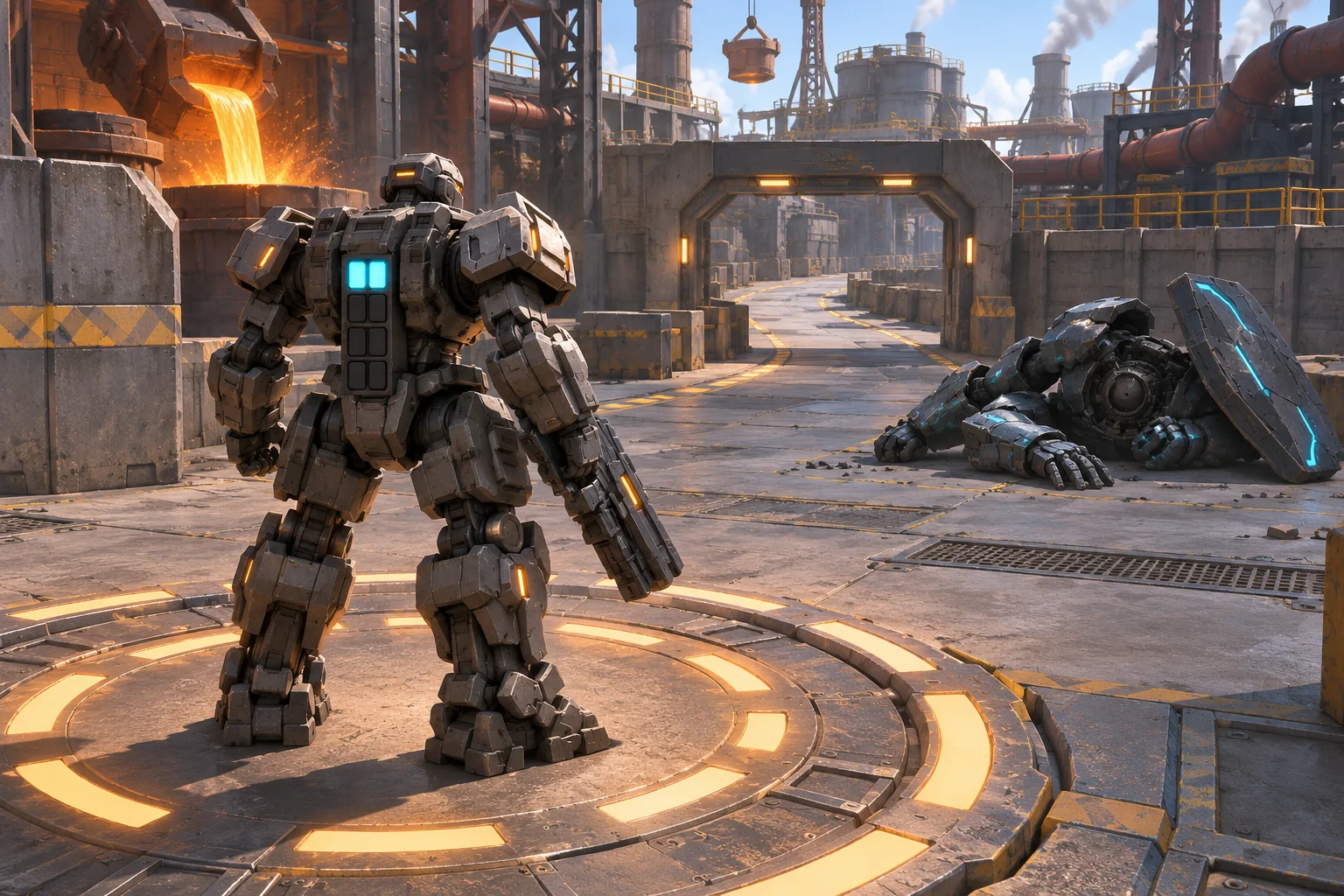
The outcome image below is the target state after all three two-mark shots: the Warden is down, the exit is open, and two cells remain after the final dash-plus-shot. It is an illustration of the proposed rules, not a recorded play session.
Paper-check the next attack cycle
A resource loop should give the player a reason to notice recovery. The following paper ledger changes one variable: recharge speed. The starting meter, dash and shot costs, four-second interval, Warden health, and action order stay the same. This is a fictional arithmetic exercise, not a generated result, a balance test, or evidence that either pace feels good.
| Recharge rule | Cycle 1 | Cycle 2 | Cycle 3 | Encounter result |
|---|---|---|---|---|
| Baseline: 1 cell per 2 seconds | 6 → 4 after dash → 2 after shot; two marks. Recovery adds 2, so the next start is 4. | 4 → 2 after dash → 0 after shot; four marks. Recovery adds 2, so the next start is 2. | The Warden still has two marks, but the required dash-plus-shot costs 4. Two cells are not enough to repeat the full loop. | The example mech cannot finish the third cycle on schedule. |
| Revision: 1 cell per second | 6 → 4 after dash → 2 after shot; two marks. Recovery adds 4, capped at 6. | 6 → 4 after dash → 2 after shot; four marks. Recovery returns the meter to 6. | 6 → 4 after dash → 2 after shot; six marks. The Warden is disabled. | The example completes the encounter with two cells remaining. |
The comparison suggests one design question: should every tell-dash-shot cycle be available on schedule, or should the player have to alter the route when charge is short? It does not prove that the faster recharge is more fun. A real prototype would need to show the same inputs and timings, then record what actually happened. Until that exists, call the faster rate a proposed revision and the table a paper check.
For a later build, write down the expected state beside the observed state: cells before tell, cells after dash, marks after shot, seconds idle, cells at the next tell. If one value differs, change one rule and repeat. That creates a traceable iteration; simply rewriting the prompt and saying it “felt better” does not tell you which change mattered.
Fit an AI game maker into a focused first build
SEELE’s official Free AI Game Maker page describes a broad workflow: describe an idea in plain English, review a playable 2D or 3D result, and iterate in Workspace. Before submission, check the selected AI model, available Koin balance, and displayed generation cost. These general steps can support a focused brief like the one above, but they do not establish that a mech shooter, this six-cell economy, or the Warden encounter will be generated correctly. Treat those as requests to inspect, not product guarantees.
When a result is available, review the exact questions from the prompt: did the Warden telegraph before firing; does the core open afterward; did dash and shot each subtract two cells; does the three-cycle health total reach six marks; and does the exit unlock only after the target is disabled? If the build differs, carry the useful parts into the next iteration and change one rule at a time.
Build the smallest readable mech loop
Keep the first arena narrow enough to explain in one sentence: dodge the marked lane, hit the open core, and manage charge until the target goes down. The six-point mount choice says what the mech can bring; the six-cell ledger says when it can use it. Open the Free AI game maker to draft a focused version of your own mech idea, then inspect the playable result and revise the rule that needs work.
Frequently asked questions
How do I keep the loadout within six mount points?
Assign a cost to each module and make the chosen pair add up to the frame limit. In this example, a four-point Rail Lance plus two-point Pulse Jets uses all six points. A three-point repeater pair plus a three-point barrier is a different six-point option, not a second system the first prototype must support.
Why does the example Warden need three attack cycles?
The fictional Warden starts with six core marks, and one Lance shot adds two. It therefore needs three exposed-core shots to reach six marks. These counts are proposed game rules; they are not observed balance data or a claim about any SEELE output.
When should the capacitor recharge?
The paper design credits recharge only during the four-second recovery after the core window closes, with no weapon, shield, or dash active. That keeps the ledger simple enough to inspect. A different prototype can use another rule, but it should state when recharge starts, stops, and caps.
Does SEELE guarantee it can build this mech shooter?
No. The official page supports a general plain-English game brief, review of a playable 2D or 3D result, and Workspace iteration. It does not guarantee this specific mech, weapon, cell economy, timing, or encounter. Review an actual result and check each requested rule before relying on it.
Is the recharge comparison a real test?
No. It is a paper-only arithmetic comparison using invented values. It shows what follows from the stated rules, not how players respond or whether either version is enjoyable. Record a real build’s observed states separately if you later run that test.