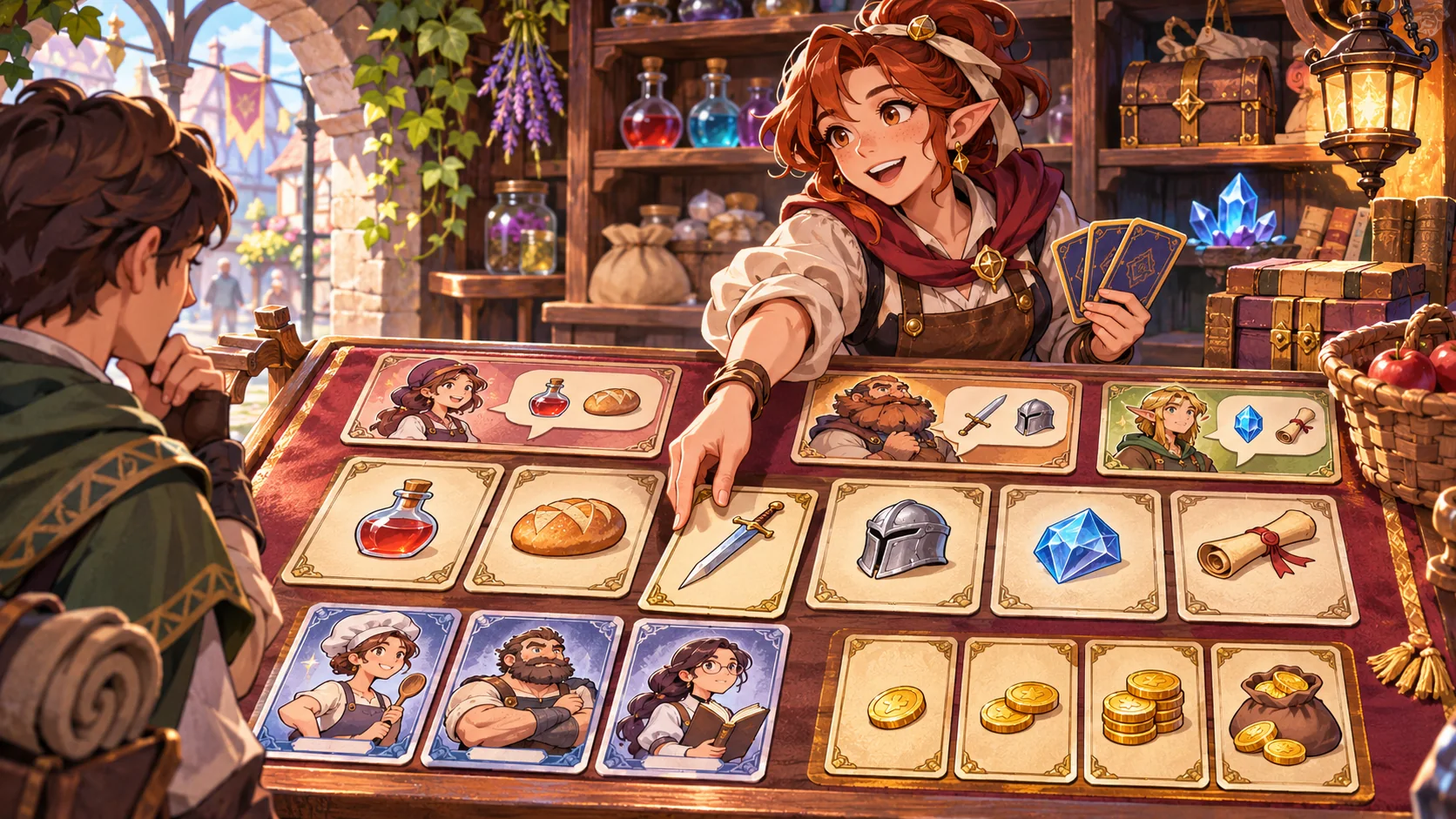
A customer does not always want the carrier on the shelf. In Pawprint Workshop, each pet-shop order names the animal, product size, fabric and hardware. The workshop must check those exact requirements against stock, reserve the materials, build the item, and deliver only when the finished product matches.
This fictional shop begins with three canvas rolls, three buckle sets and two padding kits. A customer requests a medium indigo carrier with two reinforced buckles; one order requires two canvas, two buckle sets and one padding kit. The order takes two work points and pays fourteen coins on delivery. The trace shows a valid reservation and an invalid shelf-item substitution so the custom-production rule is visible.
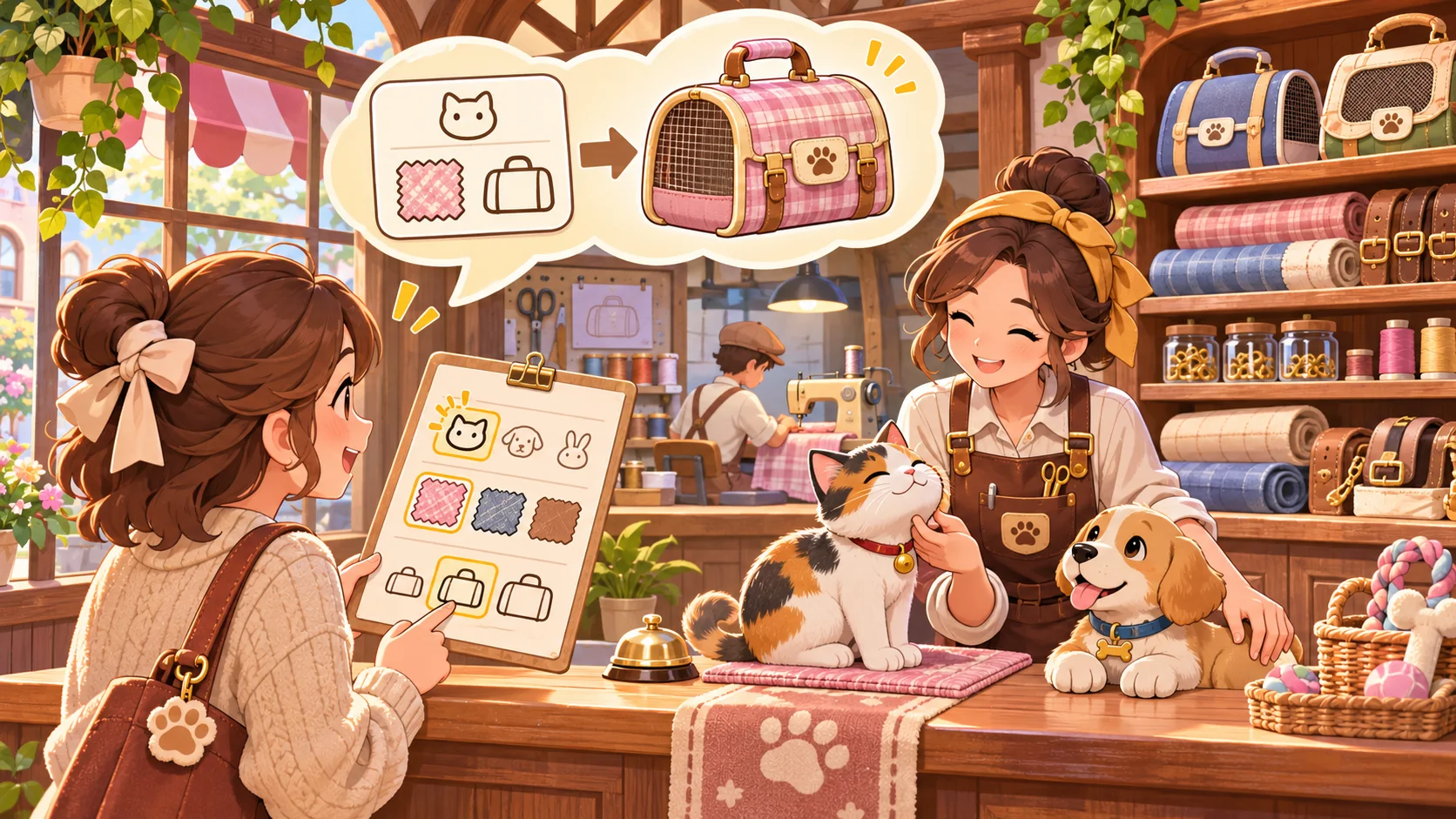
Turn the customer request into a production spec
Model a custom order as a fixed specification: customer, pet type, product, size, fabric, hardware, material quantities, work cost, deadline and payout. Pawprint Workshop begins with canvas 3, buckle sets 3, padding kits 2 and cash 8. A customer requests one medium indigo carrier with two reinforced buckles. That product consumes canvas 2, buckle sets 2 and padding 1, takes two work points and pays fourteen coins when delivered. On acceptance, validate all required materials together and reserve the exact quantities; if any material is short, reject the order without partial reservation. A production job can consume only its reserved stock. When the job completes, create an item with the same size, fabric and fitting fields as the order. Delivery checks every required field before payment. A standard small carrier on the shelf is not a substitute for the medium indigo specification, even if it is the same product category. Canceling a queued order releases its reserved materials; a delivered order cannot pay twice. Keep the first order fixed to make reservation and fulfillment auditable. Then add another customer whose size or fabric differs and check that the shop cannot spend the same reserved canvas twice.
| Order field | Rule and result |
|---|---|
| Specification | Record pet, product size, fabric, fittings, material counts and due work before accepting. |
| Acceptance | Validate all material quantities at once; short stock rejects the order with no partial reservation. |
| Reservation | Reserve exact stock for one order so another job cannot consume it. |
| Production | Consume only the reserved materials and complete after the authored two work points. |
| Delivery match | Finished item must match size, fabric and hardware before it can be delivered. |
| Payment | Credit fourteen coins once on successful delivery; canceled or mismatched orders pay nothing. |
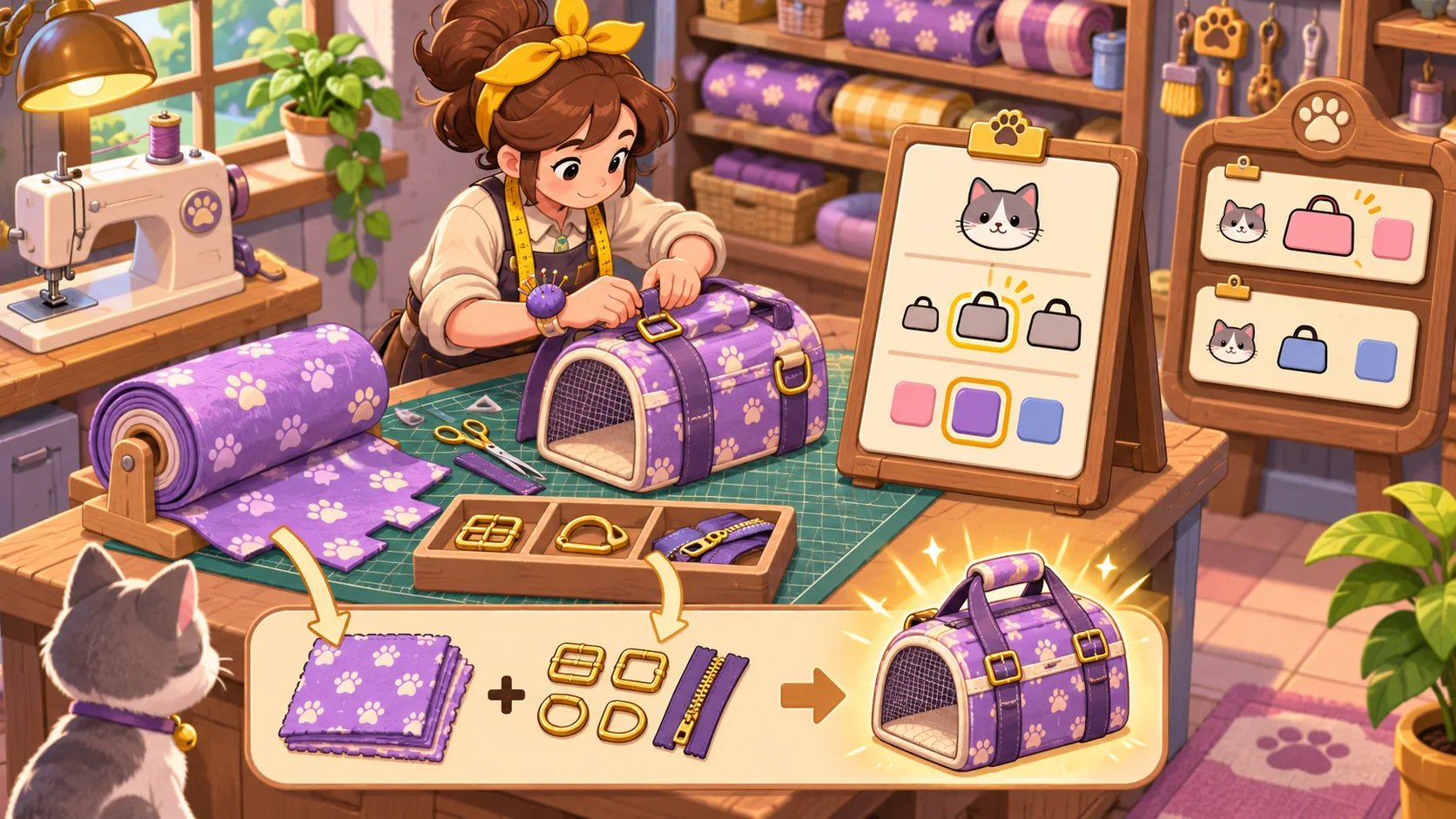
Trace a reservation and a mismatched product
Start with canvas 3, buckle sets 3, padding kits 2 and cash 8. The order asks for a medium indigo carrier with two reinforced buckles, requiring canvas 2, buckle sets 2 and padding 1. Validate all three quantities, then reserve them together; unreserved stock is canvas 1, buckles 1, padding 1. Advance the job for two work points and produce a medium indigo carrier with the required buckles. The completed item matches all order fields. Deliver once, clear the order and credit fourteen coins; cash becomes 22. Counterexample: present the standard small rose carrier from the shelf. Product category matches, but size, fabric and hardware do not, so the delivery is rejected, the order remains open and no payment is credited. If a second order tries to reserve the last two buckles, reject it without taking any of its other materials.
| Check | Expected result |
|---|---|
| Accept the medium indigo order | Reserve canvas 2, buckles 2, padding 1 atomically. |
| Check available stock | Canvas 1, buckles 1, padding 1 remain unreserved. |
| Advance production by two work points | Create the specified medium indigo carrier with reinforced buckles. |
| Deliver the matching item | Clear the order once and cash increases 8→22. |
| Offer a small rose shelf carrier | Reject the mismatch; order stays open and payment remains unchanged. |
| Attempt another reservation for two buckles | Reject all reservation changes when available stock is only one set. |
Ask AI for a small made-to-order pet shop
Ask SEELE for one made-to-order workflow before adding adoption, grooming or animal-care systems. Put customer requirements, stock validation, reservation, production and delivery matching in one explicit sequence. Compare the successful carrier with the mismatched shelf product, then add a stock-shortage test.
Create a local pet-shop management prototype called Pawprint Workshop. Start with canvas stock 3, buckle-set stock 3, padding-kit stock 2 and cash 8. A customer requests one medium indigo carrier for a small dog with two reinforced buckles. The specification requires canvas 2, buckle sets 2 and padding 1; production takes two work points and delivery pays 14 coins. On order acceptance, validate every stock quantity atomically; if any is insufficient, reject the order without reserving anything. Otherwise reserve all exact amounts so no other job can spend them. On completion, create the item with the same size, fabric and hardware fields as the request. Deliver only if every field matches, clear the order and credit payment once. Successful trace: available stock after reservation is canvas 1, buckles 1, padding 1; after two work points deliver the matching carrier and cash becomes 22. Counterexample: offer a standard small rose carrier; reject it because size, fabric and hardware do not match, leave the order open and pay nothing. A second order requiring two buckles must be rejected because only one unreserved set remains, with no partial material reservation. Show order, reserved stock, available stock, progress and payment ledger. Add reset. Keep accept, cancel and deliver keyboard-operable without timed input.Show how materials move through the workshop
The first draft started a second carrier order even though the first one had already reserved the remaining buckle sets. Keep reserved stock separate from available stock and run the full material check before changing any quantities. Reject the whole order if one input is short, so no canvas or padding disappears on a failed acceptance.
Replay the matching carrier and the standard shelf item. Confirm that product type alone is not enough: size, fabric and fittings must all match. Check that delivery pays once, cancellation releases reserved stock, and a second reservation cannot claim the same buckle. Godot Resource and save-game references can inform a data model, but this is not an implemented inventory system.
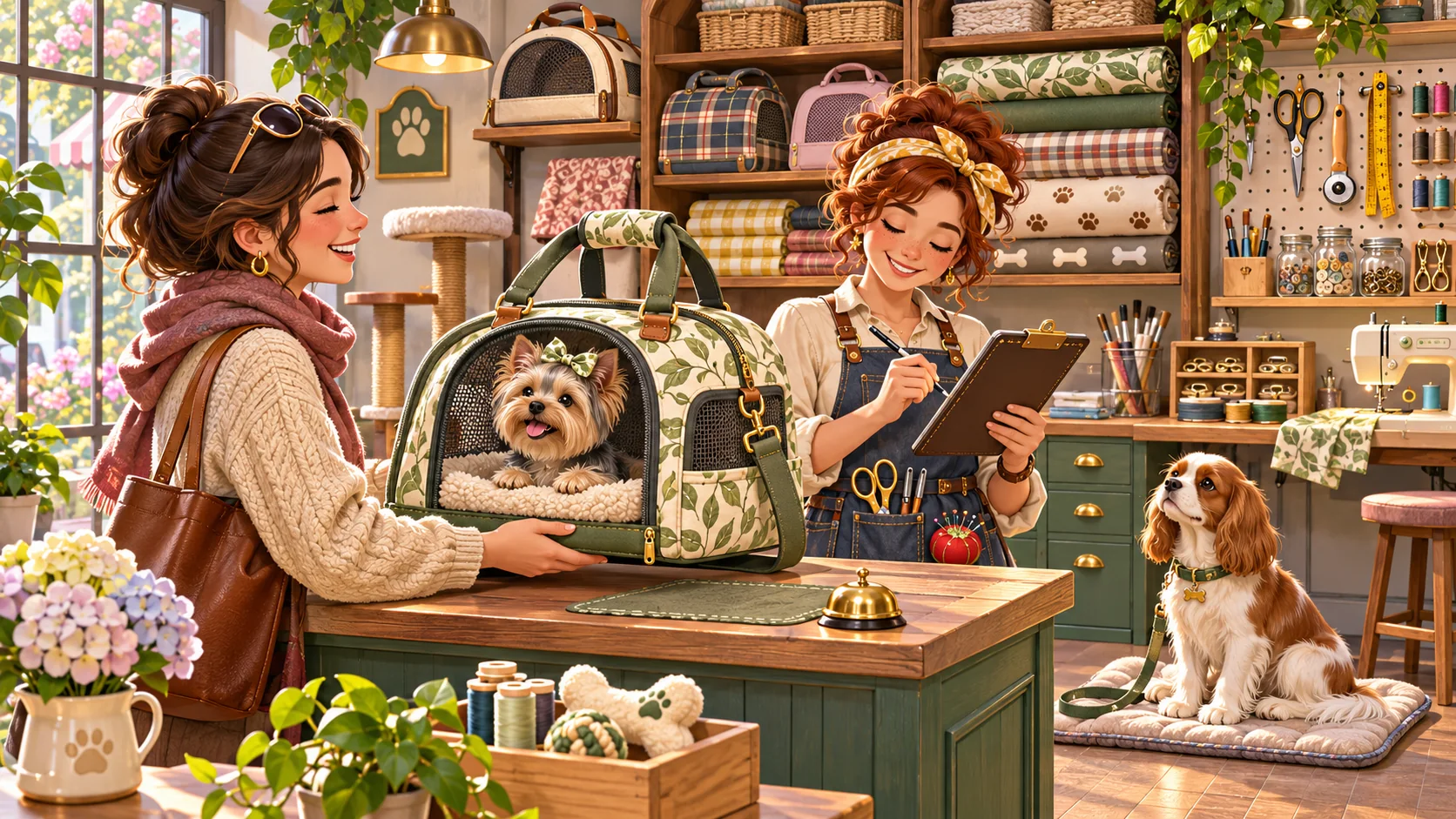
Add more products after exact matching works
Keep one pet, one product and one order fixed while checking how customer specifications move through stock, reservation, production and delivery. The player should be able to see why a same-category shelf product fails an exact custom order. Once that works, add another size or material and try competing orders against the shared stock.
Read Godot Resource documentation.
Read Godot save-game documentation.
Frequently asked questions
Why reserve materials when the order is accepted?
Reservation prevents two work orders from claiming the same fabric or fittings. Check every required quantity before changing stock, then keep reserved units separate until production consumes them or the order is canceled. That keeps simultaneous jobs from double spending inventory.
Can a standard shelf item fulfill a custom order?
Only if every required field matches. In this example, a small rose carrier cannot fill an order for a medium indigo product with reinforced buckles. Show the mismatched fields and leave the order open rather than granting a partial sale.
Start a local game prototype with SEELE.
What should happen when stock is short?
Reject the whole reservation and leave all inventory unchanged. The player can restock or wait before accepting the request. An atomic check prevents one material from disappearing when a different required part is unavailable. Tell the customer what is missing and why.
When should the shop receive payment?
Credit the customer payout only after the completed item matches the accepted specification and is delivered. Mark the order paid so a repeated delivery action cannot add the same coins again. A canceled order must never remain marked as paid.