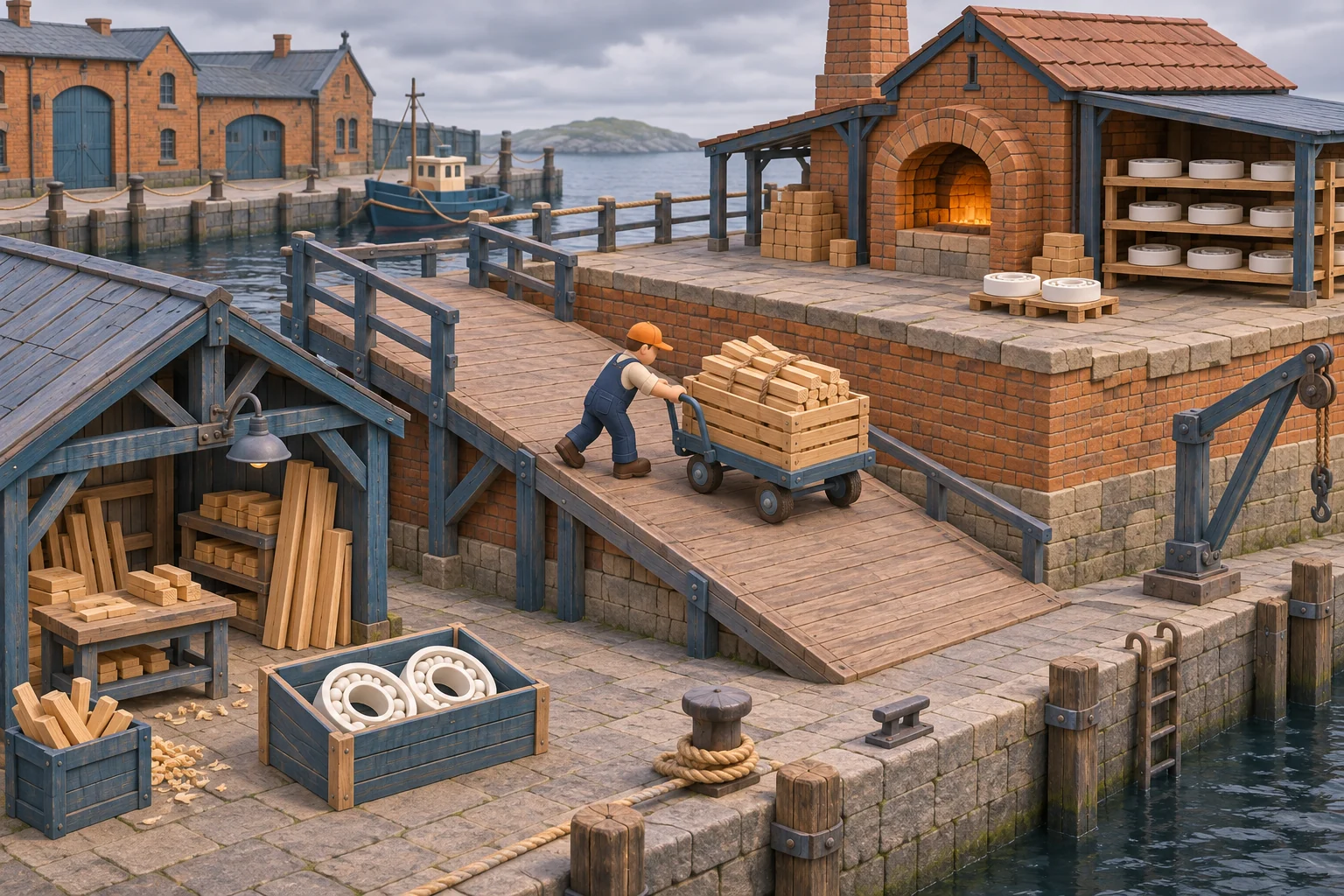
A pine crate slides through a trade bay and rolls back down the ramp. Did you just buy something? In a physics sandbox, a collision can show that an object arrived. For a deal, the player should have a clear moment to accept the terms. Build that distinction into one exchange between two workshops.
Give the two workshops a reason to trade
In fictional Rivet Quay, the sawmill bundles pine but needs ceramic bearings for its carts. The kiln makes those bearings and burns pine to fire its next batch. Put the two buildings on opposite ends of a short ramp. The player hauls one pine bundle in a pushcart and brings back one crate of bearings.
Give the exchange bay a fixed offer of one bundle for one crate. Reserve exactly one of each. A completed trip delivers the output of one workshop as an input to the other, so a shortage now has a visible cause and a route the player can act on.
Treat arrival as a signal to check the offer
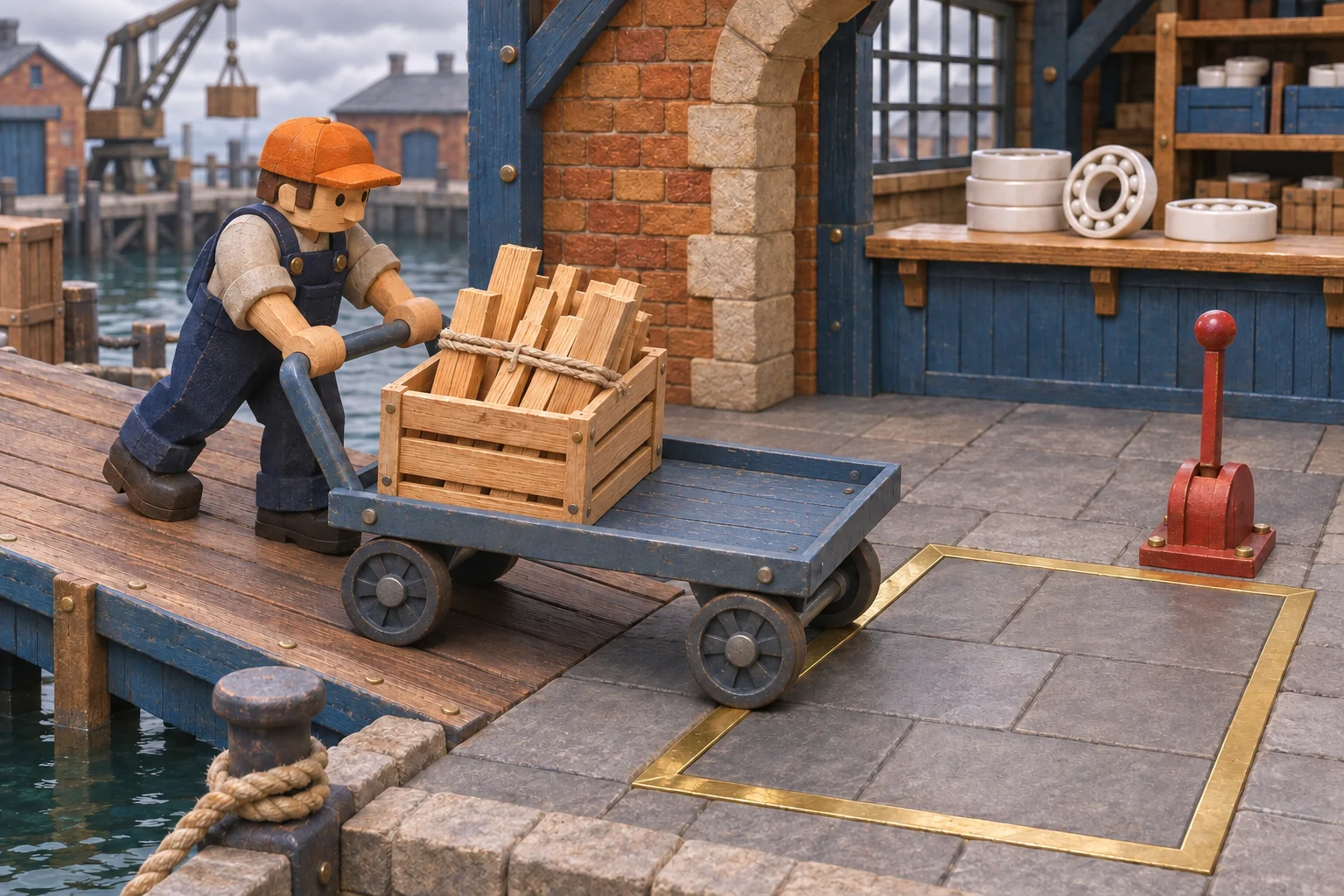
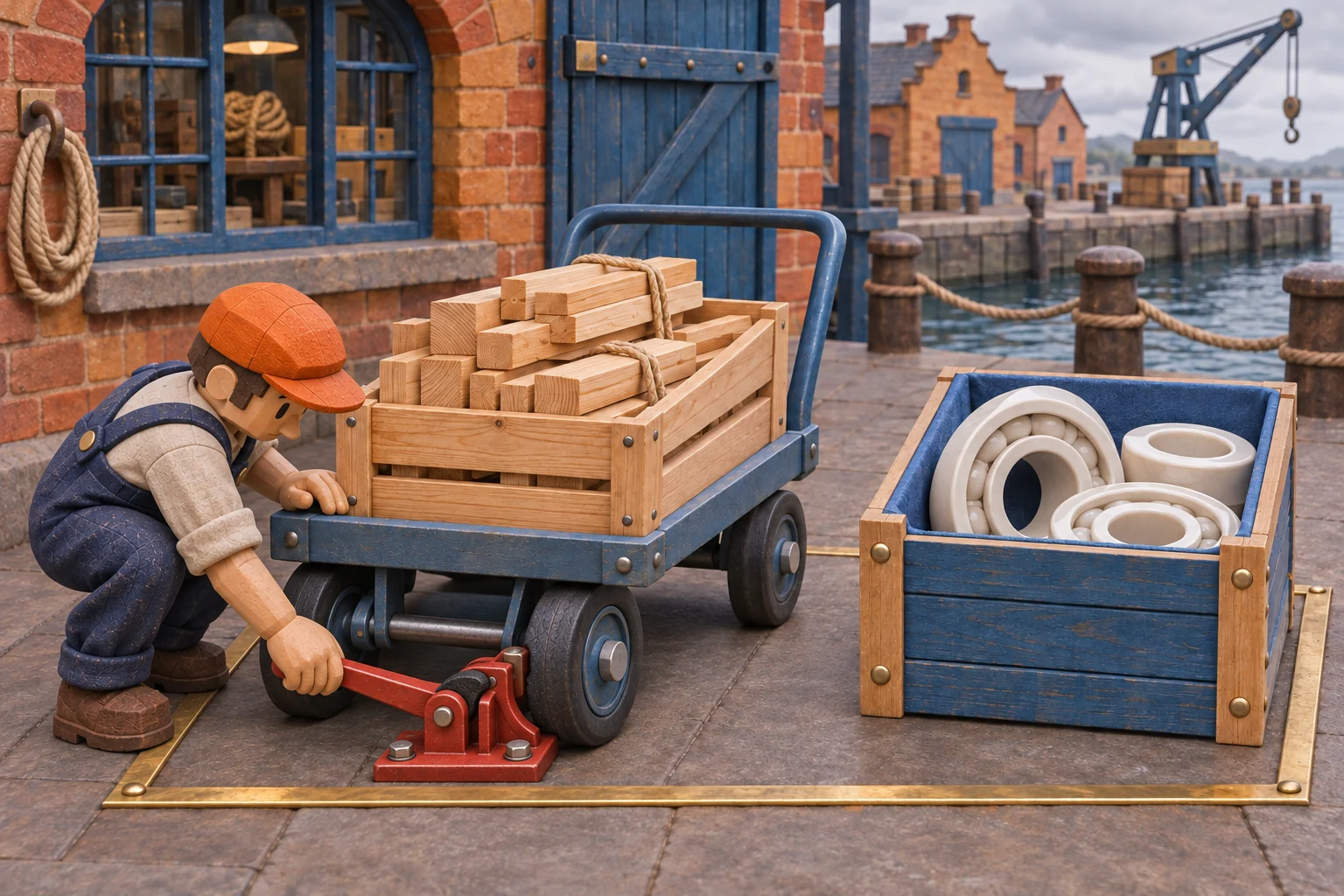
Track whether the cart is inside the bay and whether its wheels are secured. When the cart crosses the bay marker, reveal the offer. Enable confirmation after the player engages the floor latch. If the cart leaves, clear its arrival and latch states. The posted offer can stay visible as a reference.
When the player confirms, recheck that the cart is secured and both crates still belong to their original owners. Change both owners together. Keep both objects in place so the player can see the crates that were just exchanged. A rejected confirmation should tell the player which step is missing.
Replay the same bad arrival under two rules
A deterministic local rule replay made a cart enter, leave, attempt to confirm, return, latch and confirm twice. The contact-only rule traded the moment the cart entered. With the revised rule, leaving changed neither owner and early confirmation asked the player to secure the cart. The first latched confirmation traded both crates. The repeat did not trade them again.
Run that sequence on your eventual build with a loaded cart. If people expect a deal when the offer first appears, show a distinct confirmation cue and leave the latch visible. The replay validates the trade states. A playtest can show when players think they have committed.
Prompt AI for one working exchange
Keep pricing and stock fixed for the first build. You should be able to observe each crate’s owner before and after one confirmation.
Build one physics sandbox trade bay for a sawmill and a kiln. Give the player a pushcart with one pine bundle. Offer one bearing crate for it. Show the offer when the cart enters. Require the cart to be in the bay and latched before the player can confirm. In one update, assign each crate to the other workshop. Keep both crates physically in place. Reject early confirmation, ignore repeats after the trade and add reset.
SEELE’s free AI game maker describes producing a first version from a text prompt and refining it with follow-up requests. Start with the exchange above and check the cart, the latch and the ownership changes before adding production schedules.
Start the workshop-trade prototype in SEELE
Frequently asked questions
What if a loose crate enters the bay first?
The bay can highlight that crate and tell the player to secure a cart. Keep confirmation unavailable until both the cart and the offered crate are in the valid position. If a crate is removed after the offer is shown, check the current cargo again when the player confirms.
When should prices start to change?
Wait until a player can complete several fixed-price exchanges and explain what each workshop needs. Then let one workshop change a quote when its input runs low. Hold the quoted price while the cart is secured so the terms shown at confirmation match the delivered deal.
What should happen if the cart tips on the ramp?
Give the player enough space to recover the crate and load it again. Keep ownership and stock intact during recovery. For early debugging, add a reset to return the cart and both crates to their starting positions, then replay the dock checks with the same offer.