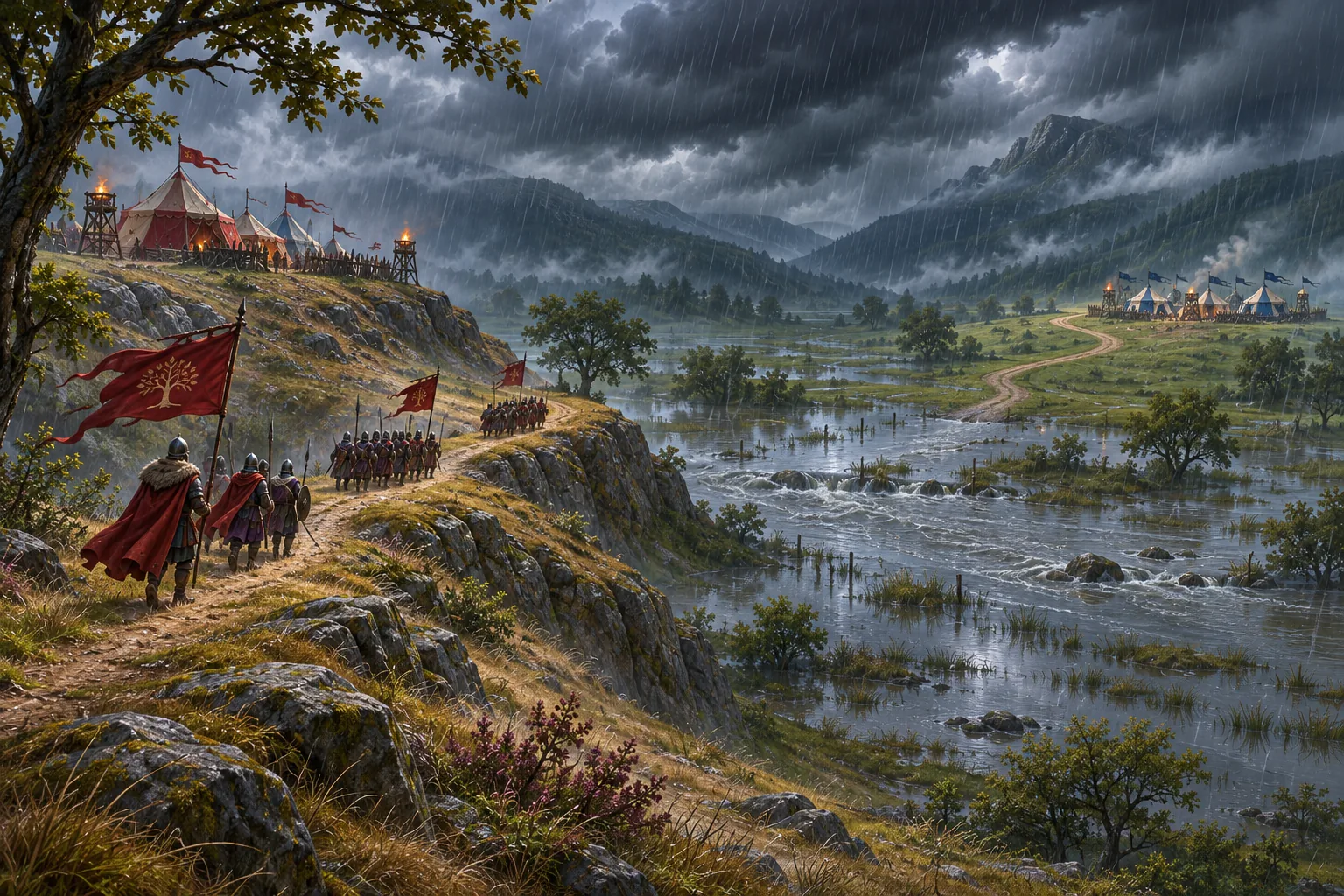
In fictional Marches of Vale, a clear-weather ford connects the capital to an eastern province. The campaign begins with grain 6, timber 2, treasury 4, and legitimacy 3. In turn one, clear weather yields four grain; army upkeep costs two, leaving grain 8. Heavy rain in turn two floods the ford, reduces the local harvest to two, and costs two more grain for upkeep. Before the rain, the player can spend two timber on a raised road that remains passable at movement cost 2. The army crosses within its movement budget, captures the eastern province, and gains three grain without losing legitimacy. Without the road, the ford and ridge route are blocked; the province is not captured and legitimacy falls by one. The setting and results are fictional; the local test verifies these rules only.
Forecast weather before the battlefield changes
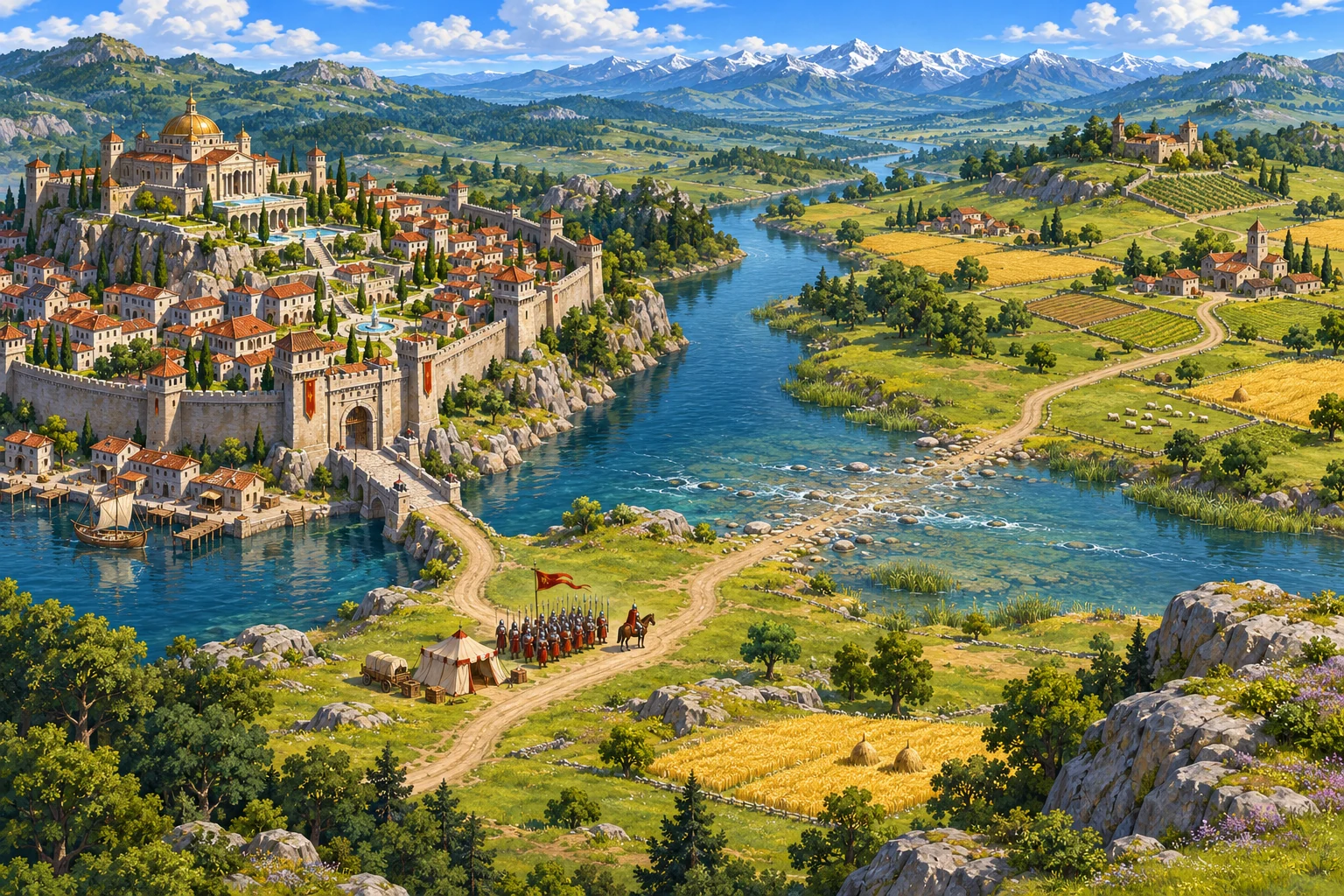
Represent the capital and eastern province as two campaign regions joined by a ford. In clear weather, the ford is open and costs one movement point. The army has movement 3 per turn. Heavy rain floods the crossing, changes the ford tile to impassable, and slows the ridge detour to cost 5. Show the forecast one turn in advance so the player can prepare rather than discover a blocked route after issuing an order.
Keep the weather transformation deterministic for the test: turn one is clear and turn two is heavy rain. Resolve the forecast before movement and battle. The terrain tile, route cost, and harvest yield update together at the start of the rainy turn. The army’s location and campaign objective remain fixed, letting the player see how weather changes the available operation rather than changing the goal itself.
Connect battlefield access to the campaign economy
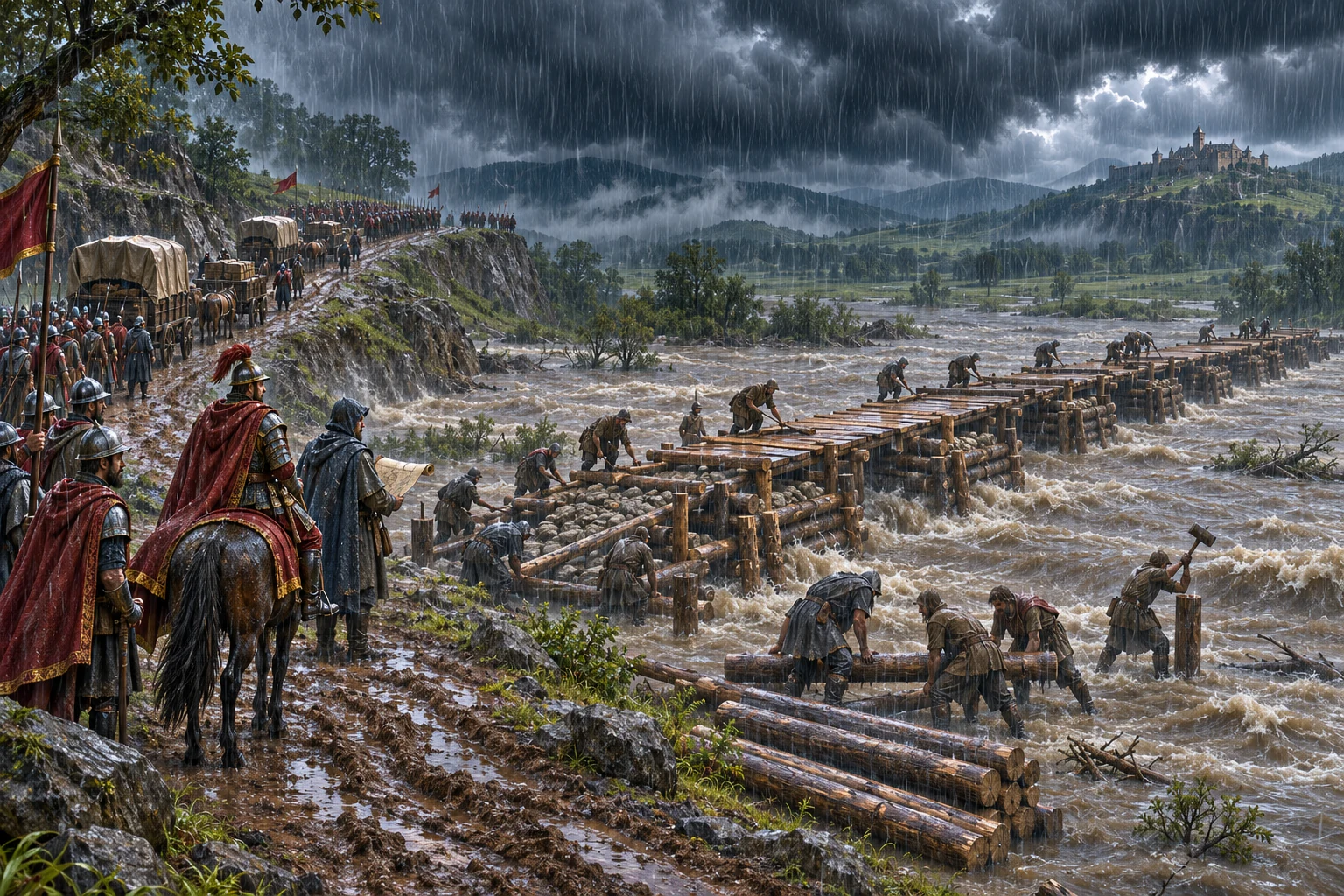
Start with grain 6, timber 2, treasury 4, and legitimacy 3. In the clear turn, the capital region yields four grain and the army consumes two for upkeep, leaving eight. Before turn two, the player may spend both timber to raise the road across the ford. In heavy rain, the road costs two movement points, so the army can still reach the eastern province within its budget.
The rainy harvest is two grain and upkeep is two, leaving the stock at eight before the captured province is counted. Capturing the east adds three grain and keeps legitimacy at 3. The road is an economic decision as well as a tactical one: it converts timber into a reliable supply route through adverse weather. Keep treasury unchanged in this focused test so it does not mask the grain and loyalty effects.
Compare the raised road with a flooded-route control
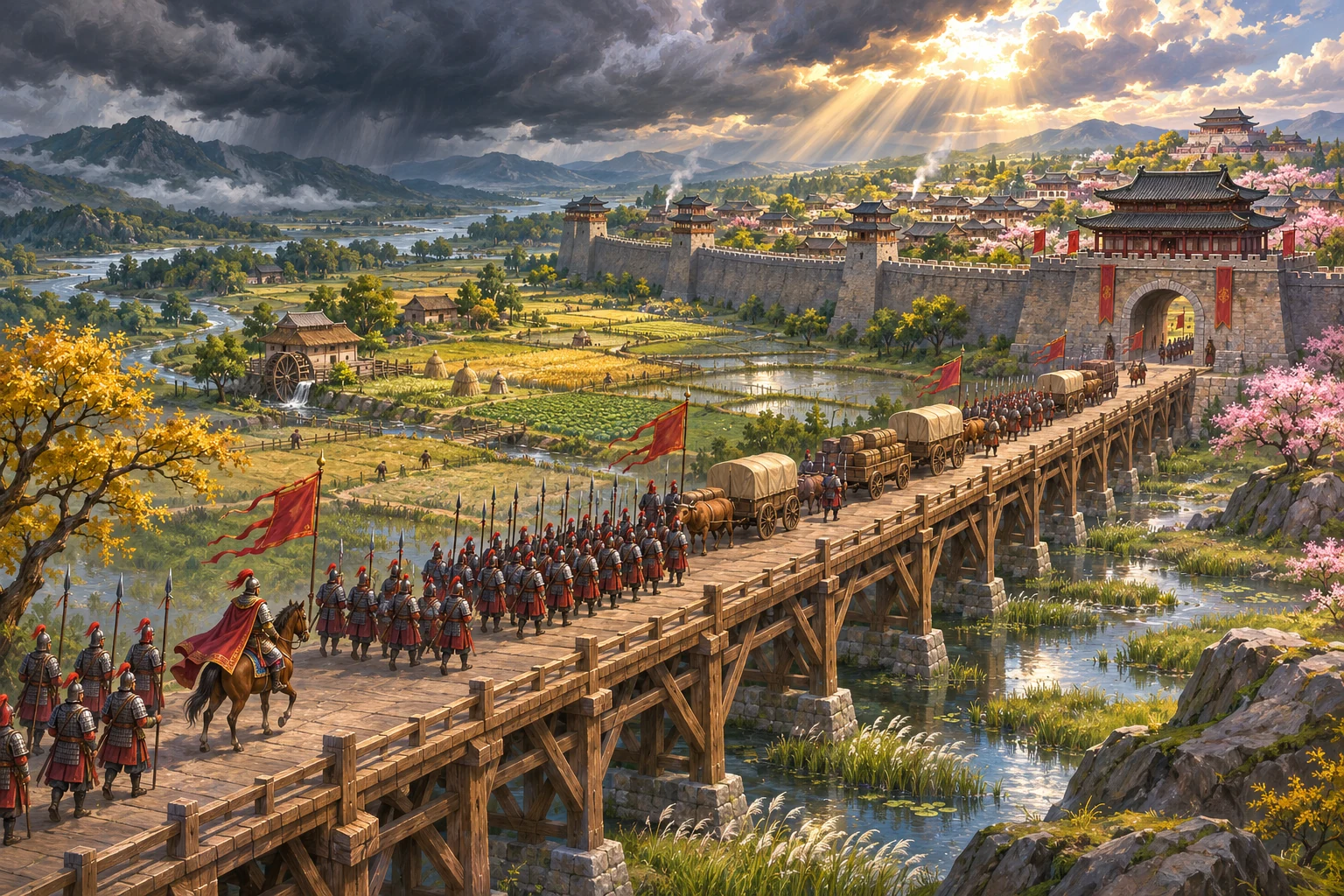
Run the prepared campaign for two turns. The grain sequence is 6, then 8 after the clear harvest and upkeep, then 8 after rainy harvest and upkeep, then 11 after capturing the eastern province. The army reaches the objective, the road remains usable, and legitimacy stays at 3. Log weather, route costs, timber spending, harvest, upkeep, capture, and loyalty in turn order.
Repeat without building the road. Heavy rain closes the ford and the ridge detour costs more than movement 3, so the army cannot capture the east. Grain remains 8 after the local harvest and upkeep; legitimacy falls from 3 to 2 when the isolated province is lost. Marches of Vale and all values are fictional. This local test checks only the weather, route, economy, and loyalty rules stated here.
Ask an AI game maker to test weather and campaign tradeoffs
Create a grand-strategy prototype in fictional Marches of Vale with a capital and eastern province joined by a ford. Start grain 6, timber 2, treasury 4, legitimacy 3; army movement 3, upkeep 2 per turn. Clear turn: capital yields 4 grain and ford costs 1 movement. Rainy turn: ford becomes impassable, ridge detour costs 5, harvest falls to 2. Before rain, allow spending timber 2 on a raised road that costs 2 movement in rain. The army then captures east, adding 3 grain and preserving legitimacy 3. Without the road, it cannot capture; grain ends at 8 and legitimacy falls to 2. Show forecast, terrain, routes, resources, and province control.
Run clear then heavy rain. Verify grain 6→8 after turn one, 8 after rainy harvest and upkeep, then 11 after capture. Road costs timber 2 and rainy movement 2, allowing the army to reach the east with movement 3. Without it, the ford closes, ridge cost 5 blocks capture, grain remains 8, legitimacy falls to 2.
FAQ
How can weather change a grand-strategy battlefield?
Let a forecast update specific terrain properties such as ford access, movement cost, and local harvest. Resolve those changes at a consistent campaign boundary, then show the affected routes before the player moves. A deterministic weather case makes it possible to test whether preparations change an operation’s outcome.
How do I connect weather to a strategy-game economy?
Use the same weather event to change both access and production. In this example, rain closes the ford, reduces harvest, and makes a raised road valuable. Track starting stock, yields, upkeep, construction cost, and captured-region income so the player can compare the military and economic consequences.
What political effect should a changing battlefield have?
Tie a political value to a visible campaign result, such as keeping access to a province or losing control when an army cannot arrive. State the exact threshold and timing. This prototype lowers legitimacy by one only when the isolated province is lost, making the cause of the change clear.