Make the forecast a tactical decision
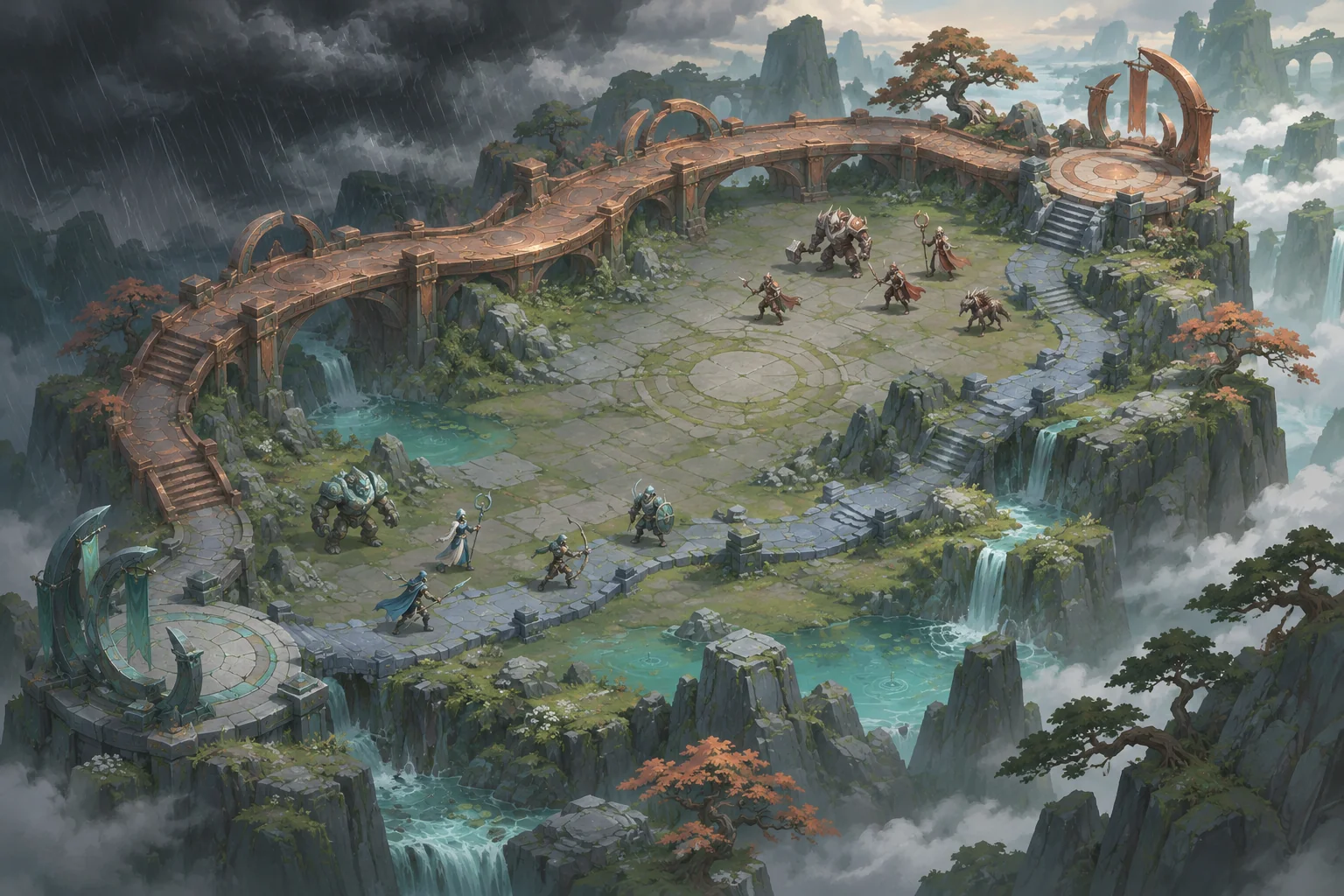
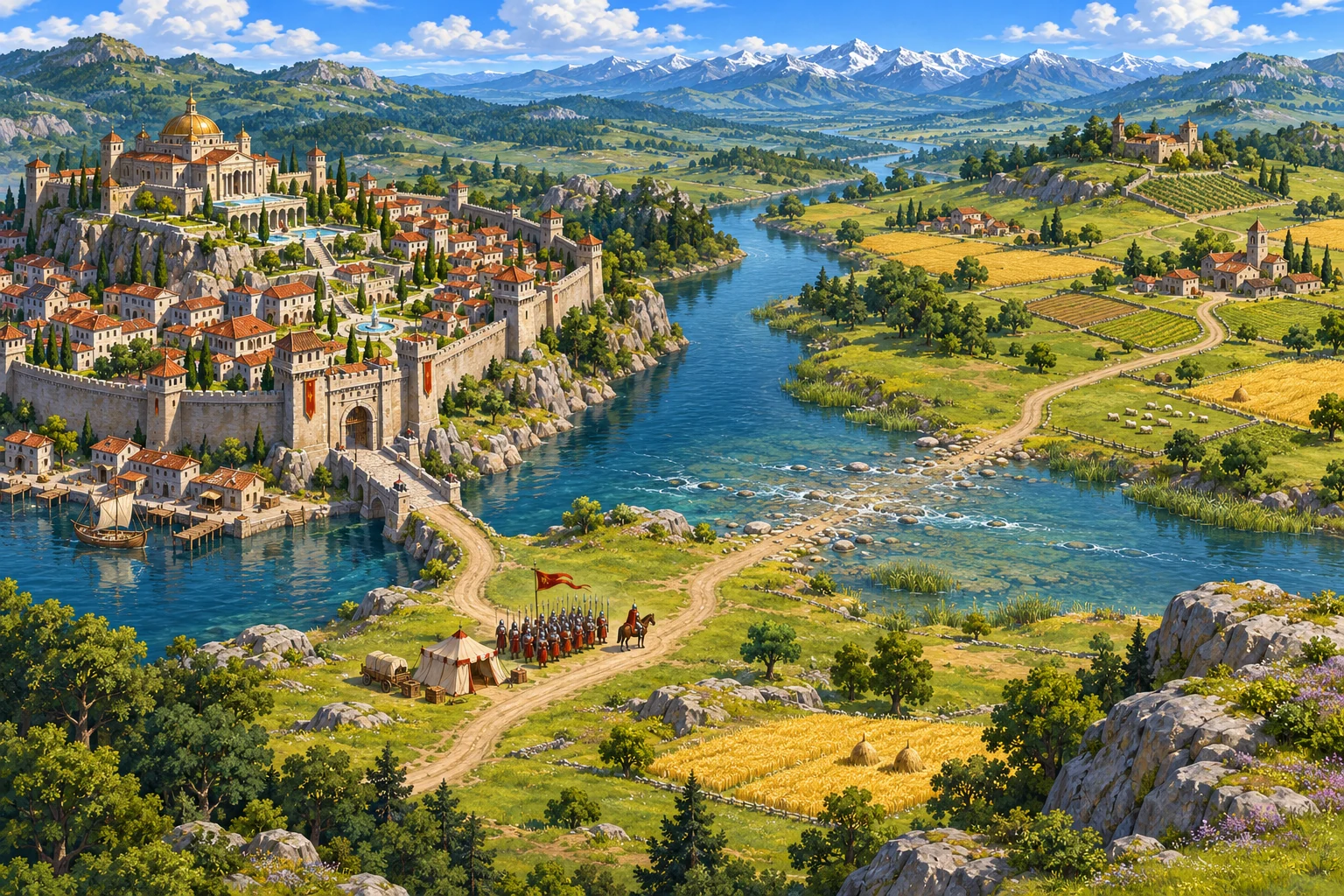
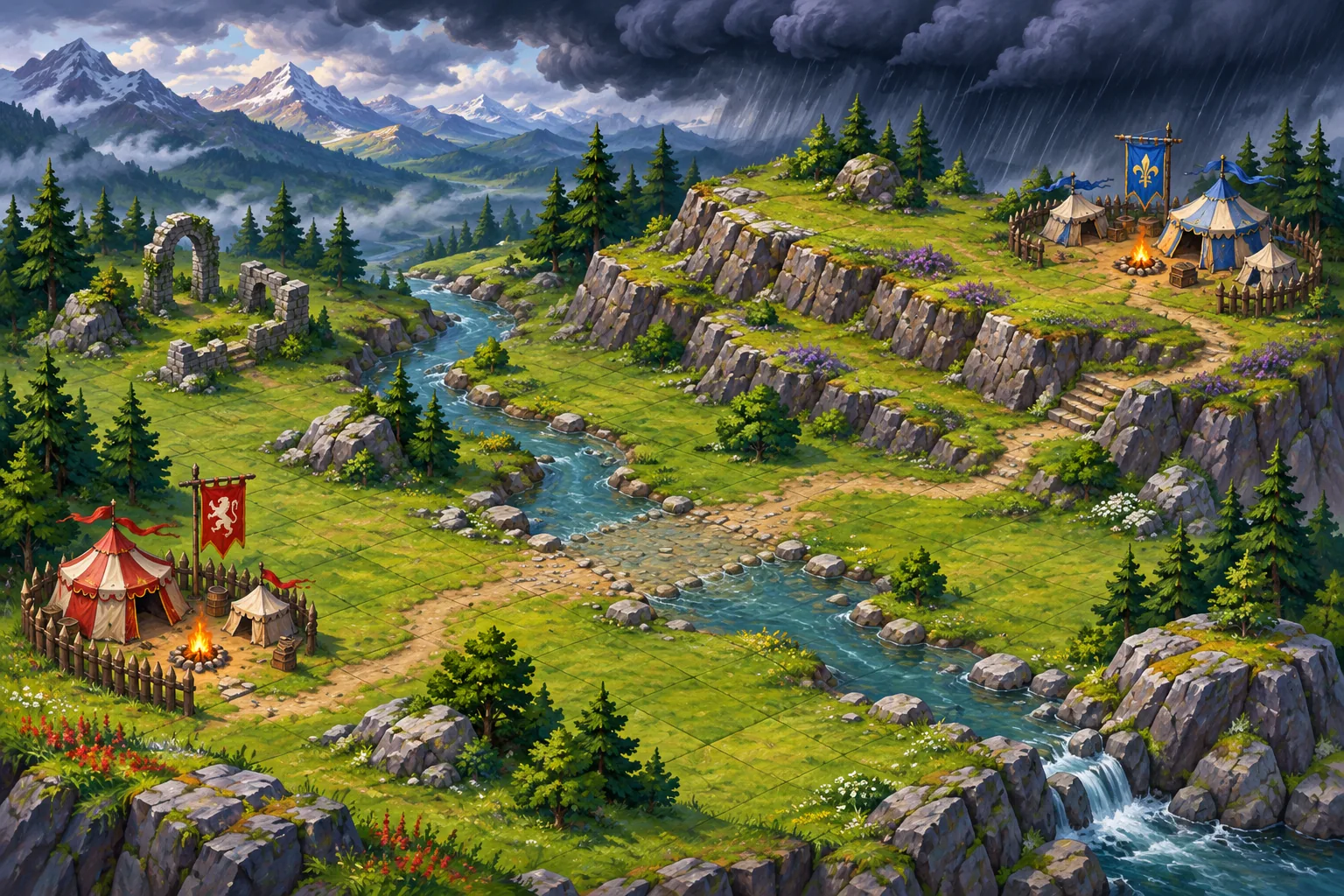
In fictional Bracken Reach, two camps face each other across a 5-by-5 valley. A shallow ford is the shortest route, while a raised ridge offers a longer path. Clear weather leaves both open. Before a rain turn, show the forecast; when the phase begins, low ford cells flood and close, while the ridge remains passable. Units plan after the change, not during a surprise mid-move.
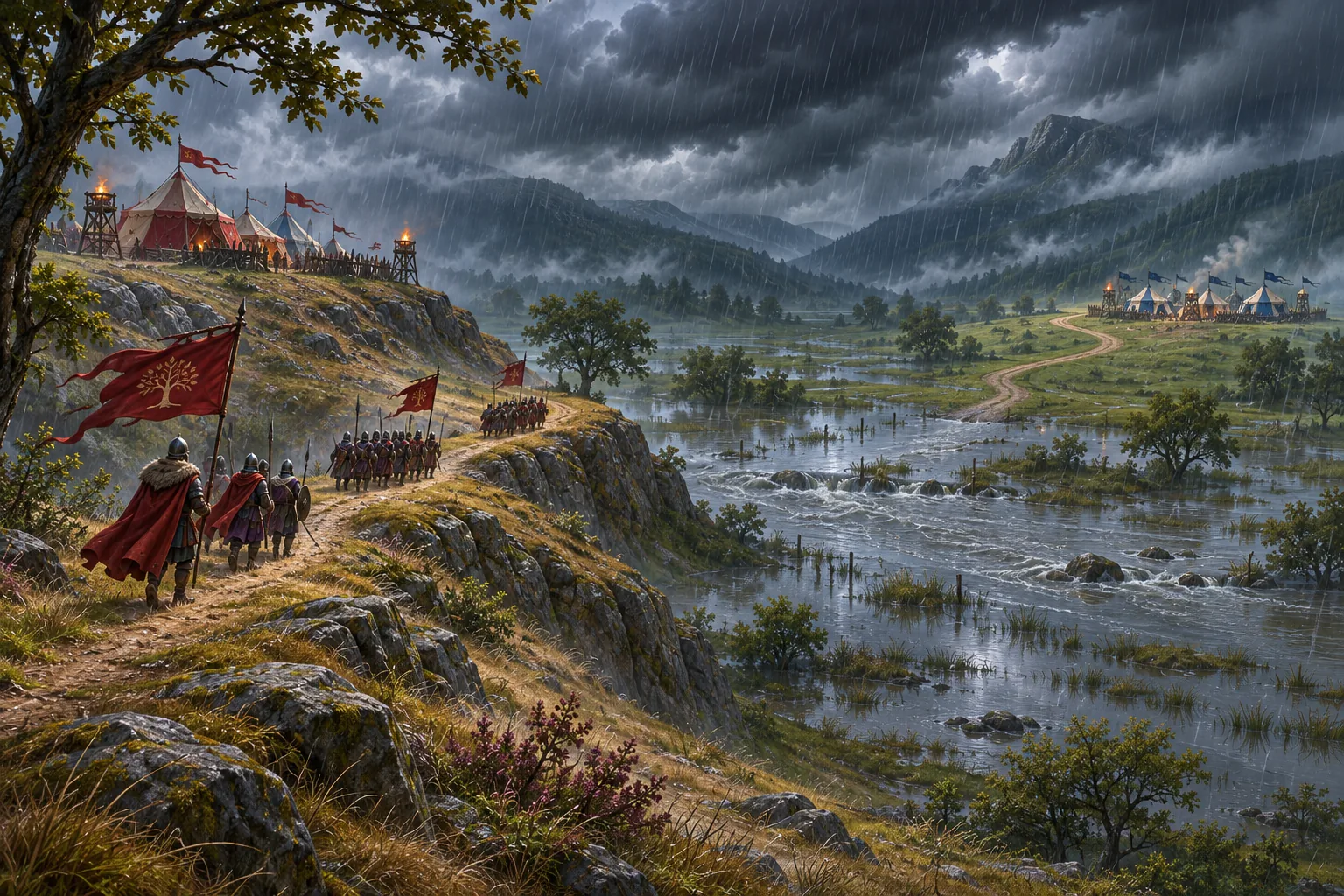
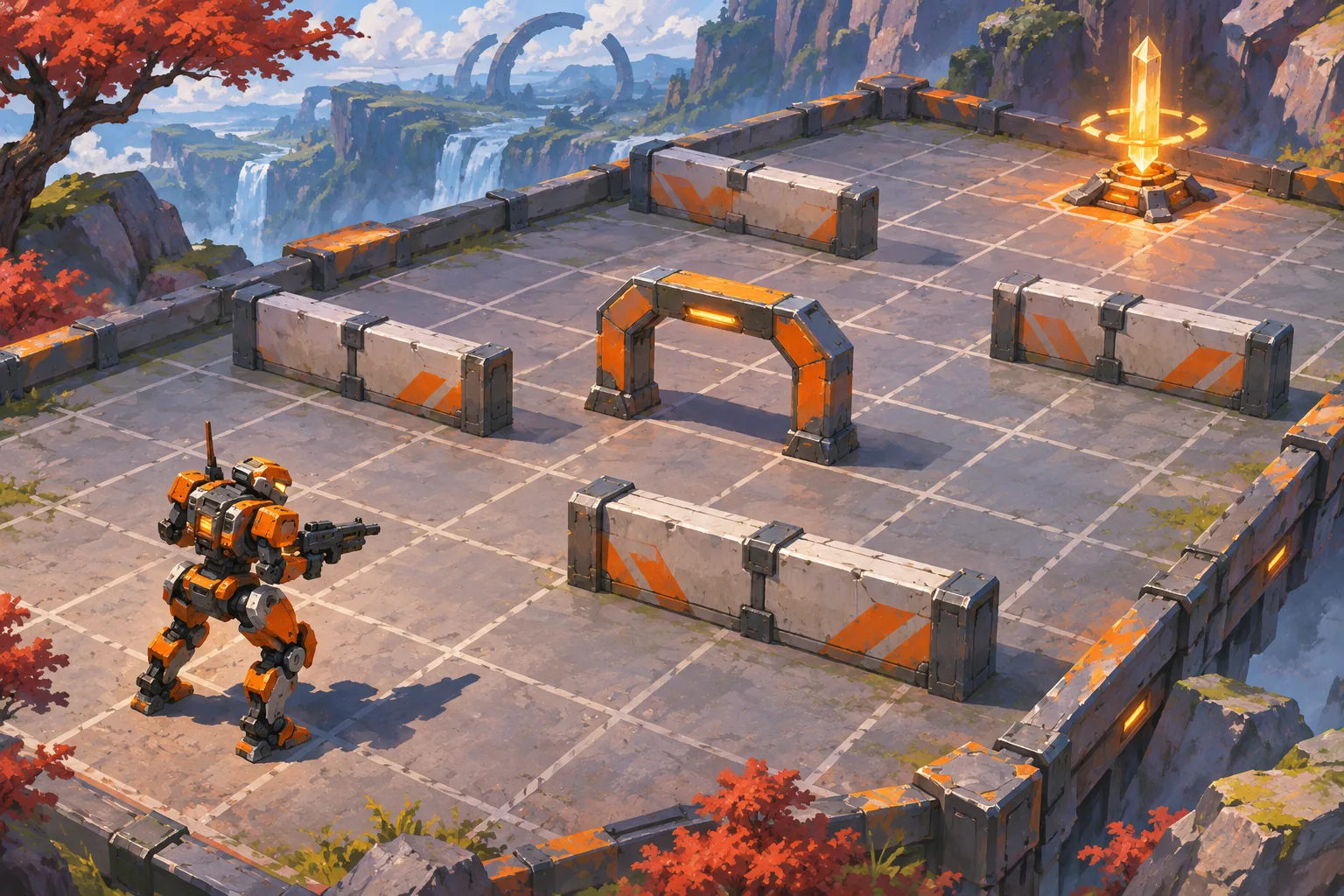
A weather phase should change a small number of named terrain rules. This makes the map readable and keeps a weather effect from silently invalidating a route after an order is committed. Mark flooded cells, preview the new path and preserve a safe retreat edge for units already near the ford. Players can then decide whether to cross early or reposition before the rain.
Update terrain at a visible turn boundary
Store the weather forecast, phase, terrain tags, unit positions and current path graph. At the start of the rain phase, apply the flood tag to low ford cells, recalculate routes, then accept movement orders. Keep ridge cells tagged high ground so they stay open. If a unit has no legal retreat after the update, flag that before the player ends the prior turn.
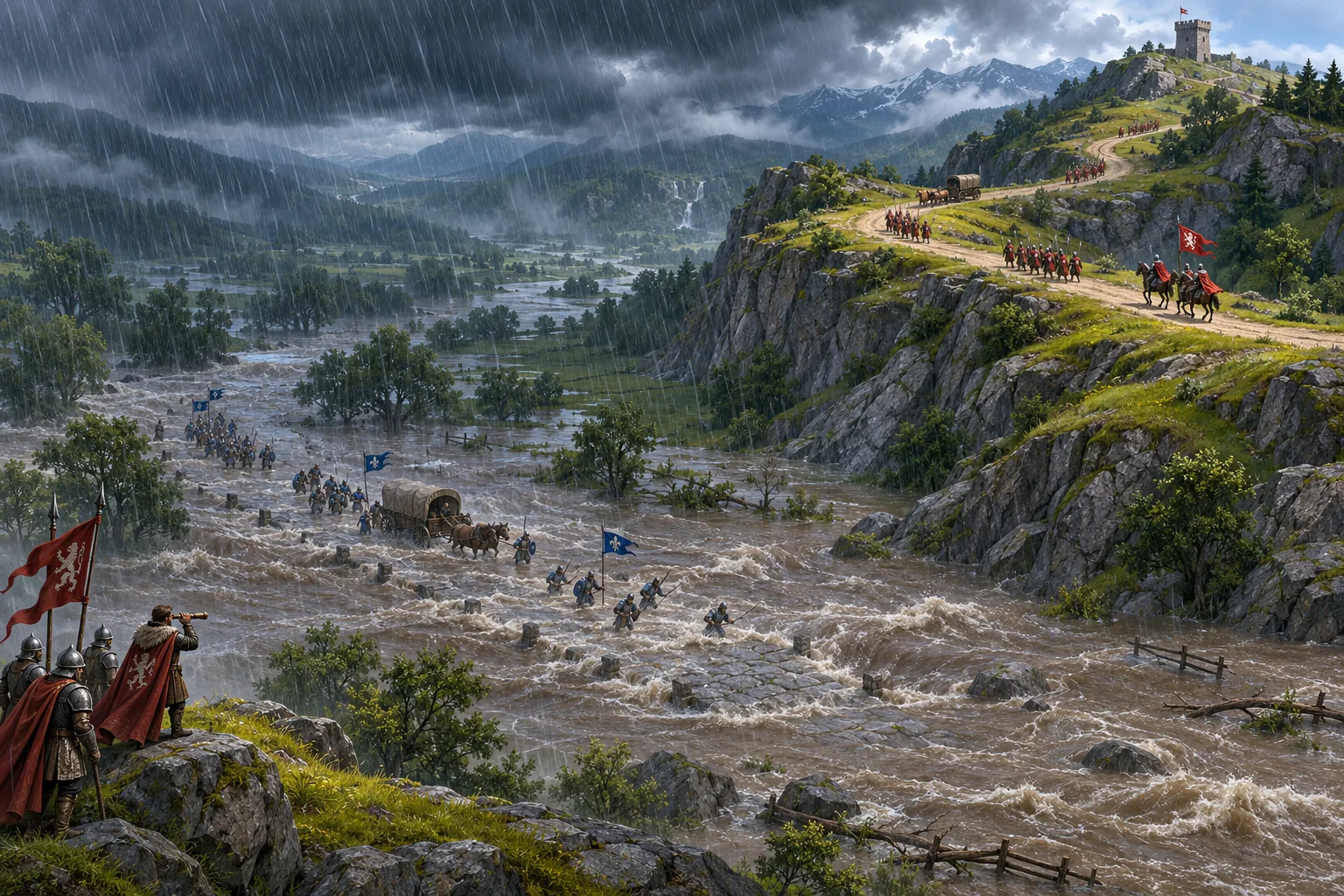
The local graph test checks the same camps in two phases. In clear weather, the ford is reachable. In rain, ford cells become impassable, the ridge path remains connected, and a unit on the near bank still has a retreat route. This deterministic map test does not simulate combat, weather visuals, unit AI or a full 4X match.
Keep the longer ridge route legible
Show the cost of each route in movement points and mark the weather phase that will affect it. A ridge detour may take one extra move, but it avoids a flooded crossing. Let players inspect the forecast and route preview before committing an order; then resolve the phase in one predictable step so the tactical cause of a changed path is easy to understand.
Prototype weather and pathfinding before combat
Start with two camps, one ford, one ridge and a single rain forecast. Test route reachability before and after the flood, then test retreat access from both banks. Godot TileMapLayer can organize a tile-based 2D battlefield; its official reference describes the layer. SEELE AI Game Maker offers a prompt-based entry point for a game concept. Neither source validates Bracken Reach or its tactical balance.
Create an original compact strategy map with two camps, a low ford and a high ridge. Show a clear-weather route preview and forecast rain before the next turn. Rain floods low ford cells but leaves ridge cells passable. Recalculate paths before accepting movement orders and warn if a unit loses retreat access. Keep this as a prototype rule test, not a playtest claim.
Start a fictional strategy prototype in SEELE · Godot TileMapLayer documentation
Frequently asked questions
When should weather change the battlefield?
Apply the change at a clear phase boundary, such as the start of a turn, and show the forecast beforehand. This gives players time to choose whether to cross, wait or take the ridge. Avoid changing passability after an order is locked unless the game has a clearly explained reaction rule and a way to preview that risk.
How can rain change tactics without feeling random?
Use a forecast with a fixed set of terrain effects. In this example, rain floods only low ford cells while elevated ridge cells stay open. Display affected tiles and movement costs before the turn begins. Players can adapt their plan, and a route change follows a rule they can learn rather than an opaque random event.
What should the first map test cover?
Check route reachability in clear and rainy phases, then verify that a unit on either bank retains a legal move. Also confirm that the route preview updates before orders are accepted. This local graph test covers terrain connectivity only; combat, unit behavior and the full strategy match need separate playable testing.