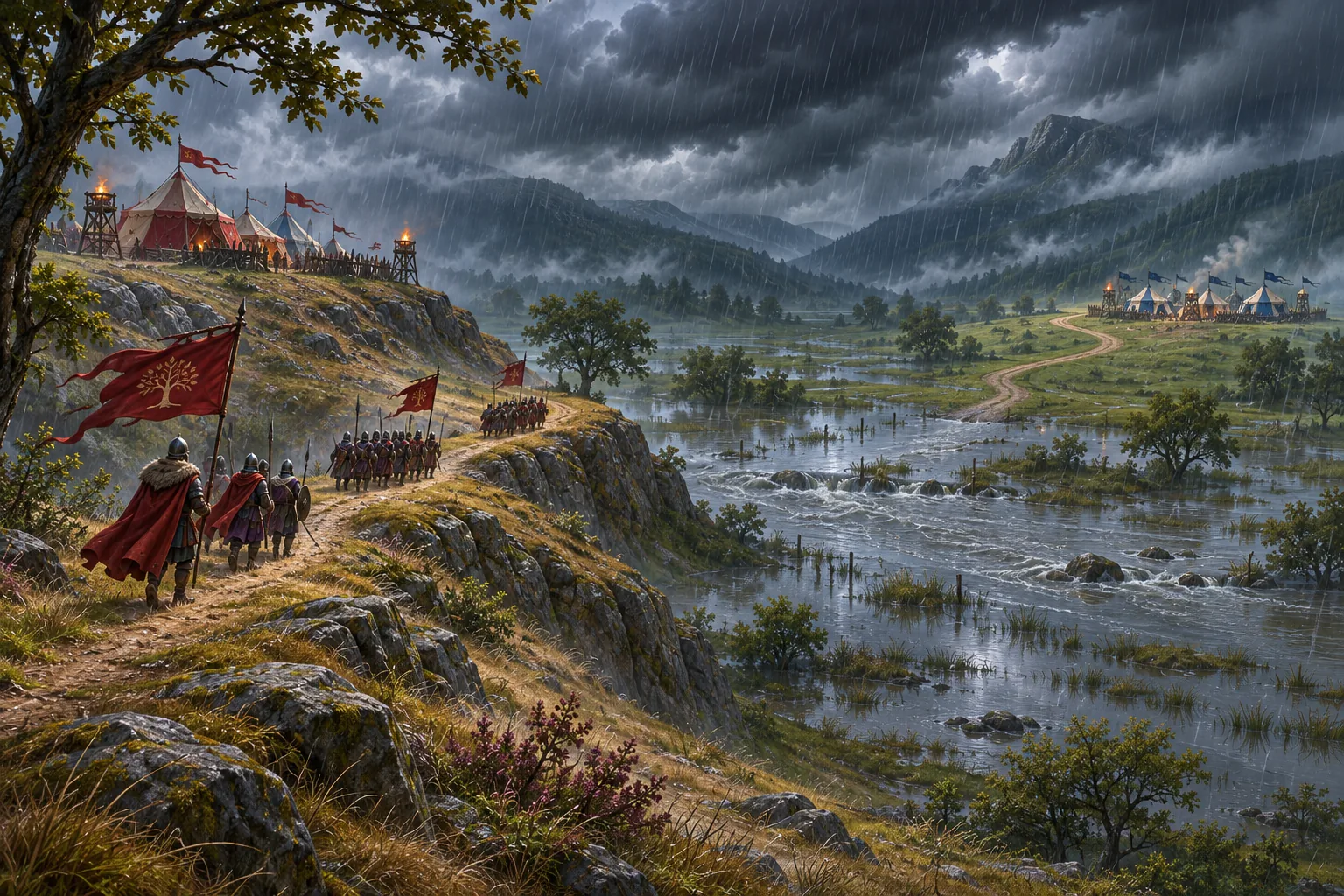
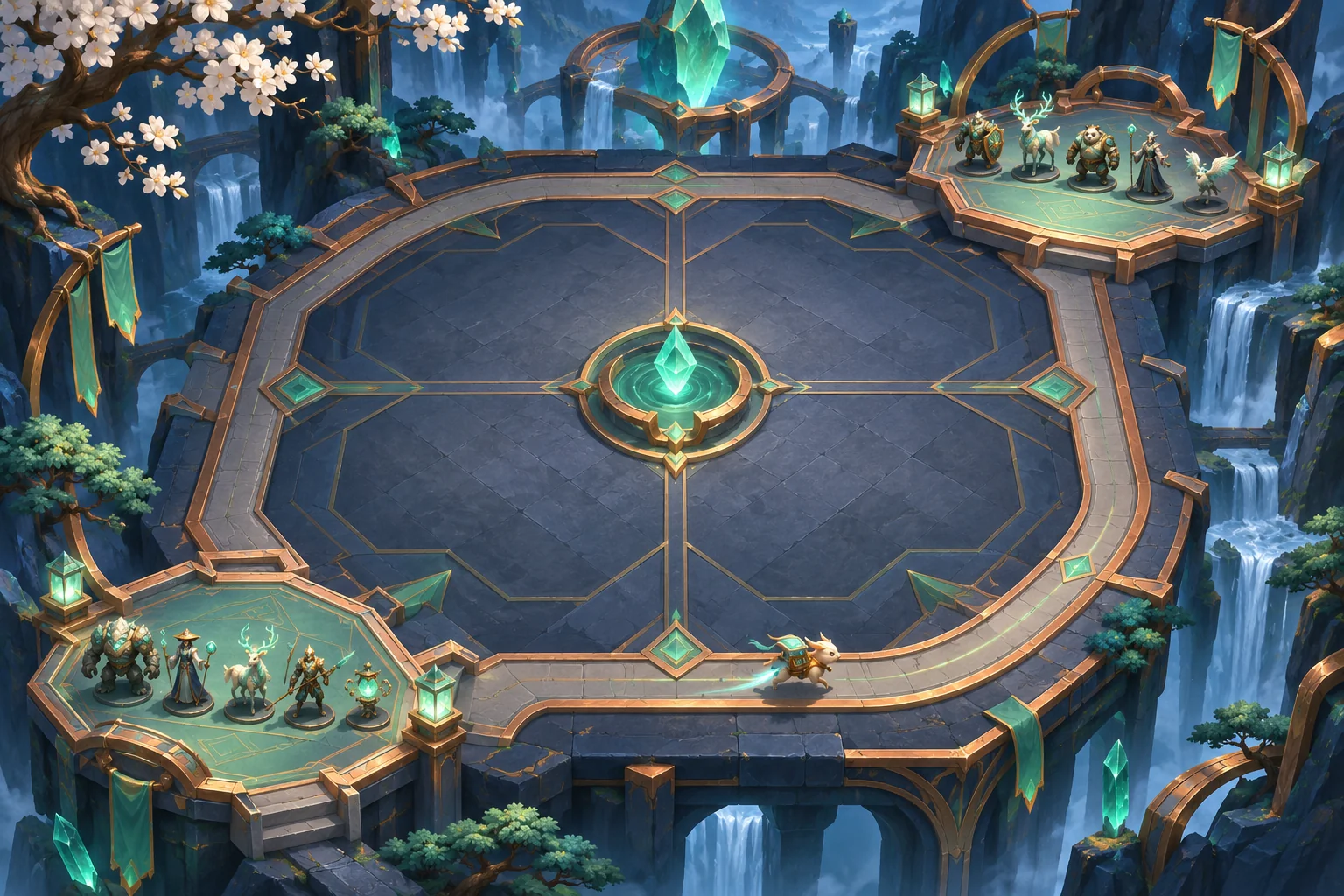
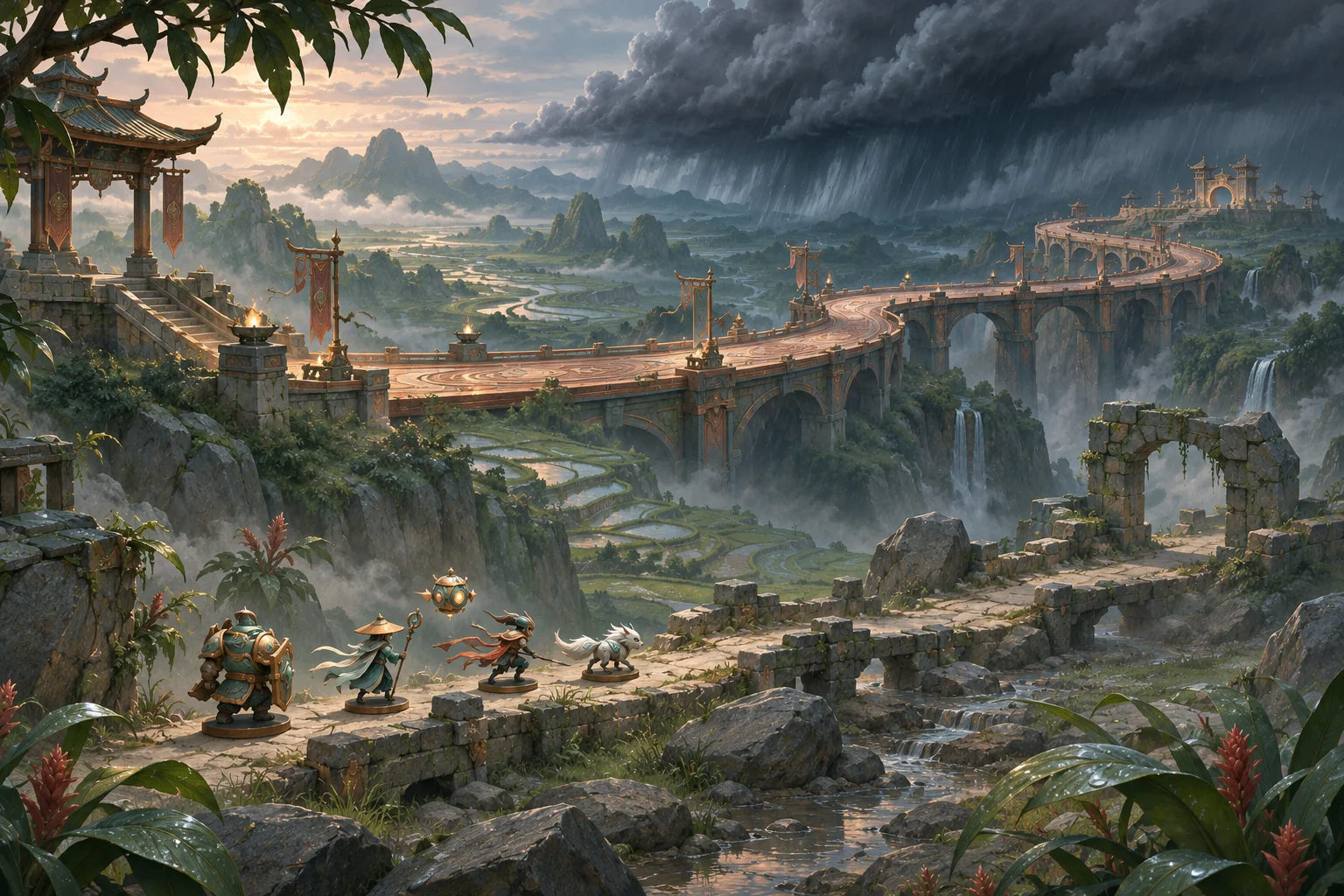
Weather changes an auto-battler when it reshapes the route units can take. In the fictional Monsoon Circuit, heavy rain floods a short low lane and forces units onto an elevated detour. The forecast becomes part of team planning because it changes when units can reach the fight.
Start with one low shortcut, one raised route and a fixed unit movement budget. Show the weather forecast before roster lock. Then test whether shifting the storm by one round changes arrival timing while the paths and movement stay the same.
Make weather change traversability
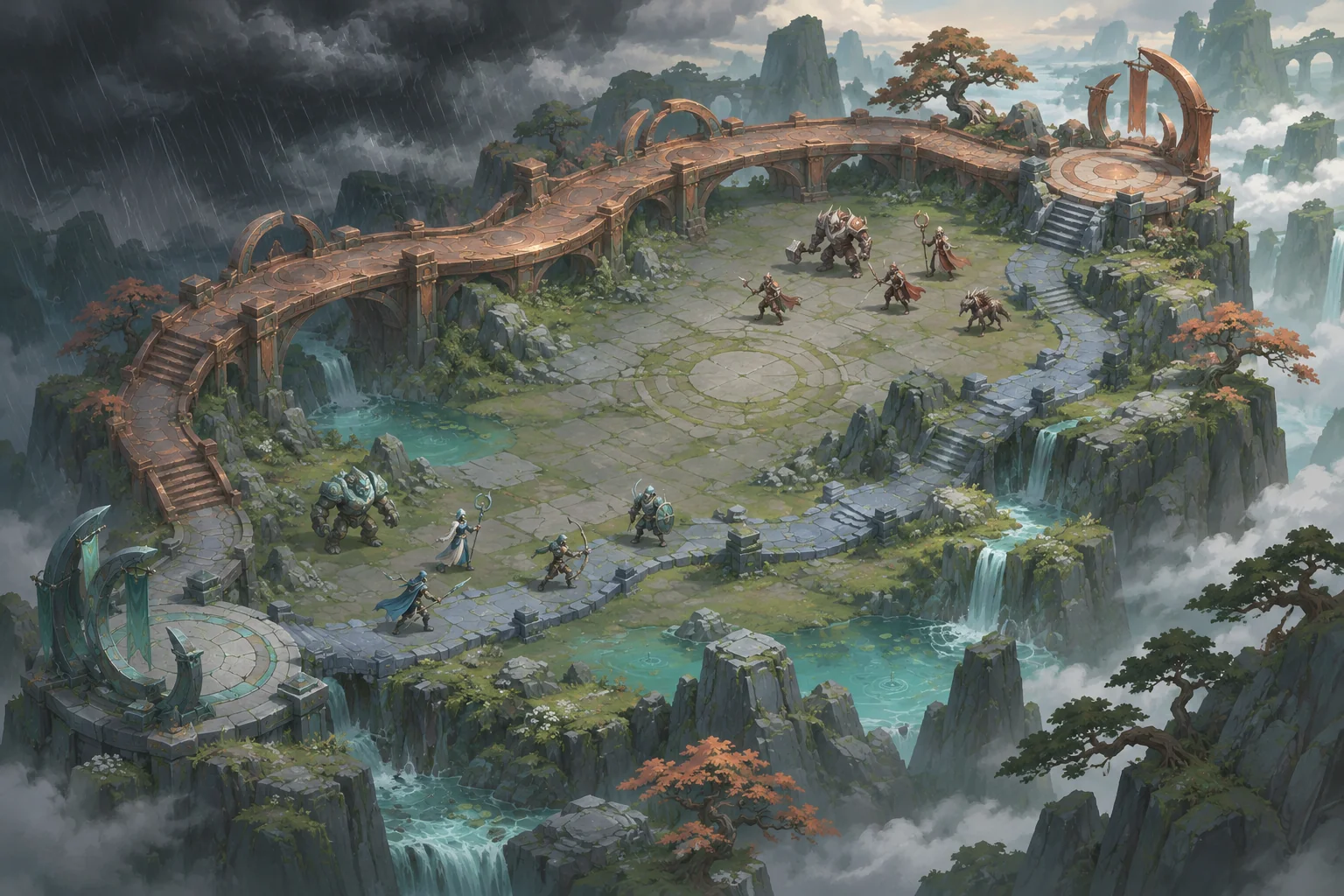
Represent dry and flooded terrain as different path states. Before each automatic round, read the forecast and mark the low lane open or blocked. A unit already committed to a route should not jump between paths without a visible reroute event.
Show the blocked tile, the new route and each unit's remaining move budget. Keep weather duration explicit so players can tell whether the lane will reopen next round. Lock the roster at a consistent point, then let the terrain determine how quickly each unit joins the fight.
Godot's NavigationAgent2D reference describes path-following for moving actors. It is optional routing vocabulary here; the small comparison below uses a fixed path graph and round budget rather than an engine simulation.
Read Godot's NavigationAgent2D reference
Move the storm forecast by one round
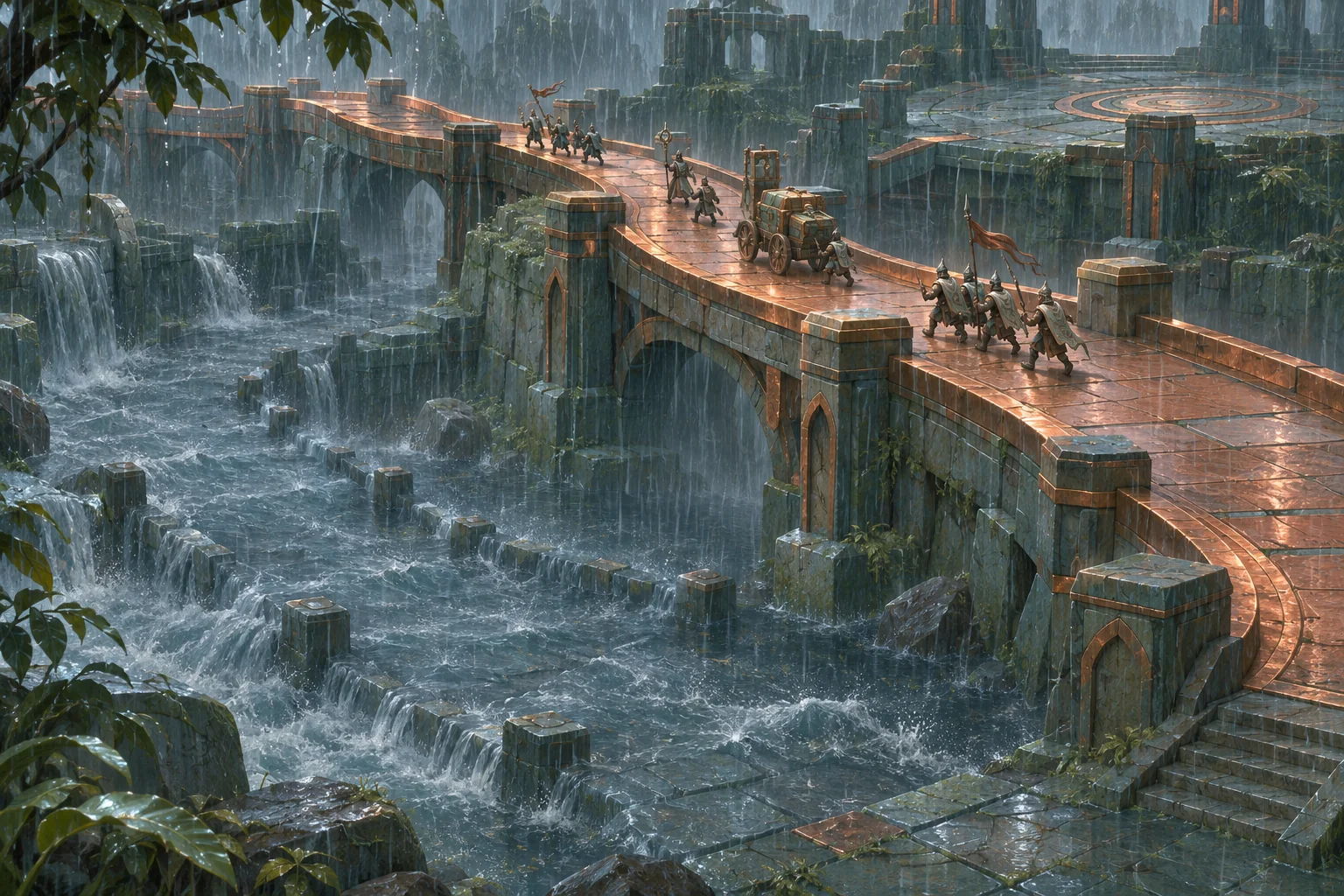
The fictional low lane is two tiles and the raised detour is four. Units can move three tiles per round. If rain begins on round 1, the low lane is flooded before movement; the four-tile detour takes two rounds to reach the fight.
Change only storm onset to round 2. The dry shortcut remains available in round 1, so the unit covers its two tiles and reaches the fight a round sooner. Path lengths and movement budget are unchanged.
This deterministic model checks path and arrival timing only. It does not simulate an automatic battle, unit balance, forecast comprehension or weather visuals. In the prototype, verify that the route reroutes at the stated boundary and that the forecast appears before roster lock.
Ask AI for a forecast-to-path battle loop
Describe one arena with a two-tile low lane, a four-tile raised detour and a three-tile movement budget per round. Add a rain forecast that floods the shortcut. Keep unit stats and battle resolution fixed while comparing rain at round 1 versus round 2.
Inspect the event trace for forecast, lane state, chosen path and arrival round. Play the prototype to confirm units reroute clearly and that weather timing feels fair. The route model cannot verify combat outcomes or visual readability.
Create a small original auto-battler called Monsoon Circuit. The arena has a two-tile low shortcut and a four-tile raised detour. Units move three tiles per round. A forecast announces heavy rain; when it starts, flood and block the low lane for the round. Show the forecast before roster lock and display any reroute. Compare rain beginning on round 1 or round 2 while keeping map, movement budget, roster and battle rules unchanged. Log forecast, lane state, chosen route and arrival round. Make duration and reopening explicit. Do not add damage modifiers or extra weather types until this route loop is clear.
Tune forecast timing before adding more weather
A weather forecast becomes a strategic input when it changes which paths are available and when units arrive. Keep one storm and two routes while tuning its onset. Add new weather states only after players can predict the route change before the roster locks.
Start a weather-based auto-battler with SEELE's AI game maker
Frequently asked questions
Should weather always change unit damage?
No. Weather can alter traversability, visibility or timing without adding a damage modifier. A route change is easier to inspect when the map marks blocked and open tiles directly. If you later add combat bonuses, keep them separate from path rules so players can tell why a unit arrived late or dealt different damage.
When should the forecast appear?
Show it before the player locks the roster or commits a route. The forecast should identify onset and duration clearly enough to plan around a blocked lane. If weather is partly uncertain, present the possible states and make the uncertainty itself a deliberate planning choice.
Does the route model test the auto-battle?
No. It checks only which path is available and how many rounds the unit needs to reach the fight. It does not simulate attack resolution, unit strength, fairness or readable weather effects. Use an interactive prototype to test rerouting and battle outcomes with the actual interface.