Introduction
A music-driven game can make an original track part of the player’s decisions, timing or movement. For an independent musician, the goal may be to introduce a composition, create an interactive listening experience or explore how a musical idea can shape play. A game prototype does not automatically increase streams, reach new audiences or prove a track works for gameplay.
This guide uses Neon Orchard, a fictional rhythm-platform concept paired with an invented instrumental loop. No real musician, track, playable build or audience test is represented. Confirm rights and permissions for any real audio before integrating it.
Choose how music affects play
Start with a design question: does the player respond to a beat, move through musical phrases, or change the arrangement through choices? Pick one relationship between sound and action. Decide whether the track is simply background, a timing reference or a system input. Make that role clear to the player and keep an option for muting or reducing audio.
Prompt 1 — music-game brief
Create a brief for a fictional music-driven game for an independent musician. Define audience, creative goal, one role for the original track, player action, feedback, session length, audio controls, rights assumptions and future evidence questions. Label Neon Orchard and its music fictional; do not claim audience results.
Music can shape atmosphere without controlling mechanics. If the beat determines timing, make the timing readable through sound and visual cues so play does not depend on hearing alone.
Map a track to a small gameplay loop
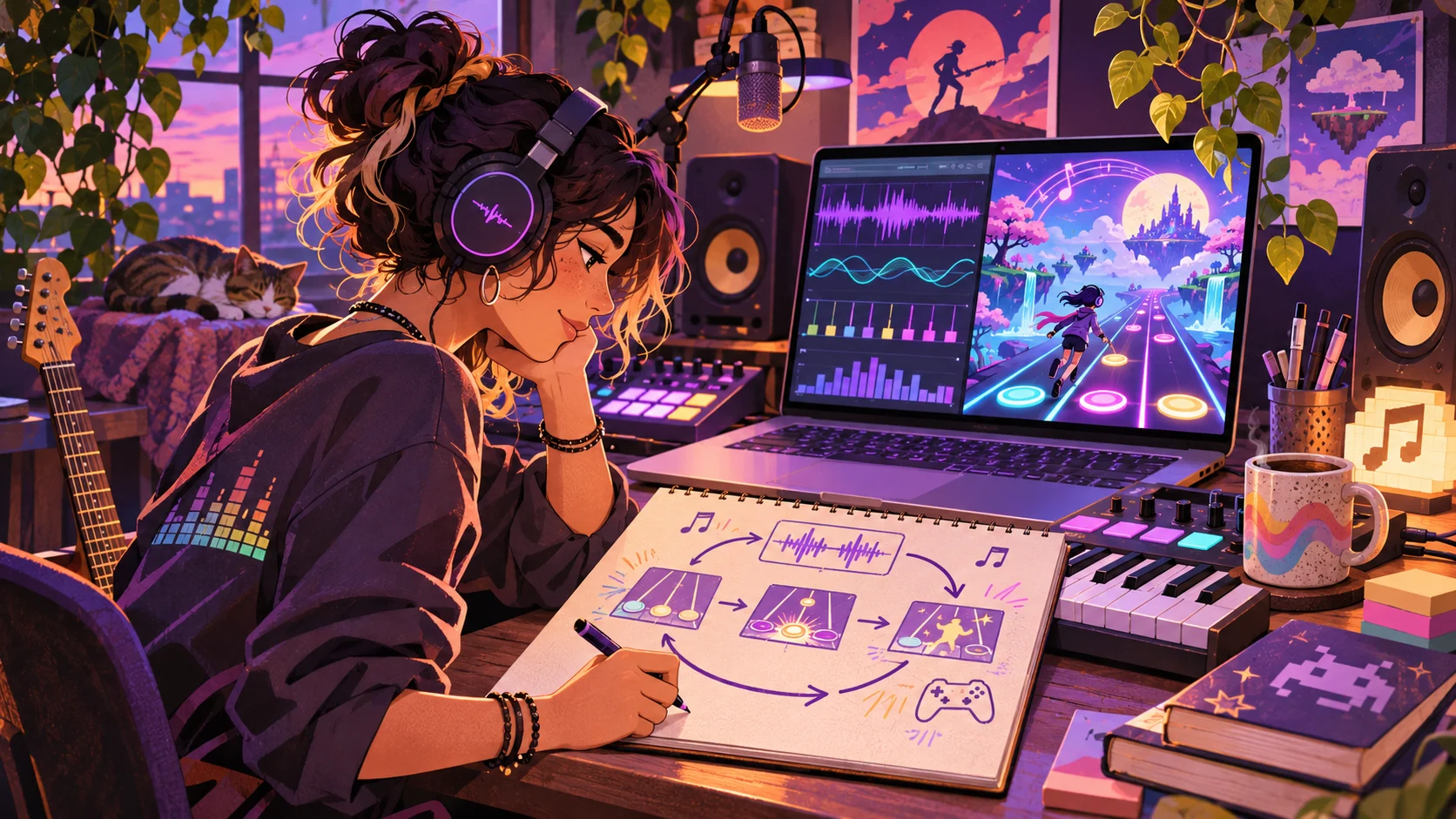
A short loop might use a repeating phrase to signal when a platform appears. Identify the musical sections, the player action associated with each section and what happens when the player misses a cue. Keep the first prototype short; a single representative phrase is easier to inspect than a full album-length experience.
Prompt 2 — track-to-play map
Map a fictional 20-second Neon Orchard music loop to a short platforming sequence. Use invented sections such as intro, phrase, pause and ending. For each section state player action, audio cue, visual cue and failure or recovery behavior. Do not imply the example is a real composition.
| Musical section | Fictional game response | Accessibility and design check |
|---|---|---|
| Intro | Show the goal and controls before play | Can the player read the instruction without audio? |
| Phrase | Offer a clear timing cue for one action | Is there a matching visual signal? |
| Pause | Give space to reposition or recover | Can players adjust cue intensity? |
| Ending | Resolve the short loop and offer replay | Is replay optional and easy to exit? |
The table is a planning aid, not a tested timing chart. A real track may need tempo analysis and manual review so cues match musical intent.
Keep timing and feedback inspectable
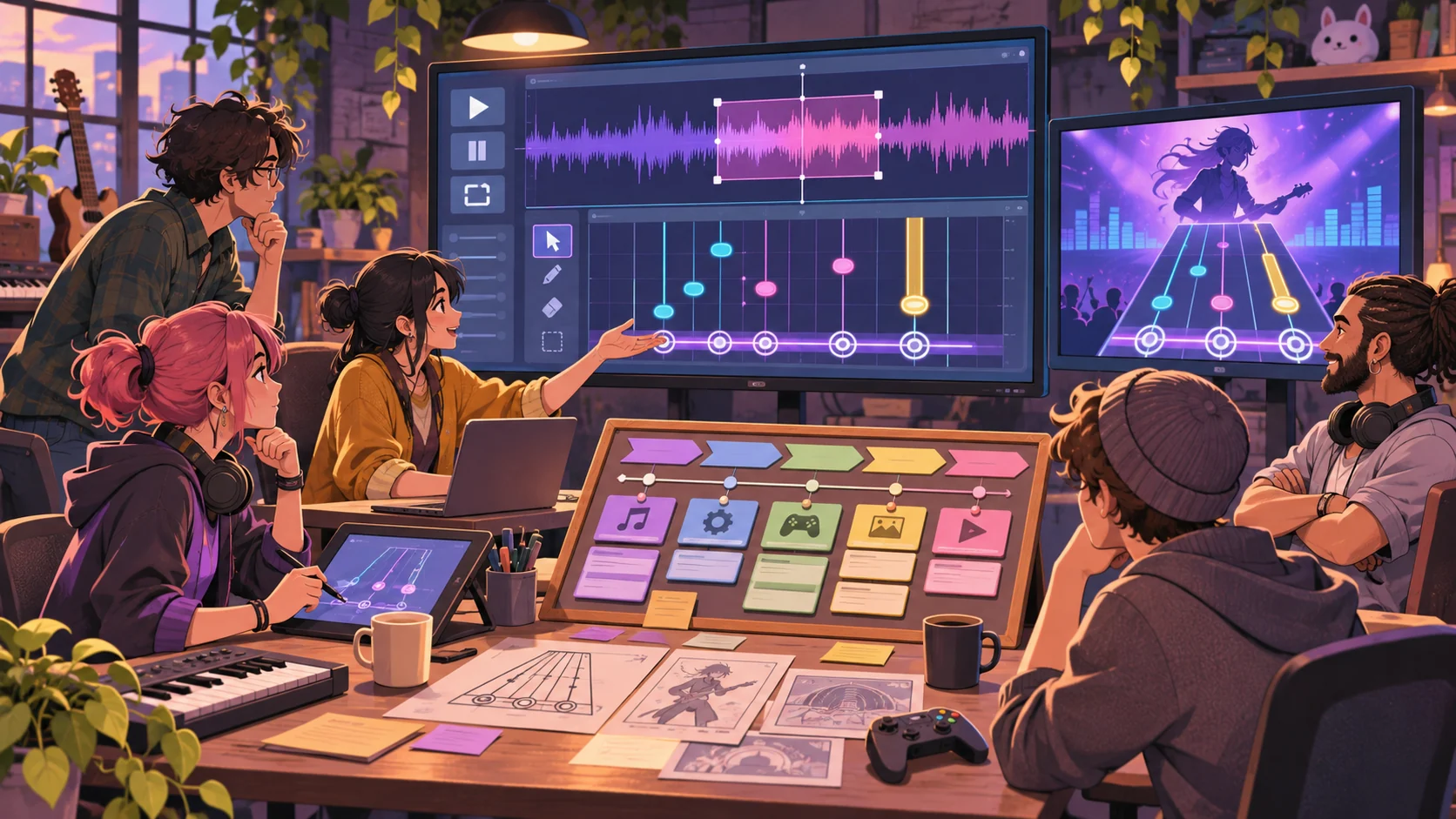
If an interaction depends on beat timing, make the timing window a tunable parameter and show the player a fair cue. Avoid punishing small timing differences in an early prototype. Record whether the action was missed, the cue was not noticed or the control was unclear as separate possibilities rather than assuming a single cause.
Prompt 3 — timing and feedback design
Specify one fictional Neon Orchard timing interaction. Define the cue, player input, adjustable timing window, success and recovery feedback, visual alternative, mute behavior and assumptions. Distinguish implemented behavior from a design proposal and leave test results blank.
An audio waveform or beat marker can help a developer inspect timing, but it should not be presented as proof that the interaction feels musical. That judgment requires listening and appropriate playtesting.
Use an editable music-game template
Keep track metadata, section markers, gameplay events and accessibility controls in an editable structure. The example below has placeholder values and no real audio file. Before using a song, document ownership, license, allowed modifications, distribution scope and any third-party samples.
{
  "gameName": "Neon Orchard — fictional rhythm platformer",
  "status": "concept example; unbuilt and untested",
  "track": {"title":"Invented loop","owner":"fictional","audioFile":null,"rightsStatus":"placeholder; no real recording included"},
  "sections": [
    {"id":"intro","start":"placeholder","event":"show controls"},
    {"id":"phrase-a","start":"placeholder","event":"offer one beat cue"},
    {"id":"pause","start":"placeholder","event":"allow reposition or recovery"},
    {"id":"ending","start":"placeholder","event":"finish and optional replay"}
  ],
  "mechanic": {"input":"single jump action","timingWindow":"tunable placeholder","missBehavior":"gentle recovery"},
  "accessibility": ["visual beat cue", "volume control", "mute", "reduced flash", "pause"],
  "review": ["audio rights", "cue alignment", "mix clarity", "device playback", "accessibility"],
  "evidenceStatus": "fictional and untested"
}
The template separates musical structure from game response, making iteration easier. Keep source audio and derived stems under the permissions that apply to them; a musician’s original track may include collaborators or samples with separate rights.
Build and inspect a playable slice
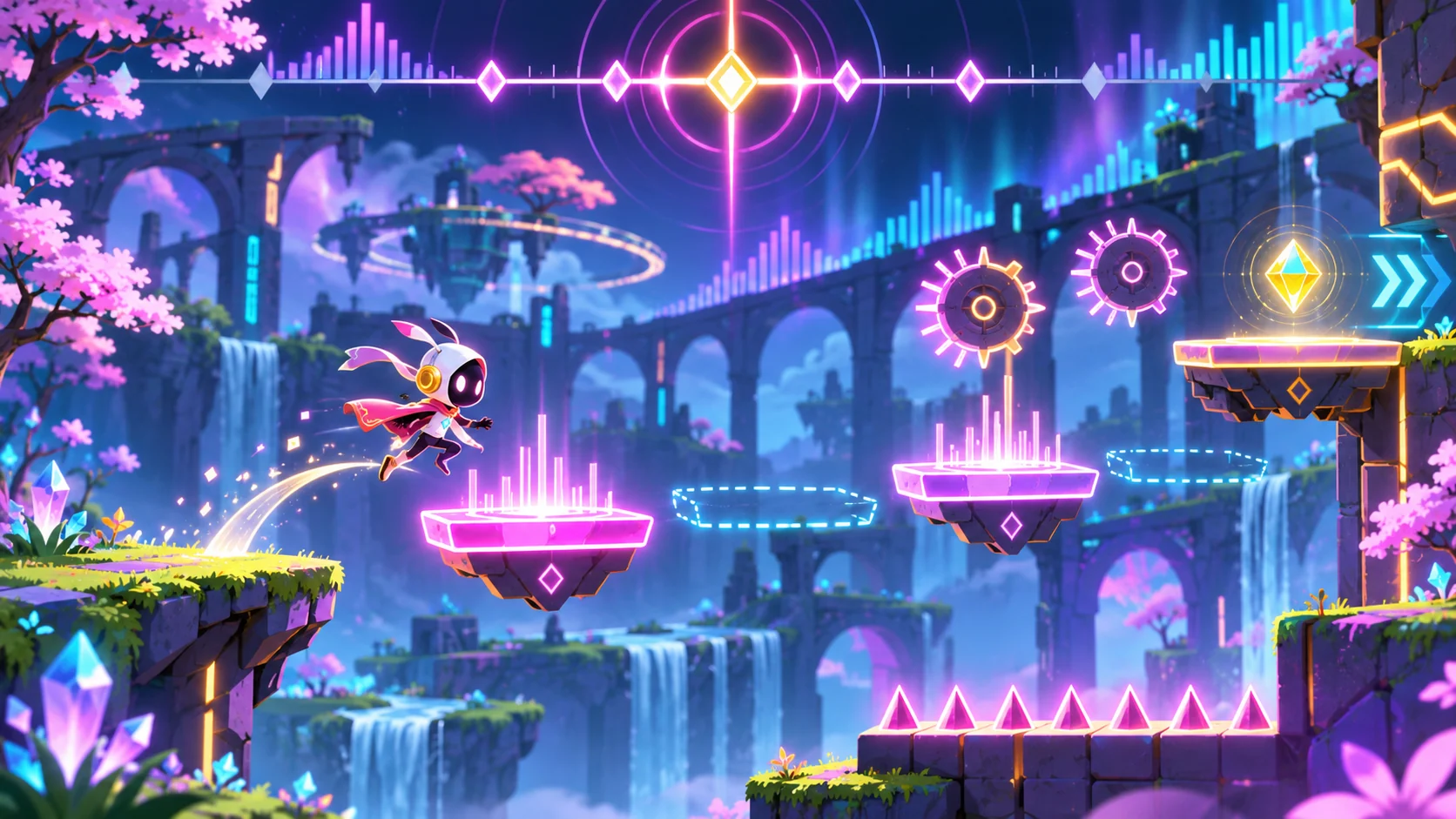
Begin with a short segment, one action, one cue and one clear recovery path. Check playback, pause and restart behavior. Test that important feedback has a visual alternative and that volume controls are available. A static mockup can show the planned scene but cannot demonstrate synchronization or audio quality.
Prompt 4 — playable music-game slice
Build a small local Neon Orchard prototype using placeholder or generated noncommercial tones only. Include one short loop, one player action, a tunable beat cue, visual alternative, volume and mute controls, pause, recovery and restart. Label the music fictional and the prototype untested. List working interactions separately from static screens.
Do not attach a real track to a public build until rights and distribution permissions are confirmed. Check how the loop behaves when interrupted, resumed or played on devices with different output levels.
Simulate a track customization
For a fictional adaptation, imagine replacing the steady loop with a slower Glass Garden passage that has a longer pause before the final cue. Change only the section timing and recovery space, leaving the visual style and player action constant. This invented example demonstrates how an editable music map can support iteration; it is not a claim that the adaptation improves play.
Prompt 5 — fictional track adaptation
Adapt Neon Orchard to a fictional slower passage called Glass Garden. Change section timing and recovery space while keeping the action and visual style fixed. Record the version difference, rights status and questions for a later playtest. Do not claim a measured improvement.
Prompt 6 — musician and designer review
Review the fictional prototype for musical intent, cue alignment, control clarity, visual alternatives, audio controls, rights documentation, interruption recovery and version tracking. Mark each item implemented, static, missing or not tested. Do not invent audience reactions.
Plan future listening and play tests
A later test may explore whether players notice cues, understand the action or feel that the music and play fit together. Define the questions, listening setup and method before collecting feedback. Include participants with different audio access needs where appropriate, and do not equate a completion rate with musical quality or audience demand.
Prompt 7 — evidence and release checklist
Prepare a future review checklist for a music-driven game. Cover composition credits, sample and license permissions, cue alignment, device playback, volume and mute, accessibility alternatives, interruption recovery, test questions and evidence limits. Leave result fields pending until a real review occurs.
Conclusion
A music-driven game for independent musicians works best when the track has a deliberate role in a short, readable play loop. Map sections to actions, make timing adjustable, provide visual and audio controls, and track rights before release. Neon Orchard and Glass Garden are fictional, with no real composition, playable game or audience test. Verify music permissions and run suitable listening and play tests before making claims about the experience.
You can shape a small concept in the Free AI game maker, then compare it with the editable track-to-play template.
FAQ
What is a music-driven game?
It is a game in which music shapes timing, movement, atmosphere or player choices as part of the experience.
Does a music-driven game need rhythm-game mechanics?
No. Music can provide atmosphere or structure without requiring precise beat input; the design should make its role clear.
Can an independent musician use any track in a game?
Only when the relevant rights and permissions allow the intended use, modifications and distribution. Collaborators and samples may have separate rights.
How can music-based mechanics support players who cannot rely on audio cues?
Provide clear visual alternatives, adjustable audio, mute and pause controls, and test the experience with accessibility needs in mind.
Does a prototype prove a song will attract players?
No. A prototype can support design exploration, but audience demand and musical fit require appropriate evidence and cannot be assumed from the concept.