Introduction
A quest-driven adventure for fantasy writers turns a world rule into an objective, a choice and a visible consequence. Start with one quest that a player can explain after a short session; keep lore that does not affect the choice out of the first slice. The fictional Moonseed Courier below uses shifting wind paths to create two routes with different costs. Its editable template shows what to specify, while a small prototype plan makes clear what still needs implementation and playtesting. This is a design walkthrough, not a report about a real author, finished game or reader test.
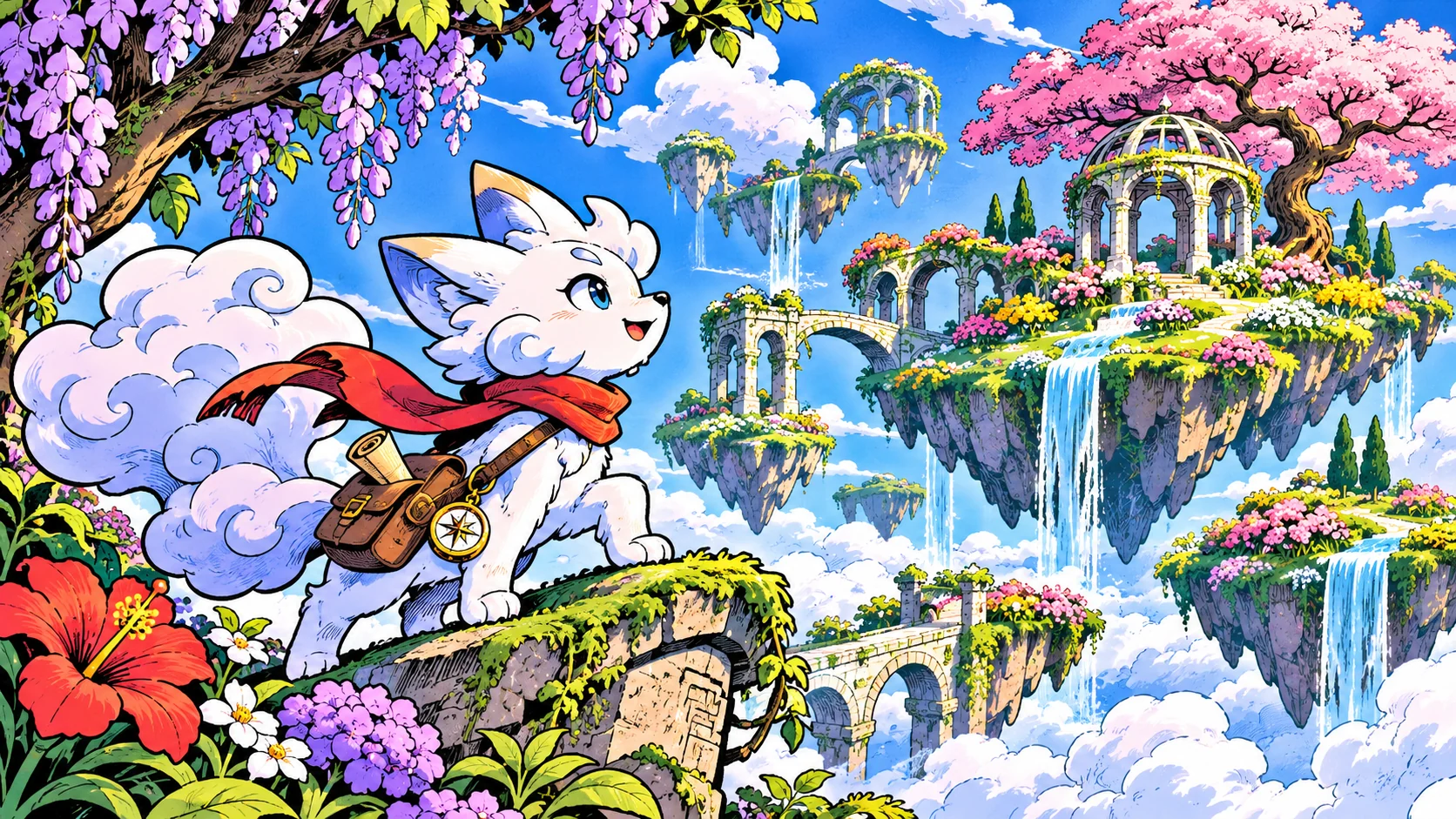
This guide uses The Moonseed Courier, a fictional fantasy setting with floating islands and an original seasonal rule. The world, characters and quest are invented; no writer, playable game or reader test is represented.
Start from a world rule and a character goal
Choose one rule that can affect action: perhaps wind routes change when a moonseed is carried between islands. Pair it with a character goal, such as delivering the seed before a route closes. The rule should create a decision the player can understand, not only a piece of lore to memorize.
Prompt 1 — quest-game brief
Create a brief for a fictional quest-driven adventure game for a fantasy writer. Define the world rule, protagonist goal, player choice, consequence, session length, playable slice and open questions. Keep the world and cast original, mark them fictional and leave test results blank.
A clear brief also says what is outside the slice. One quest and one consequence are enough to explore whether the world rule can drive play.
Turn the quest into an objective loop
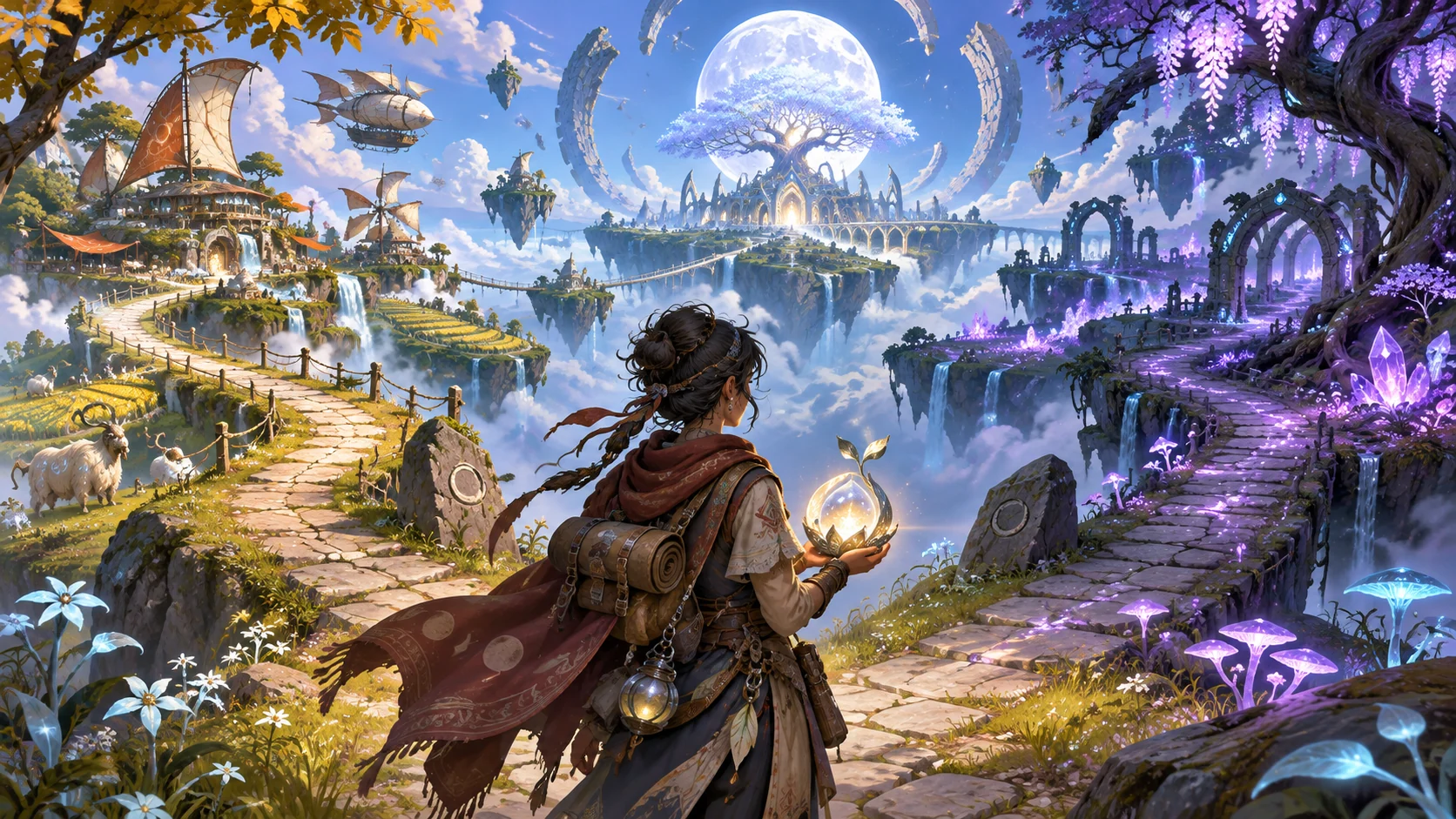
A playable quest needs an immediate objective, a meaningful obstacle, feedback and a next step. In the fictional Moonseed Courier, the player chooses between a sheltered route with a time cost or an exposed wind bridge with a resource risk. The choice should alter the next state so its consequence is visible.
Prompt 2 — quest loop and branches
Outline one Moonseed Courier quest with an objective, two routes, a consequence for each, a recovery option and a finish state. Identify what the player learns through action and what remains background lore. Do not claim the branches have been tested.
| Quest part | Player-facing purpose | Writer’s check |
|---|---|---|
| Goal | Deliver the moonseed | Can it be stated in one sentence? |
| Obstacle | Choose a route before wind shifts | Does the obstacle follow the world rule? |
| Choice | Trade time for resource risk | Do both paths have a reason to choose them? |
| Feedback | Show route or inventory change | Is the consequence visible? |
| Finish | Reach the island and unlock the next objective | Does the result create a story question? |
Let world rules generate objectives
Turn a rule into conditions, not a glossary entry. If wind changes between islands, it might affect travel, timing, signals or what can be carried. Keep the first objective legible and teach any necessary rule through feedback. Avoid relying on hidden lore to explain why an action failed.
Prompt 3 — world-rule objective design
Convert one fictional Moonseed Courier world rule into three possible player objectives. For each list the player action, state change, visible feedback and any required explanation. Choose one small option for prototyping and identify assumptions that need review.
Keep the quest structure editable
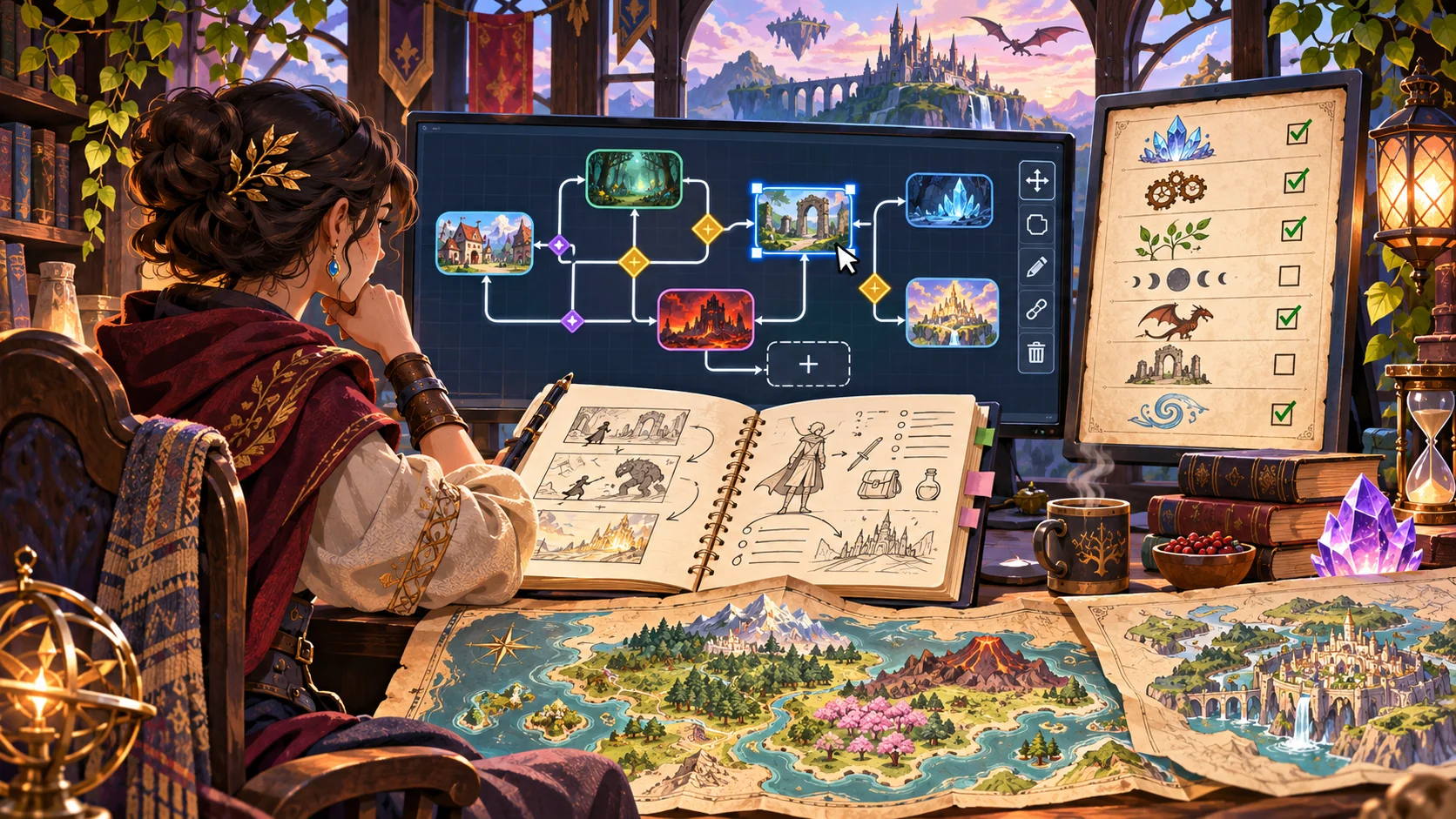
Store the world rule, objectives, choices, conditions and outcomes in an editable format. The JSON below is a planning template, not evidence of a working quest system.
{
  "gameName": "The Moonseed Courier — fictional adventure",
  "status": "concept; no playable build or reader test",
  "worldRule": "wind paths shift between floating islands",
  "quest": {"goal":"deliver one moonseed before a route closes","startState":"seed carried; two routes visible"},
  "choices": [
    {"id":"sheltered-route","cost":"time","feedback":"route remains safe"},
    {"id":"wind-bridge","cost":"resource risk","feedback":"shorter route with visible hazard"}
  ],
  "recovery": "return to a known route state; no irreversible failure in first slice",
  "finishState": "arrival opens a next objective",
  "reviewQuestions": ["is the goal clear?", "does feedback show the rule?", "are outcomes distinct?"],
  "evidenceStatus": "fictional and untested"
}
Keep author notes separate from player-facing text. A game can preserve ambiguity in the story while still making its controls and objective clear. The table below helps decide which details belong in the first playable slice.
| Design element | Put in the first slice when… | Leave for later when… |
|---|---|---|
| World rule | It changes a route, action or outcome | It only adds background lore |
| Choice | Each option has a readable cost or benefit | The branches only change dialogue flavor |
| Recovery | A mistaken choice can block progress | The risk is reversible through a clear action |
| Ending state | It shows what the choice changed | It depends on unresolved campaign content |
This keeps the prototype focused: include only the details a player needs to make and understand the central choice.
Build a small playable quest
Prototype one start, two route choices, visible consequences and a finish. Use placeholder text or art if needed, but label those placeholders. Test the transition paths and reset behavior in the actual build. A story outline or static screen is useful for planning but is not a playable quest.
Prompt 4 — playable quest slice
Build a local Moonseed Courier prototype with one objective, two route choices, visible state feedback, recovery and finish. Use original placeholder content. List implemented controls, static elements and untested assumptions; do not claim that players understood or enjoyed the quest.
For a fictional customization, imagine adapting the quest to an underground city where sound carries between districts. Change the world rule, obstacle and feedback while preserving the objective-and-consequence structure. This is an invented scenario, not a real author collaboration.
A game creation tool can help turn a concise premise into a starting point for a playable game. SEELE describes a one-line game-creation capability and support for playable games; use that as a way to explore the slice, then check whether the actual result contains the intended objective, choice, feedback and reset. A category preview is not proof that this specific quest has been generated or tested. Keep a short acceptance checklist beside the prototype so revisions target observable behavior rather than lore alone.
Prompt 5 — fictional setting adaptation
Adapt the Moonseed Courier quest template to a fictional underground city where sound carries between districts. Change the world rule, obstacle and route feedback, keeping the protagonist goal structure. Label all details fictional and list what would need playtesting.
Prompt 6 — writer review checklist
Review the quest prototype for objective clarity, world-rule consistency, meaningful choices, consequence visibility, recovery, player-facing language, lore separation and ending state. Mark each item implemented, static, missing or not tested. Do not invent reader or player reactions.
Plan future playtesting responsibly

A future review can ask whether players understand the objective, notice a consequence and can explain why a route changed. Record the build version and task context, and distinguish observation from interpretation. A small internal review can identify confusion, but it does not establish wider appeal or story quality. Use an observation sheet that captures what happened before asking for an opinion.
| Check | Record | Avoid concluding |
|---|---|---|
| Objective clarity | Whether the player can state the delivery goal | That every reader will understand it |
| Route choice | Which option is selected and what information was used | That the choice is balanced from one attempt |
| Feedback | Whether the route or inventory state is noticed | That the full story is compelling |
| Recovery | Whether the player can resume after a mistake | That the system is bug-free |
This separates observable events from interpretation and gives the next revision a specific target.
Prompt 7 — quest playtest and handoff plan
Prepare a future test and handoff checklist for a quest-driven prototype. Include build version, objective, consent, observation notes, world-rule assumptions, accessibility, known issues and next experiment. Leave findings blank until collected and state the limits of a small sample.
Conclusion
A quest-driven adventure for fantasy writers works when original world rules create objectives, choices and visible consequences. Start with one quest, keep author lore separate from player instructions, and document what the prototype can and cannot show. The Moonseed Courier is fictional; no playable game or test exists. Use an actual build and appropriate review before drawing conclusions about player understanding or story appeal.
You can shape a small concept in the Free AI game maker, then compare it with the editable quest template.
FAQ
What is a quest-driven adventure game?
It is an adventure organized around objectives, choices and consequences that move the player through a story world. A quest gives the player an immediate goal, an obstacle that calls for action, and feedback that shows what changed. For a writer, the useful test is whether the world rule shapes what the player can do rather than appearing only as background exposition.
How can fantasy writers turn worldbuilding into quests?
Choose one rule that can change an action, route or resource. Give the player a clear goal, then create an obstacle that makes the rule matter. After the choice, show a state change such as a route closing or an item being spent. The fictional Moonseed Courier uses shifting wind paths this way; its example is untested and should be treated as a design prompt.
Should every quest branch change the story?
Not every branch needs a different ending. A route can change the time cost, available resource or information while rejoining the main quest later. What matters is that the player can recognize a difference and see why the choice mattered. If both options produce the same state with no useful tradeoff, simplify the branch or give each option a distinct purpose.
Can a quest outline prove that a game is playable?
No. An outline describes intended rules, but it cannot demonstrate that inputs work, state changes persist or recovery behaves correctly. Implement the smallest slice with a start, choice, feedback and finish, then exercise each route and reset condition. Record the build version and observed behavior. Until that happens, describe the project as a concept or prototype plan, not a playable test result.
Does a prototype show that players like a fantasy setting?
No. A prototype can help examine a narrow question, such as whether a player notices the route consequence. A small review does not establish broader audience demand, enjoyment or story quality. State who reviewed which build, what task they attempted and what was observed before drawing even a limited conclusion. The Moonseed Courier in this guide has no real players or review data.