Introduction
A character adventure game can turn original comic panels into scenes a player explores and influences. The adaptation needs to preserve the artist’s character and tone while adding clear movement, choices and consequences. Start with a short fictional story, a small scene map and an editable panel-to-game template.
This guide uses Cloud Fox and the Floating Garden, an invented comic concept with an original character and setting. No real comic, artist or playable game was used or tested. The panels, dialogue and interactions are planning examples, not an adaptation of an existing property.
Choose a short story arc
Pick one small arc with a beginning, one decision and a clear ending. Describe what the player can do that a reader cannot: explore a space, inspect an object or choose a response. Keep the character goal visible so the game does not become a sequence of disconnected panels.
Prompt 1 — comic-to-game brief
Design a fictional character adventure game called Cloud Fox and the Floating Garden. Scope one short arc in which an original fox character reaches a floating garden, finds a broken wind bridge and chooses how to help. Define the player goal, scenes, movement, one dialogue choice, outcome and reset. Use original characters and details; list assumptions and untested mechanics.
A concise brief helps the artist decide which panels become background, character pose, clue or interactive moment. It also marks which new assets still need to be made.
Map panels to playable scenes
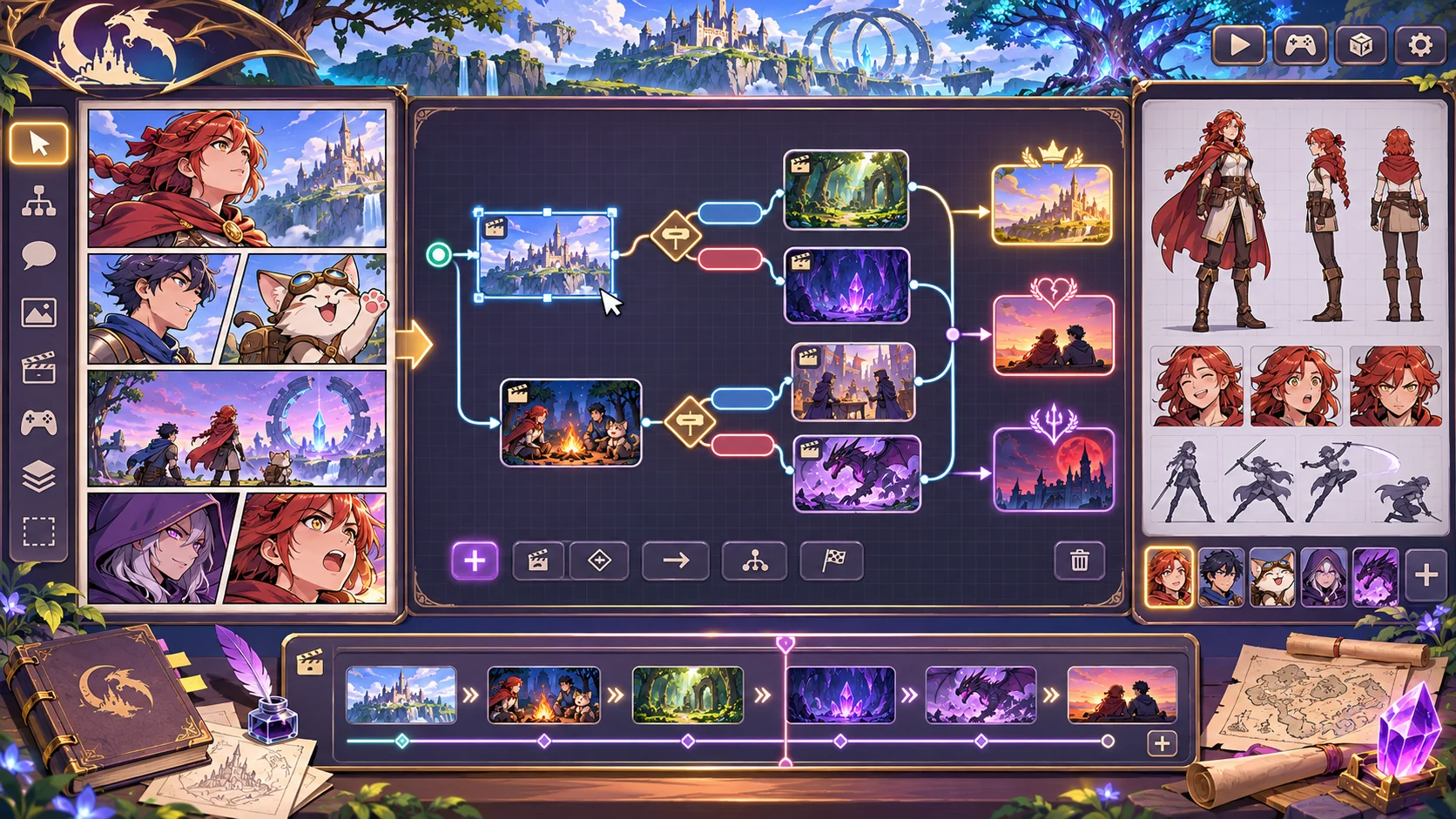
A panel does not have to become a static cutscene. It may establish a location, show an important pose or introduce a choice. Note what remains unchanged and what the player can control. Keep panel order and scene order visible in an adaptation board.
Prompt 2 — panel-to-scene map
Create a Cloud Fox adaptation board with four original comic-panel beats: arrival, bridge problem, a choice to gather ribbons or ask a bird for help, and the garden ending. For each beat, label whether it becomes a background, animation pose, inspectable clue, dialogue choice or playable space. Use placeholders for art not yet created.
| Story beat | Game use | Player action |
|---|---|---|
| Arrival | Establish floating-garden setting | Walk and inspect the bridge |
| Problem | Reveal a missing bridge ribbon | Read the clue card |
| Choice | Offer two ways to help | Gather ribbons or ask the bird |
| Ending | Show the repaired route | Explore the garden or replay |
This is a fictional adaptation plan. It does not imply that the comic art or game scenes exist.
Give the character a small action set
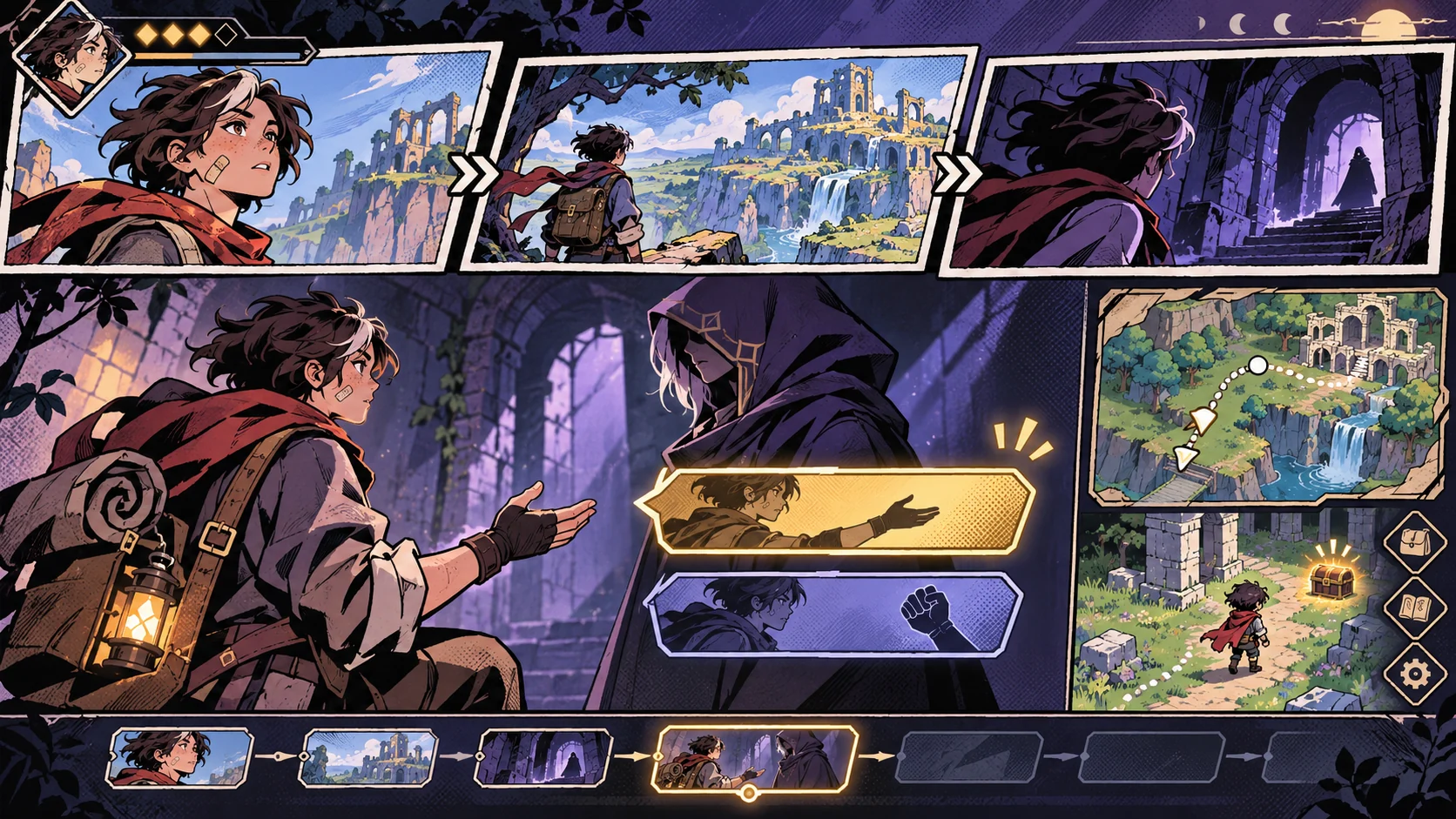
A first character prototype might walk, inspect, interact and respond. State how each action is triggered and what feedback appears. Keep movement and dialogue choices separate so players can see what changed the story.
Prompt 3 — character actions
Define a small Cloud Fox action set: move, inspect, interact and choose dialogue. For each, specify input, visible response, available scene state and one blocked condition. Keep values and animation labels as placeholders; do not claim a playable character controller or finished animation.
A character action should support the story beat. If the fox can inspect the bridge, show what information becomes available and how that clue relates to the later choice.
Turn a panel into an interactive moment
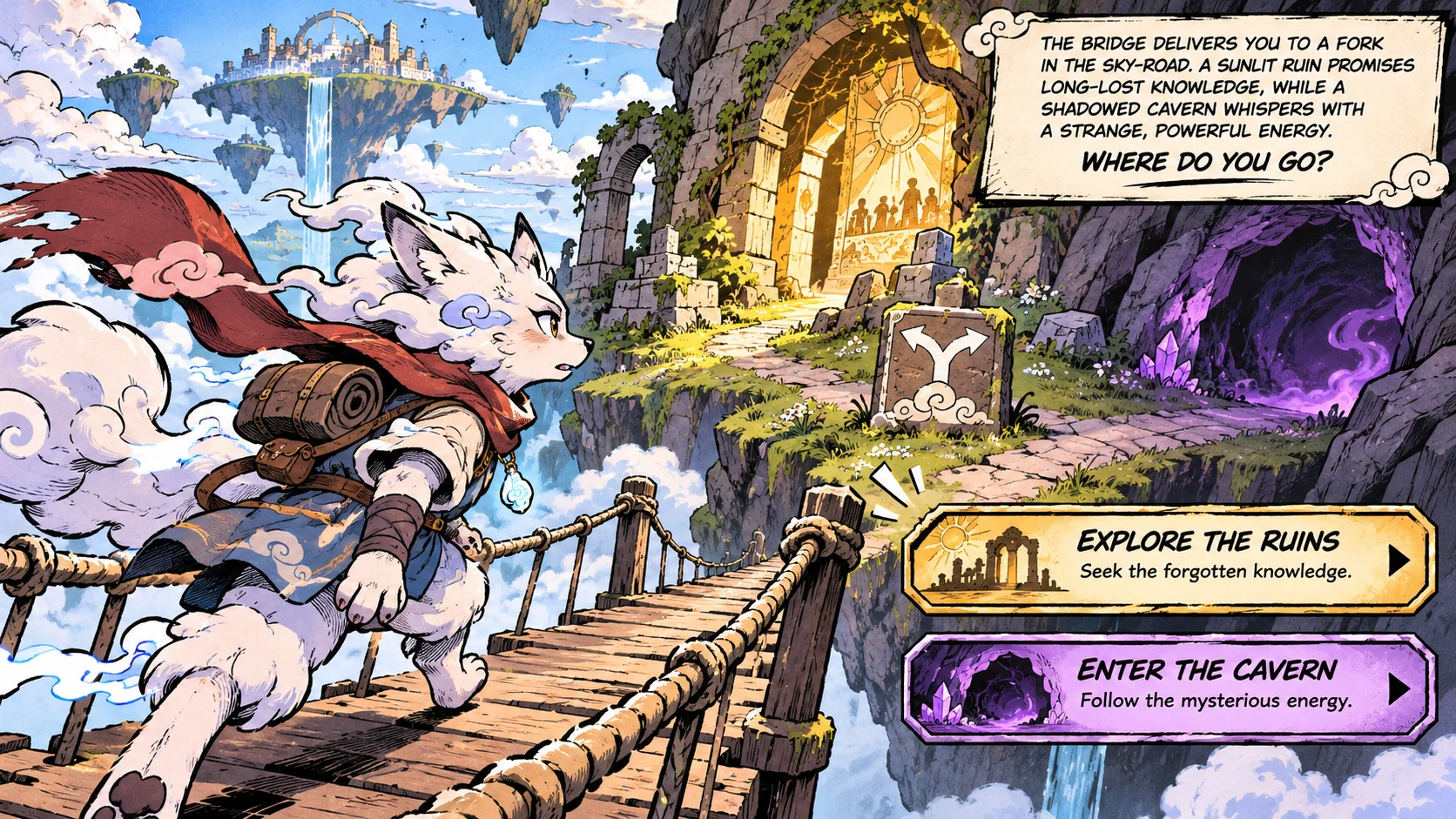
A story choice should reflect information already shown. Explain which scene comes next and whether the choice changes dialogue, an asset or the ending. If branches converge, tell the creator where and avoid suggesting more narrative variation than the outline contains.
Prompt 4 — choice and scene flow
Create a small scene graph for Cloud Fox and the Floating Garden. Add one choice between collecting wind ribbons and asking a fictional bird character for help. State what each option changes and where both paths continue. Keep the outcome coherent with the prior panels and mark any placeholder art or dialogue.
A scene graph helps artists check that a new background or pose is needed for each branch. Keep each branch small enough to create and review.
Provide an editable panel-to-game template
A comic artist needs to replace the character, panel sequence, setting, action, dialogue choice and asset notes. Keep these fields separate so a new story can use the same interaction structure without copying the example art.
{
  "projectName": "Cloud Fox and the Floating Garden — fictional demo",
  "character": "original cloud fox",
  "scenes": [
    {"id": "arrival", "panelBeat": "reach the floating garden", "gameUse": "explorable background"},
    {"id": "bridge", "panelBeat": "notice a missing wind ribbon", "gameUse": "inspectable clue"},
    {"id": "choice", "panelBeat": "choose how to help", "gameUse": "two-option dialogue"},
    {"id": "ending", "panelBeat": "enter the garden", "gameUse": "short playable scene"}
  ],
  "actions": ["move", "inspect", "interact", "choose"],
  "assetStatus": "all art and animation are placeholders",
  "evidenceLabel": "fictional planning template; no game tested"
}
Replace the character, scene beats, actions and asset notes with original work. Label any panel art that has not been cleared or adapted, and check that the player choice does not require an unplanned scene.
Request a small playable story slice
A first build could contain one background, an original character placeholder, one inspectable clue, one two-option choice, two short outcomes, a garden ending and replay. Specify what must work: move, inspect, choose, see a consequence and reset. A storyboard is not a playable adventure.
Prompt 5 — first playable scene
Build a small fictional Cloud Fox adventure with one explorable scene, placeholder character, move and inspect actions, one clue, one two-option dialogue choice, visible outcome, short ending and reset. At handoff, list working interactions, placeholder art and untested branches. Do not call static panels playable.
No game build or artist review was performed for this article.
Prompt 6 — simulated creator customization
Adapt the template to an invented “Moth and Moon Library” story with an original moth character and three new scene beats. Change character name, panel descriptions, clue and choice while keeping the same action structure. Label all assets fictional placeholders. This is a simulated customization, not a real comic artist project.
This example demonstrates how a comic creator can change story content without changing the basic interaction plan. It is not based on a real creator or publication.
Prompt 7 — observed-output review
Review the running local adventure prototype for scene order, movement, inspectable clue, dialogue choice, branch outcome, asset placeholders, ending and reset. Mark each present, missing or unclear based only on observed interactions. Record concise evidence and one smallest next change. Do not claim narrative quality or artist approval unless reviewed.
Fictional adaptation snapshot
| Field | Cloud Fox example |
|---|---|
| Story | Help repair a bridge in a floating garden |
| Scenes | Arrival, clue, choice and ending |
| Actions | Move, inspect, interact and choose |
| Customization | Character, panels, setting and dialogue |
| Evidence | Fictional outline only; no game or artist test |
The snapshot identifies art and interaction needs. It does not claim finished panels or playable scenes.
Conclusion
A character adventure game should connect original comic beats to scenes, actions and choices that the player can understand. Cloud Fox and Moth and Moon Library are fictional; no real comic adaptation, playable build or artist review is claimed. Use an editable template to plan a short arc, then verify each scene and branch in the running game.
You can take a scoped concept into the Free AI game maker, then compare the result with the review checklist.
FAQ
What should a character adventure game for comic artists include?
Map original panels to scenes, define character actions, add a small choice, track needed assets and review the ending.
How can comic panels become playable scenes?
Decide which panels establish setting, pose, clue or choice, then add only the interactions the first build needs.
Can I use an existing comic character in a prototype?
This guide uses original fictional characters. For a real adaptation, confirm the appropriate rights and asset permissions first.
What belongs in an editable comic-to-game template?
Include character, panel beat, scene role, player action, dialogue choice and asset status fields.
Does a storyboard prove the adventure game is playable?
No. Verify movement, inspection, choices, scene transitions and reset in the running build.