Introduction
A playable portfolio project gives student developers a focused way to show how they scope, build and iterate on an original game idea. A small working slice can be easier to evaluate than a long feature list, provided the portfolio clearly separates implemented behavior from mockups and planned work.
This guide uses Pocket Relay, a fictional puzzle game in which an original tiny robot routes energy through a room. The project, student and iteration history are invented; no playable build, course or portfolio review is represented.
Choose one idea you can finish
Pick a single player action and a visible outcome. Keep the first slice small enough to implement, test and explain. A useful portfolio project might show one puzzle room, a control scheme and a clear success or reset state. Avoid expanding the scope with accounts, online multiplayer or a large campaign before the main loop works.
Prompt 1 — portfolio project brief
Write a brief for a fictional student developer’s playable portfolio project, Pocket Relay. Define the intended reviewer, player goal, core mechanic, first playable scope, platform assumption, success state, accessibility needs and explicit out-of-scope features. Label the project fictional and unbuilt.
The brief should identify what the project is meant to demonstrate: interaction design, technical implementation, visual direction or iteration. A project does not need to demonstrate every skill at once.
Turn the mechanic into a playable loop
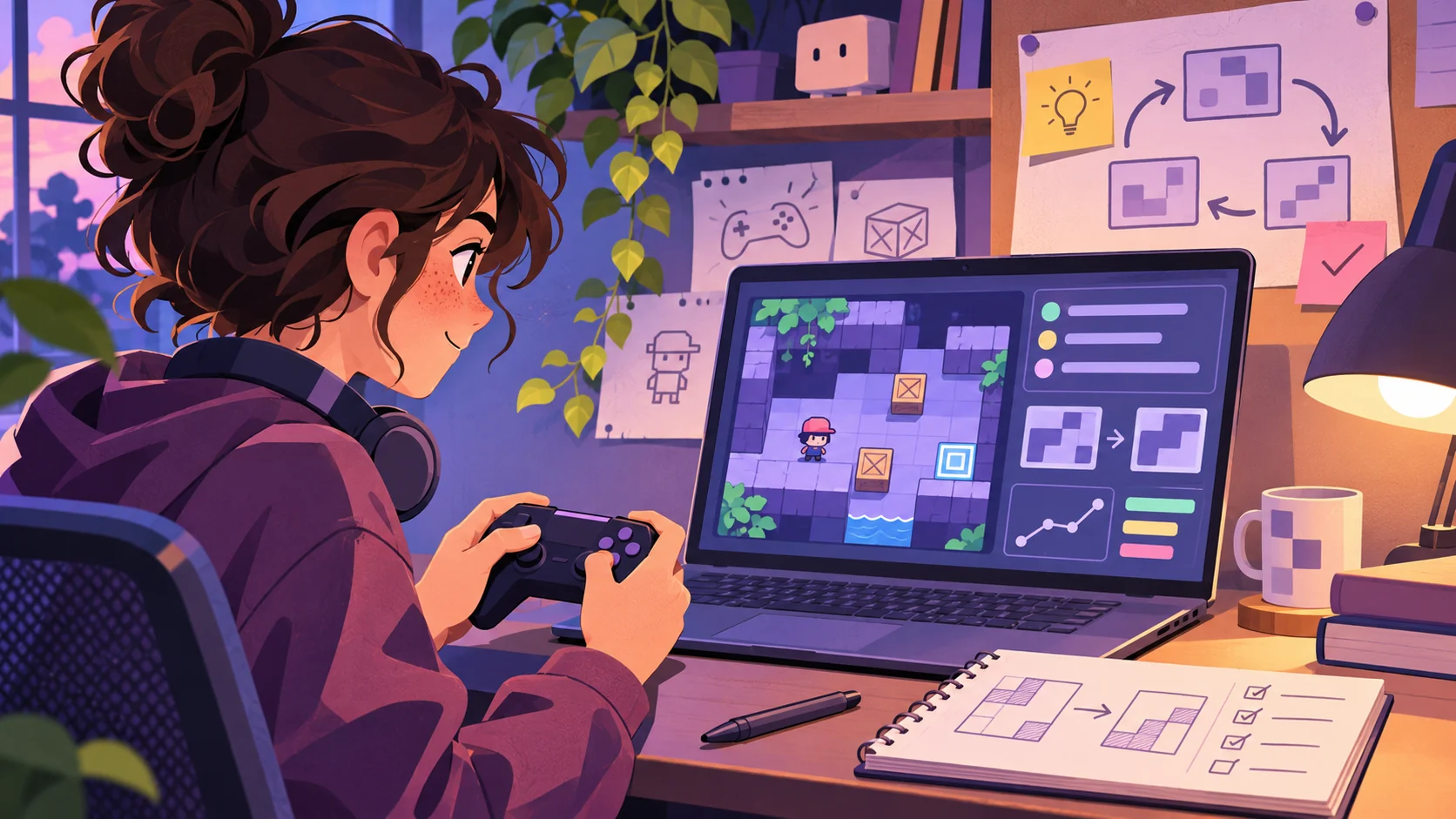
A simple loop might let the player move a robot, push a relay block onto a marked tile and redirect a beam to an exit. Show the goal, provide feedback when the beam changes and offer a reset if a choice blocks progress. A few authored puzzle states are enough to communicate the idea.
Prompt 2 — core loop plan
Design one Pocket Relay puzzle loop with start state, player movement, block interaction, energy-beam feedback, success, failure and reset. List the controls, state changes and edge cases. Keep the design original and do not imply that the loop has been implemented or tested.
| Prototype part | What the reviewer can learn | Evidence to label |
|---|---|---|
| Start screen | Goal and controls are understandable | Implemented or static |
| Puzzle room | Core interaction is visible | Build version |
| Feedback | Player sees a state change | Observed behavior only |
| Reset | Recovery is available | Tested path |
| Project notes | Decisions and tradeoffs are explained | Student-authored record |
Show iteration, not just the final screen
Document one design change and the reason for it. For example, a student might simplify a relay puzzle after noticing that too many movable blocks make the state hard to read. If that change is hypothetical, label it as a planned iteration rather than a finding from a test.
Prompt 3 — iteration note
Write an iteration note for the fictional Pocket Relay project with problem statement, original version, proposed change, intended effect, evidence source and remaining uncertainty. Keep observations blank unless the student actually collected them.
A portfolio becomes more useful when a reviewer can trace the design decision to a build or note. Do not describe an unobserved assumption as player feedback.
Keep the project plan editable
Store the goal, controls, room state, feedback, iteration record and evidence status in one simple specification. The example below is a planning template rather than a working game or test result.
{
  "projectName": "Pocket Relay — fictional student portfolio concept",
  "status": "concept example; not built or tested",
  "playerGoal": "route an energy beam to the exit",
  "coreActions": ["move", "push relay block", "inspect beam", "reset room"],
  "prototypeScope": {"rooms":1,"onlineFeatures":false,"accounts":false},
  "successState": "beam reaches exit marker",
  "accessibility": ["remappable controls", "high-contrast state cues", "pause", "text instructions"],
  "iterationLog": [{"version":"concept-1","change":"pending","evidence":"none collected"}],
  "portfolioEvidence": ["build link if available", "short capture", "decision notes", "known limitations"],
  "reviewBoundary": "do not label static concepts as implemented"
}
Keep links, dependencies and asset credits with the project. If the game uses third-party assets or libraries, identify them and record the applicable permissions.
Build and inspect the first playable slice
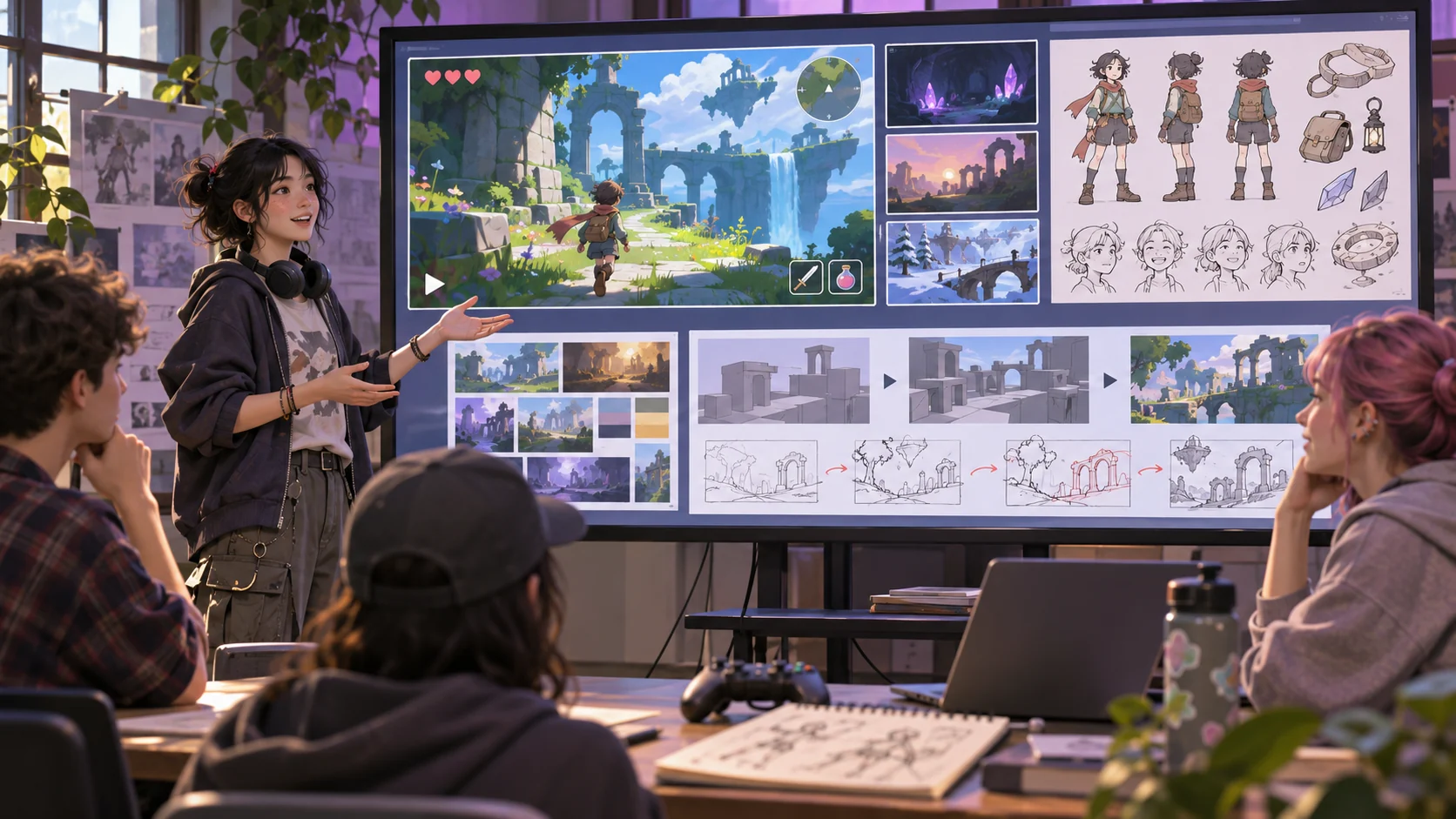
Implement only the controls and state changes needed for the loop. Add one room, one puzzle, feedback, reset and a short explanation. Check the project on its intended device and include a fallback video or screenshots if a reviewer cannot run the build. Mark recordings as captures of the actual build and state its version.
Prompt 4 — playable portfolio slice
Build a small local Pocket Relay prototype with one room, movement, relay-block interaction, beam feedback, success and reset. Include keyboard controls and readable state cues. Use original placeholder art. List controls that work, static elements, build version, known issues and untested assumptions separately.
Simulate a realistic customization
For a fictional adaptation, imagine changing Pocket Relay to a color-free sound-and-symbol cue system while keeping the puzzle rule unchanged. Document what the student would update and how they would inspect the new feedback. This is a design scenario, not an accessibility test or observed student iteration.
Prompt 5 — fictional adaptation
Adapt Pocket Relay to use symbols and optional sound cues in place of color-only beam states. Keep the puzzle rule fixed, list changed assets and controls, and define checks needed with the actual build. Mark this adaptation fictional and untested.
Prompt 6 — portfolio review checklist
Review the local project for a clear goal, working controls, visible state changes, reset, accessibility notes, original assets, build instructions, version details, iteration record and honest distinction between implemented and planned work. Mark each item observed, static, missing or not tested.
Package the project for reviewers
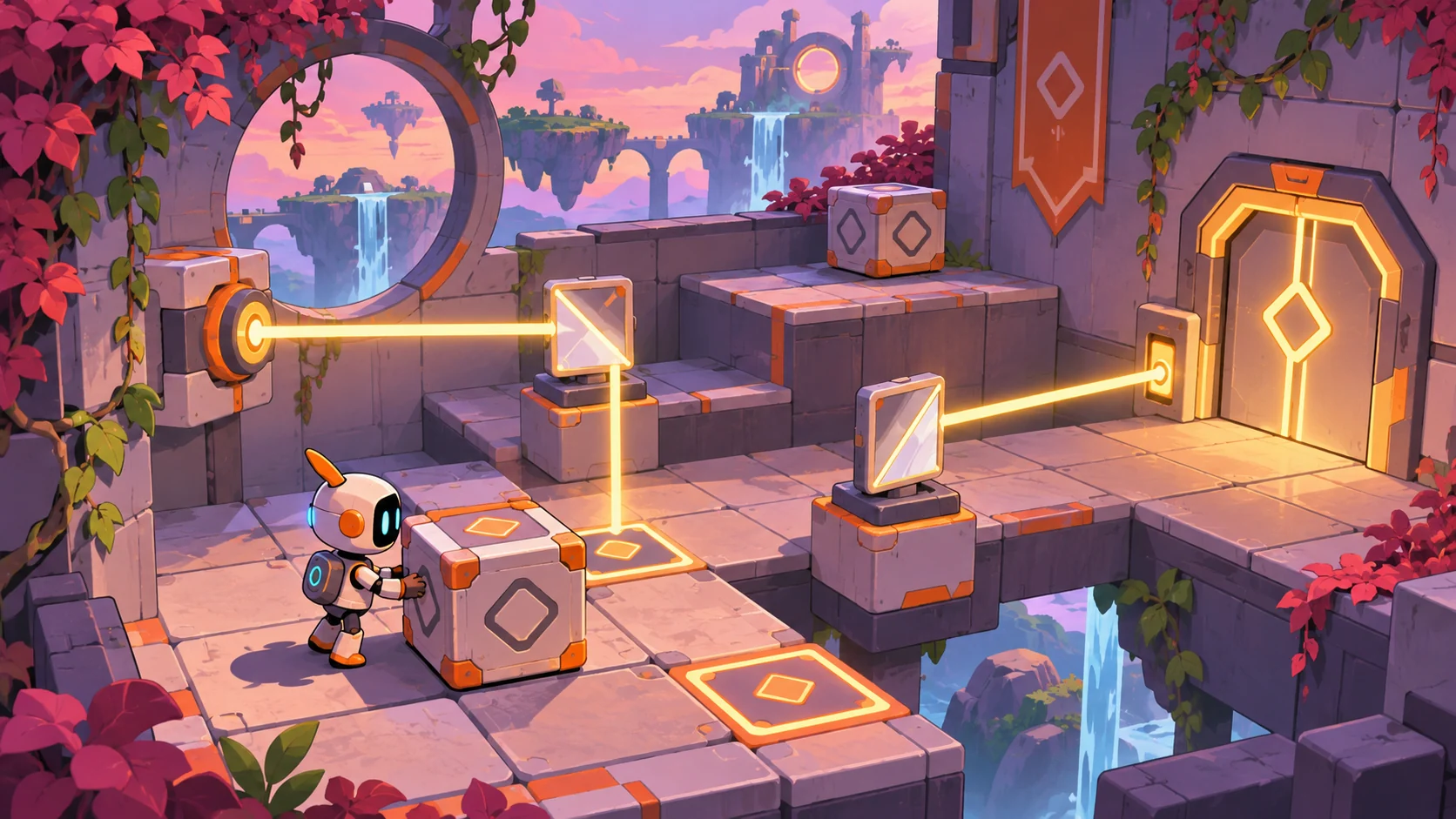
Provide a short overview, control guide, playable link or local instructions, brief capture and known limitations. Keep the portfolio text concise and explain the student’s own contribution when working with classmates. Never claim a test result, grade or audience response without evidence.
Prompt 7 — handoff checklist
Prepare a portfolio handoff for a student game project. Include project goal, student contribution, controls, build version, run instructions, asset credits, iteration note, accessibility considerations and known limitations. Mark unverified fields pending and do not invent reviewer feedback.
Conclusion
A playable portfolio project for student developers can demonstrate craft through one complete interaction, an honest iteration record and clear build instructions. Keep scope narrow, make state changes legible and identify which parts are implemented, static or untested. Pocket Relay is fictional; no build or review occurred. Verify the actual project and its credits before presenting claims about working behavior.
You can shape a small concept in the Free AI game maker, then compare it with the editable project specification.
FAQ
What makes a good playable portfolio project for a student developer?
A focused playable loop, clear controls, a visible outcome, honest project notes and a concise explanation of design decisions.
How large should a student game portfolio project be?
Small enough to finish and document. One complete mechanic or room can communicate more than several unfinished systems.
Should a portfolio include a playable build or a video?
Include a build when it is stable and accessible to reviewers; a short capture and run instructions can help when the build is unavailable.
How should students describe iteration?
State the problem, the change, the evidence that informed it and what remains uncertain. Label hypothetical changes as proposals.
Can AI-generated game art prove a student built the project?
No. Concept art does not prove implementation or authorship. Describe generated assets accurately and show the actual project evidence.