Two players face one pinball table and one deck. Player A controls the left flipper; Player B controls the right. Both choose cards for a shared shot queue, so the team must coordinate physical timing and the next effect. Start with one ball, three cards and one short scoring lane.
Keep flipper control physical and readable
Use a compact table with one launch lane, two flippers, three bumpers and a scoring gate. Player A owns the left flipper and Player B the right. Show each input near its flipper and keep the ball visible. Cards can modify the shot but cannot move a flipper for its player.
Give the team one shared meter with four charge. A basic shot uses one charge. This makes the team's card plan compete with the resource needed to keep playing.
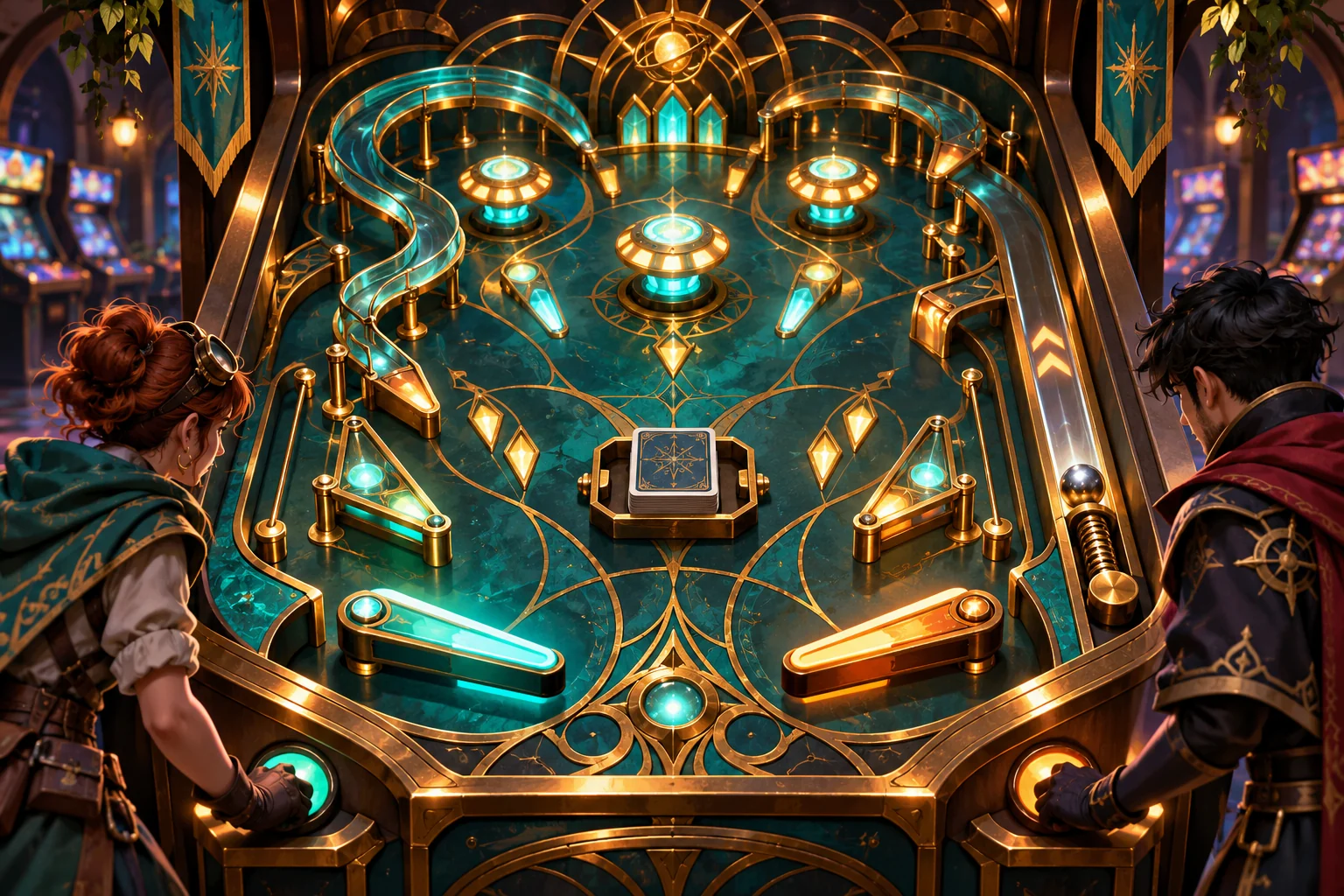
Give both players one shared two-slot card queue
Each player may suggest one card, but the team has only two shared queue slots. A boost card costs two charge; a rebound card creates one rebound token when the ball hits a bumper. Show who queued each effect and resolve cards in order before the next launch.
Do not let two boost cards stack freely. The first boost uses two charge; a second boost is legal only after the rebound card has created its token. This keeps the physical rebound connected to the shared deck decision.
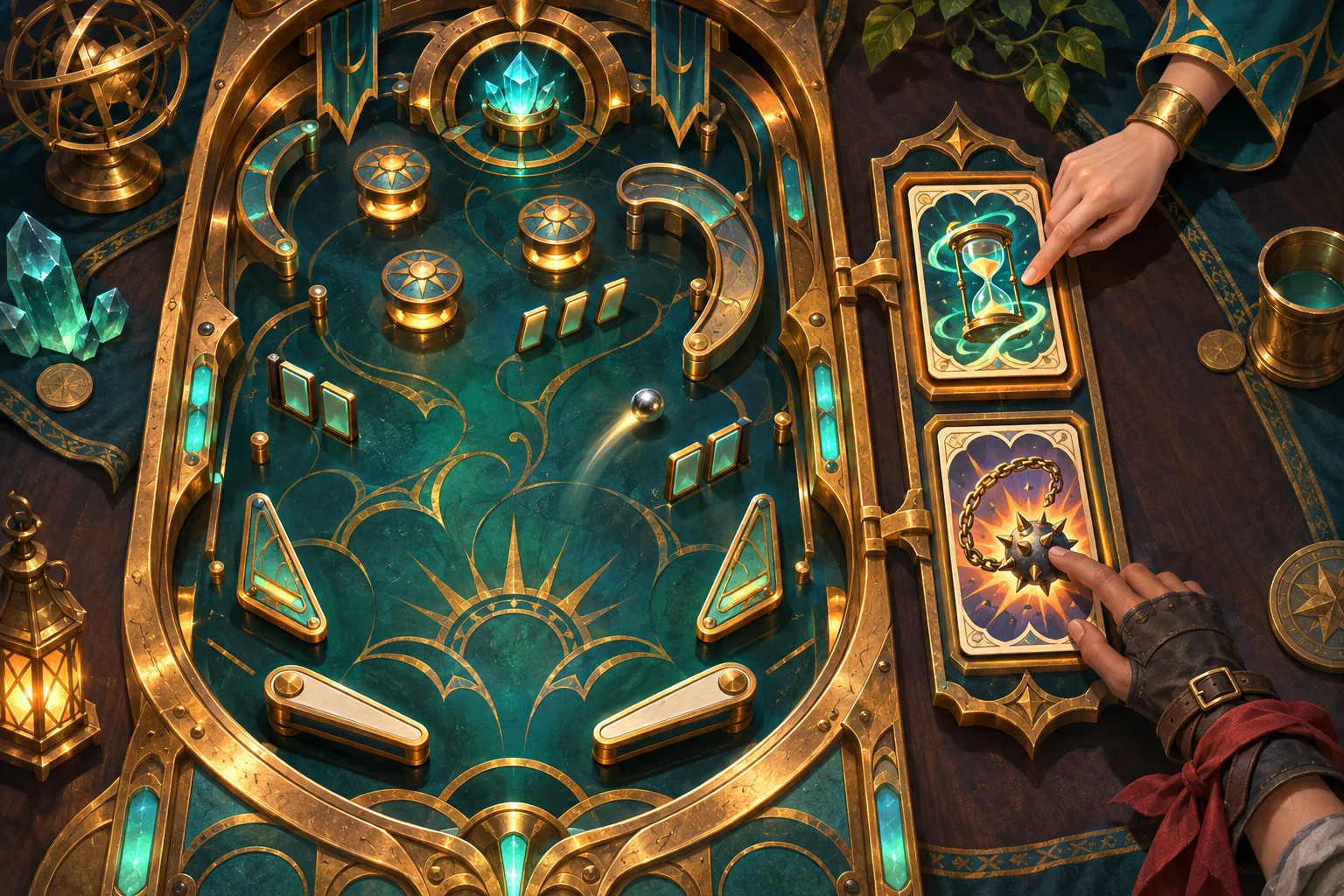
Replay the double-boost exploit and revise the rule
The deterministic run begins with four charge and the ball at the launch lane. The naive queue plays two boosts, spends all four charge and reaches the scoring gate once; no charge remains to relaunch. The revised queue plays one boost, rebounds from a bumper to earn a token, then spends the token on a second boost. It scores twice and retains two charge.
Reset the same launch, bumper path and starting meter to compare both queues. The replay checks card order, charge and rebound tokens. A future human playtest should check whether both players can understand and negotiate the shared queue.
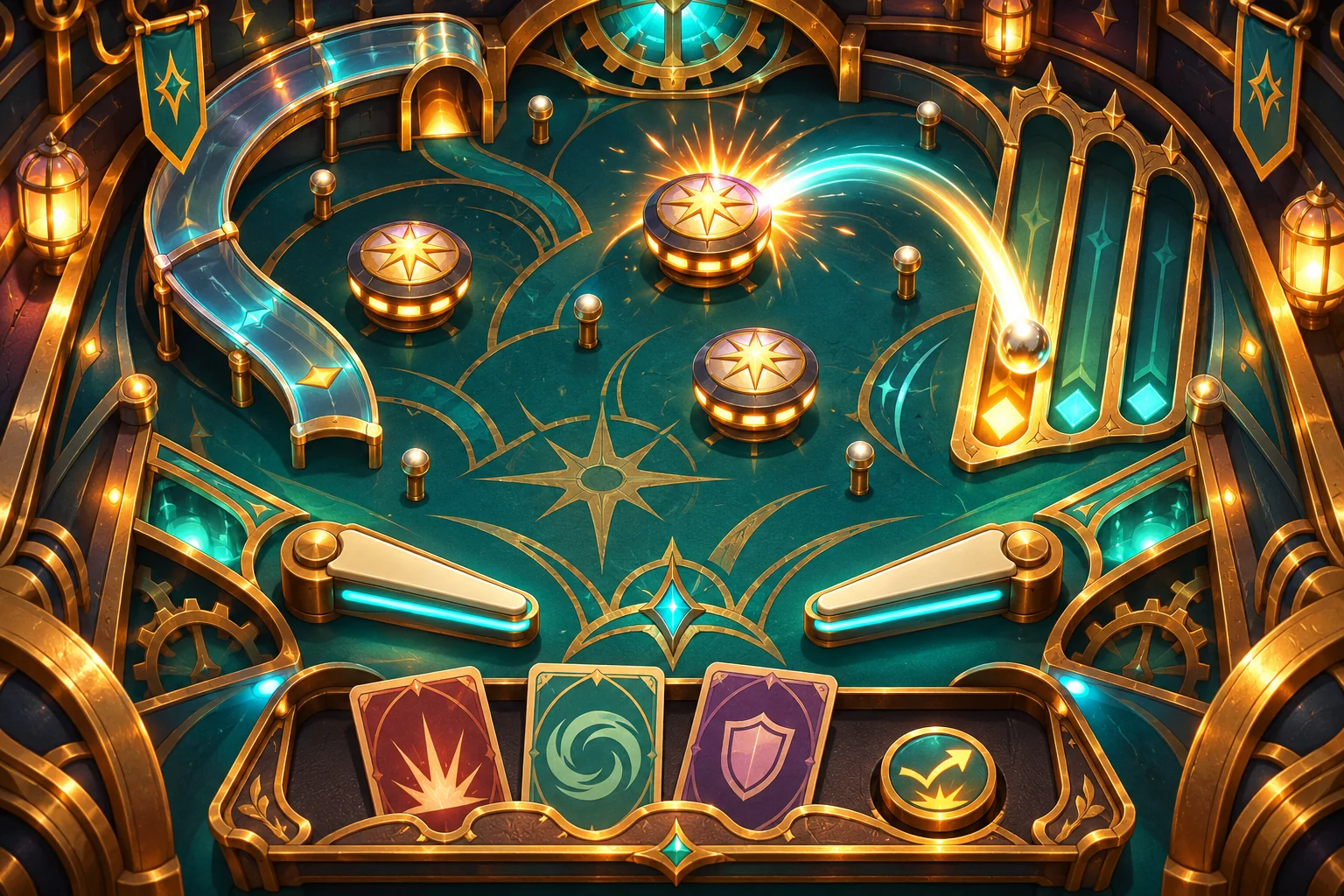
Prompt AI for one cooperative pinball run
Start with one table, three cards and a short run. Add more bumpers and upgrades only after the shared queue and rebound token are understandable.
Create a two-player pinball roguelike with one shared deck and one shared two-slot shot queue. Player A controls the left flipper; Player B controls the right. Start with four charge. A basic shot costs one, boost costs two, and rebound creates one token after a bumper hit. A second boost requires that token. Show each player's queued card, resolve cards in order, track charge, scoring gate and reset.
SEELE's free game maker describes starting from a text prompt and refining a first version with follow-up requests. Use this run to inspect the shared queue and rebound gate before adding table upgrades.
Start the shared-deck pinball prototype in SEELE
Frequently asked questions
Why share one deck instead of giving each player cards?
One deck makes card order a team decision while separate flippers preserve physical roles. It creates a clear coordination problem without removing either player's control of the table. If you later add personal cards, keep the shared queue visible so both players can still plan the next shot.
Can both players queue the same card?
Let both suggest a card, but resolve only the effects that fit the shared queue and charge. Show which card was accepted and why another was held. This prevents duplicate boosts from silently bypassing the resource rule and gives the players a chance to revise before launch.
How do I test whether the queue is understandable?
Replay the same launch with a double boost and with a rebound-gated second boost. Compare charge, rebounds and scoring. Then ask human playtesters to explain who selected each queued effect and what must happen before the next card can fire.