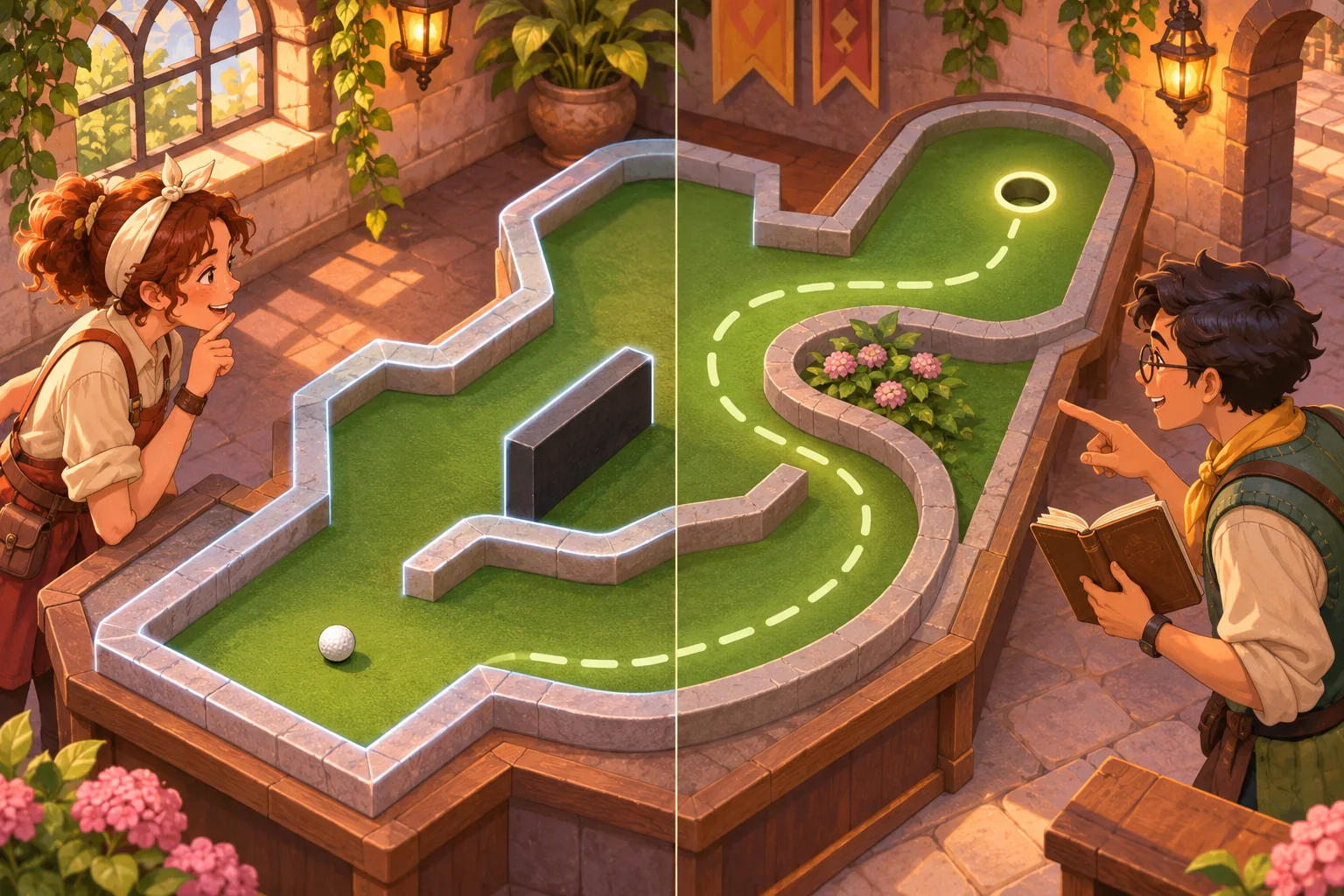
Two players run a winter tram. One wants to stop for a traveler, while the other wants to save time for the climb. Give them one hand to choose from, and make a choice take effect only when both players have acted. The person who proposes a card this round reviews the next one.
The Bell Line is a fictional two-scene story for local play. Both players see the same hand, draw pile, time, heat, and discard. Start with three time and one heat. The players will decide whether to board a traveler and whether to use their last heat on the climb.

Give both players control over one shared hand
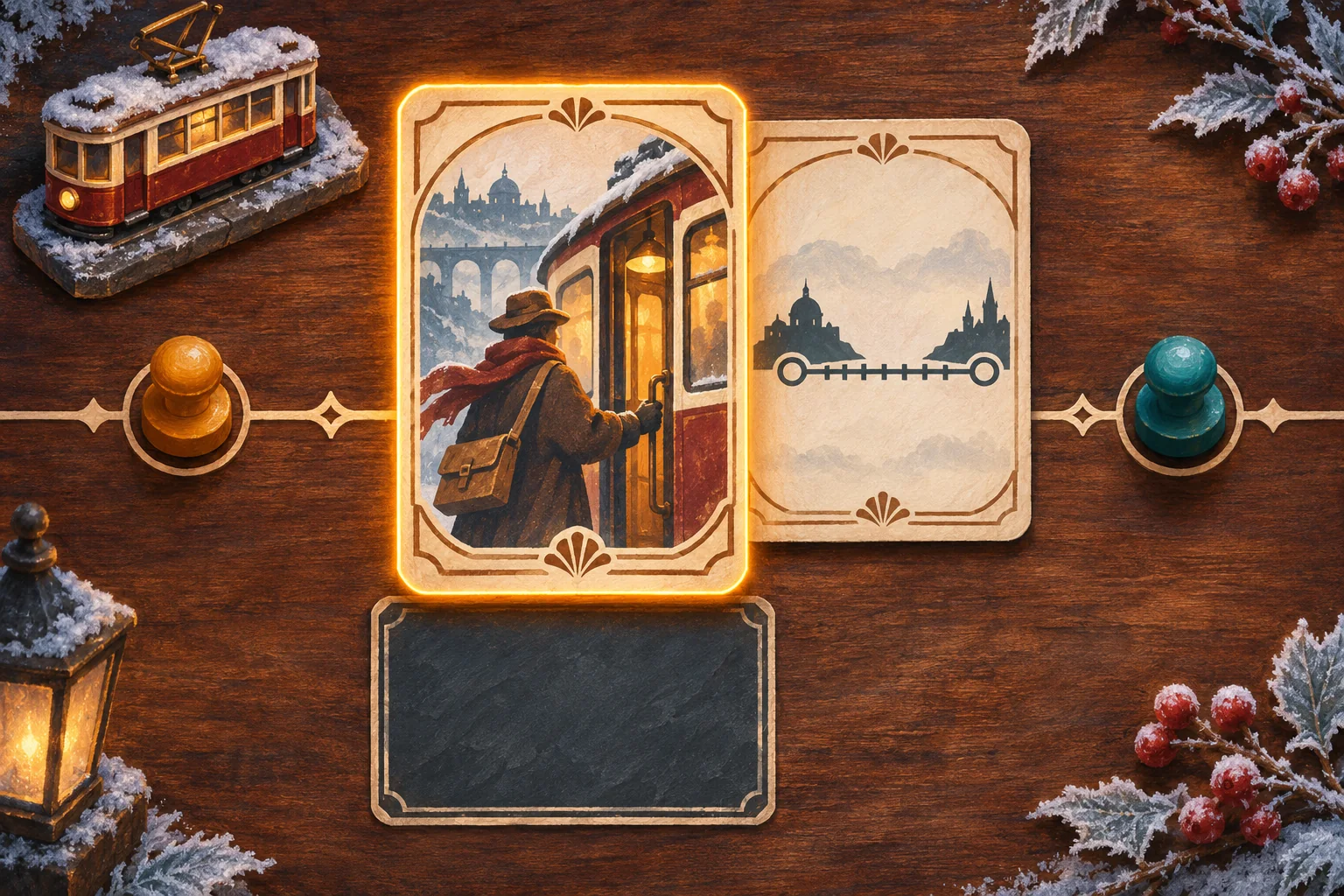
At each scene, deal its two cards to the common hand. The proposer chooses one. The reviewer can confirm or request one change to the other card, then confirm the current choice. A proposal displays the cost without spending it. On confirmation, apply cost and story effect once, discard the played card, clear the unplayed card, and swap roles. Keep the two scenes in a fixed draw order for the first prototype.
| Scene and card | Shared consequence on confirmation |
|---|---|
| Snowy stop: Pick Up | Spend one time and board one traveler. |
| Snowy stop: Press On | Spend no time. The tram leaves without the traveler. |
| High pass: Share Heat | Spend one time and one heat. If the traveler is aboard, they reach the station warm. |
| High pass: Seal Cabin | Spend one time and save the heat for the next crew. A boarded traveler arrives quiet and cold. |
Trace three endings and one rejected input
Keep each scene’s pair of cards visible until the reviewer confirms. At the end, tell players which events led to the arrival they saw. If nobody boarded, use the solo arrival whatever the heat choice. Check that the heat remaining at the station still reflects the card played.
| Check | Expected result |
|---|---|
| Propose Pick Up but wait | The card and its cost are shown. Time, heat, and discard stay put. |
| Pick Up, then Share Heat | One time and zero heat remain. The traveler receives a warm welcome. |
| Pick Up, then Seal Cabin | One time and one heat remain. The traveler arrives quietly. |
| Press On with either pass choice | Two time remain. No passenger appears in the arrival. |
| Confirm twice from the previous round | The first confirmation commits once. A stale confirmation does not change the next hand. |
| Reset | Three time, one heat, the first two cards, and the original roles return. |
Give the AI a short playable spec
Use SEELE’s text-to-game workflow for an initial two-turn card prototype. Keep the rules and outcomes together in the prompt. Start with a local handoff and two named roles so you can verify the shared state without adding network behavior.
Create a local two-player card story called The Bell Line. Use one deck, one visible hand and one shared discard. Start with three time and one heat. At the snowy stop, deal Pick Up (one time, board the traveler) and Press On (zero time, leave alone). At the high pass, deal Share Heat (one time and one heat) and Seal Cabin (one time, retain heat). Alternate proposer and reviewer each scene. Only the reviewer confirms, with one optional revision to the other card. A pending choice spends nothing. Apply each confirmation once, discard that card, clear the other card and advance the scene. Show warm, quiet, or solo arrival according to boarding and heat. Give both roles keyboard controls and provide reset.Show which choice is waiting for approval
Suppose the reviewer presses confirm twice and the second press lands after the scene changes. Tie approval to the current scene, reviewer, and pending card version. Check all three before committing the change. Show a distinct outline for a proposal and move the card to the discard only after approval.
Rerun the two arrivals with a passenger and the solo arrival. Confirm that the second scene starts with the other player as proposer and that a revision keeps the original cost unspent. For a web version, make proposal, revision and confirmation available from a keyboard without requiring precise key timing, following W3C’s keyboard criterion.

Extend the deck after both roles feel useful
Keep the two pairs of cards predictable while you tune the roles. A useful first test is whether both players can point to the final card and explain what they each did to play it. Once that works, add another choice to the deck and replay the two scenes. The general card narrative guide can help you design effects that carry into later scenes.
Read the narrative card game design guide.
Start your shared-deck story in SEELE.
Frequently asked questions
Should the first version shuffle the deck?
Use a fixed pair of cards per scene at first. It gives you repeatable endings and lets you compare two approvals without chance changing the hand. After testing the shared state, use a small pool for each scene and make sure every draw offers a playable choice.
What if the players disagree?
Give the reviewer one revision to the other legal card and show that revision to both players. Let them talk before it is confirmed. A single revision makes disagreement visible while keeping the first build finite. Add another negotiation round only if conversation is what you want to test.
Read W3C’s keyboard accessibility guidance.
Do the two players need separate hands or controllers?
One screen and keyboard are enough to model alternating roles. Give each role keyboard-operable actions and visibly show whose turn it is. Both players see the same hand throughout. You can test separate controllers later while keeping the shared deck, pending card and confirmed transaction rules intact.