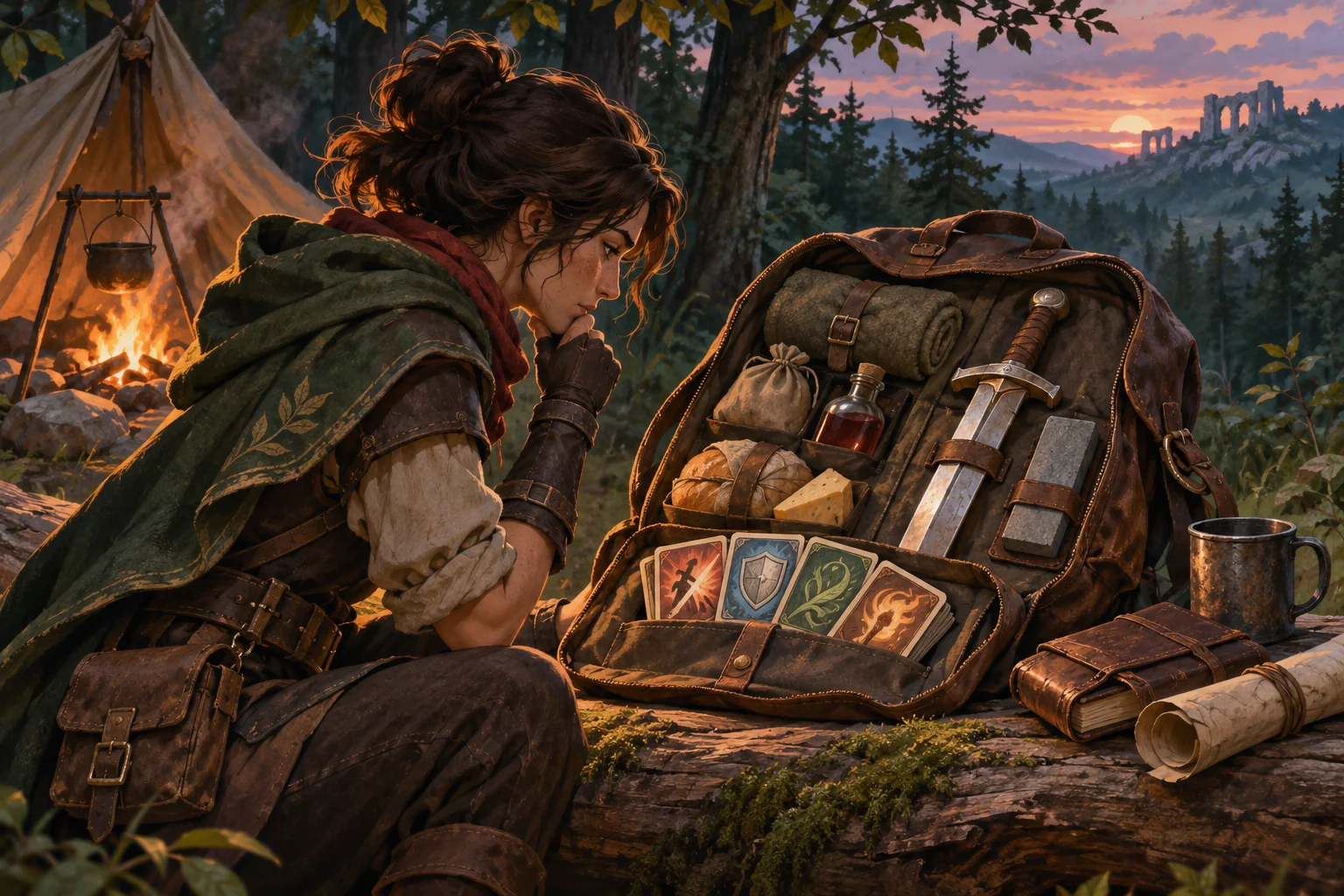
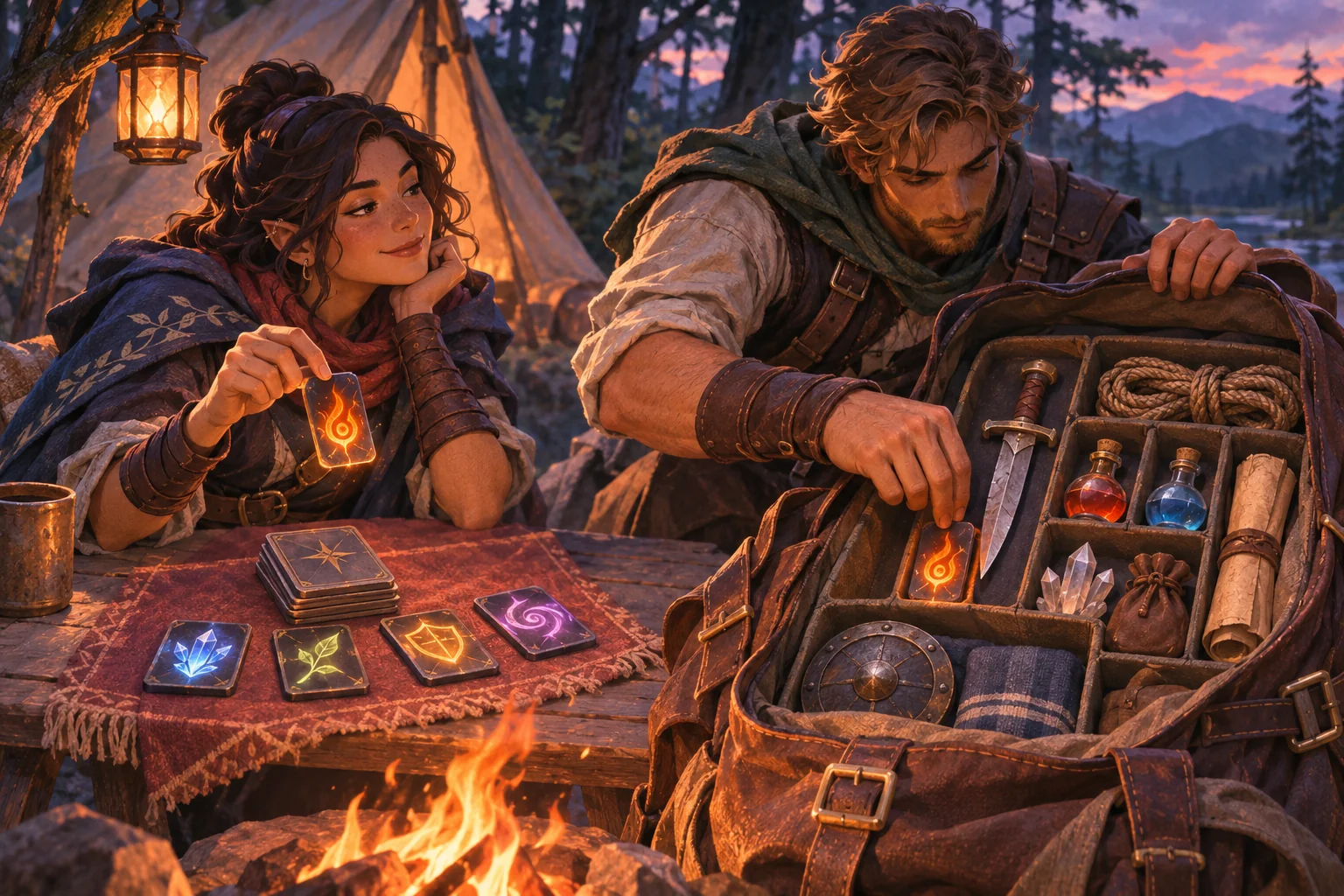
A shared deck can make an inventory roguelike cooperative when each card choice creates a placement decision for the other player. One player chooses from the common offer; the partner fits that item into a shared pack. Rotate picker and placer roles after every turn so both players shape the run and neither controls every reward.
Make the grid matter through item adjacency. A short blade gains a damage bonus when its ember rune touches an edge, while a potion takes space that could have held another tool. Start with one small board, a handful of fixed cards and one visible adjacency rule. A deterministic placement check can verify the bonus; it cannot establish that the pair's decisions are fun or fair.
Make the shared deck feed a shared inventory puzzle
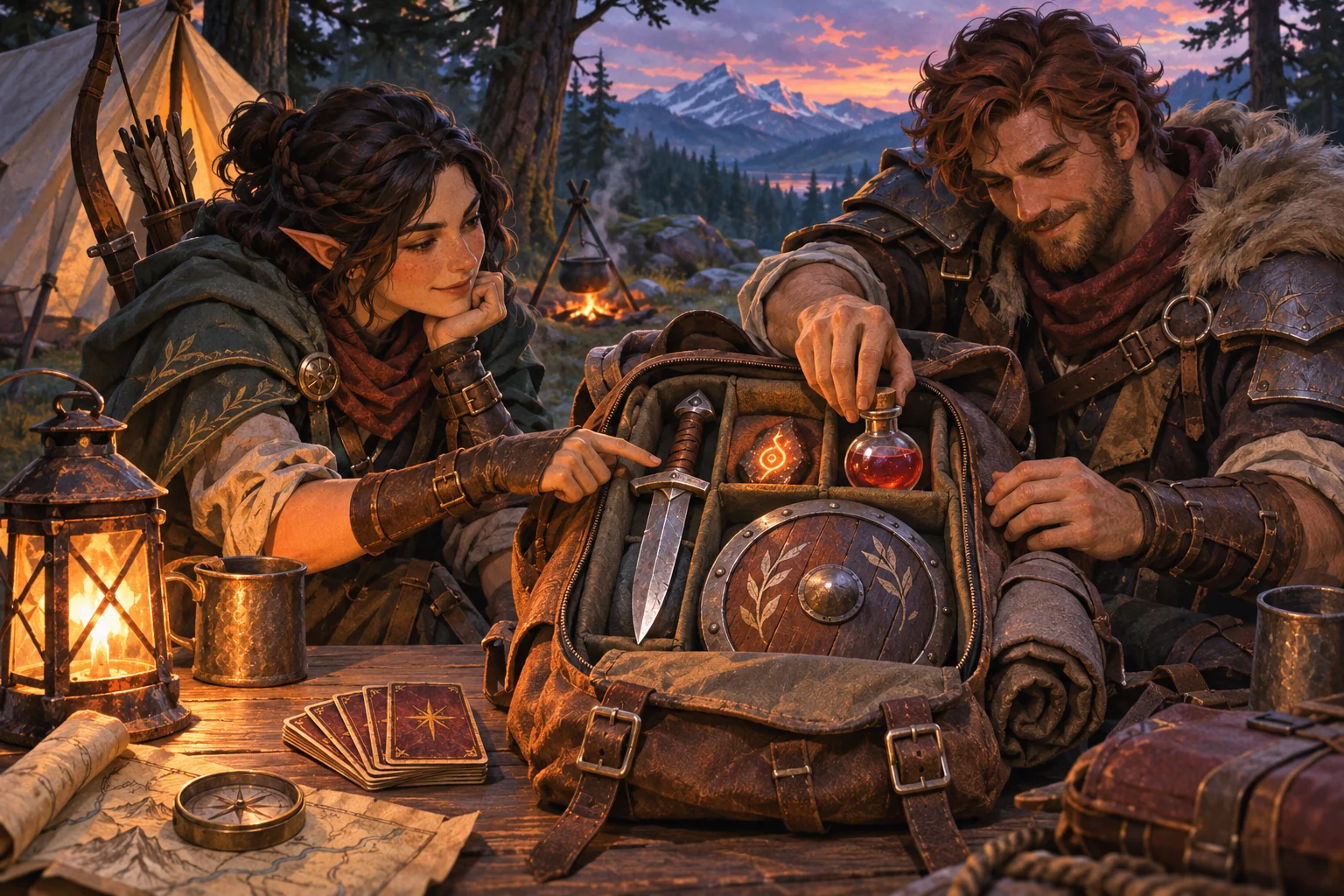
Use a four-column by three-row pack. Give each item a footprint: the short blade occupies two horizontal cells, the shield takes two vertical cells and a rune uses one. The picker chooses one card from a three-card shared offer; the placer chooses its location and orientation. On the next draw, swap jobs.
Resolve adjacency when the item enters the grid. For example, an ember rune touching an edge of the blade grants two attack for the next encounter. Leave the effect visible on the board, and show the placement preview before confirming. This gives the picker a reason to consider the partner's space and the placer a reason to preserve useful item pairs.
Keep the offer, card footprints and starting pack fixed while checking the first rule. Show occupied cells, legal placements and the active bonus. Add rarity, curses or changing grid shapes only after players can see how a drafted card affects both the shared layout and the next fight.
See Godot's Resource documentation for reusable card, item-footprint and adjacency-effect data.
Keep one useful adjacency bonus
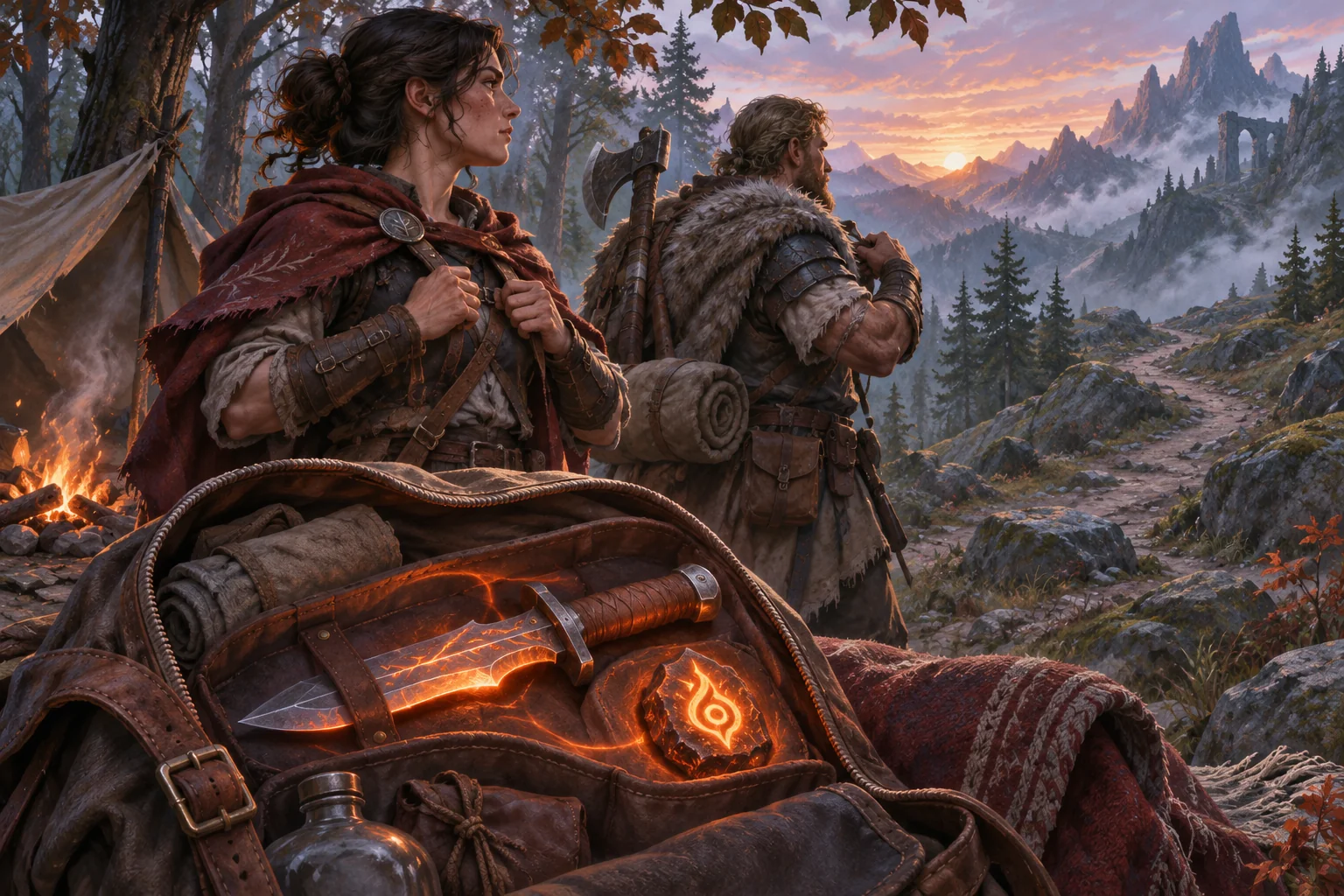
Start with a 4 by 3 pack. Place the two-cell blade at columns one and two of the top row. The next shared offer contains a one-cell ember rune. Under the first rule, the game automatically places it in the first open slot at the far edge of the board. The rune fits, but it does not touch the blade and grants no bonus.
Change only placement control: let the partner preview legal cells before confirming. Put the rune directly below one blade cell so their edges touch. The same two items now grant the stated two-attack bonus. Keep the board, offer and item effects unchanged during this comparison.
This deterministic grid check verifies that a legal placement can activate the adjacency rule. It does not test whether players communicate, whether the bonus is balanced or whether the puzzle stays interesting over a full run. Test those questions with pairs playing several encounters.
Ask AI to prototype the shared-deck pack puzzle
Show both the common card offer and the shared grid before the picker and placer commit.
Change only automatic versus previewed placement while keeping the cards and item effects fixed.
Create an original two-player inventory-management roguelike prototype with one shared card deck and a shared 4-column by 3-row pack. Each turn, one player picks one card from a three-card offer and the partner chooses the item's location and orientation; alternate roles on the next turn. A short blade occupies two horizontal cells. An ember rune takes one cell and grants +2 attack only when edge-adjacent to the blade. Compare automatic first-fit (rune lands far away) with placement preview (partner places it beside the blade). Keep the offer, grid and effects fixed. Show legal cells and the active bonus. Do not claim the rule check proves co-op enjoyment or balance.
Let each card choice change the shared pack
A common deck becomes a cooperative system when one player's draft creates a meaningful placement choice for the other. Begin with a small pack, distinct item shapes and one readable adjacency bonus. Once alternating pick-and-place decisions work across several encounters, add more cards and test how the shared layout changes run strategy.
Start a shared-deck roguelike with SEELE's AI game maker
Frequently asked questions
How can two players share control of one deck?
Alternate the decision roles. One player selects a card from the common offer, and the partner places that item in the shared inventory. Swap picker and placer on the next turn so both players influence which rewards enter the run and how they fit.
Why make inventory placement affect card strategy?
Item footprints create tradeoffs for limited pack space, while adjacency effects reward deliberate layouts. A card can be useful because of its own effect and because it fits beside another item. Show the occupied cells and resulting bonus so players can plan together.
Does a placement model show that the co-op puzzle is balanced?
No. It verifies that an item fits and that a stated adjacency effect activates under fixed rules. It cannot tell whether both players have satisfying choices, whether the bonus dominates the run or whether teams communicate well. Playtest several encounters with pairs before judging those questions.