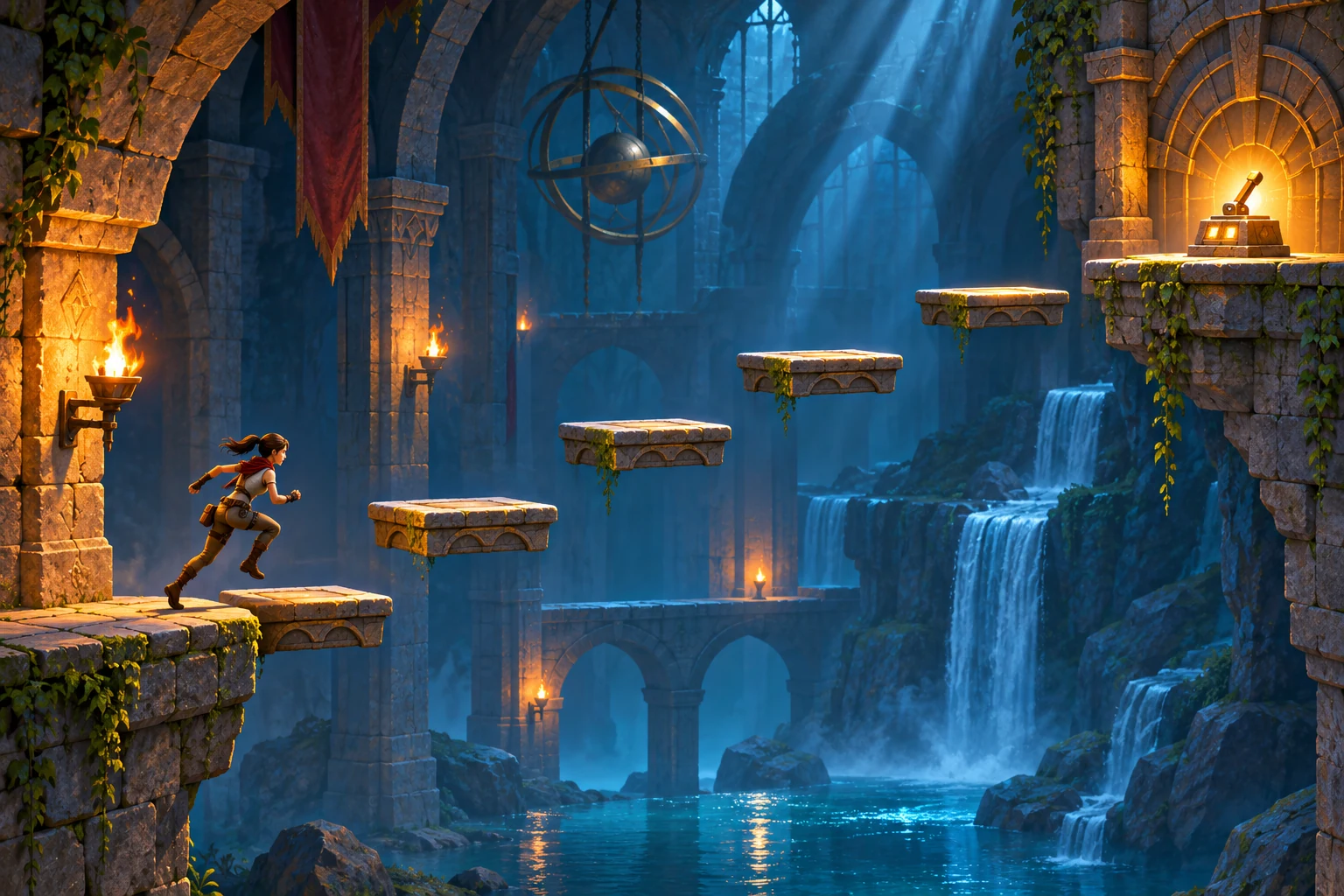
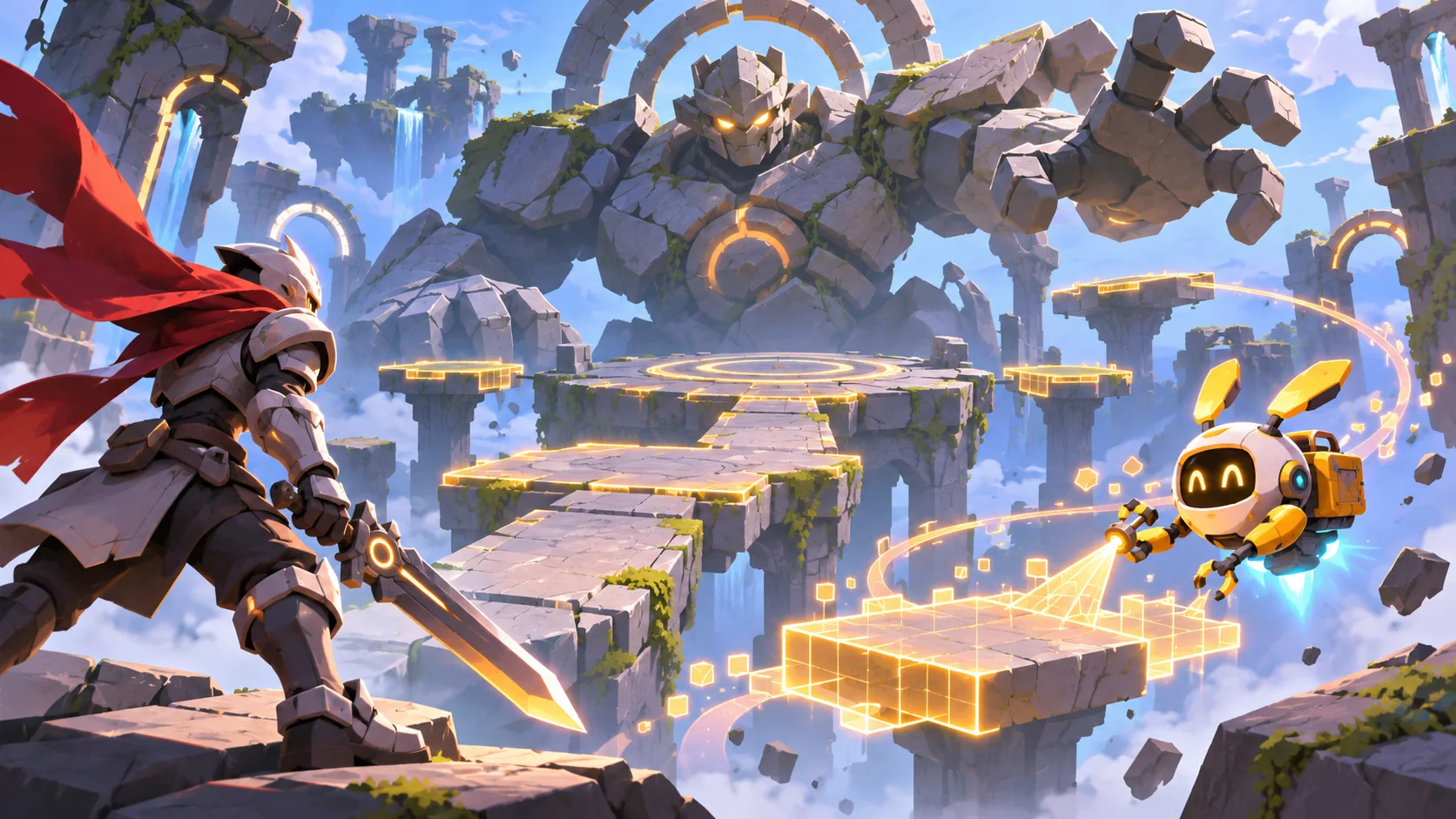
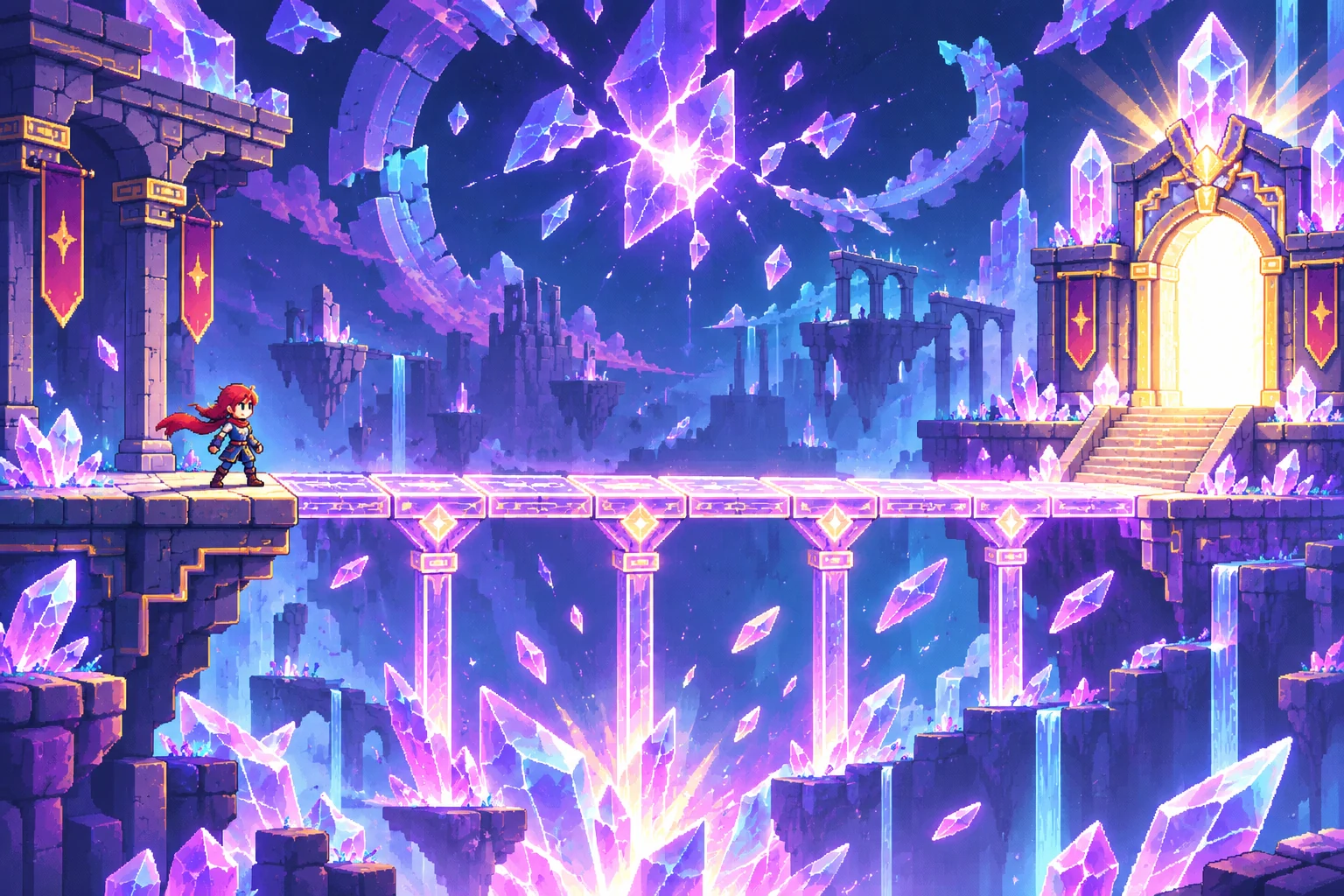
In fictional Shardfall, defeating a boss rearranges the crystal platforms instead of merely opening a door. The player can jump 2.5 units horizontally and 1.5 units vertically. After boss one, two platforms shift into a path toward boss two. After boss two, a bridge appears and the exit becomes reachable. Keep jump limits, boss positions, checkpoints, and platform coordinates fixed. Report each world phase, changed coordinates, reachable target, and exit state. This makes the boss victories change the route the player must learn.
Set jump limits before building the arena
Define the player’s movement envelope first: 2.5 units of horizontal reach and 1.5 units of vertical reach per jump. Place the start at (0,0) and boss one at (2,1), within reach. Keep boss two at (6,3) and the exit at (10,2), out of the initial route. This gives the first arena a measurable boundary rather than a vague difficulty label.
Keep checkpoints and boss locations fixed as the world changes. Godot Resources can hold authored phase and platform definitions; the active phase determines which coordinates are present. Show the current phase and nearby landing points so players can read jumps before committing.
Shift platforms after the first boss
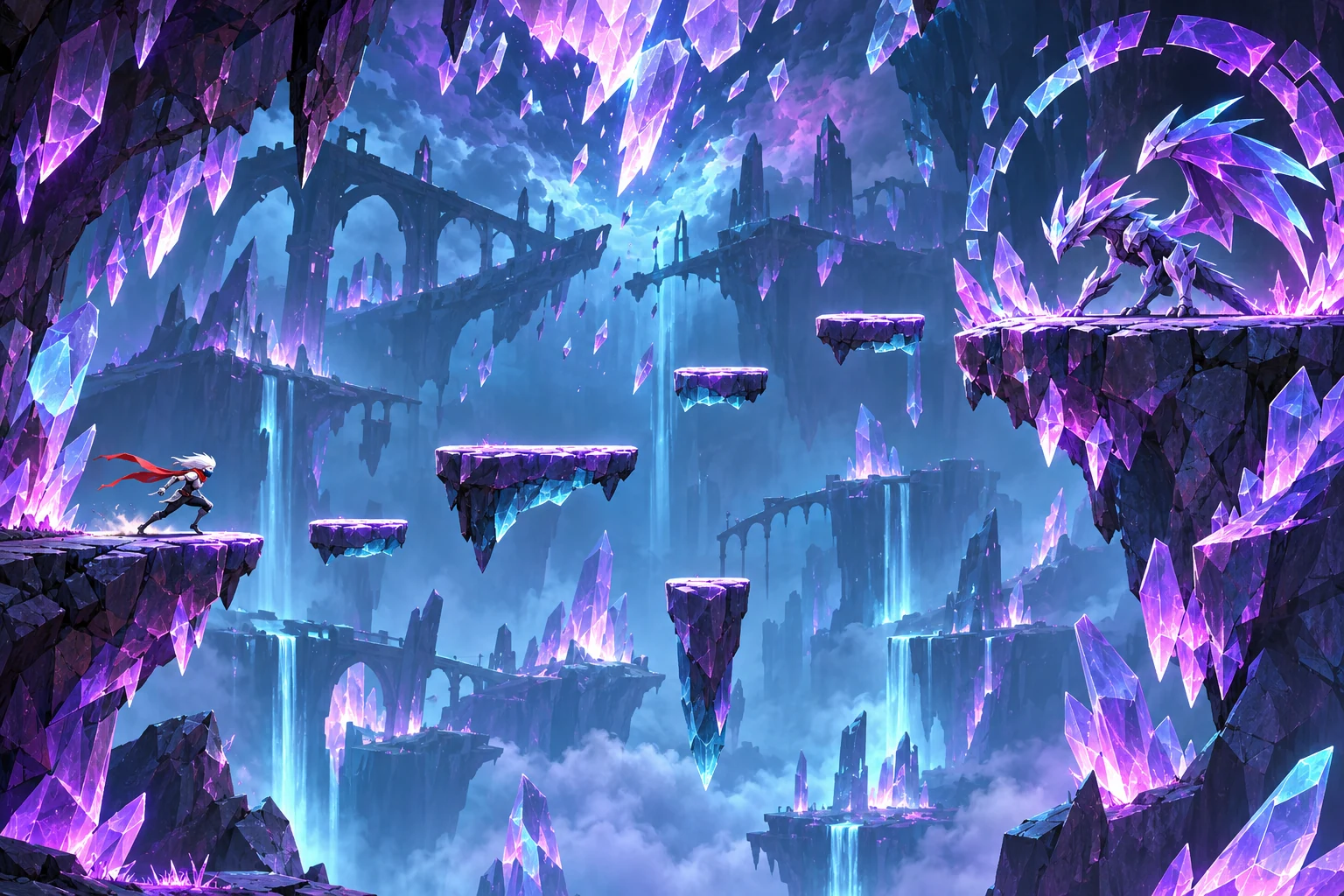
When boss one falls, add platforms at (4,1.5) and reveal boss two at (6,3). From boss one, the first platform is two units across and 0.5 units higher; from there, boss two is two units across and 1.5 units higher. Both jumps fit the fixed movement limits, so the next arena becomes reachable because the world changed.
Report the new platform coordinates and whether boss two is reachable from the checkpoint. Before the defeat, the four-unit horizontal gap to boss two is too wide. Afterward, the two new platforms split it into valid jumps. Keep the earlier arena intact so players can recognize the change rather than learn a replacement layout.
Reveal the bridge and exit after boss two
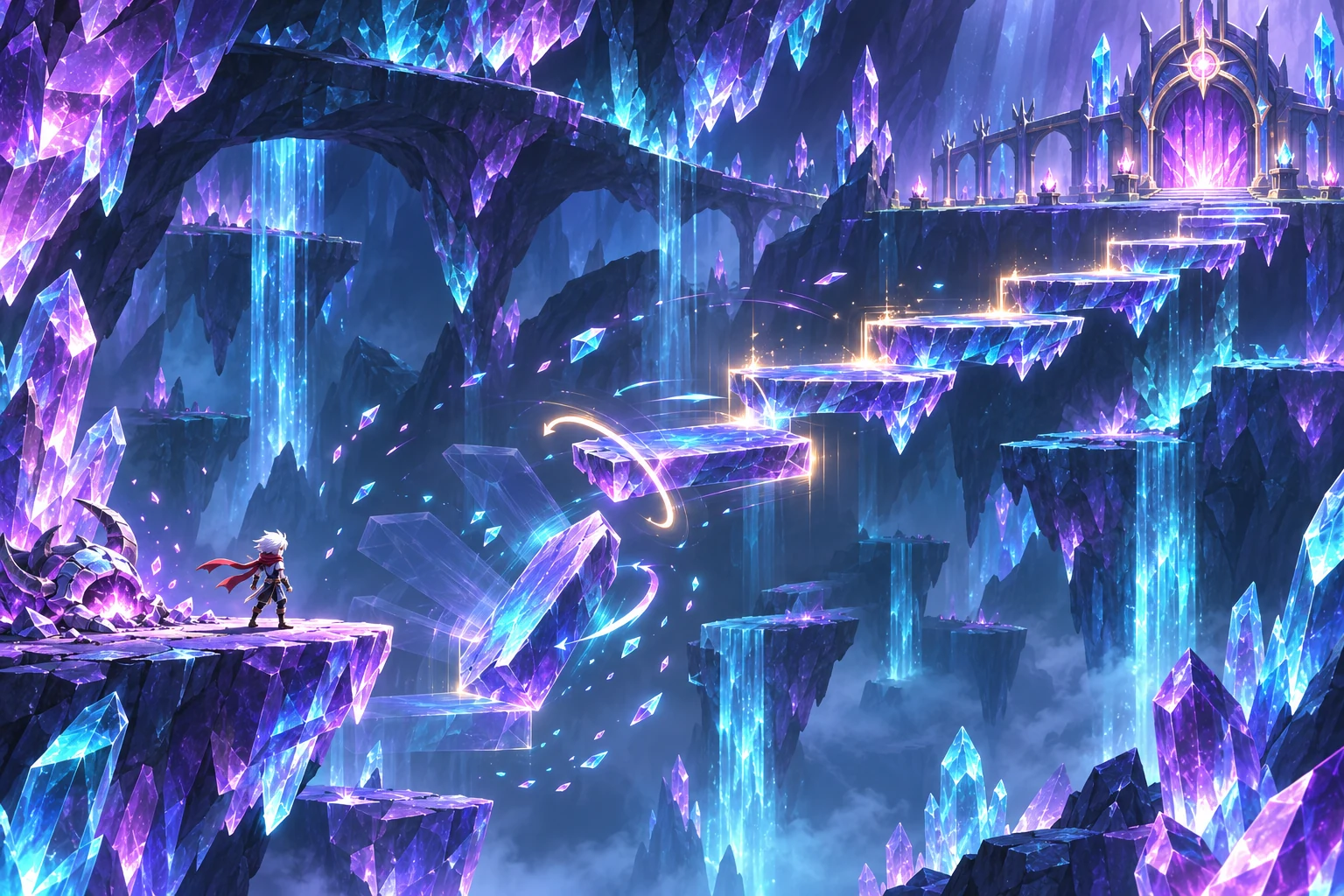
After boss two falls, add a bridge platform at (8,3) and open the exit at (10,2). The player can jump two units horizontally with no height change to the bridge, then two units across and one down to the exit. The goal now becomes reachable without changing the movement values or checkpoints.
At each phase, show platform coordinates, boss status, the next reachable target, and whether the exit is open. This fixed test checks two boss-triggered world changes and the route they create. Shardfall and all coordinates are fictional; the test measures only the stated jump envelope and reachability rules.
Give the AI a fixed boss-triggered platform test
Create a precision platformer in fictional Shardfall. The player jump limit is 2.5 units horizontally and 1.5 vertically. Start at (0,0), boss one at (2,1), boss two at (6,3), and exit at (10,2). After boss one, add platforms at (4,1.5) and make boss two reachable. After boss two, add a bridge at (8,3) and open the exit. Keep jump limits, bosses, checkpoints, and coordinates fixed. Report phase, platform positions, reachable next target, and exit state.
Verify the initial jump reaches boss one but cannot cover the four-unit gap to boss two. After boss one, jumps from (2,1) to (4,1.5) to (6,3) fit the limits. After boss two, jumps from (6,3) to (8,3) to (10,2) reach the open exit.
FAQ
How can a boss defeat change a precision platformer?
Use the victory event to add, remove, or move platforms that change the next route. Keep player movement limits stable so the new path comes from the world state rather than a hidden jump upgrade. Show the changed geometry and reachable target after each boss.
How do you test platform reachability?
Set maximum horizontal and vertical jump distances, then compare each landing point with those limits. Record platform coordinates and test a connected route from the checkpoint to the next target. This makes a jump path measurable and reproducible. for every phase.
What should change after each boss encounter?
Change the platform arrangement or unlock a bridge that alters where the player can go next. Keep checkpoints and movement values fixed during the test, then report the world phase, new coordinates, next reachable target, and exit state. after each fight.