In Recoil Run, the pulse blaster is both a weapon and a jump tool. A downward shot hits a floor plate and pushes the player upward, creating a route to a higher ledge. Each shot spends one charge, so aiming is a movement decision: use it now to cross the gap, or save it for a later target. The mechanic fits a precision platformer because aim, timing and landing control all shape the same jump.
Make aiming part of the movement plan

Use a fictional side-view room with gravity of 10 units per second squared, a ledge 1.5 units higher, and a firing impulse that acts for a short, fixed interval. The numbers are prototype values chosen to make the jump measurable, not a claim about real physics or a finished controller.
| Action | Immediate effect | Movement consequence |
|---|---|---|
| Aim downward | Pulse hits the floor target | Recoil pushes the player upward |
| Spend one charge | Ammo count falls by one | No repeat shot until recharged |
| Land on the ledge | Player clears the gap | The route opens for the next challenge |
Show the aim direction, target plate and predicted recoil arc before firing. Give the player a safe reset and a clear landing surface. This makes a miss or mistimed shot understandable instead of turning it into a hidden physics penalty.
Bind the shot to a predictable impulse
When the pulse hits a valid target, apply the recoil once and subtract one charge. A miss should spend the shot but give no movement impulse; otherwise players can fire into empty space to get a free jump. Keep the impulse and landing window consistent across the first room so players can learn the relation between aim and motion.
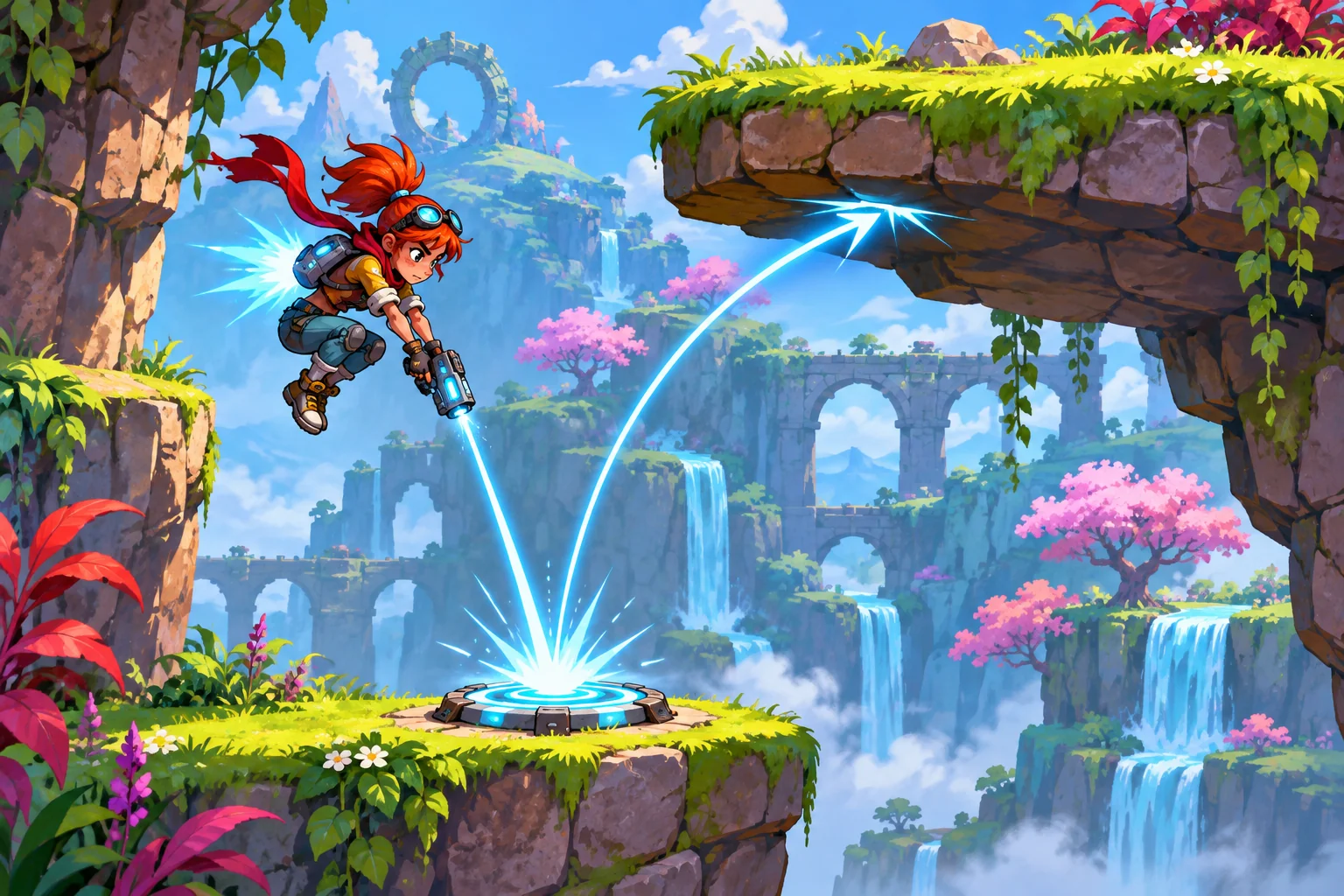
Display the remaining charge and reset state. Let players adjust their aim before the shot, then keep the trajectory stable after firing. If air control exists, keep it small and visible during the first test; strong steering can hide whether recoil itself cleared the ledge.
Replay one fixed jump
The deterministic local replay used a 1.5-unit ledge, gravity of 10 and a 0.6-second test interval. The initial impulse of 4.5 reached a 0.9-unit apex and failed to clear the ledge. The revised impulse of 6 reached 1.8 units and cleared it. Both successful and missed shots consumed one charge, while a miss produced no movement.
| Case | Initial impulse 4.5 | Revised impulse 6 |
|---|---|---|
| Valid target, 0.6-second apex | 0.9 units; fails | 1.8 units; clears |
| Shot charge | Consumed | Consumed |
| Target missed | No recoil; charge consumed | No recoil; charge consumed |
This model checks one ballistic interval and resource rule only. It does not prove that the jump feels fair or that a player can execute it. Test input latency, collision edges and player control in a playable build after the target and recoil preview are clear.

Start with one recoil room
Ask an AI game maker for a small platforming room with one lower target, one elevated ledge, one pulse charge and a visible reset. Keep the opening path safe so players can learn the shot before a timed challenge. Add moving hazards only after the recoil arc is predictable.
Create Recoil Run, a precision-platformer prototype where a pulse weapon is also movement. Build one side-view room with a floor target and a ledge 1.5 units higher. Use gravity 10 and show the recoil arc before firing. A downward shot that hits the target applies one upward impulse of 6 and consumes one charge; a miss consumes the charge but gives no recoil. Add a safe reset, visible ammo count, clear landing area and a short timing challenge. Keep air control modest and never apply recoil twice for one shot.
Start a precision-platformer prototype in SEELE
Frequently asked questions
How can a weapon help movement without making every jump free?
Make each traversal shot consume a limited charge and require a valid target. Show the aim, landing area and remaining ammo before firing. Players then trade a combat resource for access to a route. A miss should not grant movement, and a reset should restore the room without hiding the cost of a successful shot.
Should recoil change with aim direction?
Yes, if the rule is consistent and previewed. A downward shot can push upward; a backward shot can create forward movement. Start with one direction and one fixed impulse so players can learn the mapping. Add angled shots after testing whether players can still predict the landing point.
How do I tune a precise recoil jump?
Hold the room, target, gravity and starting position constant. Change one impulse value, then record whether the arc clears the ledge and how much charge remains. A local calculation can check the threshold, but only a playable build can reveal input feel, collision behavior and whether the landing window is fair.