In fictional Ironroot, two weapons serve as both attacks and traversal tools. The tether spear damages an enemy and pulls the hero to an anchor across a four-unit gap. The pulse maul damages an enemy and launches the hero three units from a marked floor plate, enough to reach a ledge 2.5 units high. Keep the route, enemy placements, weapon values, and movement-free control fixed. Report tether range, launch height, hits, and room reachability. The goal is to make weapon choice shape both combat and how the player explores.
Give each weapon a combat and traversal role
Create two distinct weapons. The tether spear damages a foe and latches onto marked anchors, pulling the hero horizontally. The pulse maul damages a nearby foe and rebounds the hero from marked floor plates. Keep both weapons available in the same small route so the player can learn their different uses without changing the level layout.
Store weapon reach, launch height, damage, and valid anchor or plate types as authored data. Godot Resources can hold stable weapon definitions, while the active weapon and current room state remain part of gameplay. Make the required targets visually distinct so a traversal action is readable before the player tries it.
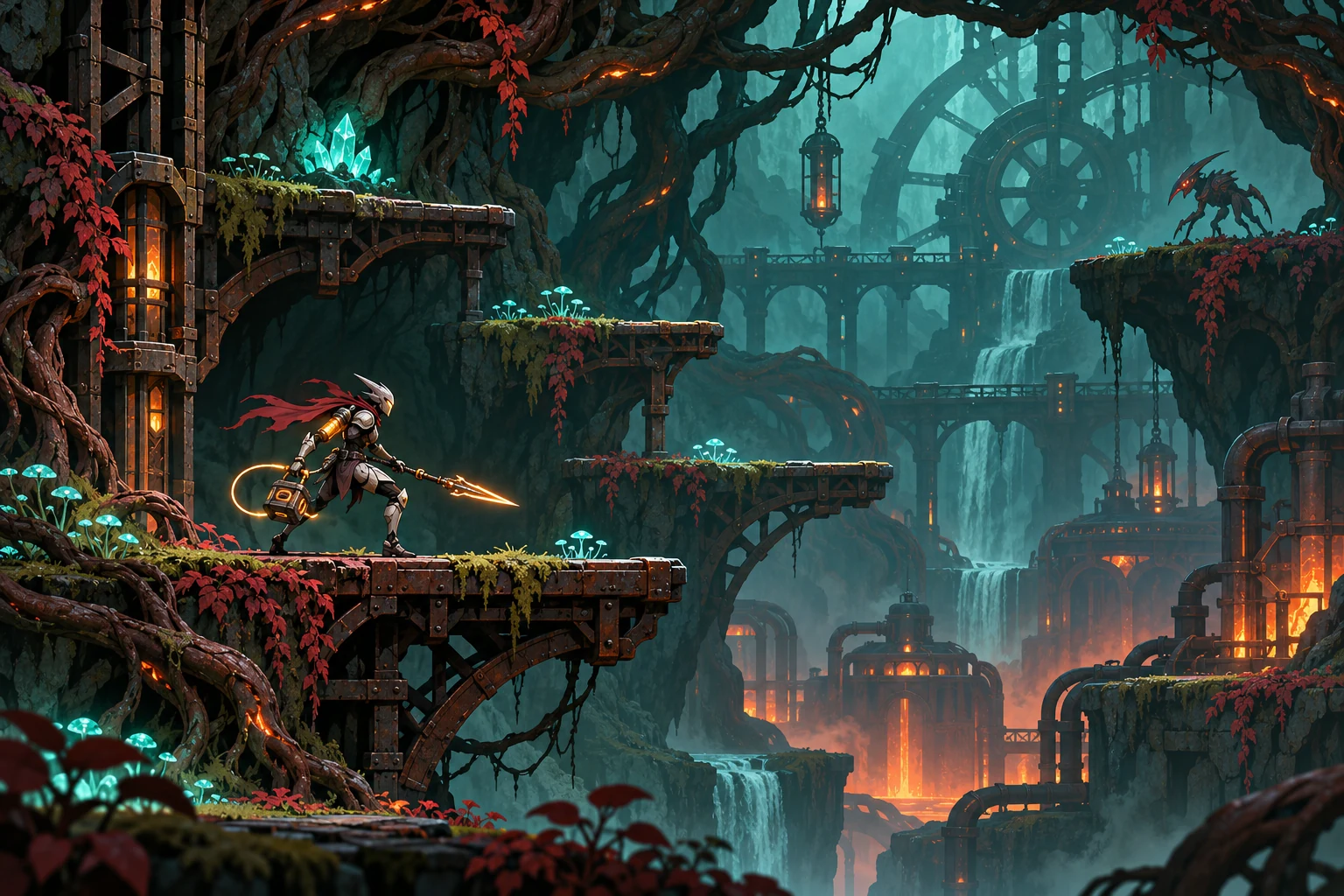
Use the tether spear to cross a gap and strike
Set a horizontal chasm four units wide with a marked anchor on the far side. Give the tether spear five units of reach. Firing at the anchor pulls the hero across; firing at the nearby enemy deals one hit. A movement-free control has only two units of jump reach, so it cannot cross the gap or enter the far room.
Keep anchor distance, spear reach, enemy position, and weapon damage fixed. Show the grapple target, distance, hit event, and destination room. The spear must not become a separate key that opens the route; its normal weapon action should perform both combat and traversal.

Use the pulse maul to reach a high ledge
Place a marked floor plate beside a nearby enemy and set the next ledge 2.5 units above it. The pulse maul deals one hit to the adjacent enemy and rebounds the hero three units upward, reaching the ledge. A movement-free control with one unit of jump height cannot get there.
Report launch height, ledge height, hit count, and whether the room is reachable. Reuse the same route in the control and weapon-enabled runs. Ironroot and all distances and outcomes are fictional; the fixed test checks only whether the weapon actions satisfy the stated movement thresholds while still producing combat hits.

Give the AI a fixed dual-purpose weapon test
Create a compact metroidvania level in fictional Ironroot with two weapons. The tether spear deals one hit and pulls the hero to a marked anchor across a four-unit gap; spear reach is five units. The pulse maul deals one hit to an adjacent foe and rebounds the hero three units from a marked floor plate; the next ledge is 2.5 units high. Keep route, enemies, values, and a weapon-free control fixed. Report distances, launch height, hits, and room reachability for both weapons and the control.
Verify spear reach 5 covers a 4-unit gap and hits the enemy; verify maul launch height 3 covers a 2.5-unit ledge and hits its nearby enemy. The weapon-free control has only 2-unit gap reach and 1-unit jump height, so neither room is reachable.
FAQ
How can a weapon also work as a movement tool?
Give the weapon a clear combat action and a traversal interaction with marked terrain. A tether spear can damage a foe and pull the player to an anchor, while a maul can strike an enemy and bounce the hero from a plate. Keep both effects readable and testable.
How do you test weapon-based traversal?
Fix obstacle distances, weapon ranges, launch height, enemy positions, and a movement-free control. Record hits and whether each room is reachable. This shows whether traversal comes from the weapon action while its combat use remains active. in a compact route.
What makes a metroidvania weapon gate fair?
Show the anchor or launch plate clearly and let players understand which weapon interacts with it. Keep the required range within the weapon’s stated limits, then check that the route opens without hidden movement bonuses or a changed room layout.