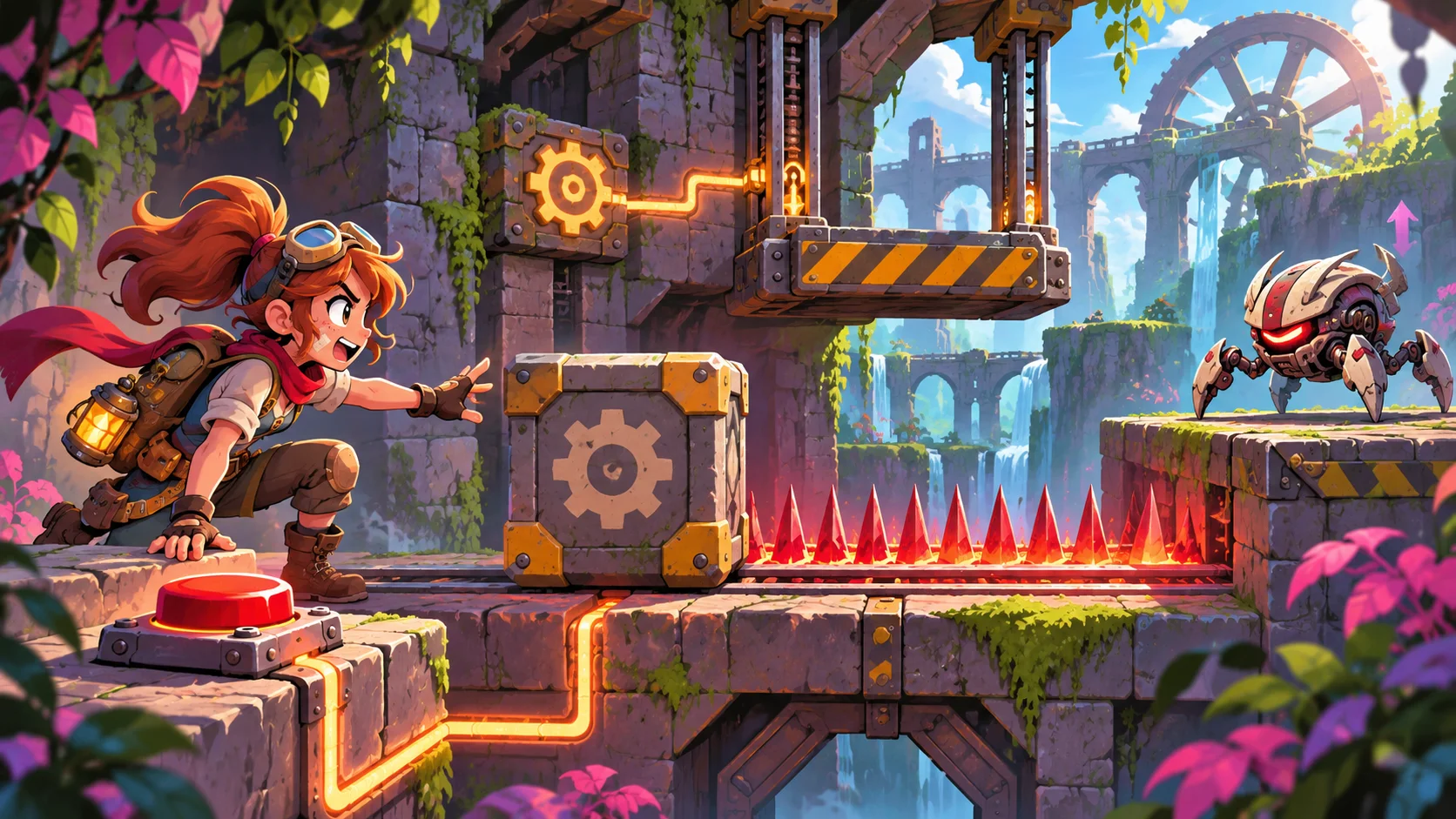
In Anchorline, the grappling tool solves two kinds of obstacles. Hook a fixed anchor to cross a gap, or latch onto an armored sentry and pull it away from a doorway. Both uses share aim preview, range, line of sight and one-charge cost. That shared rule makes combat part of the platform puzzle: spend a charge to move yourself, clear a route, or save it for the next room.
Make one tether serve two puzzle verbs
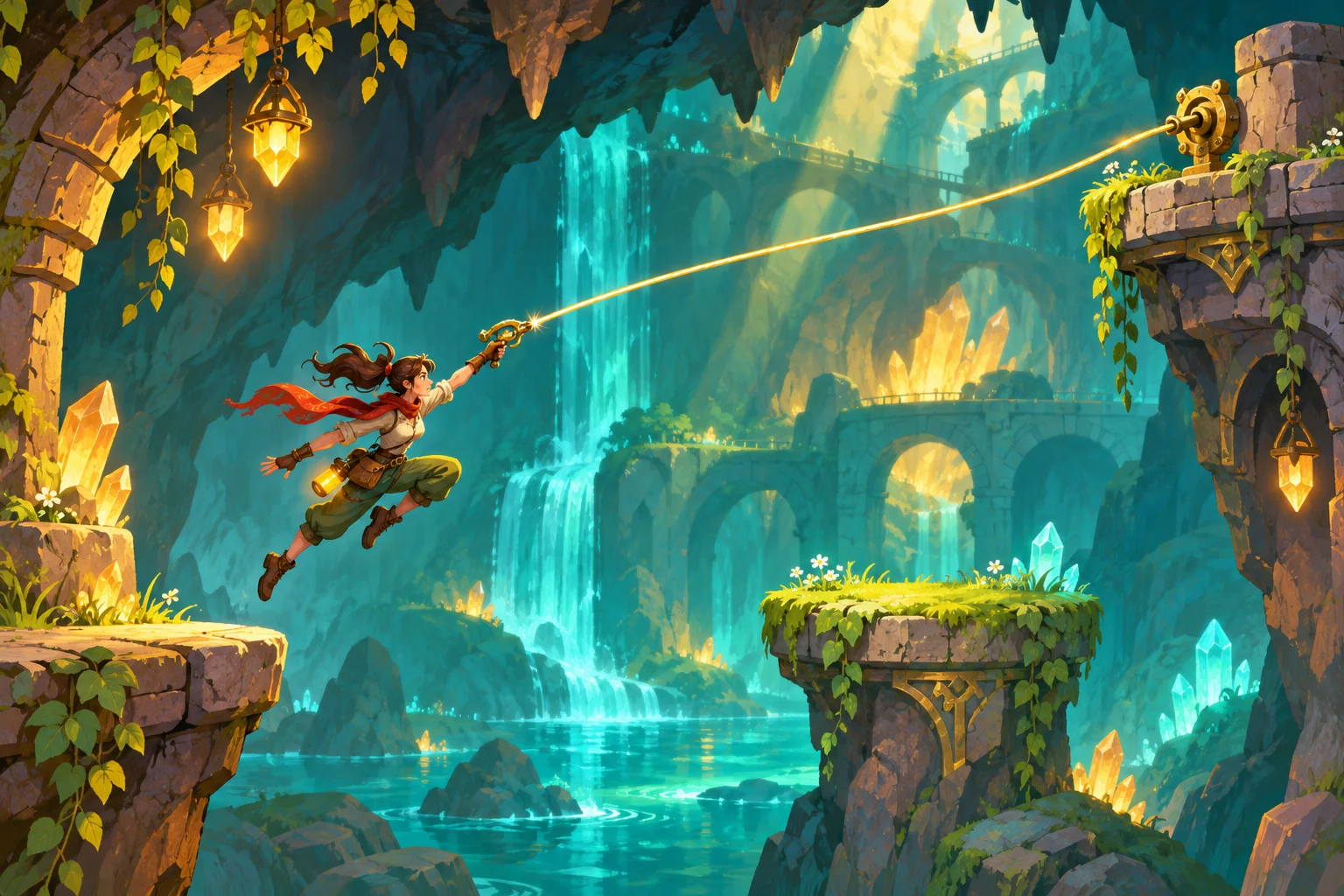
Start with a side-view room containing a gap, one fixed anchor, a guarded doorway and a safe reset point. The player aims at either an anchor or a marked armor plate. A valid hook spends one charge: an anchor pulls the player toward its point, while an enemy target pulls the sentry a short distance. A blocked or out-of-range hook spends the charge but causes no movement, so the feedback must explain why it failed.
| Target | Hook result | Puzzle use |
|---|---|---|
| Fixed anchor | Pull the player toward the anchor | Cross a gap or reach a ledge |
| Armored sentry | Pull the sentry away from its position | Open a doorway or change a patrol lane |
| Blocked target | No movement or enemy effect | Find a new angle or route |
Preview the target, tether path and charge count before firing. Keep anchor points and enemy armor visually distinct. A clear tether color and a short failure message help players connect range and obstruction rules to the result.
Keep travel and combat under the same rules
Aiming should work the same way for both target types. Check distance and visibility first, then consume one charge and apply exactly one result. Do not let an enemy hook pull the player as well, or allow a blocked tether to affect a target through a wall. A reliable reset should restore the room and charge count so players can retry a route without losing track of the puzzle state.
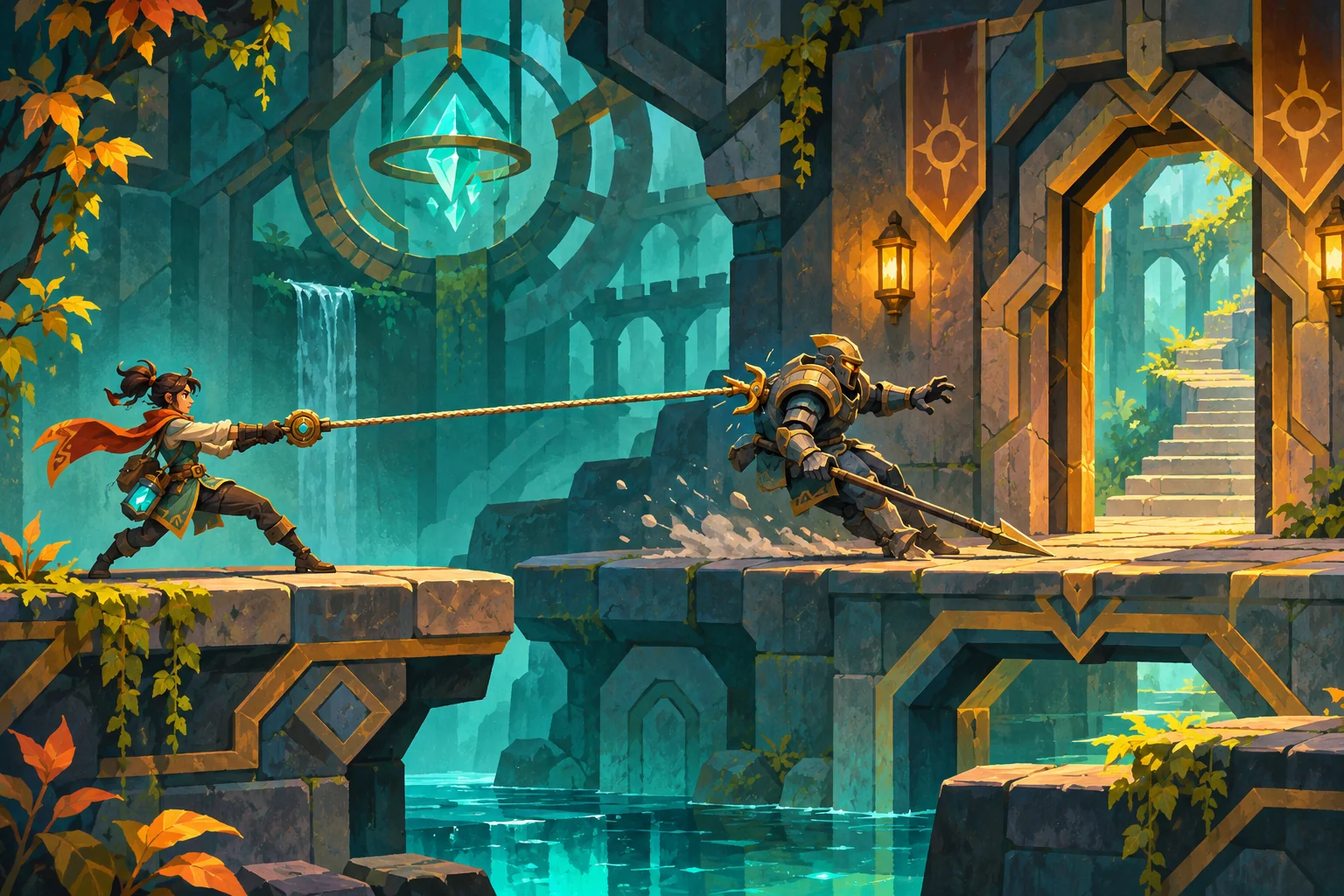
For a first room, use one anchor above the gap and one sentry guarding the far exit. The player can spend the hook to swing over the gap, or first pull the sentry out of position and approach on foot. If the charge is scarce, make the choice meaningful by putting a refill point after the exit rather than before it.
Test the shared range and visibility rule
The deterministic local geometry check places both an anchor and an enemy target 5 units from the player. At the initial range of 4.5, both are out of reach. Increasing the shared range to 5.5 makes both valid. A separate blocked target stays invalid even at the revised range. This tests the range threshold and obstruction flag, not rope physics, collision, enemy behavior or game feel.
| Case | Range 4.5 | Range 5.5 |
|---|---|---|
| Anchor at 5 units | Out of reach | In range; travel hook applies |
| Sentry at 5 units | Out of reach | In range; sentry is displaced |
| Target behind a wall | Blocked | Blocked; no effect |
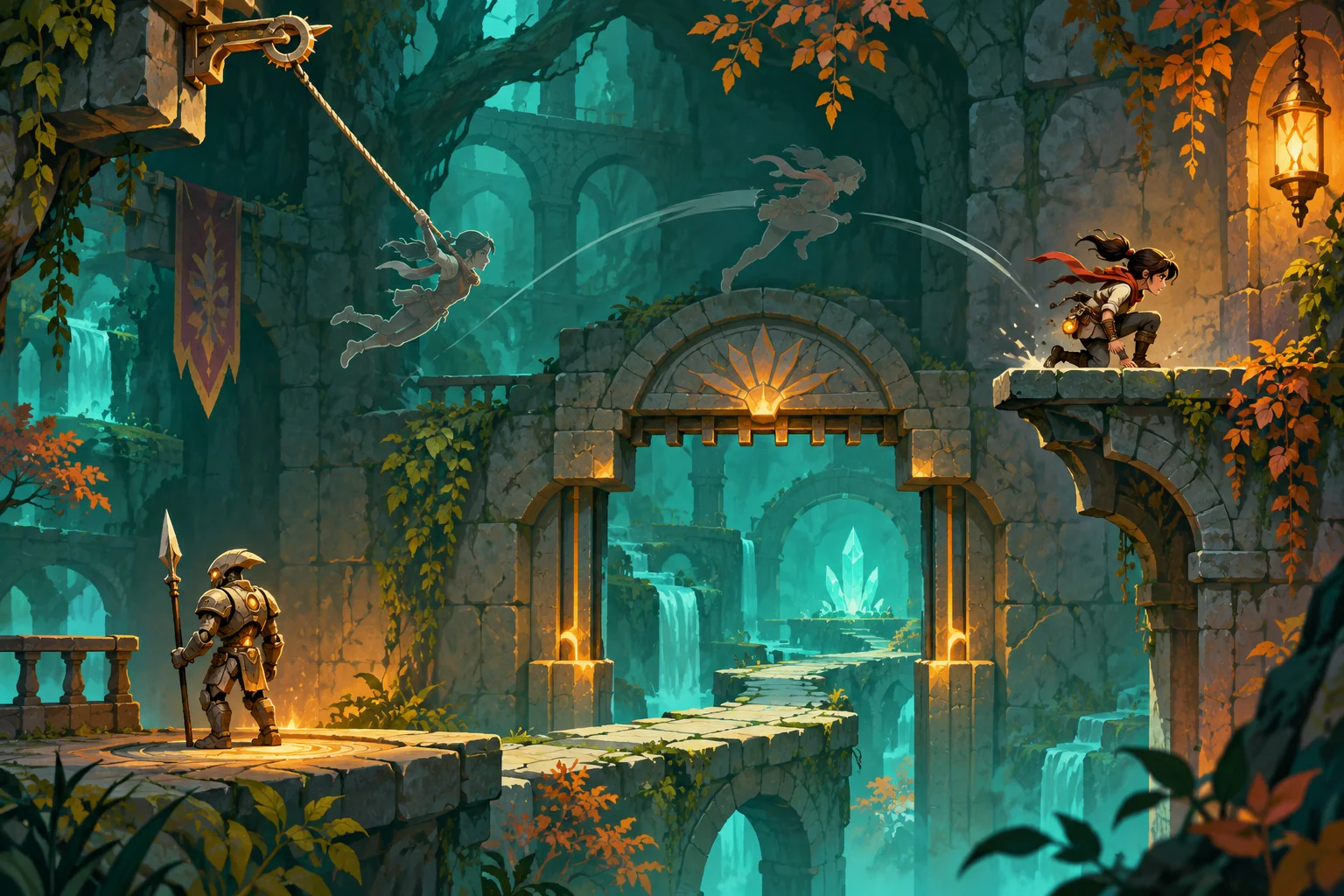
Keep the projected tether line visible through the aim step, and show whether the selected target is valid. In a playable build, test edge collisions, rope release timing, enemy recovery and whether the player can read the alternate route. Those checks are needed before deciding how far a pull should move a character.
Start with one room and a clear prompt
Ask an AI game maker for a compact room with one gap, one anchor, one armored sentry, a guarded doorway and a safe reset. Teach the anchor swing before adding pressure. Then let players solve the doorway either by moving the sentry or by finding a second route. Add hazards only after the shared range and visibility rules are easy to read.
Create Anchorline, a side-view puzzle-platformer prototype built around one grappling tool for travel and combat. Make one room with a gap, a fixed brass anchor, an armored sentry guarding a doorway, and a safe reset. Show the aim preview, tether path, valid target state and one remaining charge. Use the same 5.5-unit range and line-of-sight check for both target types. Hooking an anchor pulls the player toward it; hooking the sentry pulls the sentry away from its guard point. A blocked or out-of-range hook has no effect and explains why. Add a safe landing, a second route and a charge refill after the exit.
Start a puzzle-platformer prototype in SEELE
Frequently asked questions
How can one grappling tool support travel and combat?
Give the tool one aiming and validation rule, then define a different result for each target type. A fixed anchor moves the player; an armored enemy moves away from its position. Preview the target and tether path so players can plan both actions as parts of the same room puzzle.
What should happen when the grapple misses or hits a blocked target?
Show a clear reason, spend the charge consistently, and apply no movement or combat effect. This prevents a failed hook from becoming an unintended shortcut through walls. A safe reset and predictable refill location help players retry while learning range and visibility.
How do I tune grappling range for a puzzle room?
Hold player position, target coordinates and obstacles constant. Test both anchors and enemies just inside and outside the range, then record whether the result matches the preview. A local geometry check can verify thresholds, but a playable build is needed to assess rope feel and collision behavior.