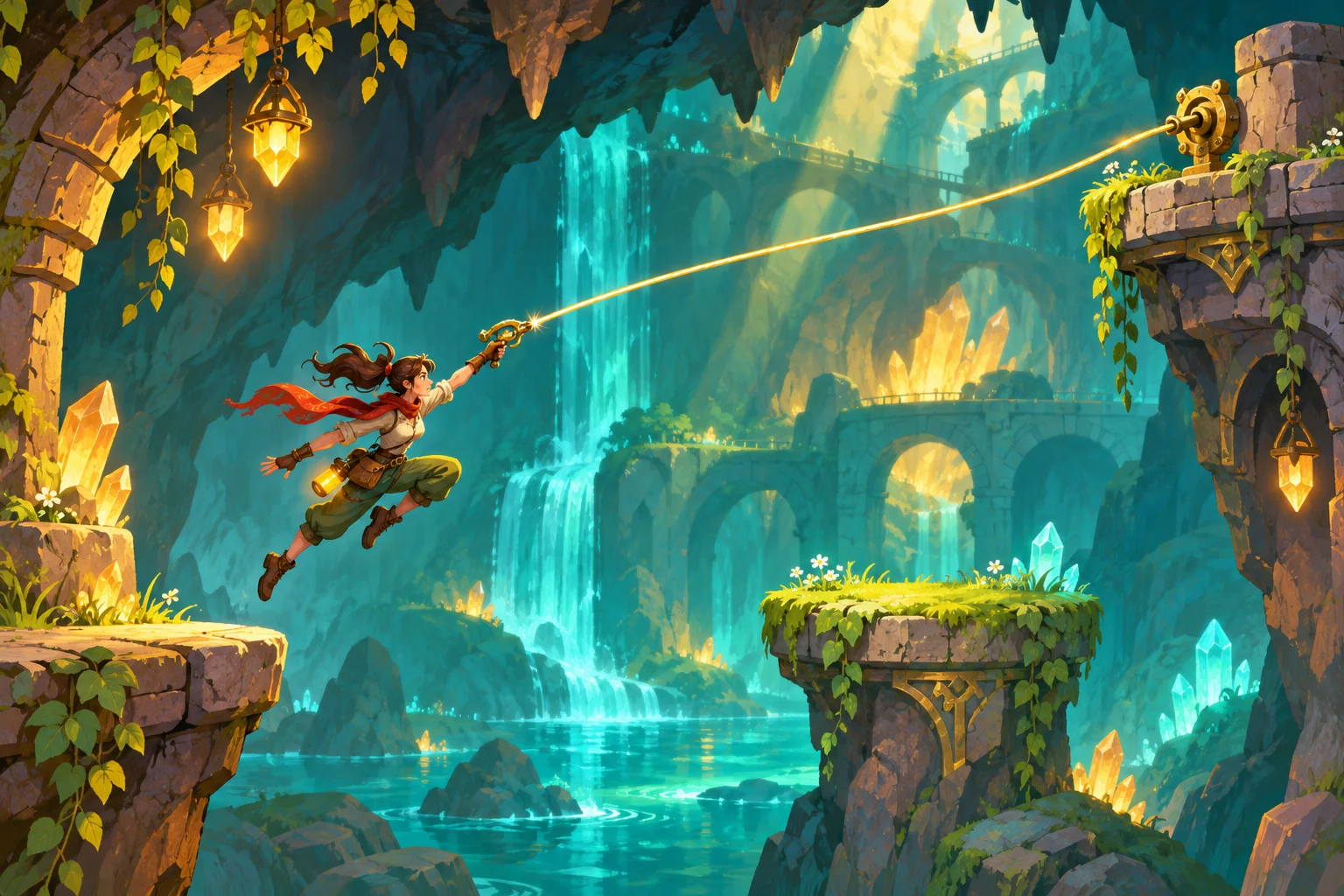
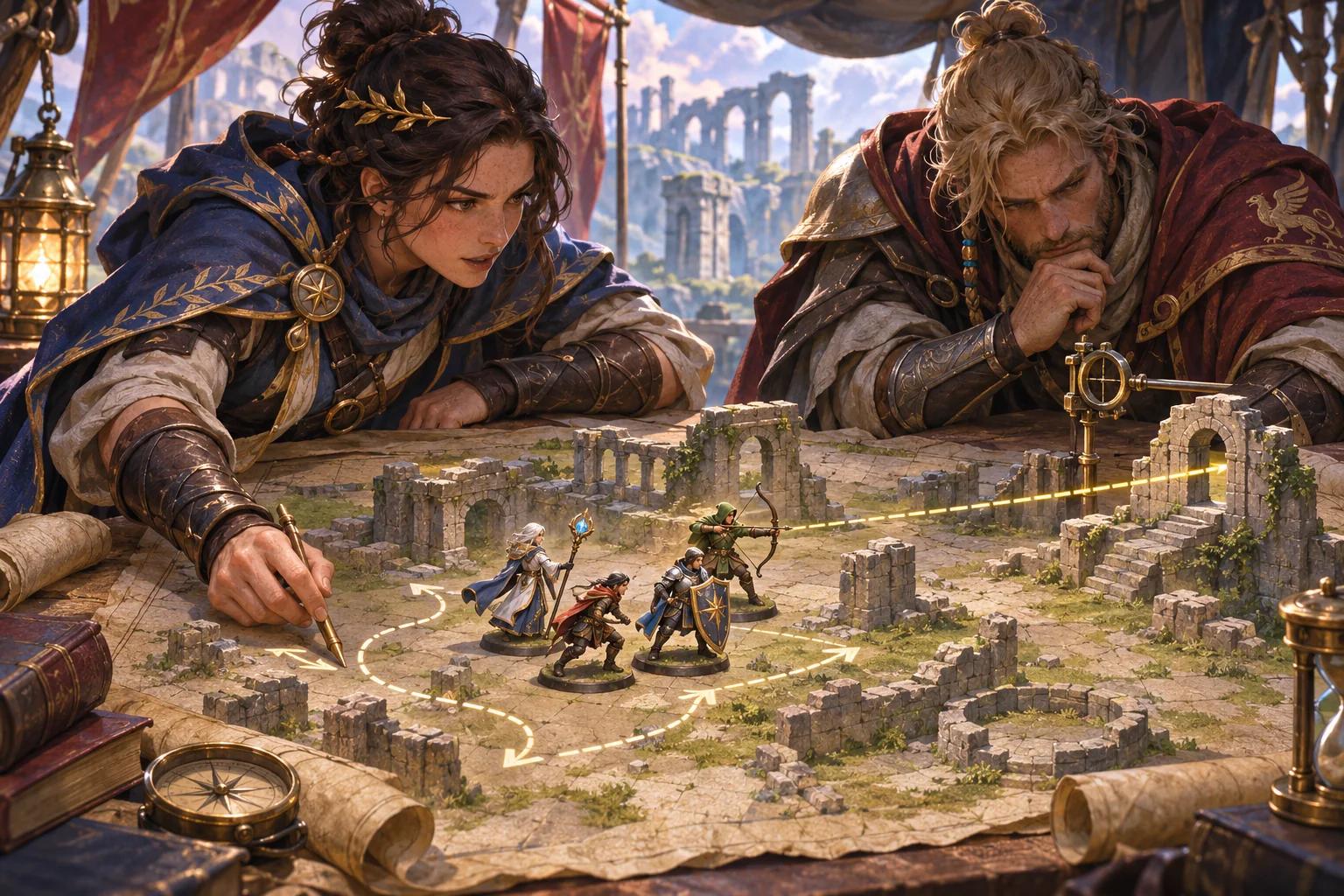
A co-op platformer's grappling tool can serve more than one purpose when it recognizes different target types. A fixed anchor lets a player swing across a gap; an exposed armor point lets a teammate pull an enemy off balance. Players learn one attachment action and apply it to movement and combat situations.
Keep the tether range and button behavior consistent. Start with an anchor tag for travel, then add an armor tag to one enemy and test whether the same grapple changes its combat state. This deterministic interaction check verifies target handling only; it does not prove the move feels good in a two-player session.

Use target tags to connect movement and combat
Give valid grapple targets explicit tags. Fixed anchors use `anchor`; an enemy exposes `armor` only during its wind-up. The grappler uses the same aim, latch and release actions in both cases. Show a distinct reticle and tether color for each target so players know what the tool will do before they commit.
For traversal, hook an anchor across a gap and let the player swing to a safe ledge. For combat, latch onto the enemy's exposed armor and pull while the partner lands a hit. That follow-up changes the enemy from guarded to staggered, creating a brief opening for the team.
Keep rope length, cooldown and enemy timing fixed while testing both target types. Add moving anchors, heavier enemies or rescue pulls only after the same grapple feedback clearly distinguishes swing, pull and release.
Add one combat target without changing the tether
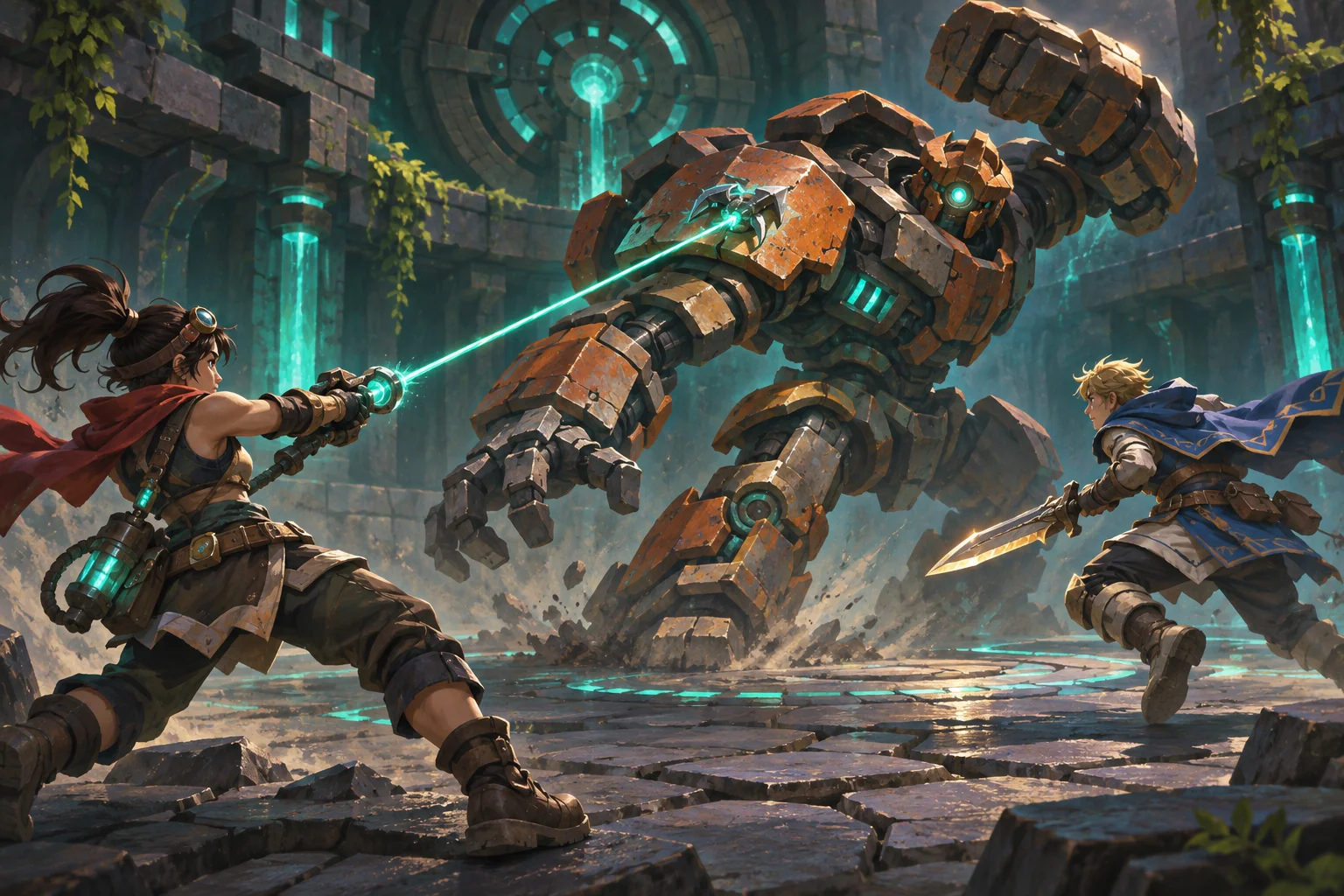
Place an anchor four units across a gap with a five-unit grapple range. The player can latch and swing to the opposite ledge. In the first combat rules version, the enemy's exposed armor point has no grapple target tag, so the same tool rejects it and the partner cannot create a stagger opening.
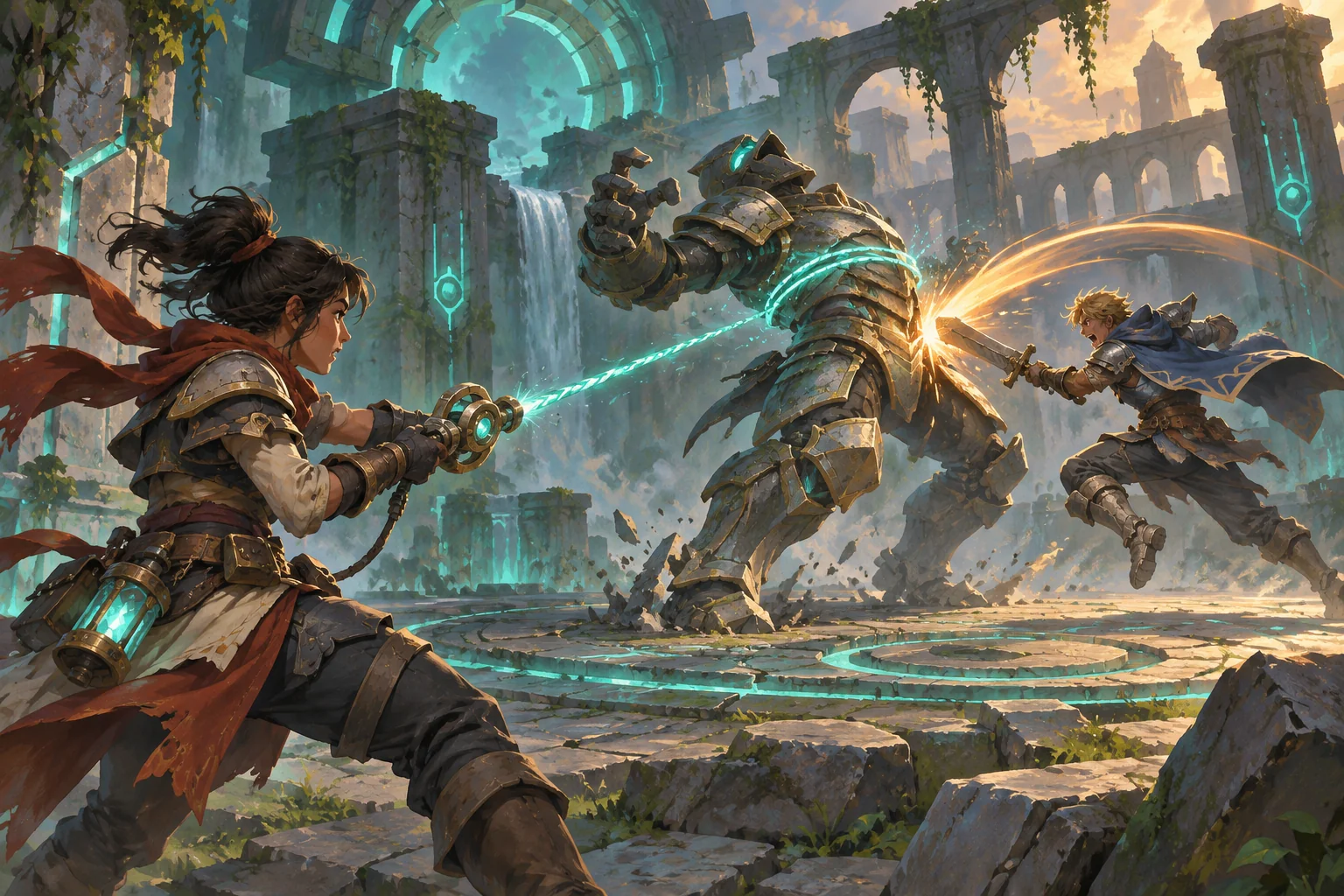
Change only target support: mark the exposed armor as a valid grapple point. Keep tether range and timing unchanged. The player latches during the enemy wind-up; when the partner lands a strike while the rope is attached, the enemy changes from guarded to staggered. The grapple now contributes to both movement and team combat.
This deterministic model checks target eligibility and the partner-triggered state transition. It does not test coordination under pressure, animation readability, accessibility or damage balance. Playtest with pairs using different movement and communication styles before tuning the encounter.
Ask AI to prototype a dual-purpose co-op grapple
Show grapple target tags, tether range, partner follow-up and enemy state clearly.
Change only whether exposed armor is a valid grapple target while keeping tether physics fixed.
Create an original two-player platformer prototype with one grapple tool. Fixed anchors let a player swing across a gap; an enemy exposes an armor target during its wind-up. Use a 5-unit grapple range and place the traversal anchor 4 units away. Compare the enemy without a grapple target tag to the same enemy with an armor tag. When one player grapples the exposed armor and the partner hits, change the enemy from guarded to staggered. Keep tether range and timing fixed. Do not claim this state test proves co-op feel or combat balance.
Teach one grapple action across two kinds of challenge
A dual-purpose grapple makes platforming and combat feel connected when target feedback and partner follow-up stay clear. Begin with one stable anchor and one exposed enemy point, then test whether pairs understand when to swing, pull and strike. Add new target types only after the shared tether rule works in a playable level.
Prototype a co-op platformer with SEELE's AI game maker
Frequently asked questions
How can a grapple work for both travel and combat?
Use one attachment action with different tagged targets. A fixed anchor can support a swing across a gap, while exposed enemy armor can allow a pull or partner follow-up. Keep the reticle and tether feedback clear so players know the result. Let each player see the attachment state.
How do partners coordinate a grapple attack?
Give the grapple a readable window and a clear follow-up. One player latches onto an exposed point while the other attacks or moves into position. Show the enemy state change so both players understand how their actions combined. Make the follow-up cue visible to both players.
Does a target-state model prove the grapple is fun in co-op?
No. It verifies that a tagged point accepts the tether and a partner hit changes the enemy state. It cannot measure timing pressure, coordination, readability or fairness. Test the move with pairs before balancing damage and cooldowns. Repeat this with several enemy types before tuning.