Connect freight, population growth, and the schedule
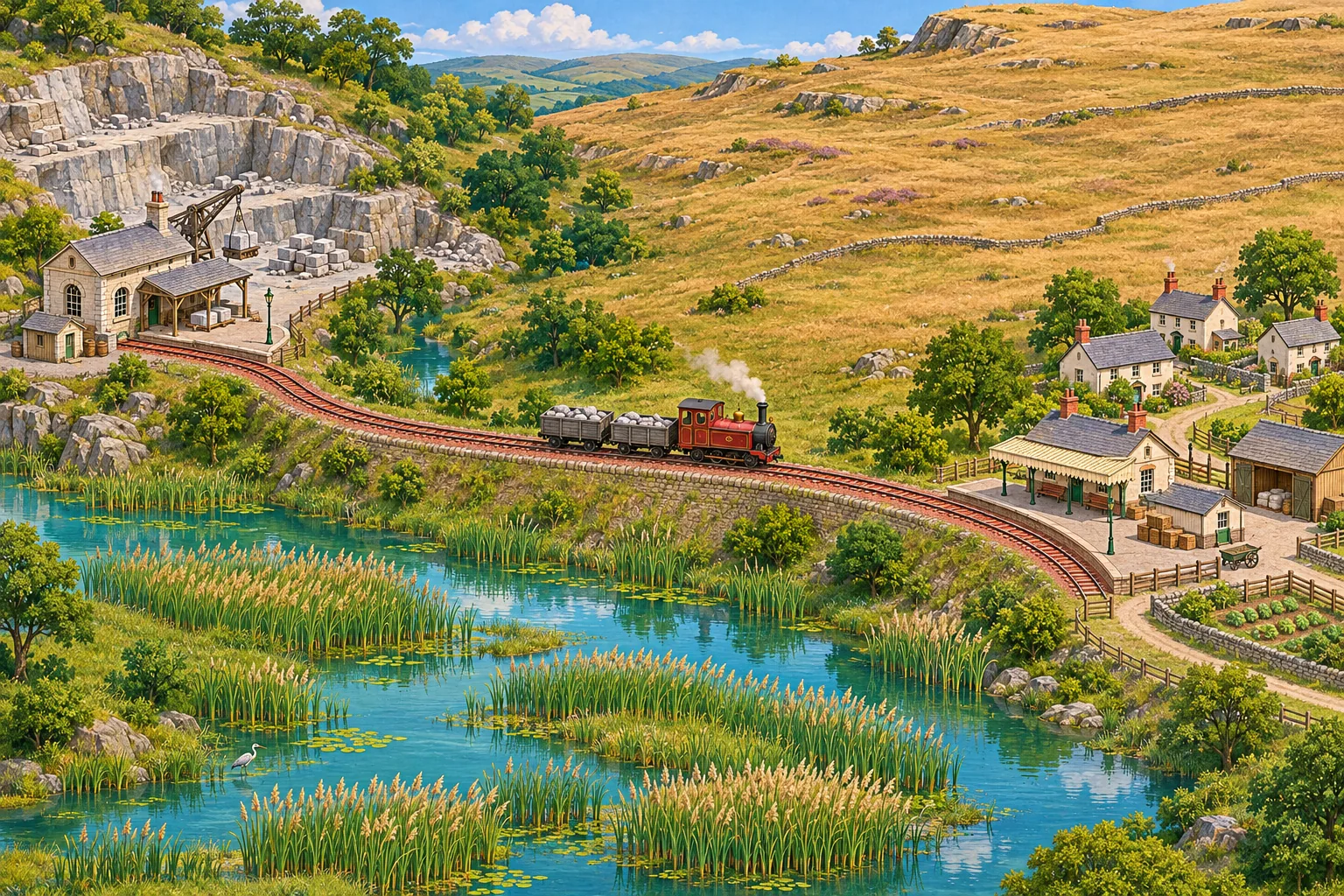
Build one branch line between a quarry and a town. In fictional Reed Junction, delivered stone adds growth points. When the town qualifies for a new building, the player chooses a cheap marsh plot or a more expensive upland terrace. Filling too much marsh slows the low rail crossing on the next timetable. This makes the land-use decision matter to the same freight service that prompted expansion.
Preview the trade-off before committing a building
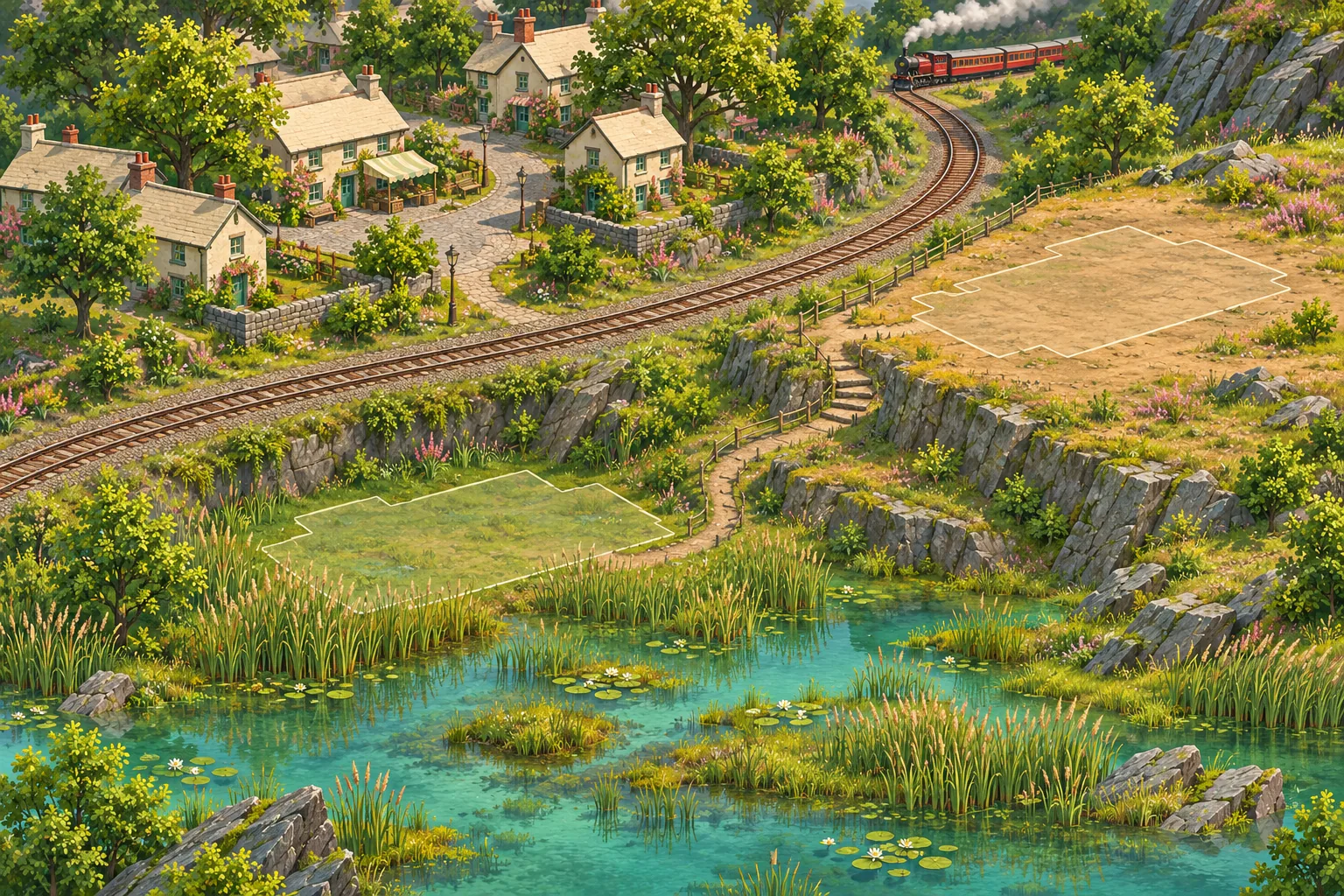
Start with six construction credits and three wetland cells. One delivery adds two growth points. Every four points unlock one building. A marsh plot costs two credits and removes one wetland cell. A terrace costs four and preserves the wetland. If fewer than two wetland cells remain, the low track requires three time slots instead of two.
Run each day in this order: schedule the crossing, resolve the delivery, add growth points, then commit any building and update habitat. Save the new track time for the next timetable. Show the projected cell count, remaining cash, and next crossing time before committing. Treat these as designed game rules. If you use Godot's TileMapLayer for the map, keep the ledger authoritative. Tile changes normally update together at the end of the frame.
Replay the same deliveries with two land plans
A local simulation of the fictional ledger fed one delivery per day for four days. The town unlocked its first building on day two and its second on day four. Building twice in the marsh left two credits, but only one wetland cell. The fifth day's crossing went from two slots to three. Building on one marsh plot and then the terrace spent all six credits and kept two wetland cells. The crossing stayed at two slots.
In the playable prototype, set a departure with only two free track slots. Under the first land plan, stop the planner from promising the old arrival. Show the extra slot and offer a later departure. Confirm the second plan keeps the original schedule. This checks that habitat state affects the rail decision the player makes next.
Start with one timetable and four deliveries
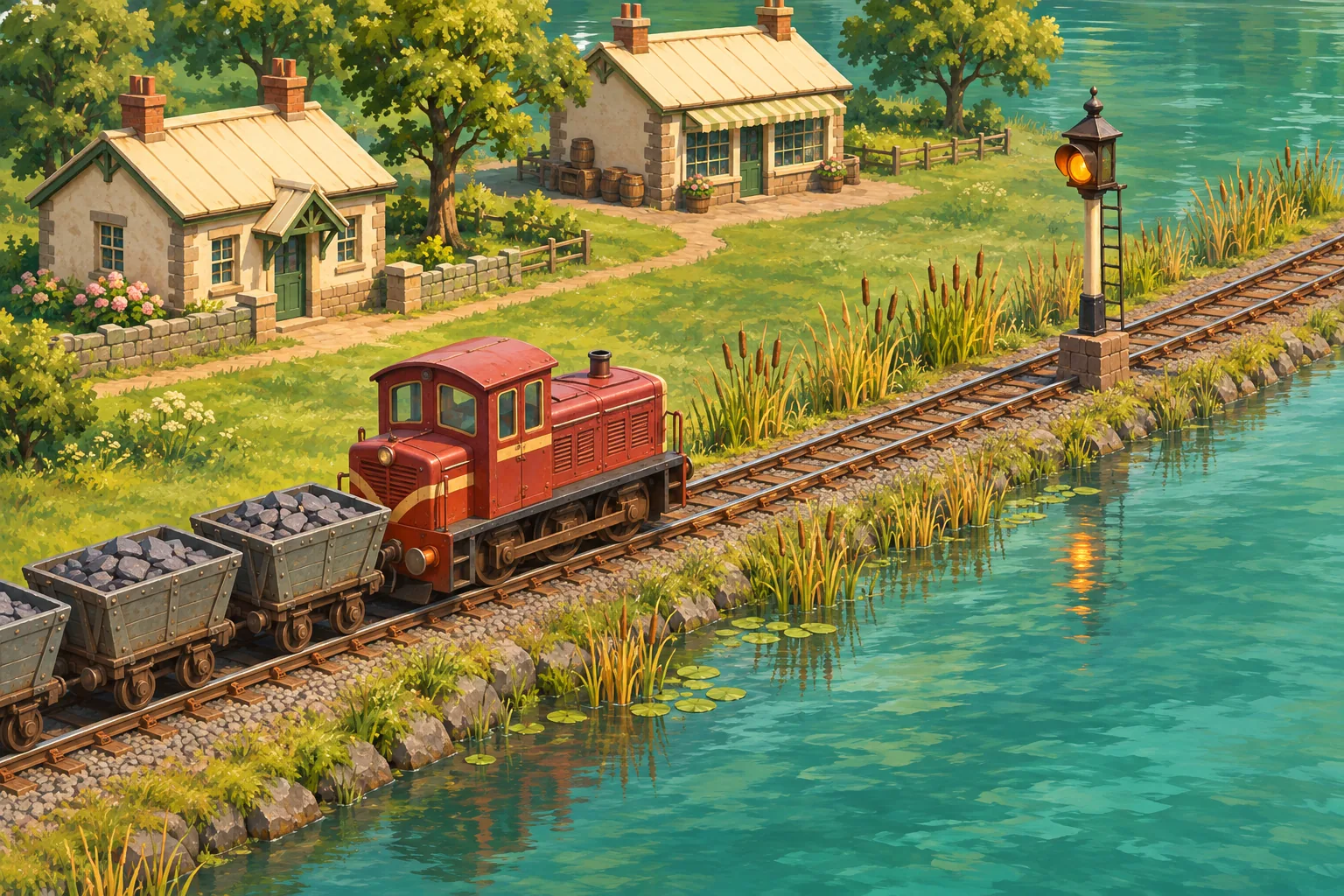
Give the AI the supply chain, growth threshold, construction budget, and rule order. SEELE AI Game Maker can provide a text-based starting point for a playable first version. Use both land plans as test inputs. Fix the end-of-day ledger before adding passenger routes, additional habitats, or variable weather.
Create Reed Junction, a fictional railway management prototype. One stone train serves one town. Start with six credits and three wetland cells. Deliver once per day for four days. Each delivery adds two growth points and each building spends four. Marsh construction costs two credits and removes one habitat cell. A terrace costs four and preserves habitat. Below two habitat cells, the next crossing takes three slots. Otherwise it takes two. Show the projected timetable before construction.
Draft the Reed Junction prototype in SEELE · Godot documentation on TileMapLayer
Frequently asked questions
When should the longer crossing take effect?
Apply the new crossing time to the next timetable after construction. Keep completed arrivals unchanged so the ledger explains the delay. For a train already in motion, keep its committed travel time in the first prototype and apply the new condition on its next trip.
What if the player cannot afford either expansion site?
Keep the earned growth points and delay construction. Show the amount still needed and leave the current timetable in effect. Test how the settlement resumes growth after the budget improves so an unaffordable choice does not silently discard the player's delivered freight.
Do I need a detailed ecosystem simulation for the first build?
Use a visible habitat count and one clear crossing rule first. Test whether players can trace the cause from building placement to the next arrival. Add more habitat types only when each gives the player a distinct decision about routes, cargo, or timing.