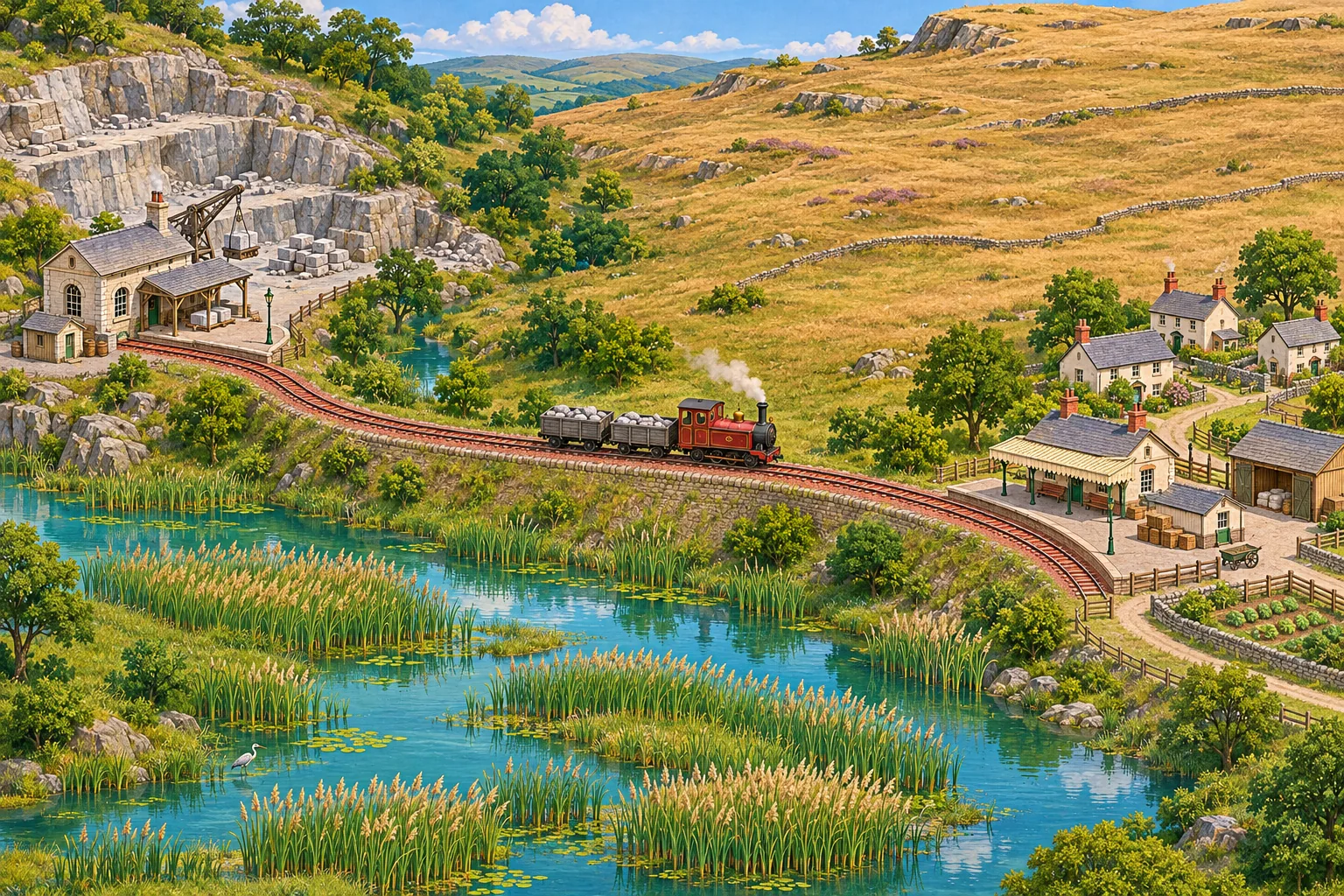
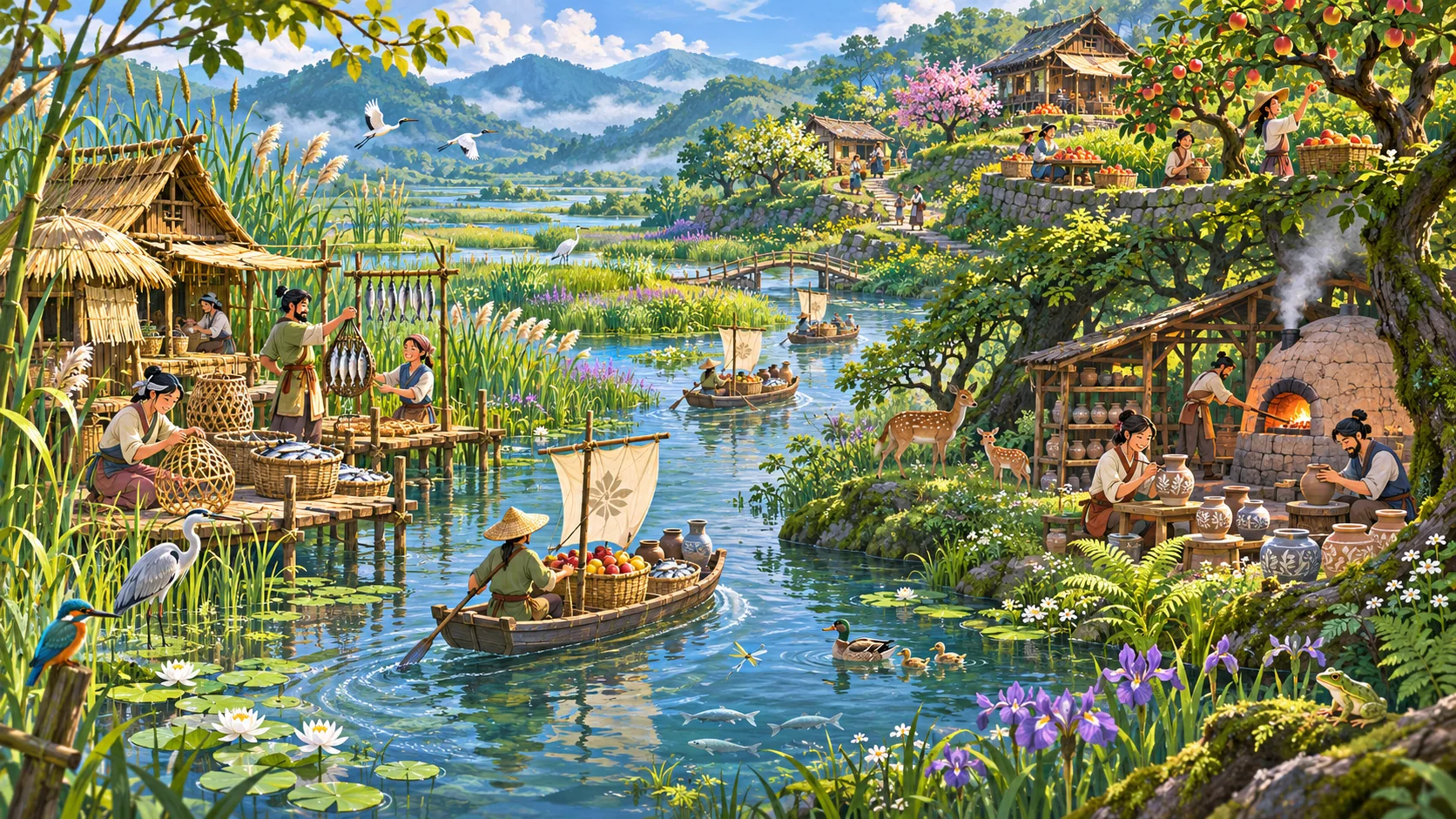
In the fictional Reedwater Reach, a level-one settlement sits beside a meadow. It supports one pollinator, yields one herb per cycle, and trades two herbs for one grain. Spending three stone expands the settlement into a wetland: pollinators rise to three, herb yield reaches three, and the market trades one herb for two grain. The local fixture compares expansion with a matched meadow control. All names, values, and outcomes are invented.
Set a baseline for ecology and trade
Start with a level-one settlement beside meadow habitat. Record pollinators at one, herb yield at one per cycle, and a market offer of two herbs for one grain. Show these values on both the region view and the trade panel so players can connect the land to available goods.
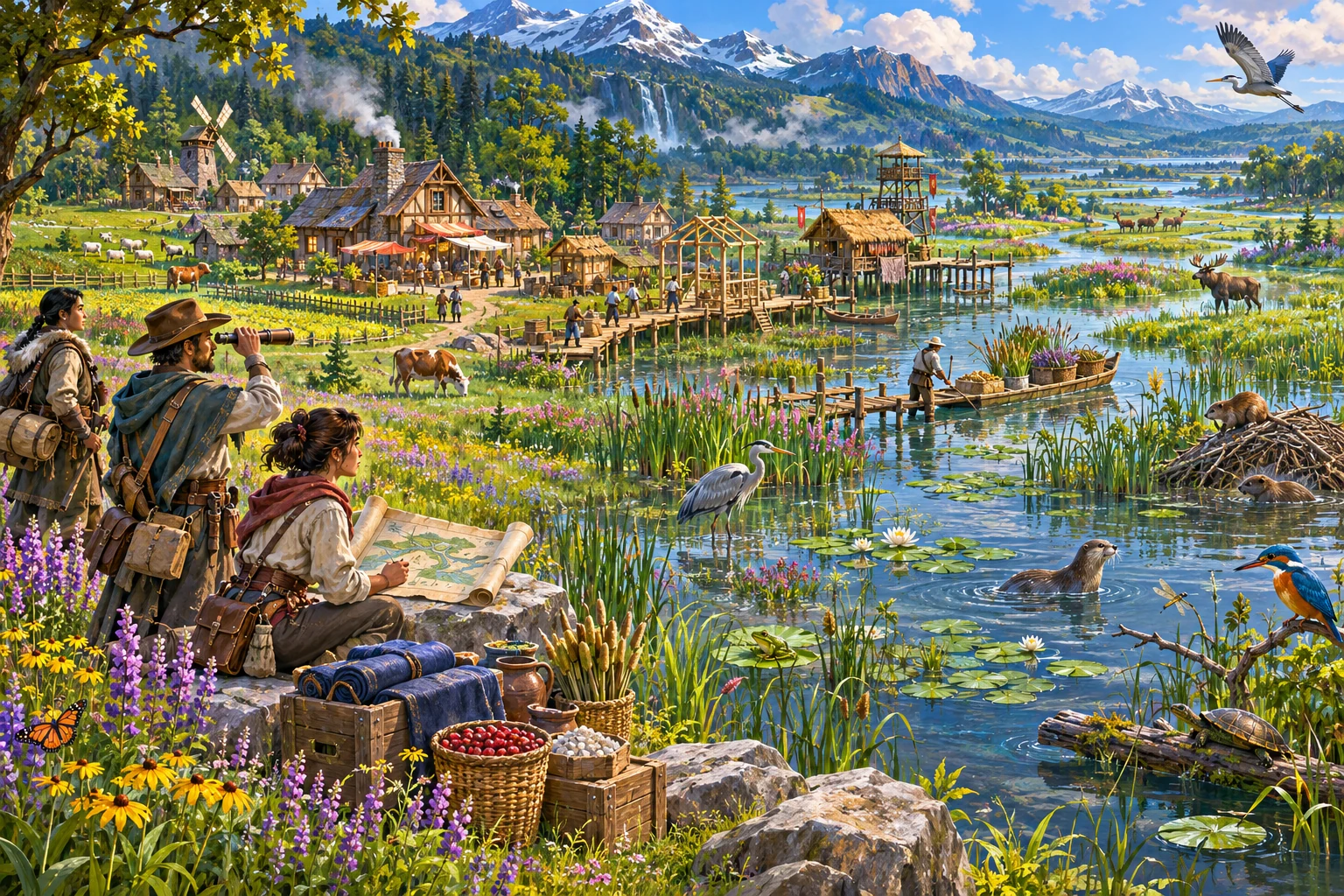
Let explorers gather three stone before expansion. Keep stone as a construction cost, not an ecology bonus: only the settlement-level transition changes the habitat state. This gives the player a clear choice to invest in a wetland and makes the ecosystem response visible rather than random.
Expand the settlement and update its ecosystem
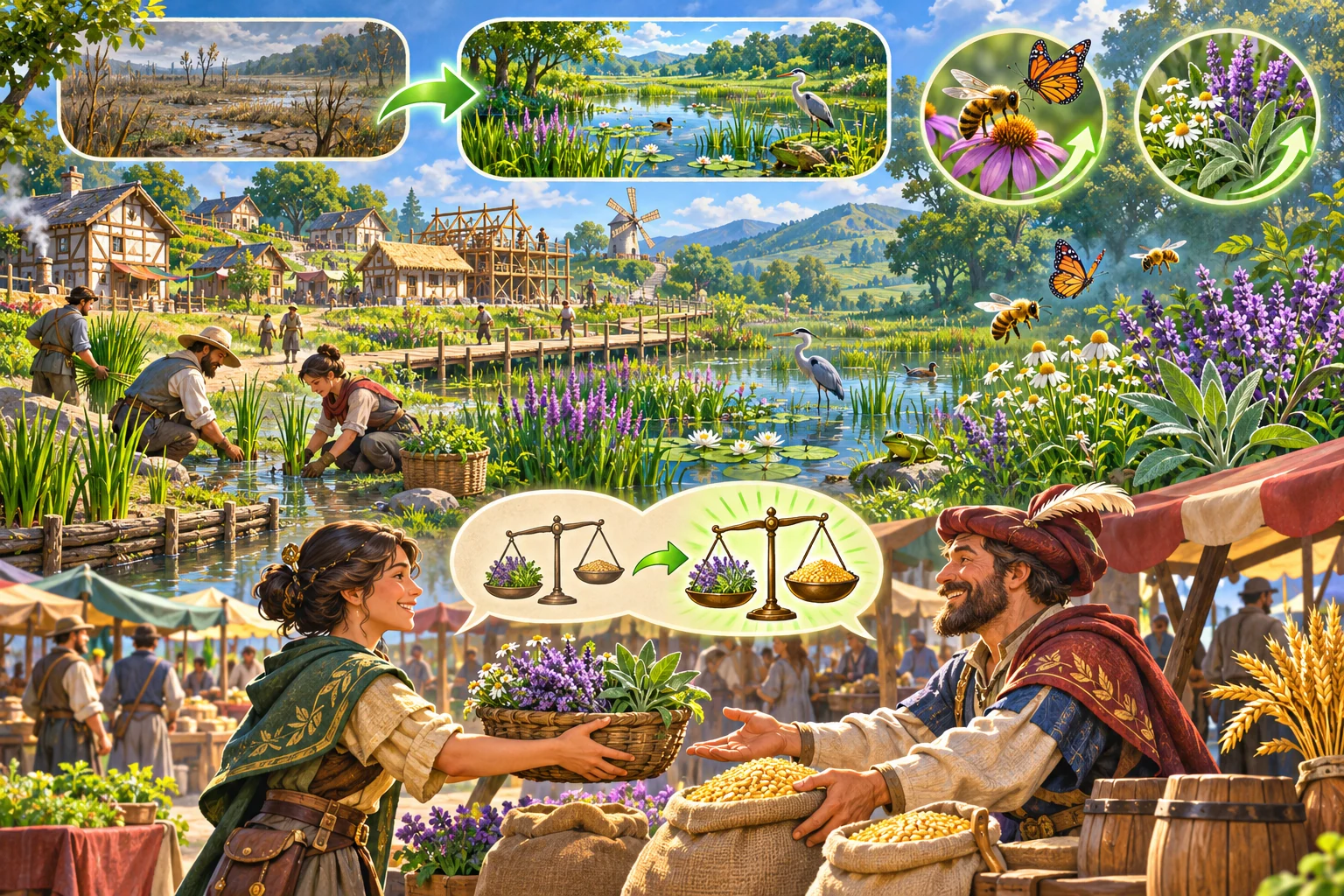
When three stone are spent, expand the settlement into the adjacent wetland. Update pollinators from one to three and herb yield from one to three per cycle. Apply the new state before the next harvest, and show a short change log for habitat, wildlife, and output.
Update the trade panel from two herbs per grain to one herb for two grain after expansion. Display the old and new terms and the settlement level that caused the change. This connects habitat growth to a concrete trade benefit without implying that every ecosystem change must improve every resource.
Compare expansion with an unchanged meadow control
In the expansion run, spend three stone, switch the nearby habitat to wetland, increase pollinators to three, and raise herb yield to three. Trade one herb for two grain. Record settlement level, habitat, wildlife count, harvest, and market ratio at each step.
For the control, keep the same starting settlement and resources but do not expand. The meadow stays at one pollinator and one herb per cycle, and the market remains two herbs for one grain. Compare the two states after the same cycle. Reedwater Reach and all values are fictional; the fixture checks only these authored transitions.
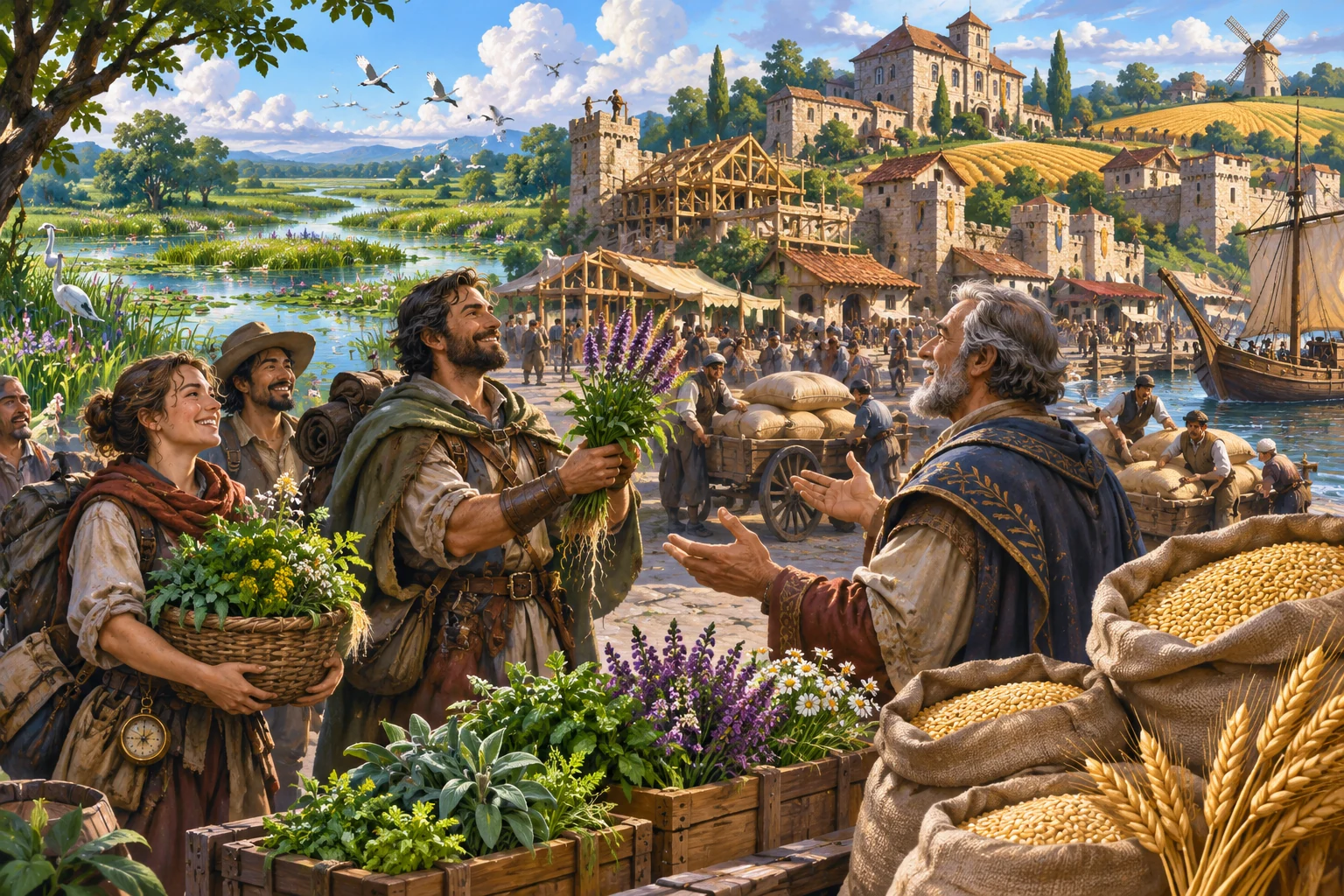
Ask an AI game maker to prototype settlement ecology and trade
Create an exploration trading game called Reedwater Reach. Level-one meadow: 1 pollinator, 1 herb per cycle, trade 2 herbs for 1 grain. Spend 3 stone to expand the settlement into wetland: pollinators become 3, herb yield becomes 3, and trade becomes 1 herb for 2 grain. Update habitat, wildlife, yield, and market after expansion. A no-expansion control keeps meadow values and old trade terms.
Run an expansion: spend 3 stone, change meadow to wetland, update pollinators 1→3 and herb yield 1→3, then apply trade 1 herb for 2 grain. In a matched control, keep the settlement at level one and retain 2 herbs per grain. Log habitat, wildlife, yield, and market terms.
FAQ
How can settlement growth change an exploration game's ecosystem?
Tie each expansion level to visible habitat and wildlife states, then let those states affect harvests or routes. Show the before-and-after values and apply them at a clear point in the cycle. A matched control helps players see which changes came from expansion rather than random variation.
How should an ecosystem affect trading mechanics?
Use ecology to change a specific market input, such as the quantity of herbs available or the exchange rate for grain. Display current terms and the cause of a change. Keep the rule consistent so players can plan exploration, settlement costs, harvest timing, and trades from the same state.
What should I test in a settlement-driven trading prototype?
Check expansion costs, habitat transitions, wildlife counts, resource yields, and market ratios in the same sequence. Replay without expanding to confirm the baseline stays unchanged. Log settlement level, ecosystem state, harvest output, and trade terms before and after each cycle.