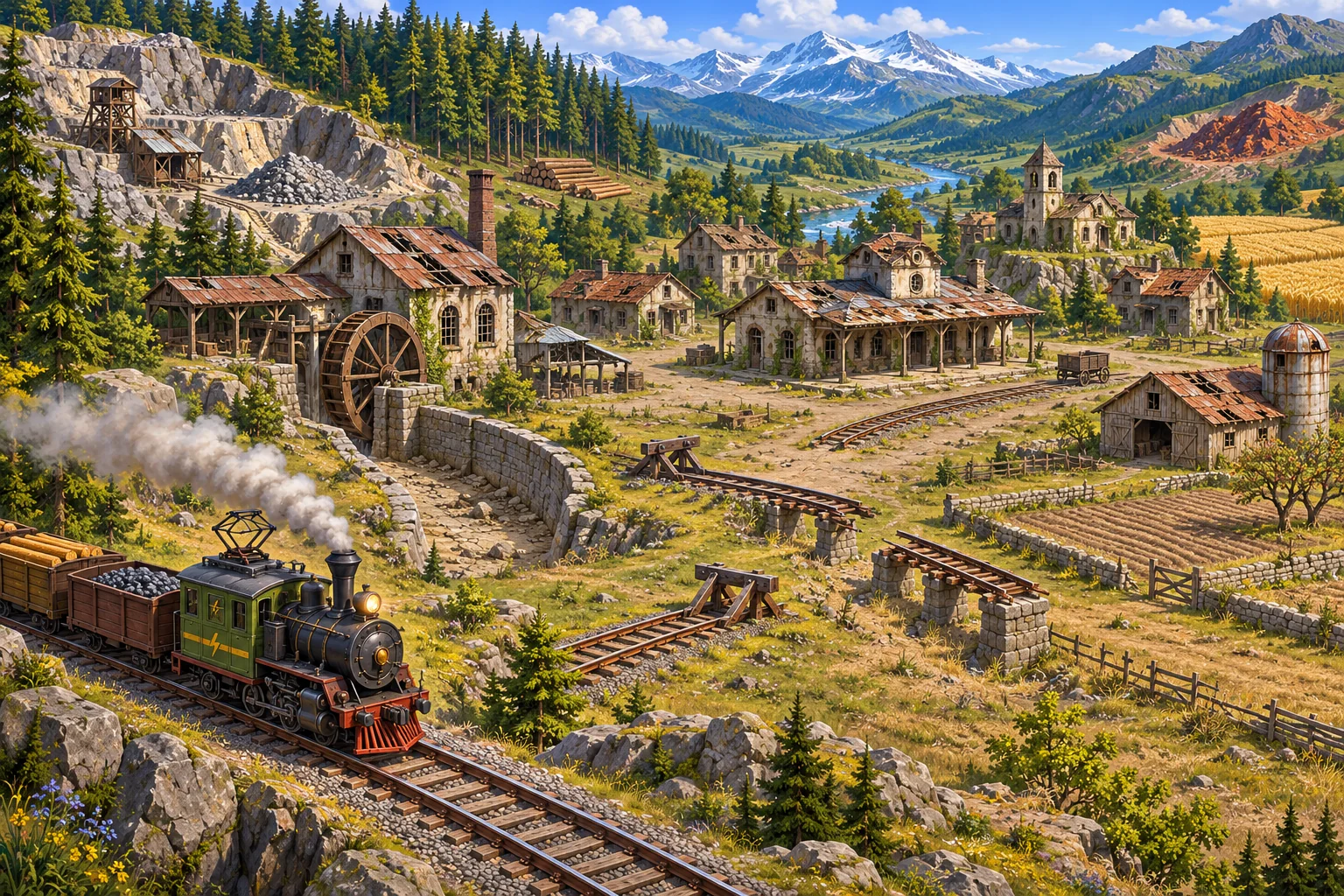
In Moss & Mill, wildlife is part of the production chain, but it is never an item to harvest. Restoring the meadow attracts bees; their pollination lets a berry hedge produce fruit. Songbirds spread those berries into saplings, while a beaver lodge beside a clean creek filters sediment into clear water. Those renewable outputs help the player repair an old watermill and reopen the valley’s workshop.
The player has four days and two work actions each day. Habitat condition controls which creatures can settle, and each day’s ecosystem phase happens before the next pair of actions. A route through meadow, hedge, grove and creek makes the chain visible: restore conditions first, then let the habitat create the materials that complete the mill.
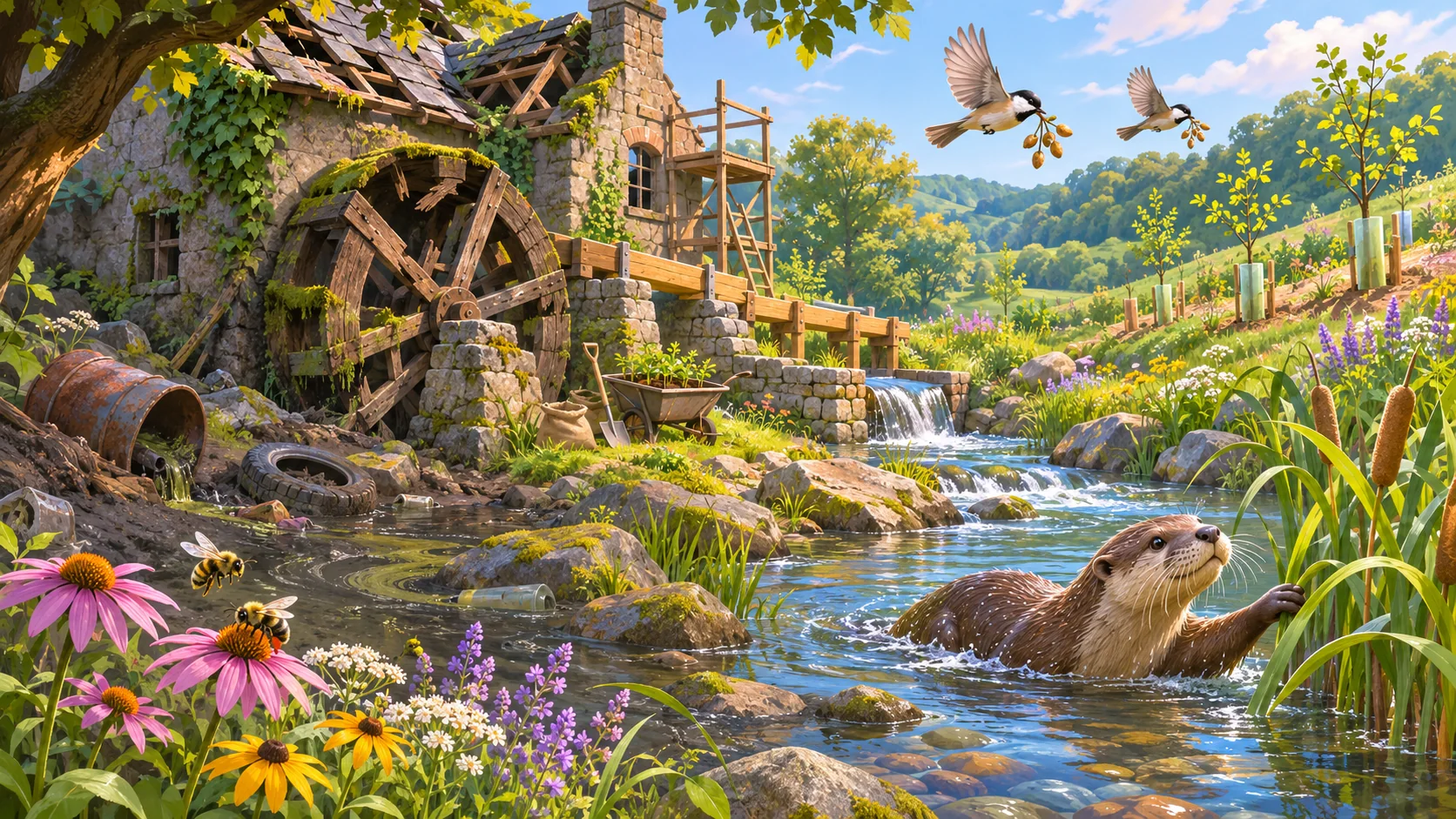
Make wildlife part of the restoration chain
Create Moss & Mill as a four-day restoration simulation on a compact valley map with five condition values from 0 to 3: Meadow, Berry Hedge, Grove, Creek and Mill. Starting values are 1, 1, 0, 1 and 0. The player has 2 work actions each day and 5 Salvaged Planks. A work action may raise one habitat condition by 1, up to 3, by spending 1 plank; the player may also place a Beaver Lodge at the Creek for 1 action once Creek condition is at least 2. Each day begins with an ecosystem phase, then the player spends two work actions. If Meadow is at least 2 and Berry Hedge at least 1, bees pollinate it and produce 1 Berry. If Grove is at least 2 and at least 1 Berry exists, songbirds consume 1 Berry and spread 1 Sapling into the inventory. If Creek is at least 2 and a Beaver Lodge is placed, beavers filter 1 Sediment per day; each sediment removed produces 1 Clear Water, up to a storage cap of 2. The starting creek has 2 Sediment. After the ecosystem phase on day 4, the player may repair the Mill for 1 work action by spending 1 Sapling, 1 Clear Water and 1 Salvaged Plank. Repairing it by the end of day 4 wins. Creatures are habitat contributors and cannot be purchased, collected, traded or consumed. Outputs persist between days; the player can hold at most 3 Berries, 3 Saplings and 2 Clear Water. Habitat condition does not decay in this first prototype. Show condition, creature presence, inventory, sediment, day, remaining work actions and the reason for any blocked recipe. All conditions and production rates are authored game rules, not ecological measurements.
| System | Prototype rule |
|---|---|
| Valley zones | Meadow 1, Berry Hedge 1, Grove 0, Creek 1, Mill 0; condition range 0–3. |
| Workday | Four days; two work actions each day. Ecosystem phase happens first. |
| Habitat action | Raise one habitat condition by 1 (max 3) by spending 1 Salvaged Plank. |
| Starting stock | 5 Salvaged Planks; storage cap 3 Berries, 3 Saplings and 2 Clear Water. |
| Bees | If Meadow ≥2 and Berry Hedge ≥1, produce 1 Berry at the start of each day. |
| Songbirds | If Grove ≥2 and at least 1 Berry is stored, consume 1 Berry and produce 1 Sapling per day. |
| Beavers | If Creek ≥2 and a Beaver Lodge is placed, remove 1 Sediment and produce 1 Clear Water per day, up to cap 2. |
| Beaver Lodge | Place for 1 action when Creek ≥2; may be placed once. |
| Mill repair | After day 4 ecosystem phase, spend 1 Sapling, 1 Clear Water and 1 Plank plus 1 action to restore Mill. |
| Wildlife | Creatures are habitat contributors; they cannot be harvested, bought, traded or consumed. |
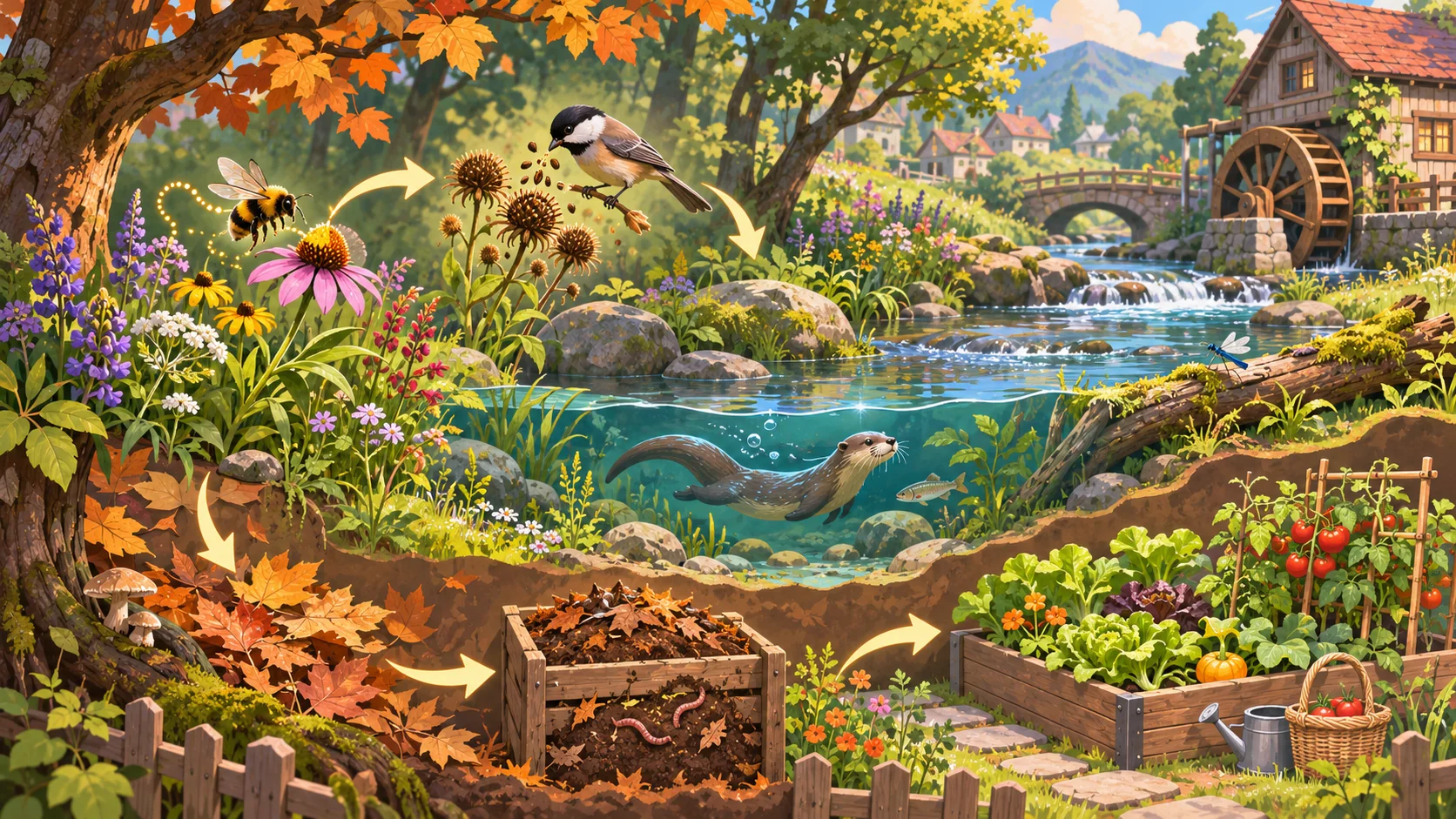
Define habitat, creatures and daily outputs
Start with Meadow 1, Berry Hedge 1, Grove 0, Creek 1, Mill 0, 5 Planks and 2 Creek Sediment. On day 1, spend one action to raise Meadow to 2 and one to raise Creek to 2; each costs one plank, leaving 3. The day 1 ecosystem phase already passed, so no outputs occur yet. At the start of day 2, bees produce 1 Berry. Spend one action to place the Beaver Lodge and one action plus 1 plank to raise Grove to 1, leaving 2 planks. On day 3, bees produce a second Berry and beavers remove one Sediment to create 1 Clear Water. Spend one action and 1 plank to raise Grove to 2, leaving 1 plank; hold the second action. On day 4, bees produce another Berry, songbirds consume one Berry and spread 1 Sapling, and beavers filter the final Sediment to produce a second Clear Water. Spend one action to repair the Mill using 1 Sapling, 1 Clear Water and the final Plank. The Mill reaches condition 1 before the four-day deadline. This trace uses a corrected starting stock and reachable recipe; it is authored design arithmetic, not a playable or user test.
| Event | Expected state |
|---|---|
| Starting inventory | Meadow 1, Hedge 1, Grove 0, Creek 1, Mill 0; 5 Planks; 2 Sediment. |
| Day 1 actions | Raise Meadow to 2 and Creek to 2; spend 2 Planks, leaving 3. |
| Day 2 ecosystem | Bees produce 1 Berry; beavers inactive until Lodge is placed. |
| Day 2 actions | Place Beaver Lodge; spend 1 Plank to raise Grove to 1, leaving 2. |
| Day 3 ecosystem | Bees produce a Berry; beavers remove 1 Sediment and produce 1 Clear Water. |
| Day 3 actions | Spend 1 Plank to raise Grove to 2; one Plank remains. |
| Day 4 ecosystem | Bees produce a Berry; birds consume one Berry and produce 1 Sapling; beavers produce second Clear Water. |
| Day 4 Mill repair | Spend 1 Sapling, 1 Clear Water and the final Plank plus 1 action; Mill reaches condition 1 and the run wins. |
Trace a four-day mill restoration
Give the generator a daily order and an affordable target recipe. Model creatures as persistent habitat residents that create renewable ecosystem outputs, not as inventory items or fuel.
Create a four-day restoration simulation called Moss & Mill with condition values 0–3 for Meadow, Berry Hedge, Grove, Creek and Mill. Start at 1, 1, 0, 1 and 0; give the player 5 Salvaged Planks, 2 Creek Sediment, and 2 work actions per day. First run the ecosystem phase each day, then let the player take two actions. One work action plus 1 plank raises one habitat condition by 1. At Creek condition 2, the player may spend one action to place a Beaver Lodge. If Meadow ≥2 and Hedge ≥1, bees produce one Berry at daily start. If Grove ≥2 and at least one Berry is stored, birds consume a Berry and produce one Sapling. If Creek ≥2 and a Lodge exists, beavers remove one Sediment and produce one Clear Water per day, with at most 2 stored. Storage caps: 3 Berries, 3 Saplings, 2 Clear Water. Creatures cannot be collected, traded, purchased or consumed. After day 4 ecosystem output, restore the Mill by spending one Sapling, one Clear Water, one Plank and one action. Start with 2 Sediment. The player must raise Meadow and Creek, place the Lodge, raise Grove, then use the renewable outputs to repair the Mill within four days. Show each phase, zone conditions, creature presence, inventory, sediment and action count. Habitat does not decay in this prototype. This is an authored fictional game system, not an ecological simulation or user-tested result.Prompt AI to build the ecosystem loop
The first repair goal required two Saplings, but the four-day work budget could only produce one after the Grove reached condition 2. The trace exposed the mismatch. The final recipe uses one Sapling, one Clear Water and one Plank, so the player can reach it without extra actions or hidden starting stock.
The daily order also matters: creature outputs occur before that day’s two work actions. If a player raises a habitat during the day, its new creature output begins on the following day. The HUD should show that timing so players can plan rather than assume an immediate yield.
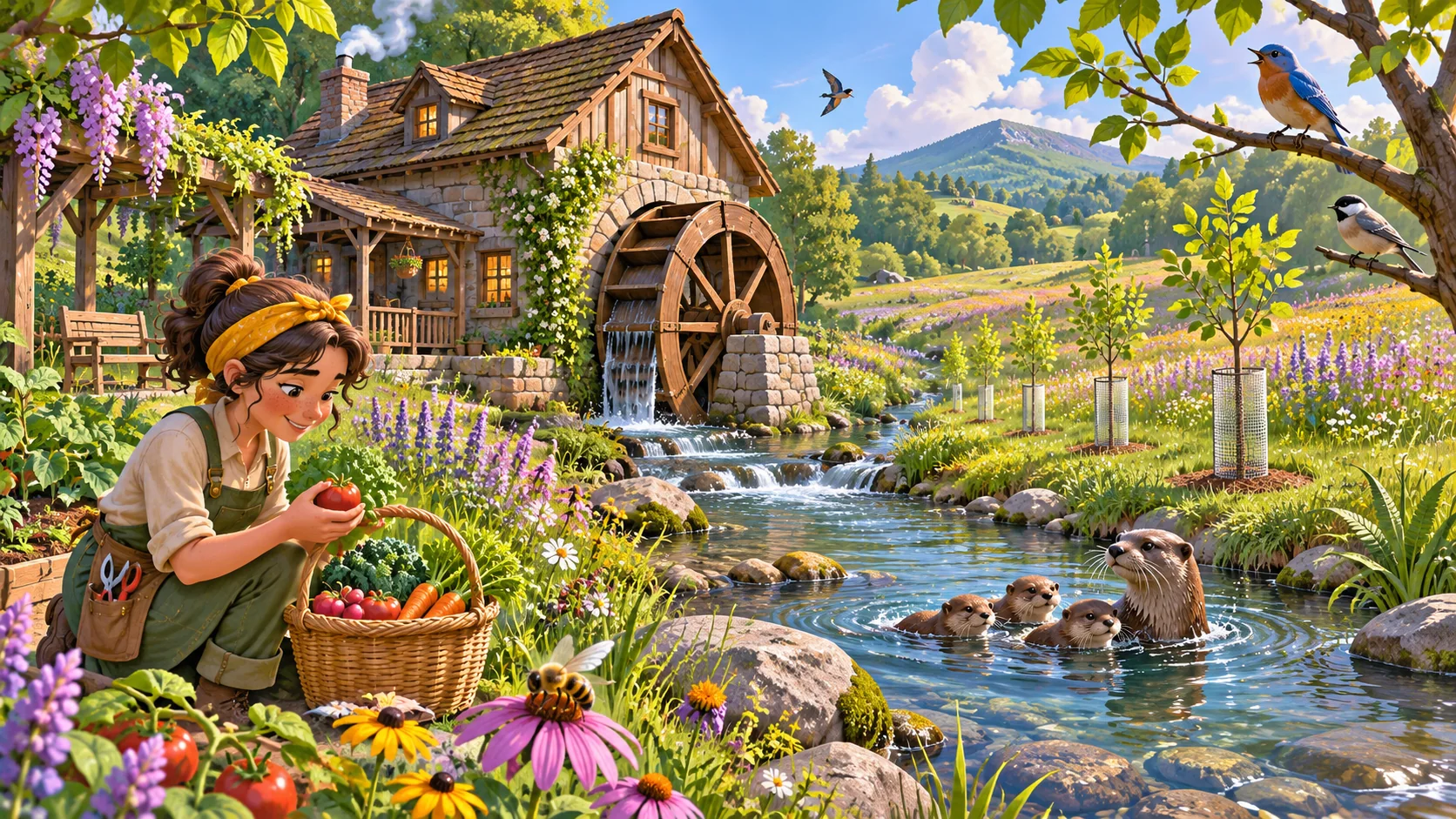
Revise the daily production order
Build the daily tick and inventory first, then add habitat actions, the three creature rules and the Mill recipe. Replay the four-day trace to confirm the starting plank count and target are reachable. Creature behavior here is a fictional production mechanic, not a claim about real ecological rates or balance testing.
Read the related restoration simulation guide.
Try the SEELE AI game maker workflow.
Frequently asked questions
Are creatures treated as inventory resources?
No. Bees, songbirds and beavers are persistent habitat contributors. The player cannot capture, trade, consume or purchase them; their presence depends on restored conditions and their outputs are renewable. Their visible presence is a habitat state, while Berries, Saplings and Clear Water are separate stored outputs.
How does the production chain create restoration materials?
Bees create Berries when Meadow and Hedge conditions qualify. Birds use a Berry to spread one Sapling once Grove condition is high enough. Beavers at a restored Creek filter Sediment into Clear Water when a Lodge is placed. The output chain is conditional: work on the habitats first, then let the next daily ecosystem phase produce its results.
Check Godot's official Resource reference.
Why do outputs happen before work actions?
The ecosystem phase runs at the start of each day, before the player’s two actions. Raising a habitat condition therefore changes creature eligibility for the next daily phase, not retroactively for the one that already ran. The daily panel should show the phase order so the player can tell when a newly restored condition will affect production.
Is this an ecological model?
No. The thresholds, output rates, four-day schedule and repair recipe are fictional game rules chosen for a compact prototype. They are not measured ecosystem data, a playable simulation, user research or evidence of balance. The thresholds, resource yields and restoration schedule are fictional prototype parameters that need implementation and playtesting.