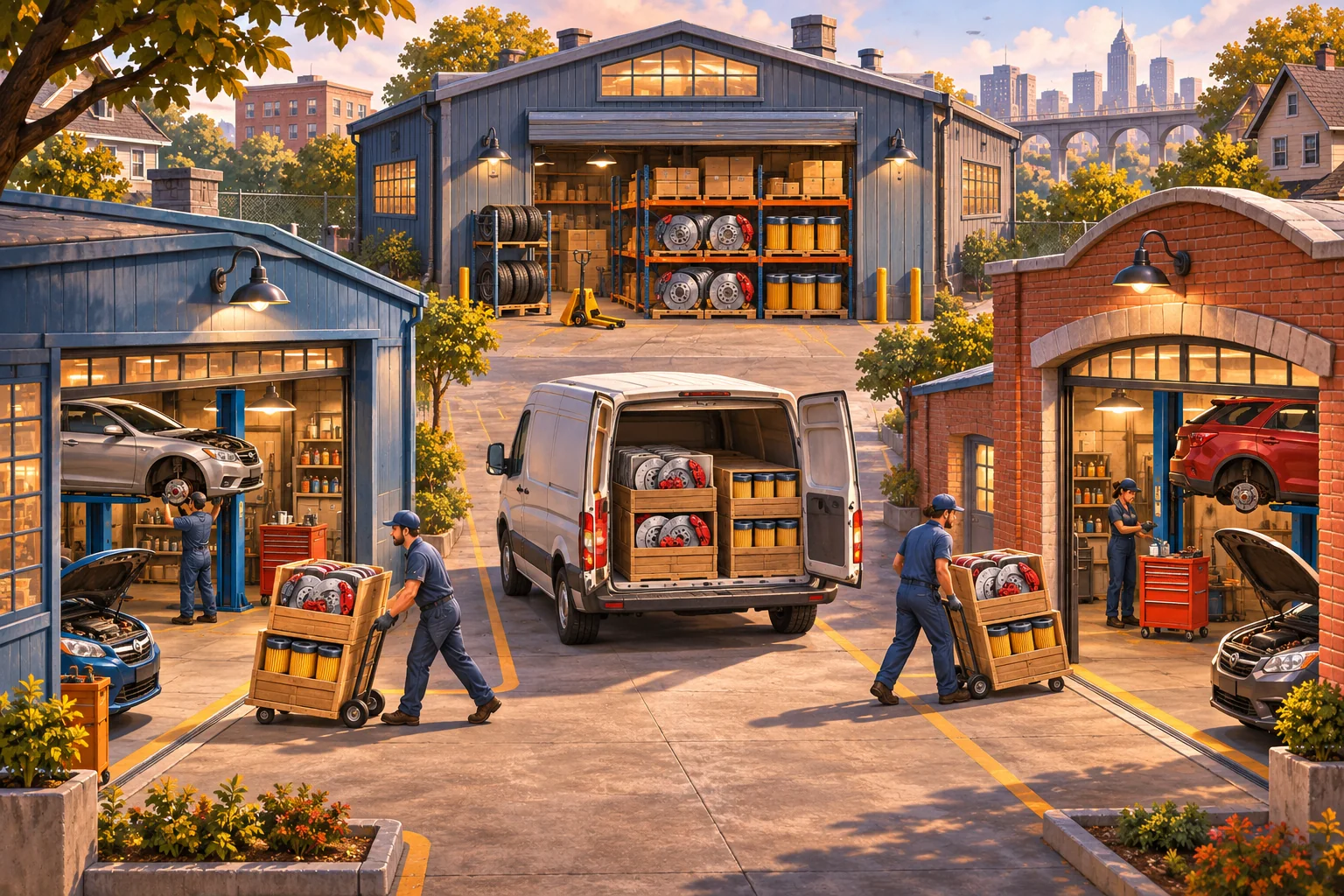
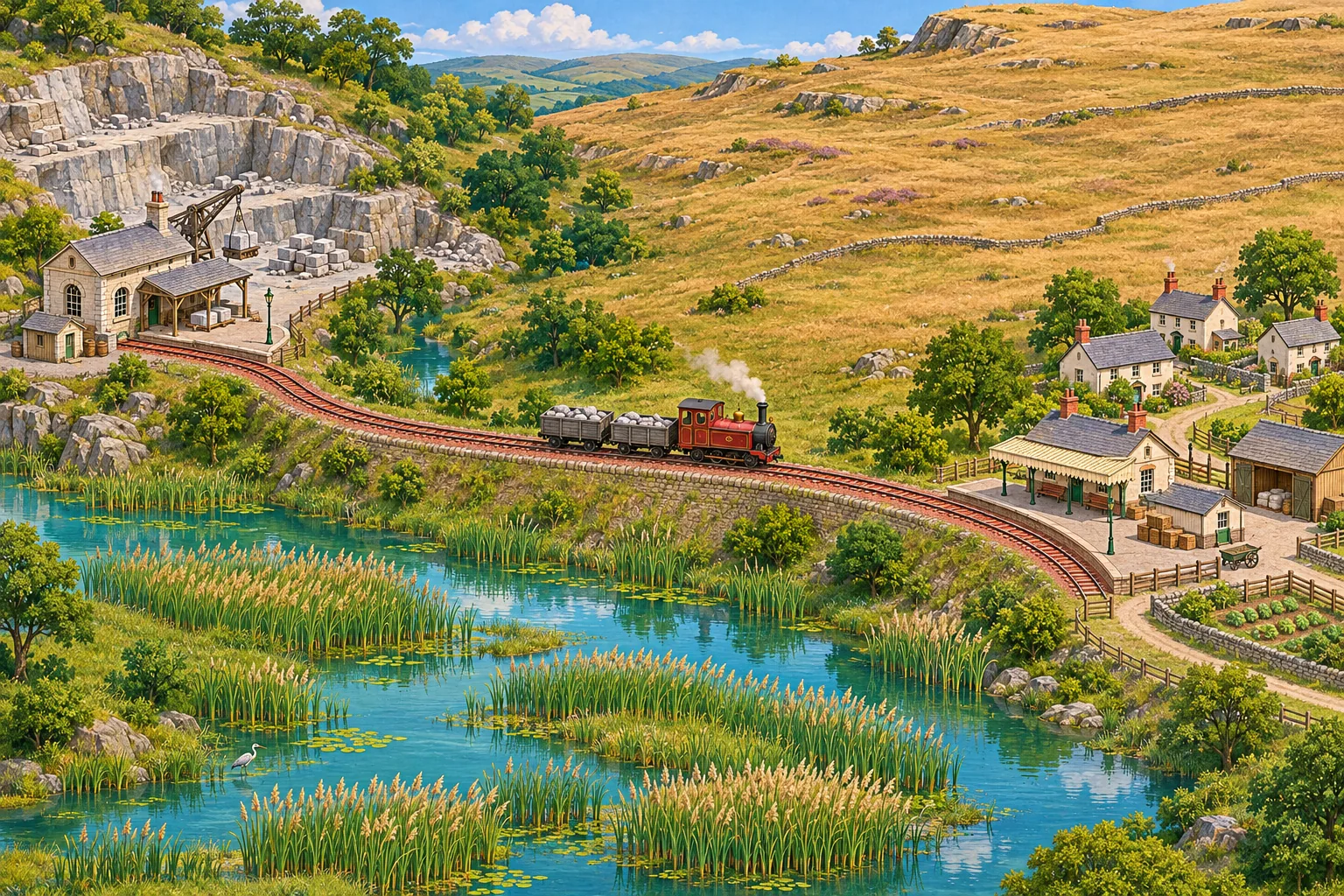
A railway management game can make track planning restore the world around the line. Build a small resource cycle in which a mine supplies a mill, the mill supports a pump, and the pump returns water to farms. One missing rail connection leaves downstream sites idle. Reconnecting it should visibly change their state.
Map a small resource cycle
Use four nodes: ore mine, mill, pump and farms. The mine sends a fixed cargo unit to the mill; the mill enables the pump; the pump restores water; farms then produce food for the settlement. Keep quantities and processing times fixed for the first experiment. Show which connection is missing on the map.
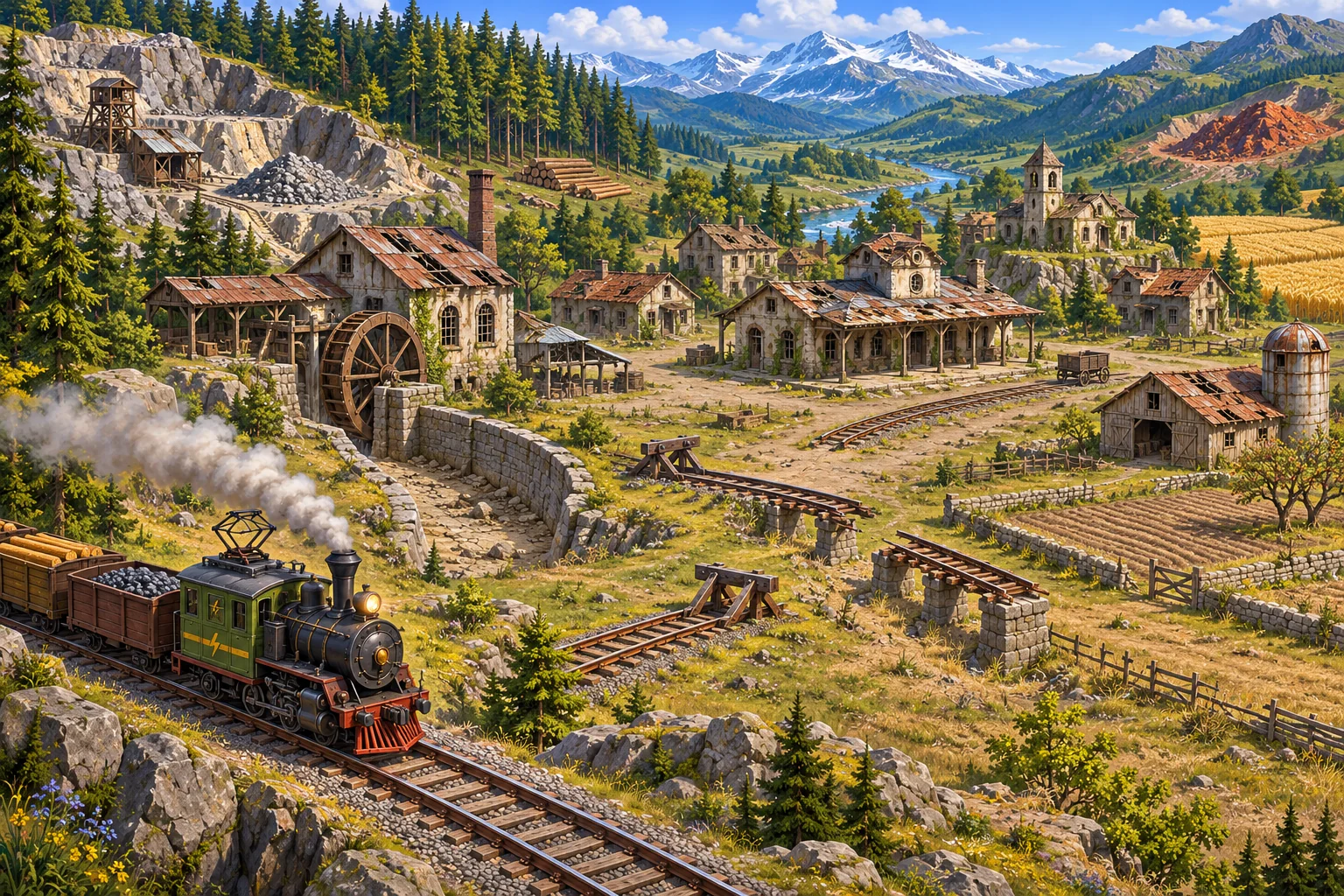
Make each node’s input and output visible. This lets players follow the chain without guessing whether a building is inactive because of missing cargo, water or track. The network should be small enough to inspect at a glance.
Reconnect the link to restore downstream sites
In the broken state, the rail link from the mill to the pump is unavailable. Ore can reach the mill, but no water returns to farms and the settlement remains in a dry state. When the missing link is rebuilt, the pump becomes reachable, farms receive water and food production resumes.
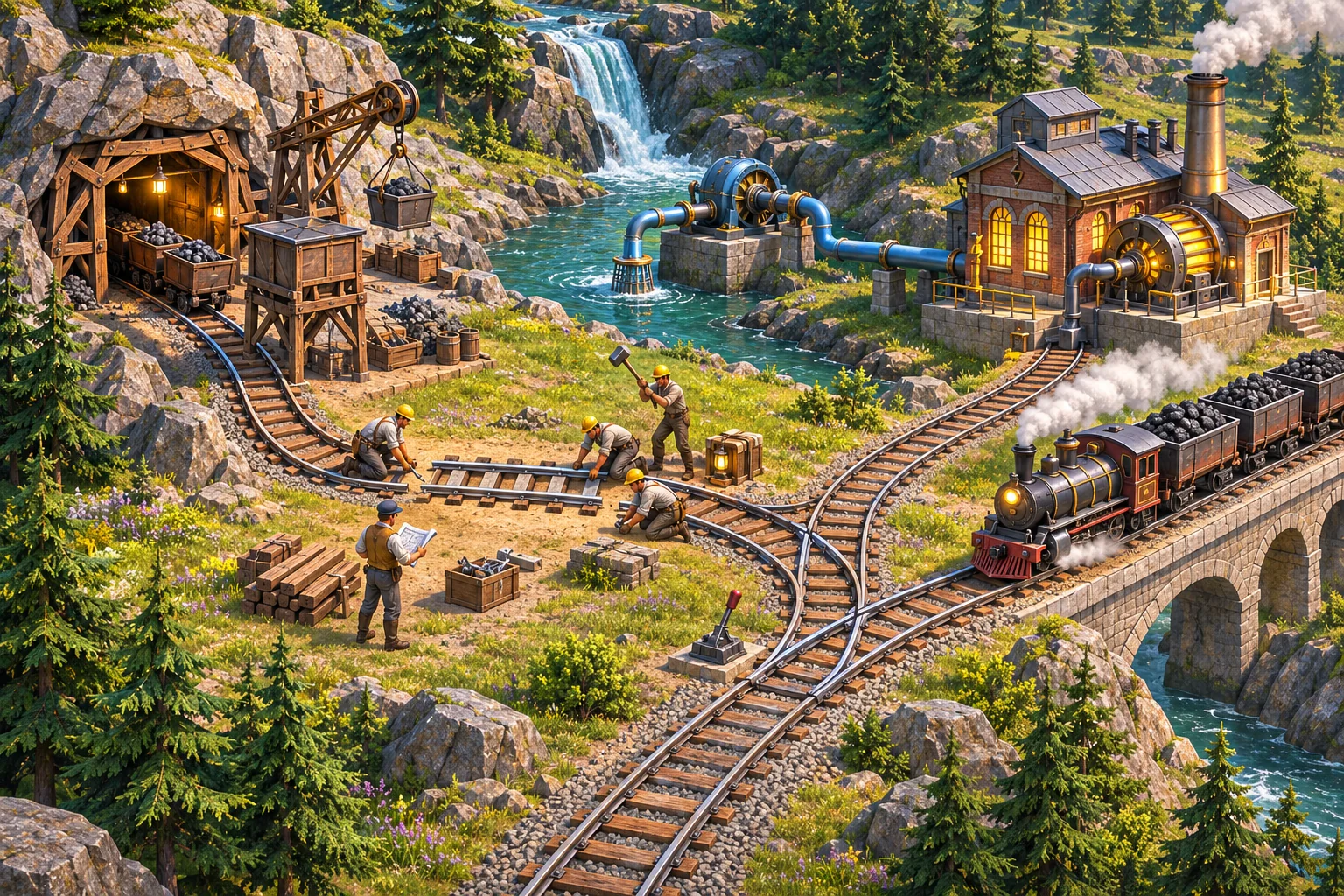
Keep the restored link in the map after the next train passes. The repair should change the network state, not merely trigger a short animation. If the player removes the link again, downstream production should stop on the next update.
Replay disconnected and connected network states
The local replay uses a fixed directed graph and one cargo unit. With the mill-to-pump edge missing, the pump is unreachable from the mine and farms remain dry. With that edge restored, the pump becomes reachable, farms receive water and the settlement state changes to restored.
| Network state | Pump reachable | Farm water | Settlement |
|---|---|---|---|
| Link missing | No | Off | Dry |
| Link restored | Yes | On | Restored |
This deterministic check verifies graph reachability and downstream flags only. It does not model train schedules, congestion, pathfinding, production rates or economic balance. Those systems need separate experiments after the resource chain itself is easy to follow.
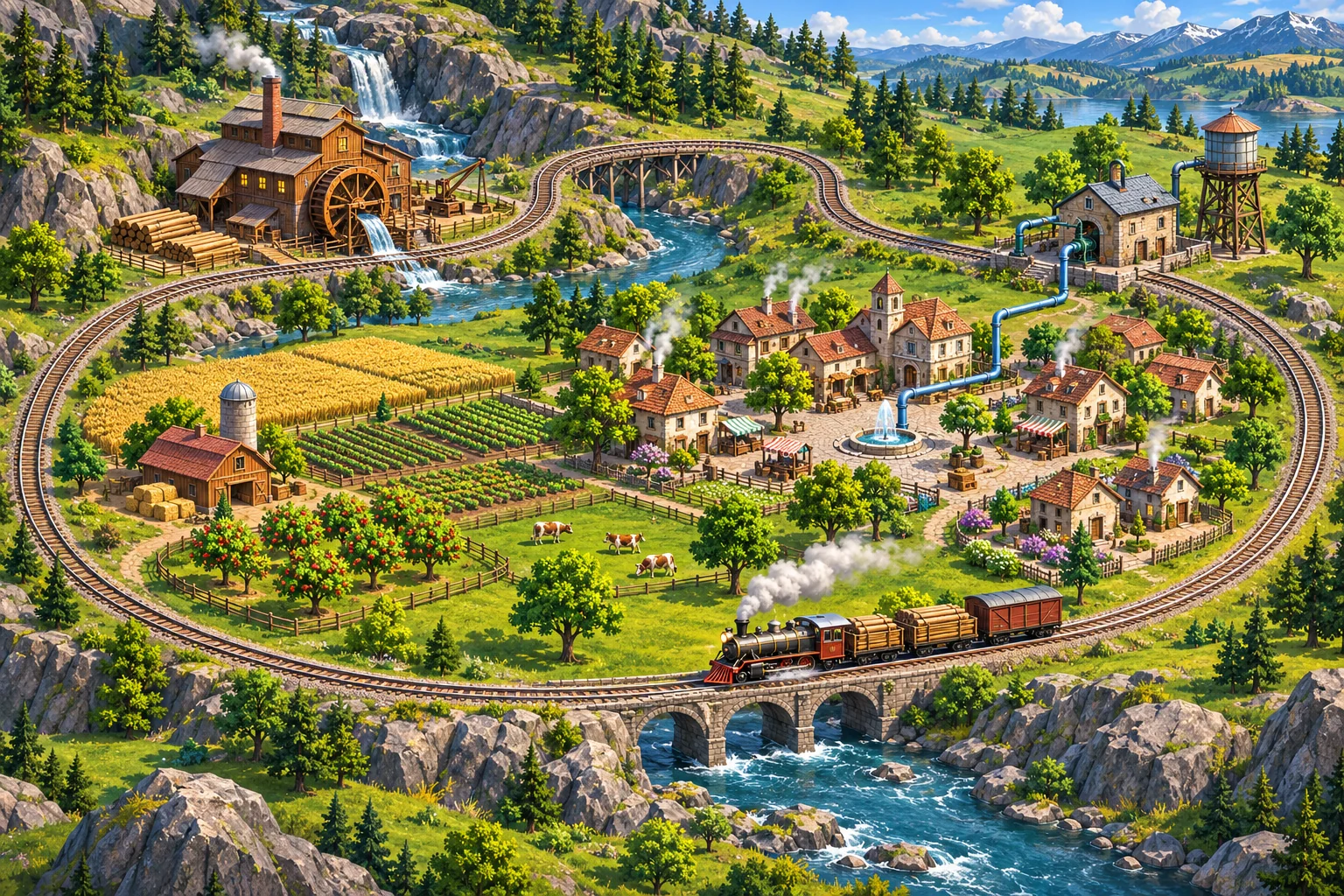
Prompt for a restoration loop prototype
Ask an AI game maker for a compact railway management prototype with a mine, mill, pump, farms and settlement. Start with one broken link between mill and pump. When the player reconnects it, let the train deliver the fixed cargo, the pump restore farm water and the settlement return to an active state. Show each node’s input and output and add a reset to compare both networks.
Once the cycle is clear, add schedules or variable cargo one at a time. Keep the first test focused on whether a track connection can restore the resource chain and change the map.
Start a railway management prototype in SEELE
Frequently asked questions
How many resource nodes should the first prototype use?
Use only enough nodes to show one clear dependency chain: mine, mill, pump and farms. A compact graph makes it possible to see which connection blocks downstream output. Add more materials or branches after the player can explain why reconnecting the missing link restores the settlement.
Should the restored state persist after a train passes?
Yes, keep the rail connection and resulting network state until the player changes them. The next update can stop production if the link is removed. Persisting the change makes restoration a planning decision instead of a temporary animation that resets without explanation.
What should I test before adding schedules?
Compare the same graph with the mill-to-pump link missing and restored. Check pump reachability, farm water and settlement state while cargo stays fixed. This isolates the resource cycle before train timing, congestion and production rates introduce additional causes. Keep all inputs fixed.