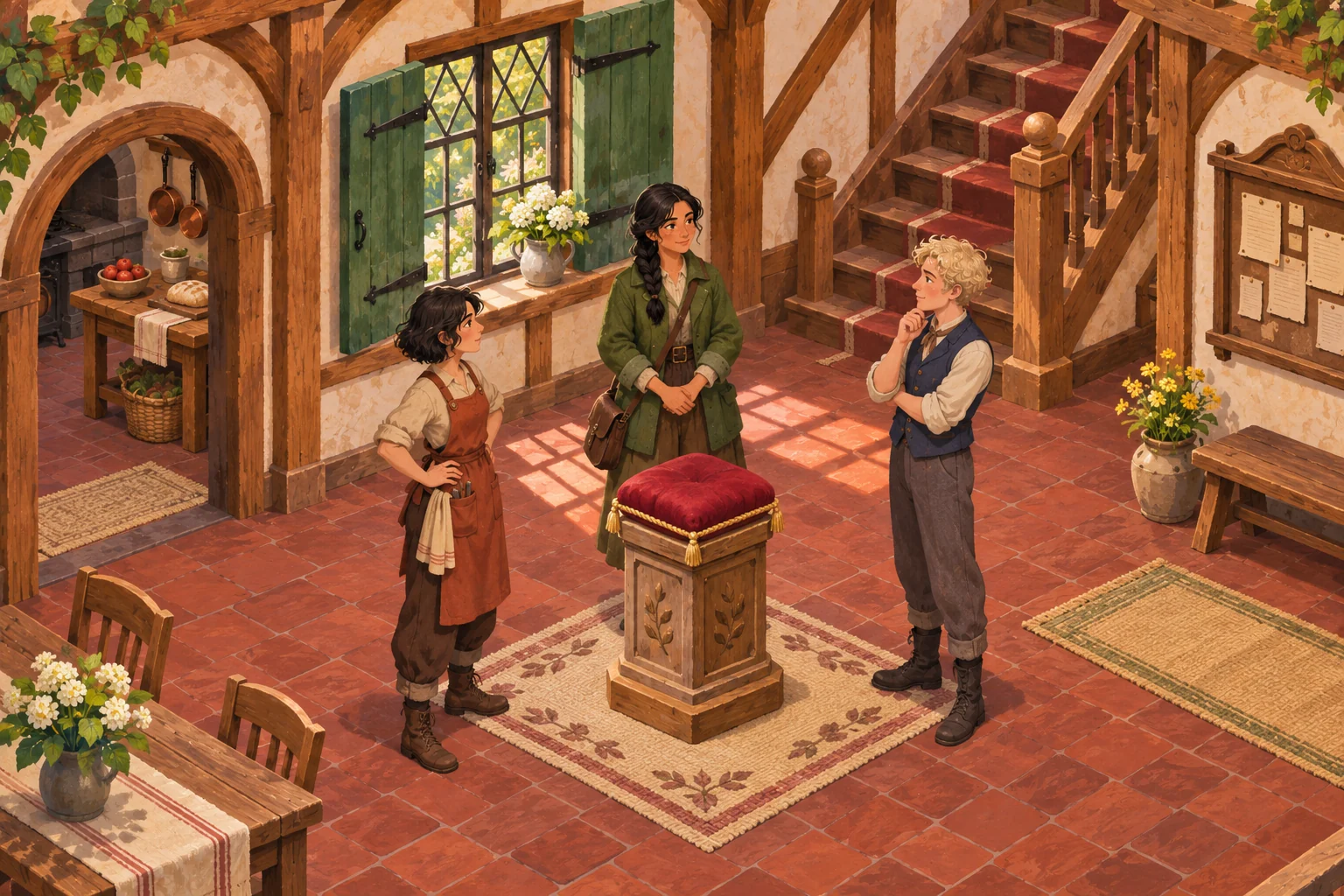
The festival bell vanishes from Bracken Hall at noon. The posted schedule places Rowan in the hall, Mira in the greenhouse and Vale in the attic. A kitchen witness places Rowan elsewhere. In this fictional mystery, a schedule tells players where someone was supposed to be. The mystery begins when someone can show where they actually were.
Pick one time window and one missing object
Give the first round three residents and one noon action per person. Tell players that one of the three moved the bell from the hall at noon. Another clue says the bell went upstairs. Treat noon as a single game slot for the three locations so players cannot explain two conflicting placements by walking between them.
Put the schedule on the table before dealing private clues. It gives players something to question without solving the case for them. Ask the group to reconstruct the noon slot and name where they would search.
Make each player bring evidence the others need
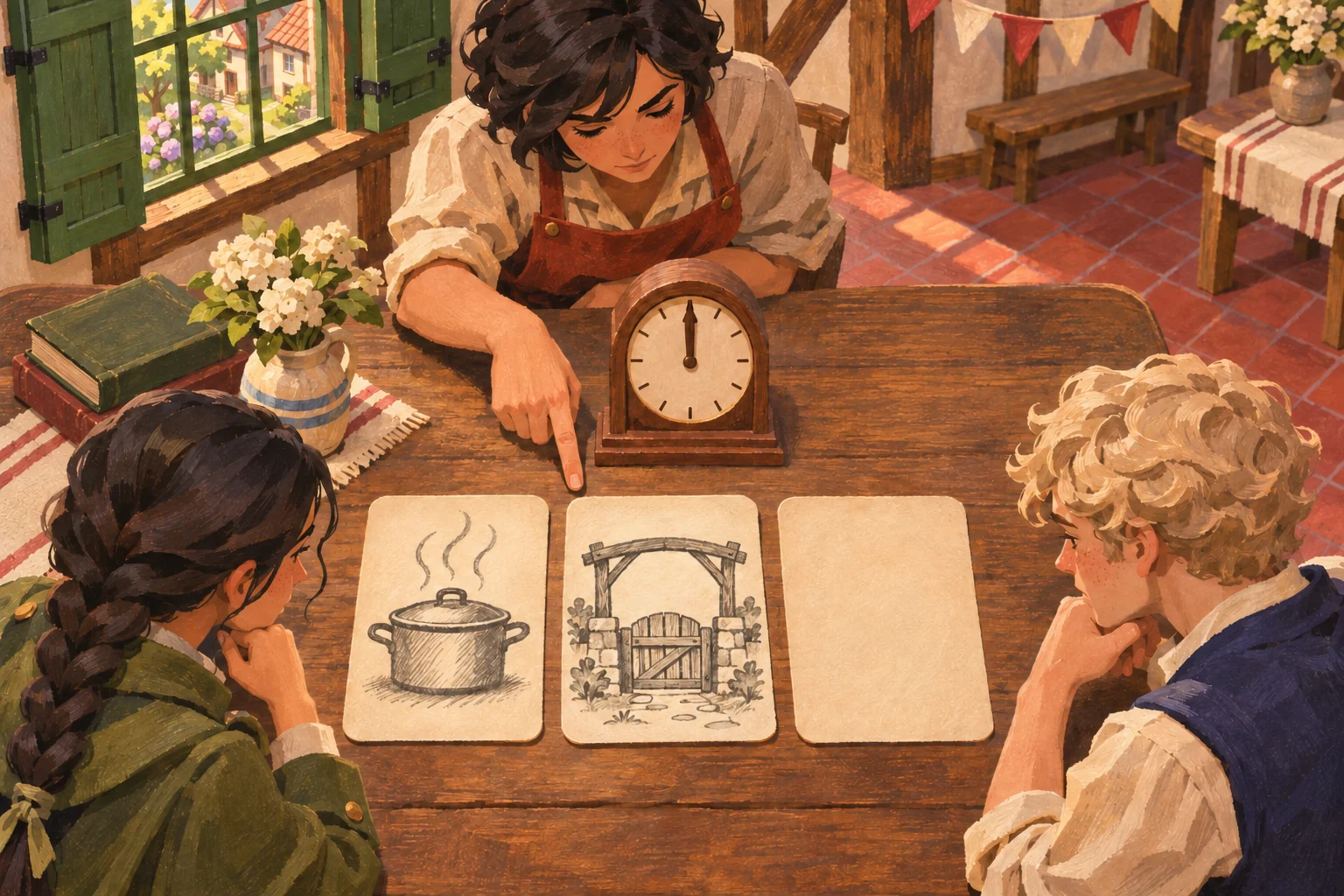
Give one player a cook’s account that places Rowan in the kitchen at noon. Give another a gatekeeper’s account that places Mira at the west gate. A third player has a porter’s report of the bell being carried upstairs from the hall. The porter could not identify who carried it.
Mark the schedule as planned and the two location cards as observed. Let players pin a card to the noon slot and explain what it rules out. Keep a candidate in play if there is no observation showing they were elsewhere.
Check that missing evidence leaves real uncertainty
A local rule replay treated the schedule and eyewitness cards as confirmed placements in its first version. That made Rowan and Mira appear in two rooms at once and left the case inconsistent. The revised rule used the schedule as a starting expectation. With both observed placements, only Vale remained possible. Removing the gate card left Mira and Vale as candidates.
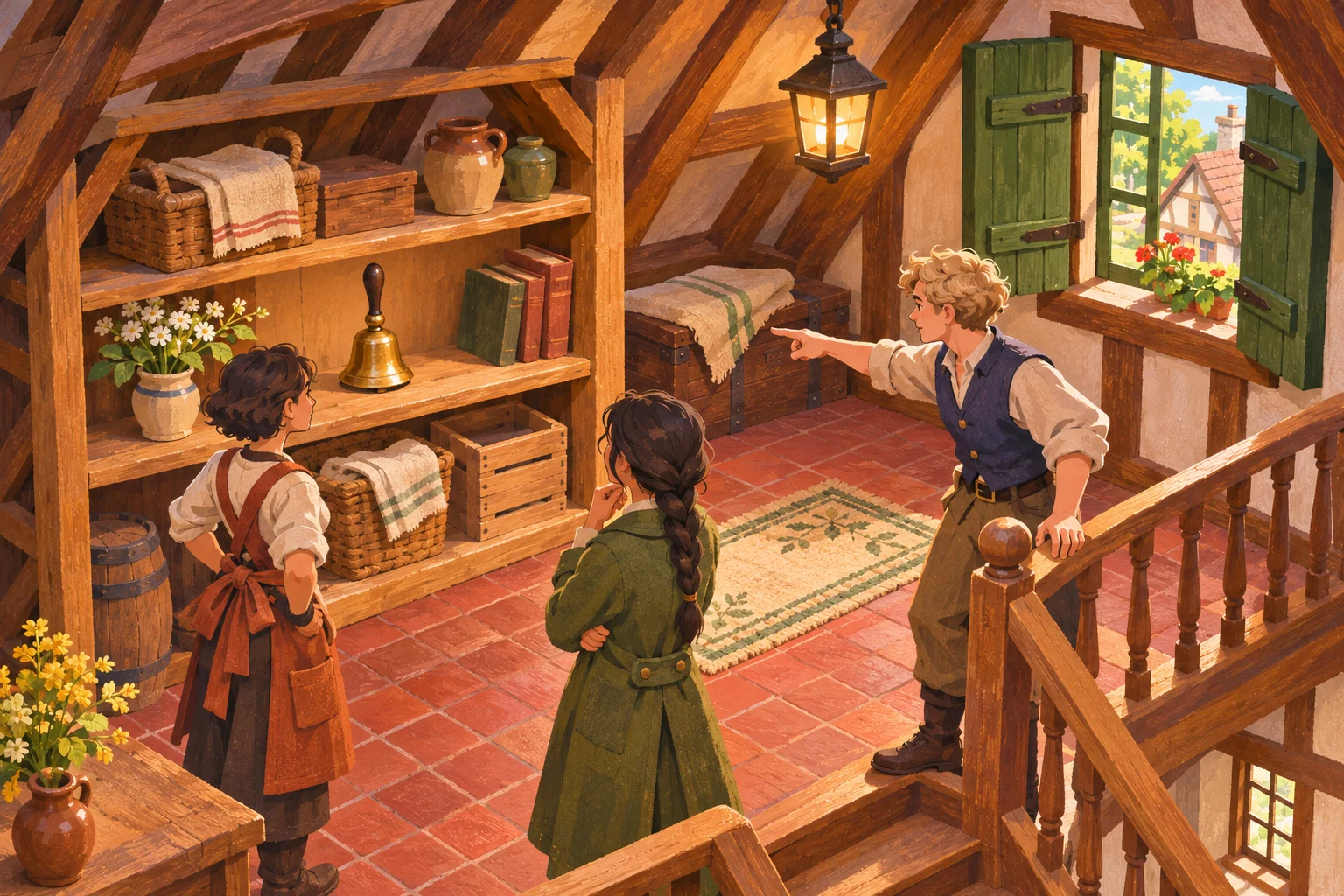
Let players verify the attic shelf after stating the deduction. Finding the bell establishes where it went. Leave the motive open unless you add a separate clue. During a later playtest, check whether players can explain why the schedule did not clear Vale.
Ask AI to prototype one round of the mystery
Start with a card reveal, a shared timeline and a final search. Exercise the full evidence set and the version with the gate card withheld.
Build a one-round social deduction prototype in Bracken Hall. Show a noon schedule with Rowan in the hall, Mira in the greenhouse and Vale in the attic. Deal private reports placing Rowan in the kitchen, Mira at the west gate, and the bell leaving the hall for upstairs. One resident moved it. Let players share and label the cards as planned or observed, identify possible carriers and search the attic. Keep candidates when a report is missing. Include a reset.
SEELE’s free AI game maker describes creating a first version from text and refining it with follow-up prompts. Start with the round above and test both clue sets before adding more times or suspects.
Start the timeline mystery in SEELE
Frequently asked questions
How can an innocent character have a broken routine?
Give an innocent resident a practical reason to be elsewhere, such as being called to the kitchen. Offer evidence of the actual location and timing. That way, breaking a routine raises a question for the players to investigate and does not decide guilt by itself.
What should happen if two candidates are still possible?
Let the group ask for a missing observation or submit a shortlist. If the round expects a single answer, check whether the unrevealed card would distinguish the two people. A believable uncertainty should lead to a next action, such as interviewing the gatekeeper again.
When should I add an unreliable witness?
Wait until players can separate the schedule from the observed events. Then add one account with a clearly limited view, such as seeing only a coat by the stair. Give the group a way to check it against an independent clue before committing.