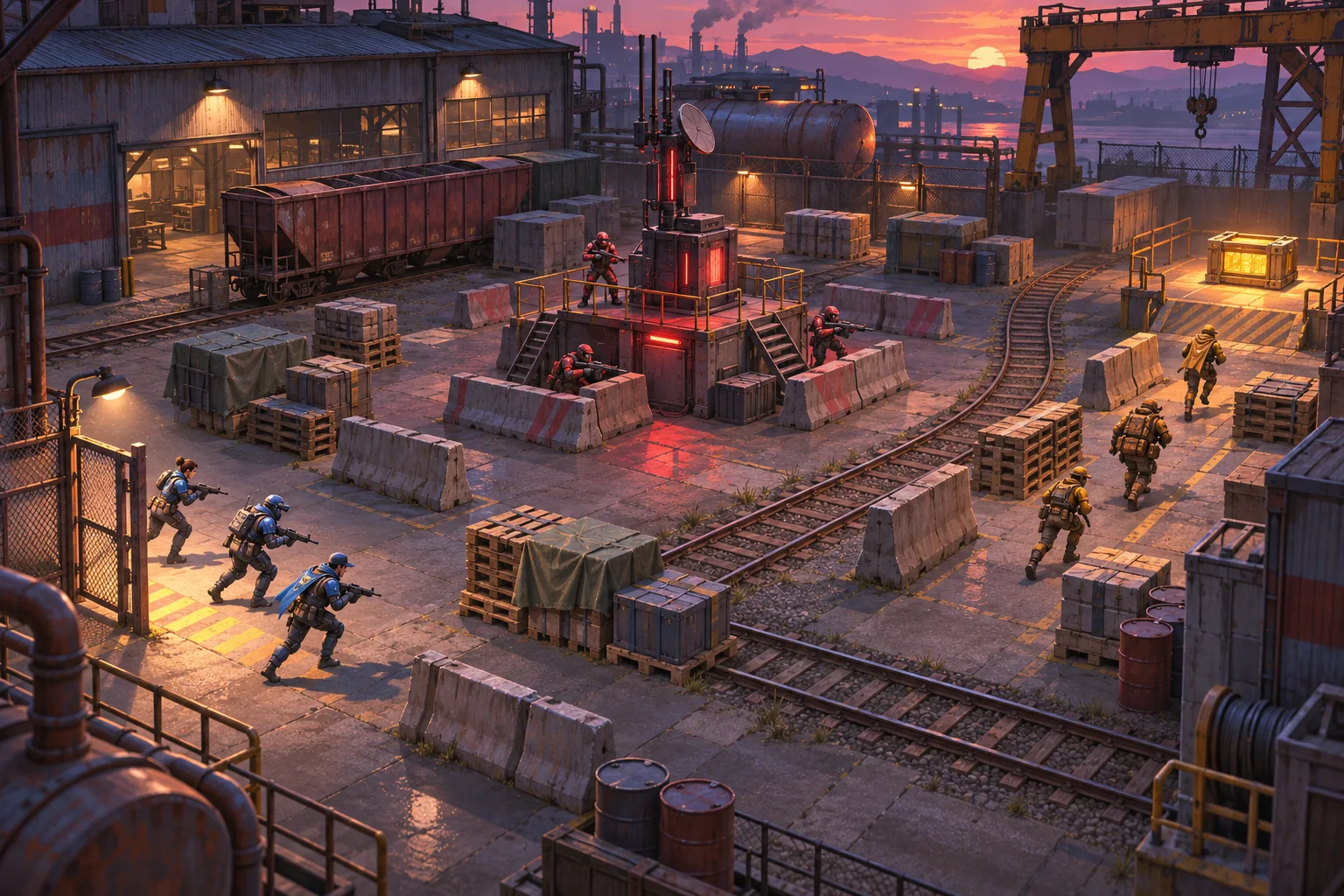
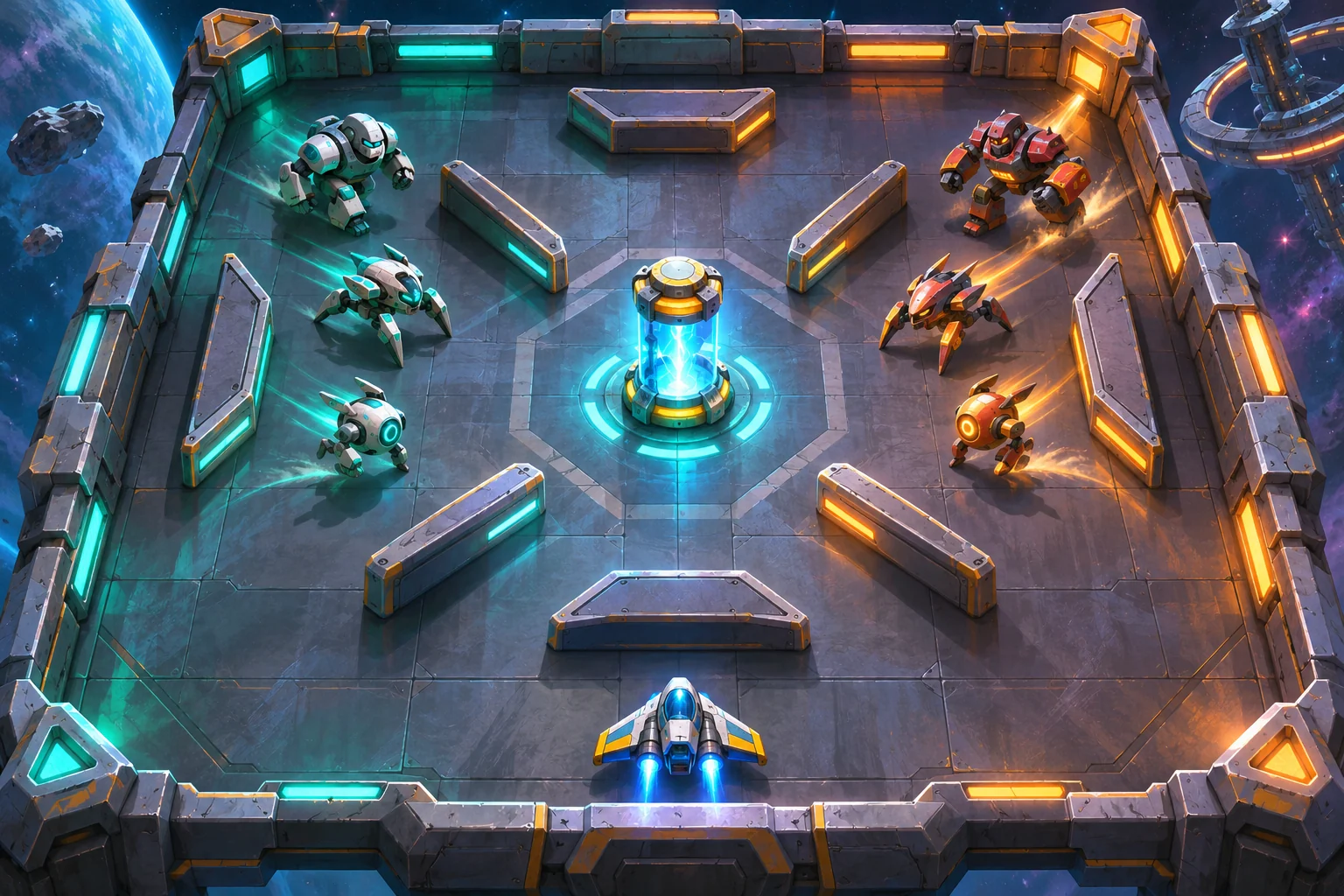
In Rival Charge, two enemy factions share the arena with the player and compete for the same energy caches. Nearby rivals fight over space instead of always targeting the player. The group that reaches a cache first gains a brief shield, changing the pressure around the arena. Automatic attacks still let the player focus on movement and upgrade choices while the enemy conflict reshapes each wave.
Make rivalry part of the survival loop
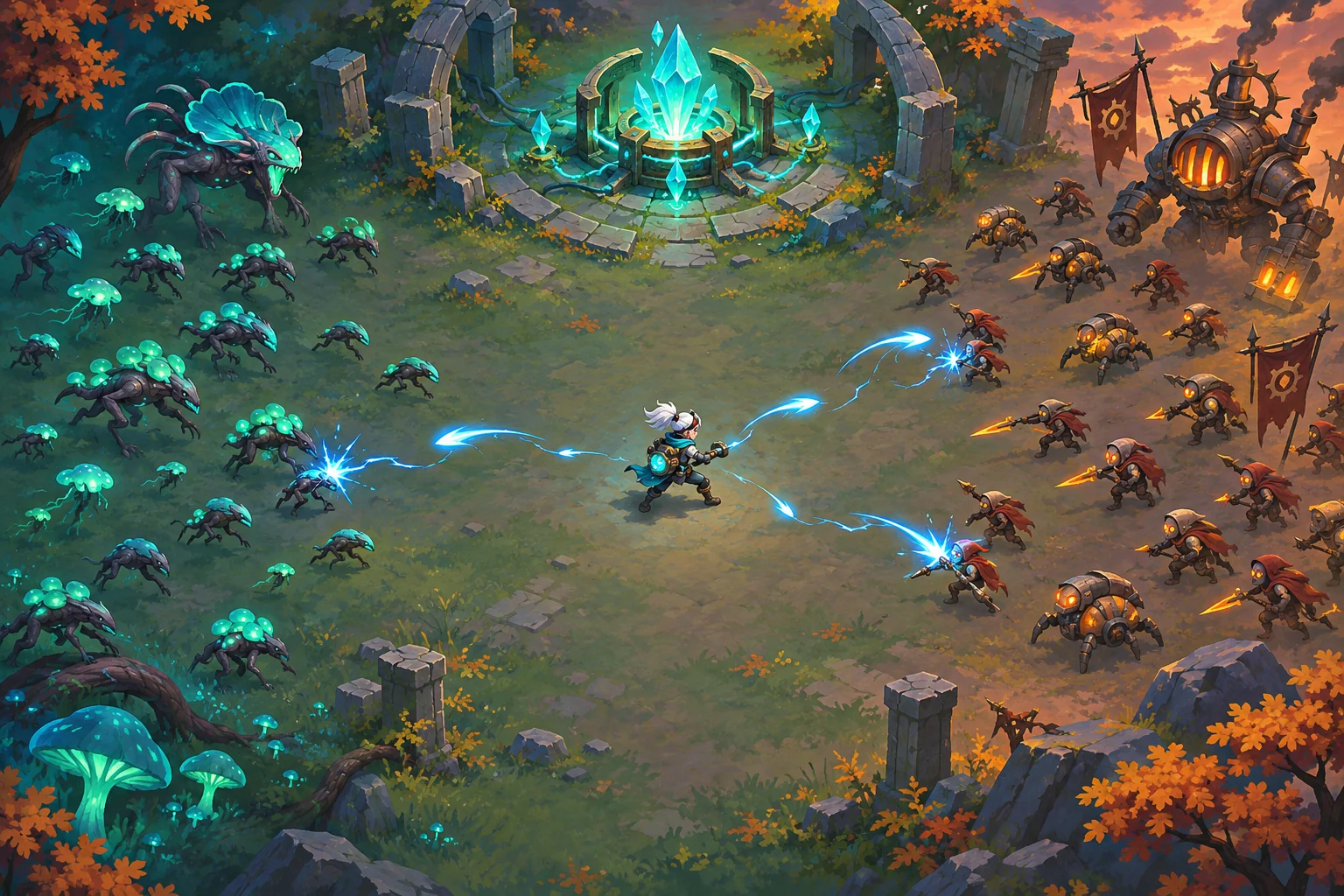
Give each faction a clear color and silhouette. A nearby cache or rival can take priority over the player; when neither is close, enemies pressure the player as usual. Keep the first arena small, with one cache between two starting groups and a safe edge for learning movement. Show cache ownership and shield duration so the player can predict how the next wave may change.
| Enemy state | Target priority | Arena effect |
|---|---|---|
| Rival nearby | Contest rival or cache | Reduces direct pressure on player |
| No local contest | Move toward player | Restores expected survival threat |
| Cache claimed | Claimant gains brief shield | Changes the safest route |
Make the cache a tactical signal rather than a random bonus. The player may let factions weaken one another, then move in to collect an upgrade, or eliminate a group before it reaches the cache. Keep the reward visible and the shield short enough that a claim changes a decision without making the arena unwinnable.
Give both factions a readable target rule
Use a simple priority: if a rival or cache is inside the contest radius, choose the nearest valid one; otherwise target the player. Break equal distances with a stable rule such as faction order, not a random roll. When two groups contest a cache, the first arrival claims it; a tie leaves it neutral until the next update. This makes replays and player expectations easier to follow.
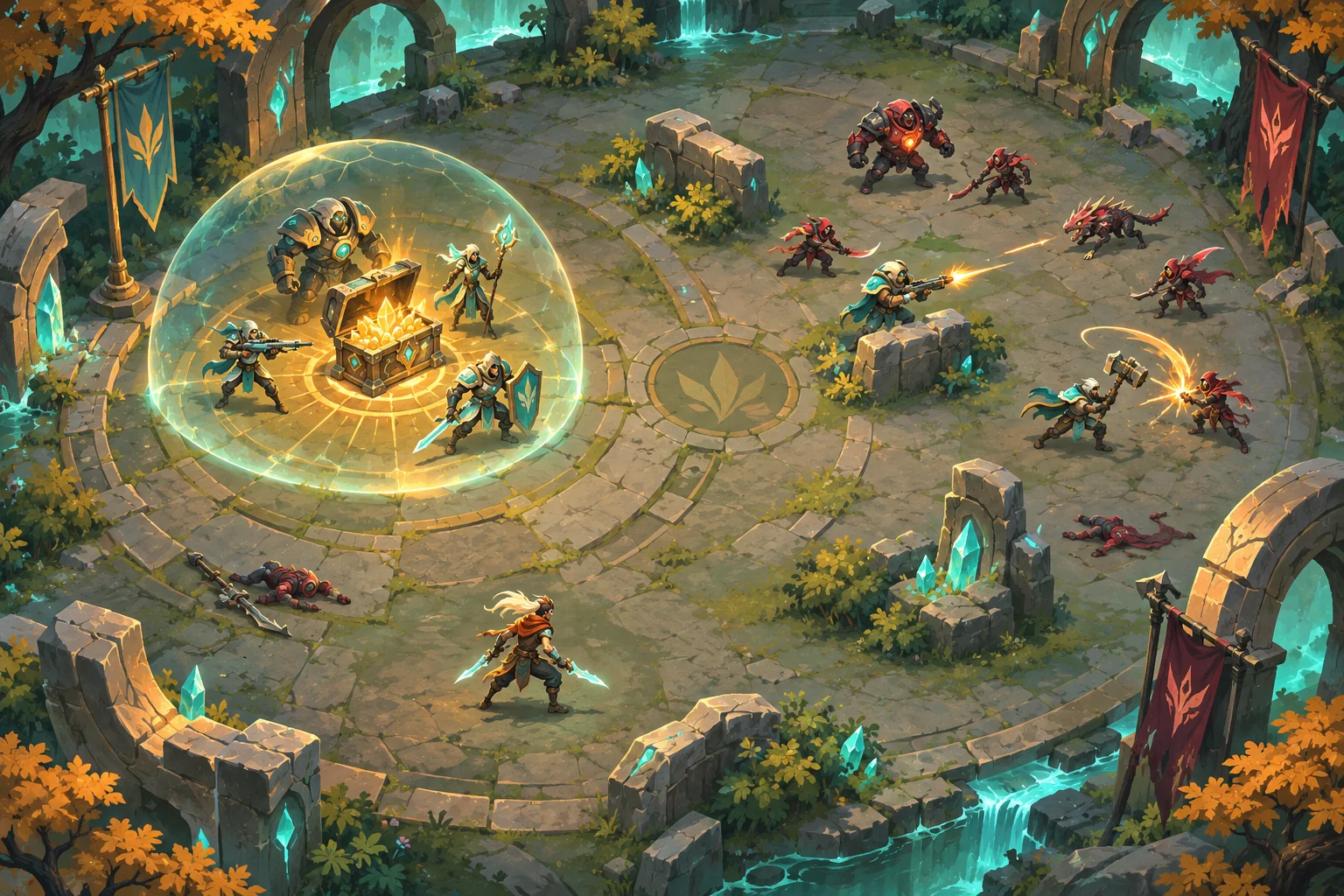
Show intent with a small target marker or brief wind-up. Keep automatic attacks visible so players can tell whether damage came from their build or a rival clash. Do not let a hidden targeting switch instantly reverse an enemy; use a short transition when the chosen target changes.
Replay the target-selection revision
The deterministic local test starts with two rival enemies 2 units apart and the player 4 units from each. At the initial rivalry radius of 1.5, both choose the player. Widening the radius to 2.5 makes them choose one another. A separate rival 4 units away keeps targeting the player. For the cache rule, an earlier arrival claims the cache, while an equal-time arrival leaves it neutral. This checks target priorities and tie handling only, not damage or full pathfinding.
| Test | Initial rule | Revised rule |
|---|---|---|
| Rivals 2 units apart | Both target player | Rivals contest each other |
| Rival 4 units away | Target player | Target player |
| Equal cache arrival | Undefined tie | Cache remains neutral |
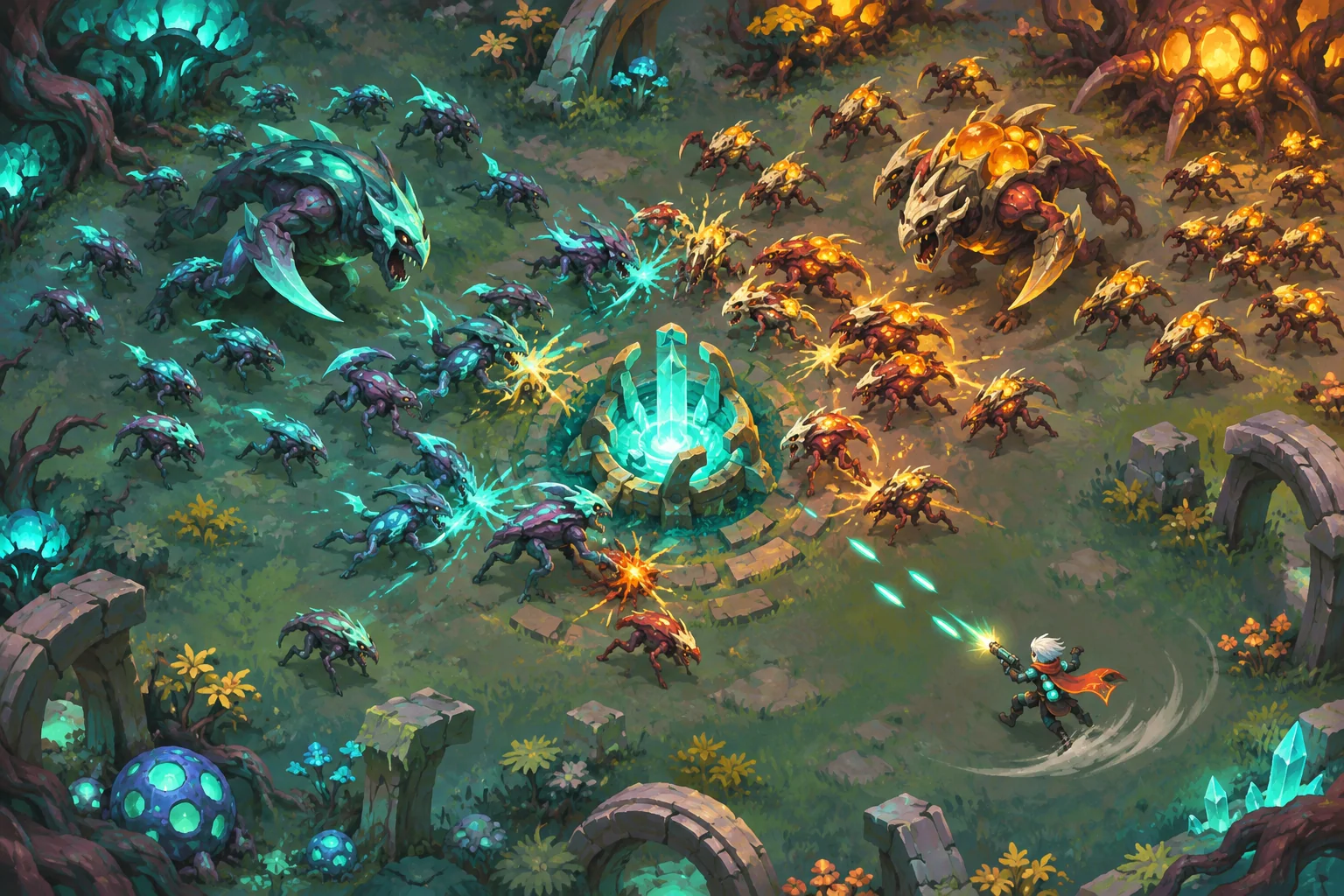
In a playable build, test whether players notice the rivalry, understand the cache claim and can still read incoming attacks. Tune shield duration, cache spacing and upgrade drops after observing real runs; the local test does not establish balance.
Start with one contested arena
Ask an AI game maker for one small arena, two color-coded enemy groups, a central energy cache, automatic player attacks and a visible upgrade choice. Begin with the target rule and cache claim only. Add more factions or cache effects after the first room makes it clear why enemies are fighting and how their conflict changes the safest route.
Create Rival Charge, a top-down survivors-like prototype where two enemy factions contest a shared energy cache while the player survives with automatic attacks and upgrade choices. Make a compact arena with two color-coded groups and one cache between them. Enemies contest a nearby rival or cache within a 2.5-unit radius; otherwise they target the player. The first faction to reach the cache claims it and gains a short visible shield. Equal arrival leaves the cache neutral. Keep attacks readable, add a safe restart and show target intent. Use deterministic tie rules and do not hide damage sources.
Start a survivors-like prototype in SEELE
Frequently asked questions
How can enemy groups compete without making the arena confusing?
Give factions distinct colors, silhouettes and a stable target priority. Show the cache state and briefly indicate target changes. Keep the first test to two groups and one objective so players can see when rivals are fighting and when they are still a threat to the player.
Should enemies always attack the player in a survivors-like game?
Not necessarily. A nearby rival or shared objective can create temporary relief and a new route choice. Keep the player as the fallback target when no contest is nearby, and make rival attacks readable so reduced pressure still feels earned by the arena rules.
How do I test whether rival combat is balanced?
Replay fixed starting positions and record target choices, cache ownership and shield state before changing damage or spawn rates. A local rule test can verify priorities and ties, but a playable run is needed to judge survival pressure, upgrade pacing and whether the player understands the enemy conflict.