# How to Make an Aquarium Management Game with AI
An aquarium management game needs more than tanks to decorate. Give the player a loop where habitat choices, exhibit readiness, visitor flow and operating resources affect one another. Then show the consequences quickly enough for the player to make a second decision. AI can help turn that loop into a brief, screen plan and small prototype, but it should not invent animal-care instructions.
This guide uses Tideglass Aquarium, a fictional design example. Its meters are game abstractions, not real water measurements or husbandry advice. A local playable mock accompanies the article so you can inspect a basic loop.
Start with a management loop
Write the loop as player decisions and observable consequences: choose an exhibit plan, allocate a care action, review simulated habitat status, open or pause visitor access, then inspect the budget and plan the next turn. Each action should change a visible state. If all choices lead to the same “happier visitors” bar, the player is selecting decorations rather than managing a system.
For Tideglass, the unique tension is care capacity versus public access. Opening another exhibit can attract guests and earn simulated income, but it also consumes staff time and may leave fewer care actions for the next turn. Closing an exhibit buys time for maintenance while lowering visitor satisfaction. The player is not trying to maximize every meter at once; the challenge is choosing what to prioritize before advancing the day.
| Loop step | Player decision | Immediate signal | Later consequence |
|---|---|---|---|
| Plan | Assign a staff token to an exhibit | One care slot is reserved | That exhibit is eligible for a stability boost |
| Inspect | Read fictional habitat and guest indicators | Low, steady or strained labels | The next turn applies the selected plan |
| Open | Admit or limit visitors | Guest count and ticket income change | Crowd pressure affects the abstract exhibit rating |
| Review | Advance one day and compare | A change log explains deltas | Budget and staff capacity shape the next choice |
The language should help players reason about the system. “Assign one keeper to Coral Gallery” is clearer than “improve the tank.” “Visitors reach capacity” is clearer than an unexplained satisfaction penalty. Make cause and effect visible in both the interface and the AI prompt.
Use abstract habitat systems responsibly
A real aquarium cannot be reduced to a universal set of care numbers. Requirements vary by species and life stage. A review of fish welfare in public aquariums describes monitoring a range of parameters, including temperature, pH, ammonia, nitrite, nitrate, hardness, alkalinity, dissolved oxygen and chlorine or chloramines. The U.S. Fish and Wildlife Service’s classroom aquarium guide also emphasizes checking equipment and water conditions. These references are context for responsible boundaries, not a design recipe for a real aquarium: fish welfare review and U.S. Fish and Wildlife Service aquarium guide.
In a fictional management game, represent an exhibit with an abstract “stability” indicator and explicitly say it is a game variable. Do not label a made-up meter “safe ammonia,” prescribe a temperature, or imply that one click represents adequate animal care. If the game is meant to teach real practices, consult qualified aquatic-care specialists, select species-specific references, document the assumptions, and review the result with them before presenting it as instruction.
Design a prototype before decorating it
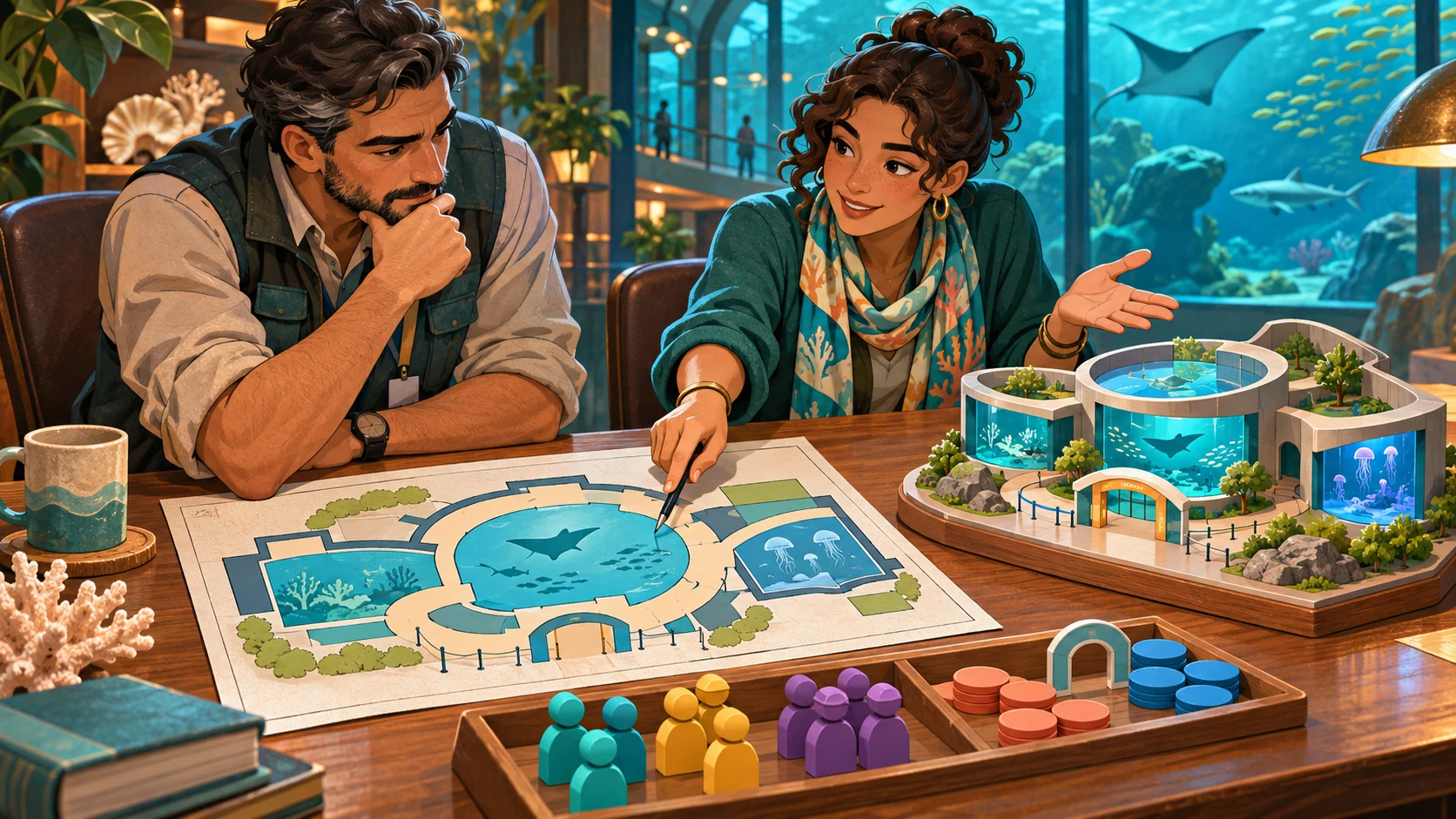
Start with a single exhibit, one staff token, a small guest counter, an operating budget and a day-advance button. Add only actions needed to reveal the central tradeoff. A first prototype might offer “assign care,” “open to visitors” and “advance day.” Show the previous state, the action and the resulting state together, so a player can understand what changed without guessing.

Use an AI prompt that requests behavior and state, not just a pretty aquarium: “Build a one-screen management prototype for a fictional aquarium. Include one exhibit, one staff token, abstract exhibit stability, visitor capacity, daily income and an advance-day action. Every action must show an immediate result and a short change log. Label all animal-care values as fictional game abstractions; do not give husbandry advice. Keep the state local and resettable.”
Then ask for one feature at a time. First require controls and state transitions. Next request a readable status panel and turn summary. Finally, ask for visual polish that does not hide the meters or controls. Test each stage before adding more exhibits, research trees or rare species.
Make visitor access part of the strategy
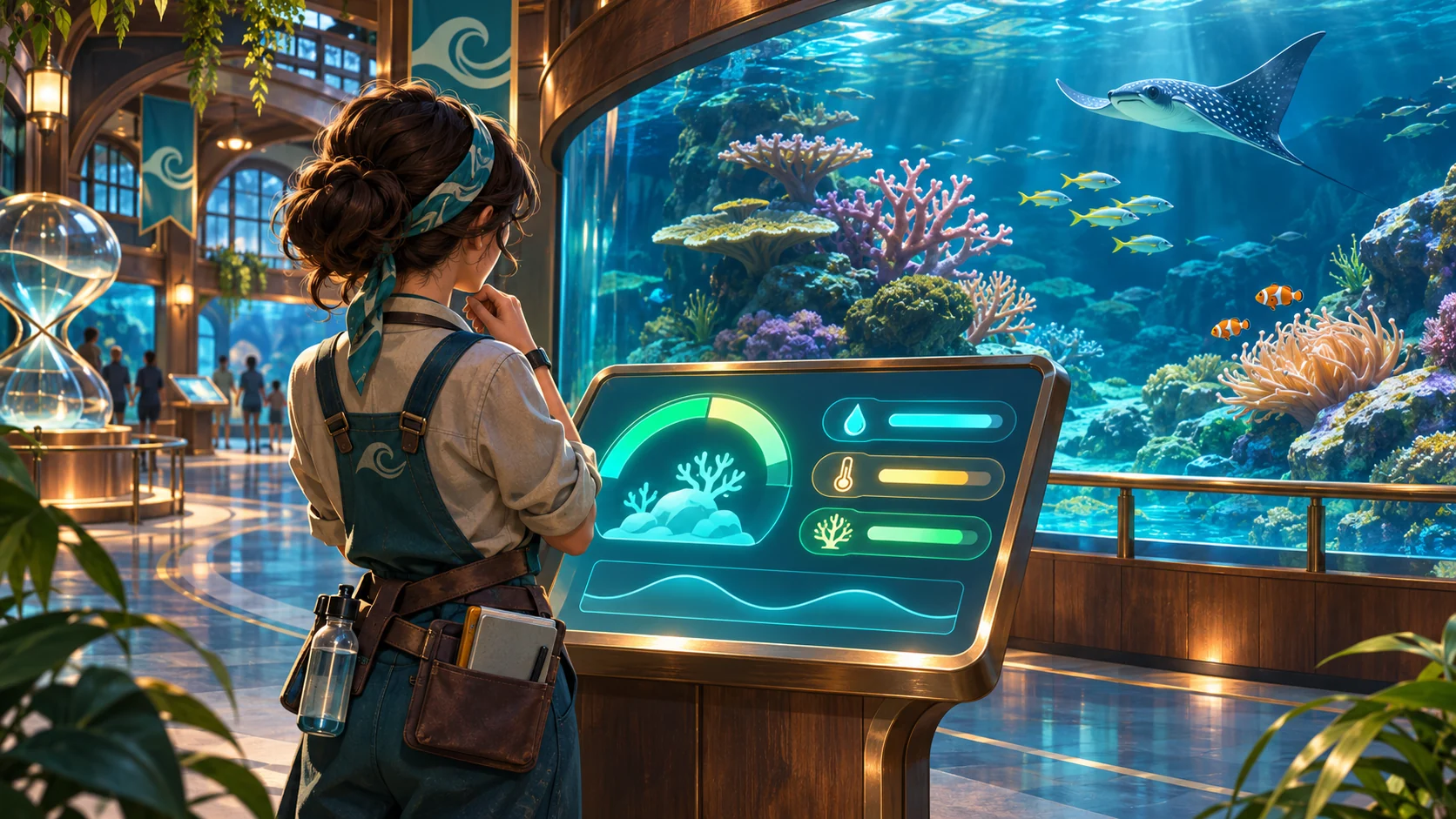
Visitor flow should interact with the management loop instead of living on a separate score screen. Opening a second gallery can increase the daily guest limit, but it also asks for another staff assignment. If a care action is skipped, the game can show a fictional “needs review” state and let the player reduce access until the exhibit is ready again. The result is a choice among competing priorities, not an arbitrary punishment.
Keep the rules legible. Show why a gallery is closed, how many staff actions remain, what a day advance will do, and whether income is an estimate or a guaranteed outcome inside the simulation. Provide a reset, pause or confirmation before an irreversible turn. These details matter because management games depend on players forming a mental model and correcting their plan when outcomes differ from expectation.

A useful first scope is a three-day scenario with two exhibits and one shared staffing pool. One exhibit can begin steady and the other strained. The player assigns care, decides which spaces to open, advances the day and reviews the log. Use invented values such as “steady” and “needs attention”; avoid real-world species labels and numeric care targets. This is enough to test whether the game communicates a tradeoff.
Iterate on what the local prototype actually shows
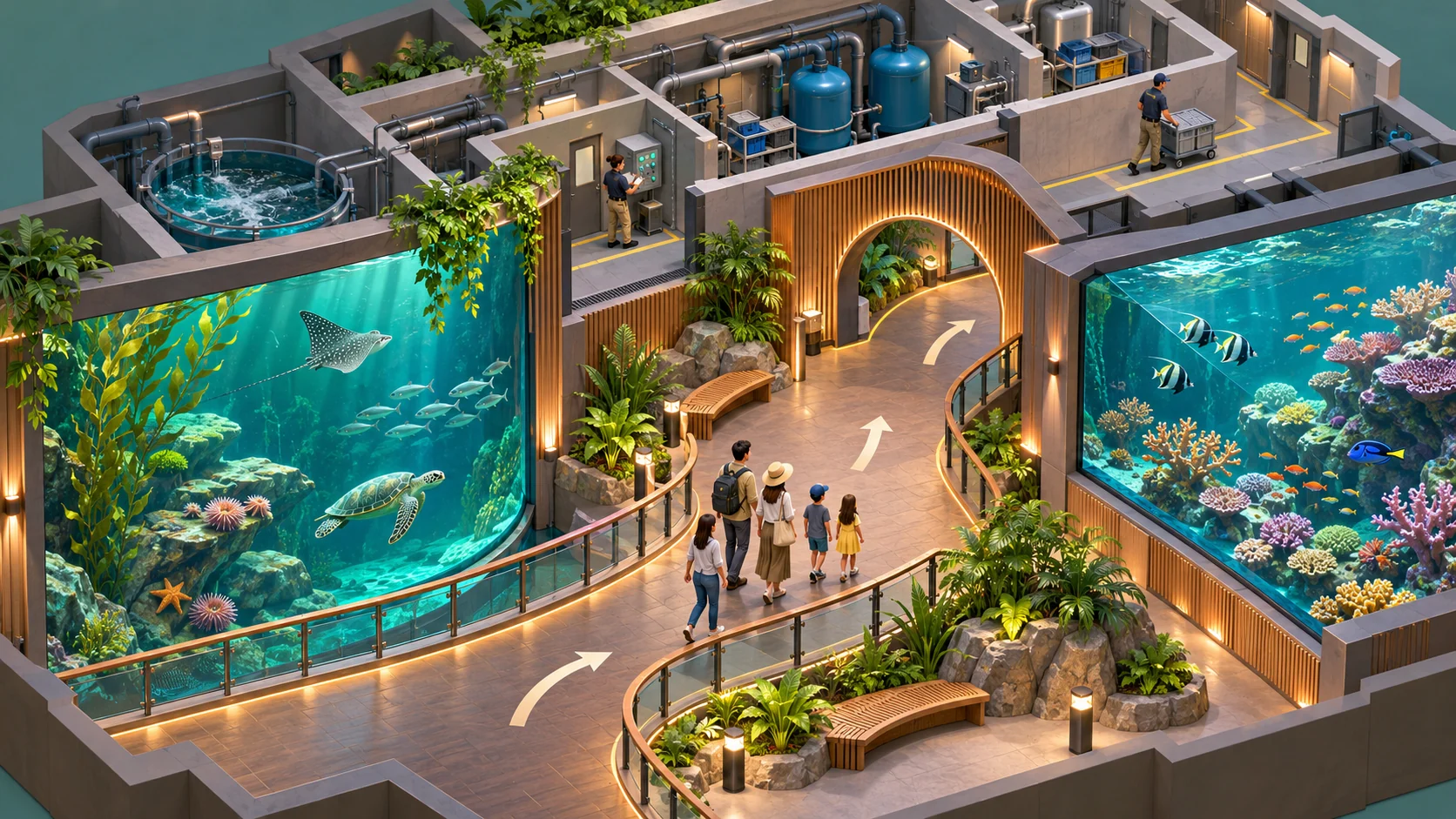
The included Tideglass mock is a small browser simulation, not an aquarium model or an animal-care tool. During local browser QA, the first pass updated the abstract status only after the day advanced. That made the action button appear unresponsive. The iteration added immediate feedback when “Assign care” is clicked, while the turn summary still records the next-day effect. This is an interface correction observed in the local mock; it is not a finding from player research.
Check the loop in a repeatable order: load the default state, record the counters, assign care, confirm the immediate signal, open or limit visitor access, advance one day, read the change log, then reset. Repeat with the same actions and confirm that the same starting state produces the same result. If a value changes without an explanation, add a message or remove the hidden rule.
| QA check | Expected local result | What it does not establish |
|---|---|---|
| Assign care | Button responds immediately and marks the exhibit plan | That a real tank has been cared for |
| Advance day | Log shows exact game-state changes | That the model matches biology |
| Limit visitors | Guest count or access state visibly changes | That visitor demand is realistic |
| Reset | Fictional counters return to defaults | That players understand the game unaided |

Prepare a brief the AI can follow
A compact design brief should name the audience, recurring decision, state variables, turn length, required feedback and evidence boundary. For Tideglass, the brief says the player is a fictional aquarium manager; each turn is one abstract day; staff assignments affect simulated exhibit status; opening rooms affects fictional visitor income; and the log explains every state change. It also says the simulation must not offer real husbandry guidance.
| Brief field | Example instruction |
|---|---|
| Core fantasy | Balance care capacity with a welcoming visitor experience |
| First playable slice | Two exhibits, one shared staff pool, three turns |
| Feedback rule | Every control produces a visible response and a log entry |
| Fiction boundary | Abstract fictional game values; no species-care recommendations |
| QA target | Reproduce a care assignment, visitor decision, turn advance and reset |
When the first version works, ask AI to explain each state transition in plain language. Check the explanation against the code and visible interface. If the model cannot explain why an action changed a counter, the player is unlikely to understand it either. Keep an editable copy of the brief and note which version produced the prototype.
Tideglass is a fictional concept, and the local interface is a small interaction mock. Use the Free AI game maker to explore a game concept, then review generated mechanics against your brief and evidence boundaries.
{
  "project": "Tideglass Aquarium",
  "fictionBoundary": "Invented management-game variables only; no animal-care guidance.",
  "playerLoop": ["assign staff", "choose visitor access", "advance day", "review change log"],
  "state": {"exhibitPlan": "steady|needs-review", "staffTokens": 1, "visitorCapacity": 5, "gameBudget": 12},
  "feedback": "Every action responds immediately; day advance lists each state change.",
  "prototypeScope": "Two fictional exhibits, one shared staff pool, three turns, reset control.",
  "qa": ["assign care", "limit access", "advance day", "read log", "reset"]
}
FAQ
How do I make an aquarium management game with AI?
Start with one recurring tradeoff, such as assigning limited staff between exhibit care and visitor access. Define the game state, actions available each turn, and the feedback each action must produce. Ask AI to build a small playable slice first, then inspect and test every transition. Keep real animal-care guidance out of a fictional simulation unless qualified specialists review it.
What should the first aquarium prototype include?
Use one or two fictional exhibits, a small staffing pool, visitor capacity, an abstract budget and a turn-advance control. Include a log that explains state changes and a reset to the same starting values. Avoid expanding into research trees, breeding systems or species collections until the core care-versus-access decision is understandable and repeatable in the prototype.
Can a game’s habitat meters represent real aquarium conditions?
Only with careful research and specialist review. Aquatic requirements vary by species and life stage, and real monitoring may cover several water-quality and equipment conditions. A single invented “health” bar cannot substitute for that work. For a fictional game, label meters as abstract game values and avoid presenting them as safe ranges, veterinary advice or an operational husbandry guide.
What did the Tideglass prototype iteration test?
The local browser check found that the first interface did not respond visibly to the care button until the day advanced. The mock was changed to show immediate feedback and retain a separate turn log. This verifies that a specific button updates the displayed fictional state in this prototype. It does not measure player comprehension, validate aquarium science or show that an audience prefers the revised design.
How can I tell whether the management loop is clear?
Repeat the same short scenario from a clean reset. For every action, check that the interface shows what changed, why it changed and what can be done next. If the player needs to infer a hidden penalty or the result depends on an unexplained value, simplify the system or add a clear message before layering on more mechanics.