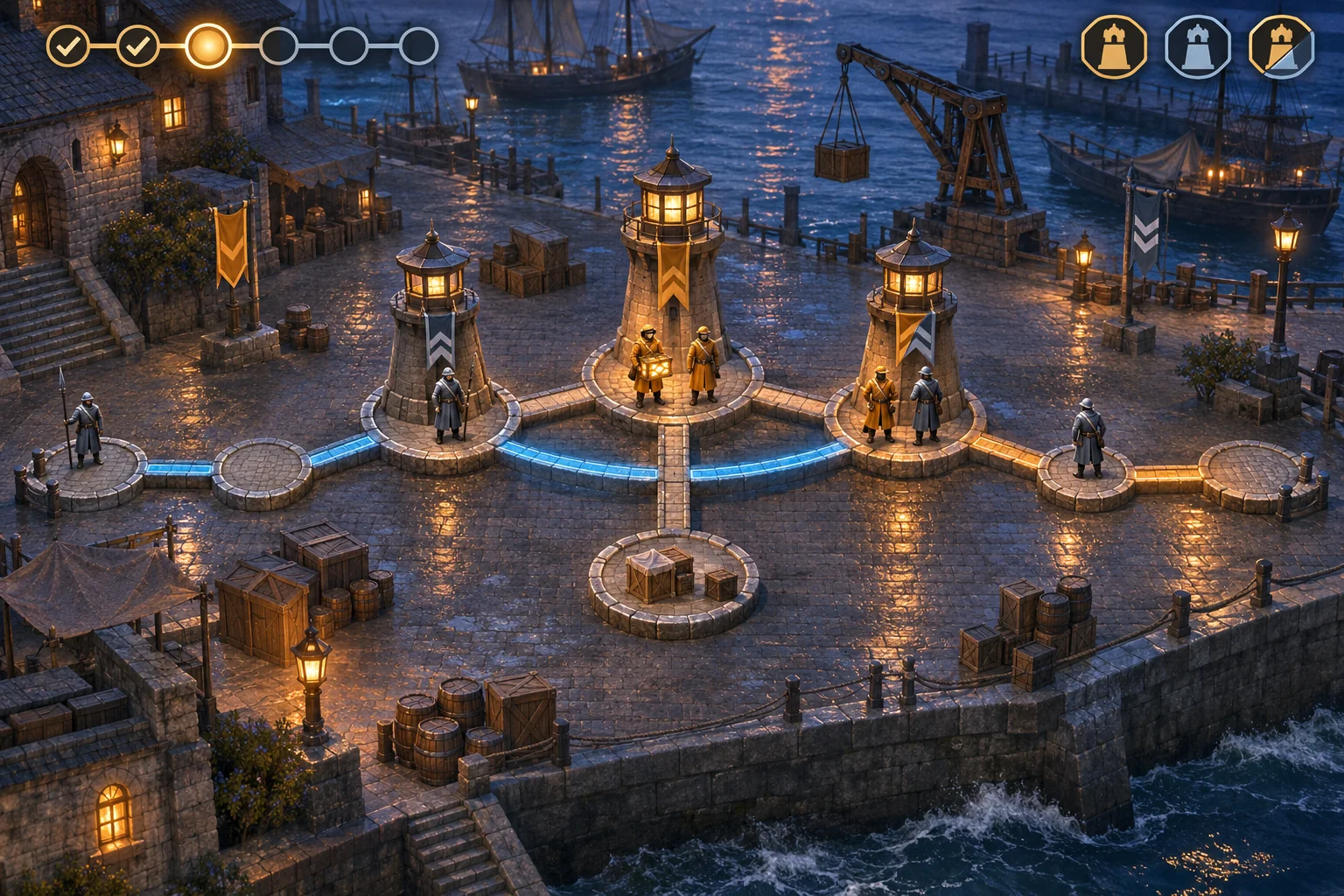
A mobile headquarters changes more than a unit’s position: it moves the place where a faction can deploy, resupply and regroup. In the fictional strategy game Driftline, the Nomads move a command crawler toward two uplinks, while the Bastion faction uses fixed sensors and fortified routes to delay them. The sides have different rules and different ways to win.
Make that asymmetry legible from setup. Nomads must activate both uplinks within five rounds; Bastion wins by preventing the second activation until the deadline. The crawler moves two tiles, projects a one-tile supply radius and spends supply to deploy squads. Replay the same opening with the crawler stationary and relocated, then compare detection, deployment and objective timing.
Give each faction a different goal and operating rule
Build a compact 7×7 map with two uplinks, a ridge, a narrow road and one sensor tower. Nomads win by activating both uplinks within five rounds; a squad must end a round adjacent to an uplink and spend its next action to activate it. Bastion wins if it prevents the second activation through round five. Nomads can move their 4-hull command crawler two tiles each round and deploy one squad within one tile of it by spending one supply. Bastion cannot move its sensor tower, but it detects the crawler along a visible lane and can direct a two-damage artillery strike at the detected tile next round.
Keep the objectives and available actions on separate faction panels. Nomads must plan where to place the crawler before deploying; Bastion reads the crawler’s route and chooses which uplink to contest. Different unit names alone do not create asymmetry: each side should make a different decision and judge success by a different condition.
Make moving headquarters change deployment and exposure
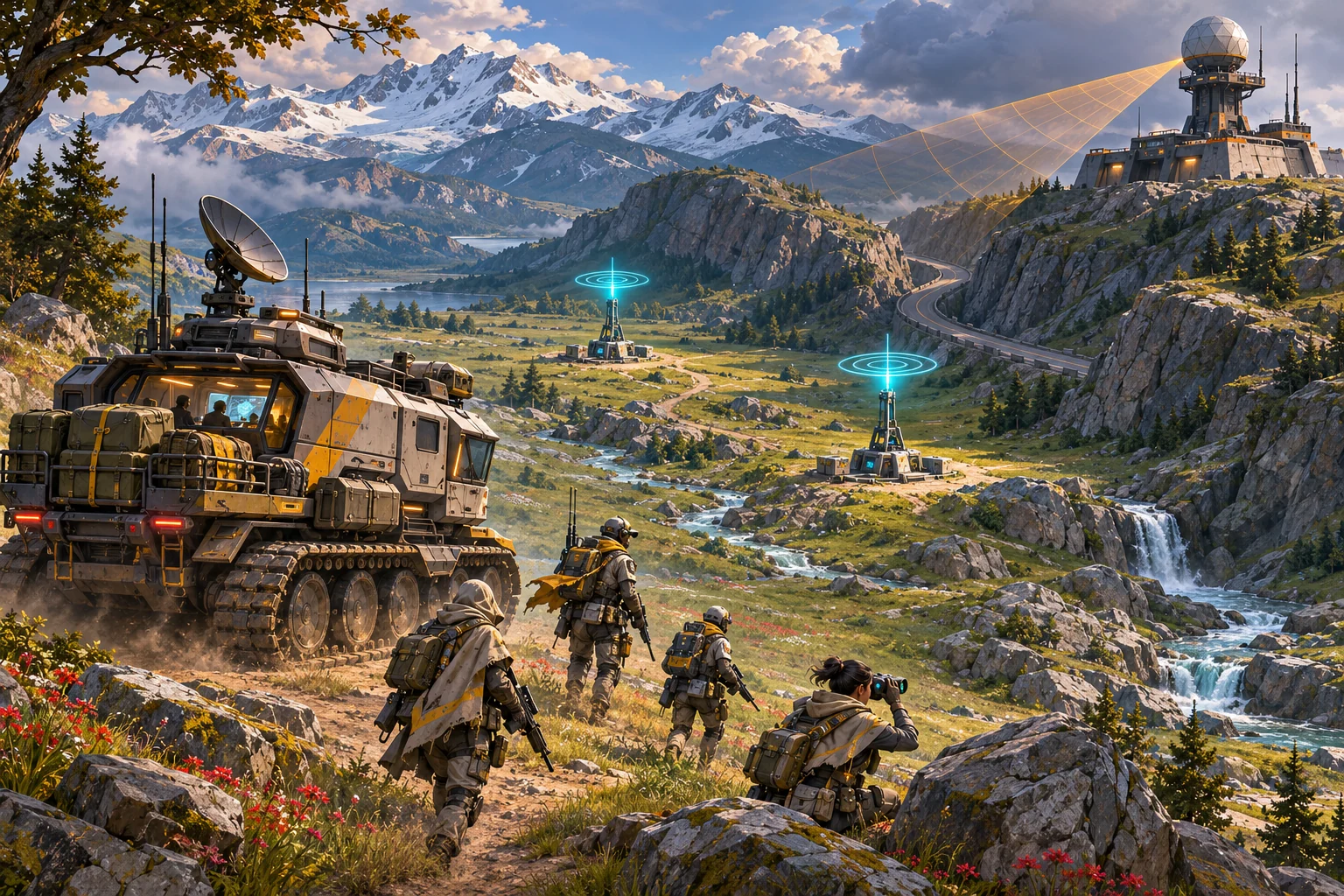
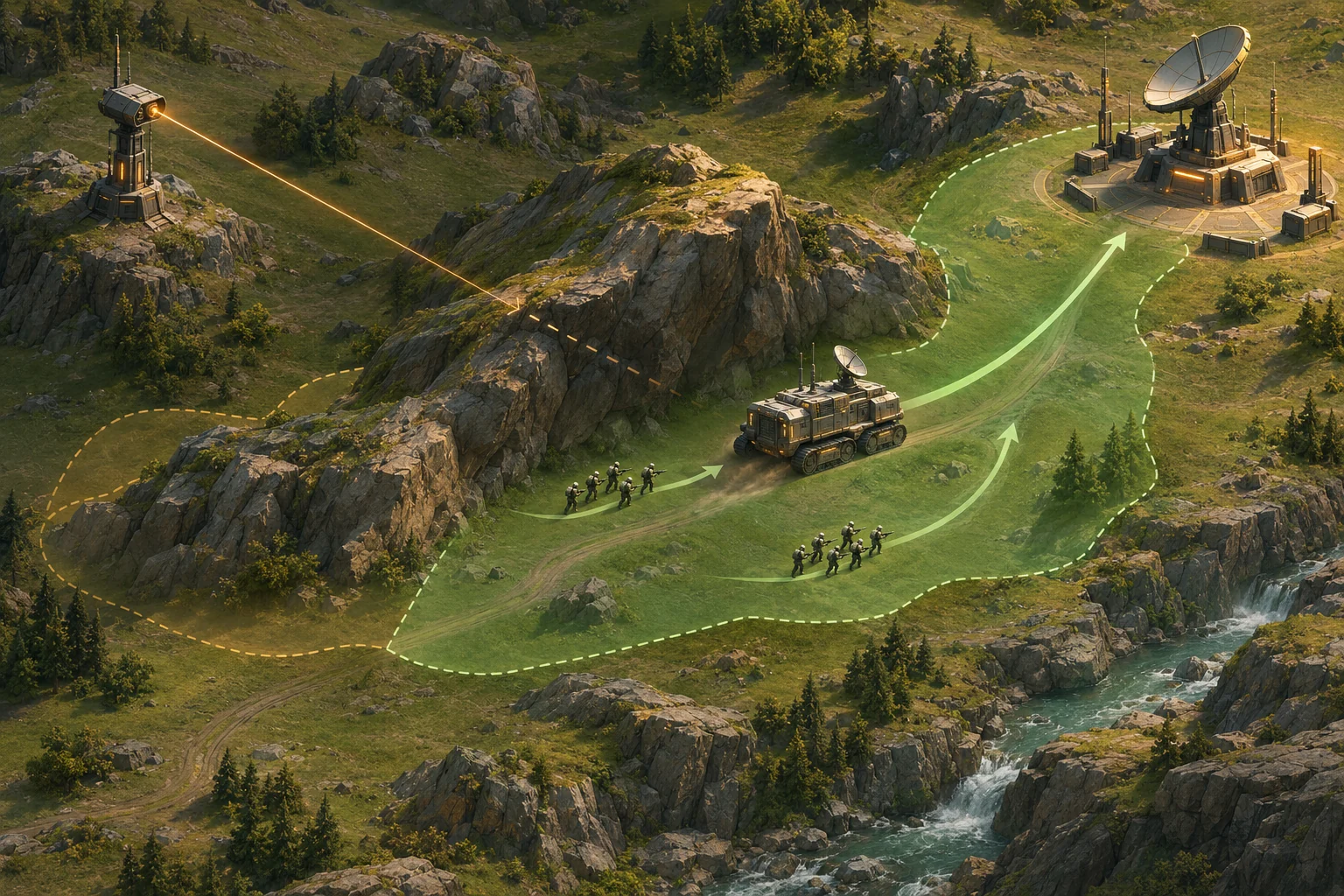
The crawler carries three supply. Deploying a squad costs one, and supply replenishes only when the crawler spends a full round stationary at a friendly depot. Its one-tile radius marks where new squads can appear. Moving the headquarters shifts that radius, opening one approach while abandoning another. Show the next supply area and the crawler’s predicted position before the order resolves.
Give the defender a visible counterplay. If the sensor tower detects the crawler in its lane, mark the target tile and the next-round artillery damage before Nomads choose whether to move. A ridge blocks detection, so the crawler can use cover to cross the map, but the longer route costs a round. The player should weigh supply access, objective timing and exposure rather than moving the HQ as a free teleport.
Compare a stationary crawler with a relocation plan
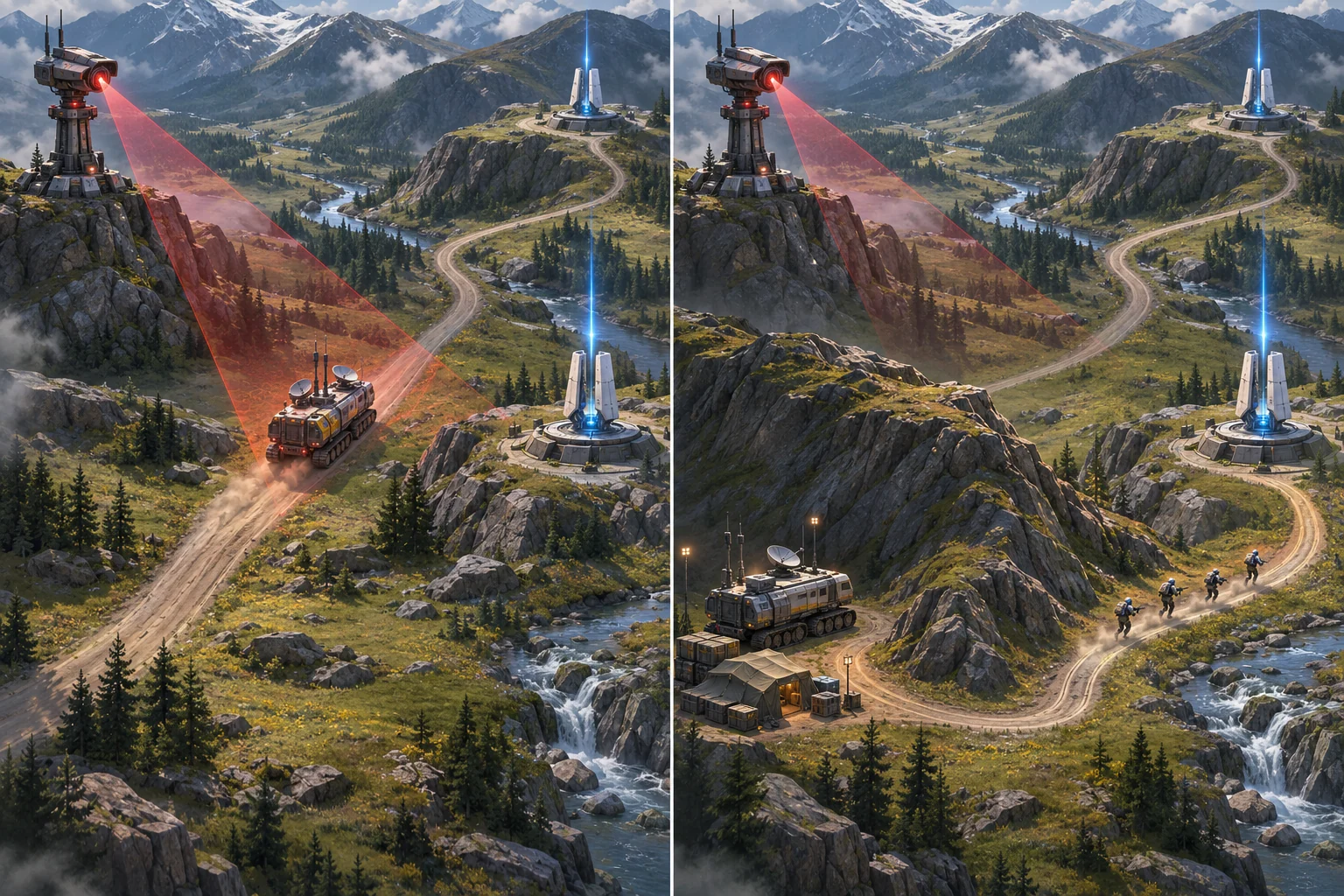
Use the same map, sensor view and starting supply for a two-round replay. If the 4-hull crawler stays in the detected road lane, Bastion marks its tile on round one and deals 2 damage on round two. Nomads deploy near the first uplink but the crawler remains exposed; record the strike and objective progress as the baseline.
Reset. Move the crawler two tiles behind the ridge on round one, which breaks the sensor line, then deploy a squad from its new one-tile radius on round two. The crawler avoids the marked strike and the squad reaches the second approach, but the move consumes a round and leaves the first uplink uncovered. This is a paper-simulated example, not a built-game measurement. Track rounds to each uplink, supply spent, detections and artillery damage. If relocation always avoids the counter, adjust the ridge route or sensor coverage.
Prototype faction rules before adding a larger campaign
Implement faction-specific objectives, crawler movement, supply radius, sensor line of sight and the delayed strike before adding more units. Add a resettable two-round opening with the same map and starting supply. Once each side can explain its win condition and counterplay, expand the unit roster or campaign.
Create a compact asymmetric strategy prototype called Driftline on a 7×7 map with two uplinks, a ridge, a narrow road and a fixed Bastion sensor tower. Nomads win by activating both uplinks within five rounds. Bastion wins by preventing the second activation through round five. A squad must end a round adjacent to an uplink and spend its next action to activate it. The Nomad command crawler has 4 hull, moves two tiles each round, has a one-tile supply radius and starts with three supply; deploying one squad in radius costs one supply. Supply replenishes only after the crawler stays one full round at a friendly depot. Bastion’s fixed sensor detects the crawler along a visible lane and marks its tile; artillery deals two damage there on the next round. The ridge blocks detection. Preview movement, supply radius, deployment locations, marked tiles and delayed damage. Add a resettable comparison between staying in the road lane and moving behind the ridge. Track rounds to uplinks, supply, detections and damage.
SEELE's official AI Game Maker page describes creating a playable first version from a prompt, testing it in a browser and refining it with follow-up prompts. Use that general workflow to inspect faction objectives, supply radius and detection counterplay; Driftline and its rules are fictional design guidance.
Build the mobile-HQ strategy game in SEELE
Frequently asked questions
How does a mobile headquarters create strategic choices?
Let it move the faction’s deployment and supply area, then attach a cost or risk to relocation. Moving can open one route while abandoning another or exposing the HQ to detection. Preview the new radius, supply and threat before confirming the move.
How do I make an asymmetric strategy game fair?
Give factions different objectives and counterplay, then show each side’s information and timing clearly. A mobile force might race to activate sites while a fixed defender delays it through sensor coverage. Balance the choices and opportunity costs, not identical unit counts.
What should I measure in a mobile-HQ test?
Replay the same map and compare stationary and relocated openings. Record rounds to each objective, supply spent, detections and damage. If moving always avoids the defender or never pays off, tune route length, sensor coverage or supply recovery. Check that both factions still have viable counterplay.