Start with the shared rules before faction abilities
Asymmetric strategy games give different sides different plans. The prompt challenge is to keep those differences understandable while preserving a common map, turn clock, and set of terms. If the brief begins with a long list of special powers, a builder may invent interactions that sound plausible but do not match the intended game.
Use a staged sequence: define shared rules first, record each faction separately, specify turn order and feedback, then ask for short traces and checks. This article uses a fictional mountain strategy scenario called Highwater Lines. Caravans race to visit three landmarks; the Sluice Guild prepares and builds two water channels. The sides have different action economies and goals, but share a map and five-round limit. These mechanics are design examples, not a tested balance result. The prompt drafts are unrun and no playable build is included.

Before writing faction-specific prompts, make a shared rules block that names the board, legal moves, turn sequence, resource units, and victory-check timing. This is the common vocabulary that later prompts should preserve:
- Locations: Spring, Ridge, Basin, Orchard, and Mill.
- Trail edges: Spring–Ridge, Ridge–Orchard, Orchard–Mill, Spring–Basin, and Basin–Mill.
- River edges: Spring–Basin and Basin–Mill; these can hold Sluice Guild structures.
- Round limit: five rounds. Caravans act first, then the Guild. Check objectives after both phases.
- Information: board state, actions, and objective progress are public.
Be precise where the same map edge has two meanings. A trail permits movement; a river edge can receive a sluice. A sluice does not block trail movement. That single sentence prevents a future prompt from turning infrastructure into an unplanned barricade.
Give each faction its own prompt record
Describe each faction using the same fields: objective, starting position, actions, costs, legal targets, state changes, and what the opponent can see. Reusing fields makes differences explicit instead of hiding them in prose.
| Field | Caravans | Sluice Guild |
|---|---|---|
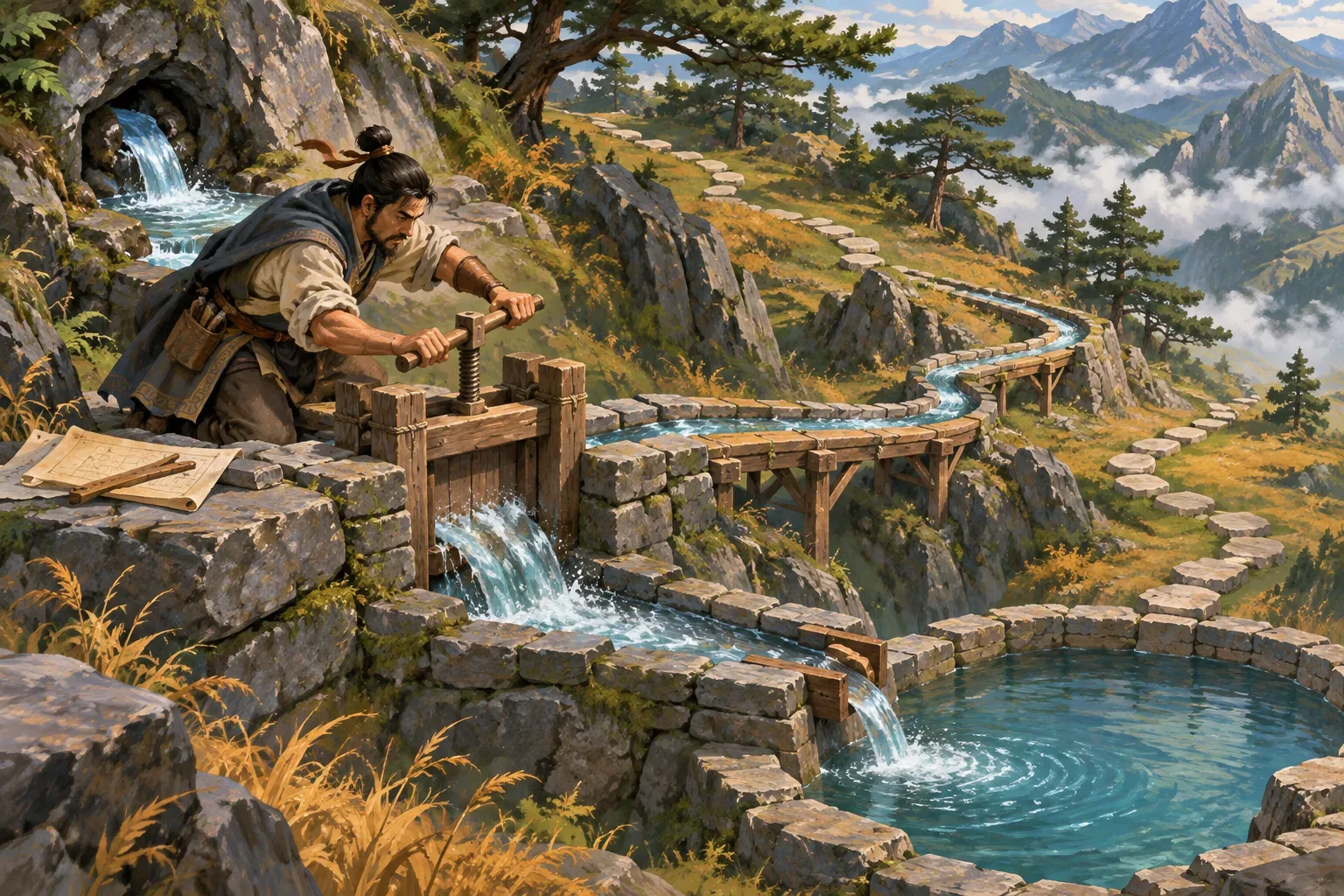
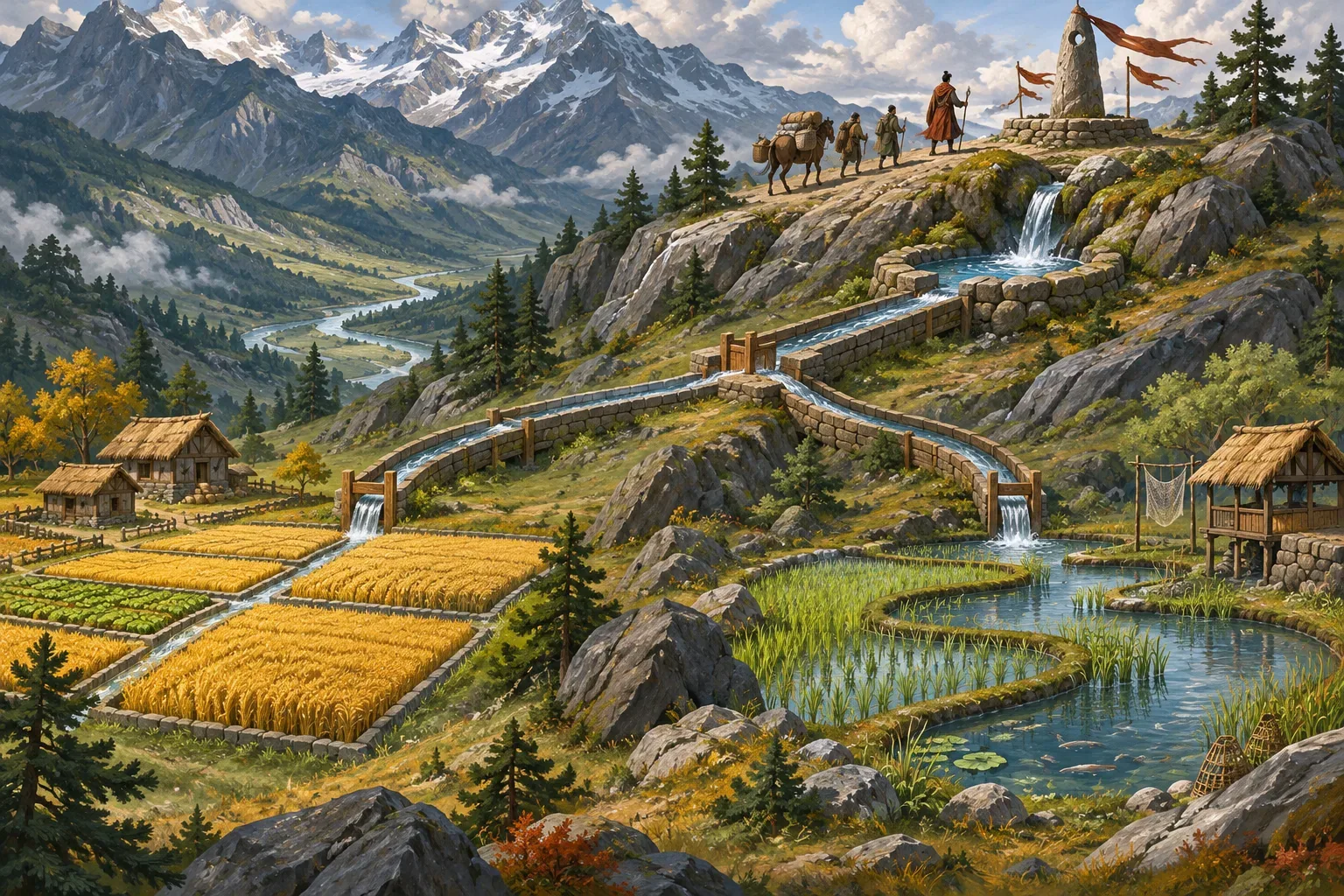
| Goal | Visit Ridge, Orchard, and Mill before the end of round 5. | Build sluices on Spring–Basin and Basin–Mill before round 5. |
| Starting state | At Spring; no landmarks visited. | Two timber; no river edge prepared or built. |
| Actions each round | Two move actions; each traverses one trail edge. | One survey and one build action; survey marks one unprepared river edge, build spends one timber on a prepared edge. |
| Visible progress | Visited landmark markers on the shared map. | Prepared and built sluice markers on river edges. |
| Win check | All three distinct landmarks visited. | Both specified sluices built. |
The Guild’s two actions may happen in either order, but a build can only target an edge surveyed before that action. If the team wants same-round survey-and-build, the order must be survey then build. State that choice directly. Here, the faction turn is survey first and build second, so each river edge can be prepared and constructed in one round if the Guild has timber.
These goals create a race over the same shared clock rather than a combat system. That is a valid first milestone if it is the intended experience. If direct disruption is part of the design, add one explicit rule for it and describe how the other side can respond. Do not ask a builder to invent attacks, blocking, or resource theft just because the word “strategy” appears in the prompt.
Define simultaneous outcomes as well. At the end of each round, if exactly one faction has met its goal, that faction wins; if both meet their goals in the same check, the result is a draw; if neither has succeeded after round five, the result is also a draw. This simple rule makes the race complete enough to reason about without claiming it is balanced.
Write prompts in stages and freeze the vocabulary
Keep each prompt responsible for one layer. First ask for the board and shared turn clock. Then add the Caravan record, followed by the Sluice Guild record. A later prompt can connect the two through round order and end checks. Preserve the exact faction, location, resource, and flag names across every stage.
A useful prompt asks for structure before polish. Request a map graph, faction data records, action rules, visible state, and unresolved assumptions. Ask the system to quote the relevant rule when it decides whether an action is legal. This makes omissions easier to notice than a request to “make the factions feel unique.”
The example state can be represented with ordinary data fields:
{
  "round": 1,
  "caravans": {"location": "spring", "visited": []},
  "sluiceGuild": {
    "timber": 2,
    "preparedRiverEdges": [],
    "builtSluices": []
  },
  "winner": null
}
Every later action should update one of these fields or a clearly named map state. If a new variable is needed, ask the builder to add it to a change list and explain why. That keeps the design document and generated implementation from drifting apart.
Ask for a shared turn trace before expanding the game
A short trace reveals whether the faction rules can coexist. For a planning-only example, the Caravans move Spring to Ridge and then Orchard in round one, recording two visited landmarks. In the Guild phase, the Guild surveys and builds Spring–Basin, spending one timber. In round two, the Caravans move Orchard to Mill and meet their three-landmark goal. The Guild surveys and builds Basin–Mill, spending its remaining timber. After both phases, both goals are true, so this fictional ruleset declares a draw under its stated simultaneous-check rule.
This trace is hand-written, not observed in a game. It exposes a design choice: with this opening, both sides can finish in round two. That may be a reasonable race prototype, or it may be too short for the intended pacing. A later balance pass could change the landmark route, round limit, or Guild construction requirement, but it should change one rule at a time and record the expected effect.
To keep a prompt honest, separate three labels in the test note: Expected is the result predicted from the written rules; Observed is what the playable build actually did; Difference explains any mismatch. If no playable build is available, leave Observed blank. Do not convert the expected trace into a reported success.
Turn the brief into acceptance checks
Before adding more factions or maps, write a short checklist for both sides:
- Caravan movement traverses one trail edge per action and cannot cross a missing edge.
- Visiting the same location twice does not count as two distinct landmarks.
- A survey action marks one unprepared river edge without spending timber.
- A build action requires a prepared legal river edge and one timber.
- Building a sluice does not block a trail move.
- Each faction’s objective is checked only after both faction phases.
- A simultaneous objective completion resolves as a draw; no completion by round five also resolves as a draw.
For each check, record the starting state, action, expected state, observed state, and build or prompt version. Use one trace where the Caravans complete first and one where the Guild completes first, then test simultaneous completion and a no-winner finish. If a check fails, fix the rule or the implementation, then rerun only the affected checks and the shared trace.
SEELE’s official AI Game Maker page describes using a text prompt to create a playable game, testing an initial version in a browser, and refining it with follow-up prompts. That is general workflow context; it does not verify this two-faction scenario or promise these prompts will implement it. Explore the AI Game Maker when you are ready to develop a strategy-game idea and check the result against your own rules.
These prompts are drafts only. No game was generated for this package, and the round-two draw is a hand-derived expectation rather than a playtest or balance finding.
FAQ
How do I prompt an AI to make an asymmetric strategy game?
Start with the shared board and turn rules, then define each faction’s goal, actions, costs, and counterplay. Ask for one small scenario and observable checks before adding content.
What makes two strategy factions meaningfully different?
Their choices should create different plans: distinct objectives, action economies, movement, or ways to affect shared spaces. Different names or art alone do not create strategic asymmetry.
Should I prompt for both factions at once?
First specify shared rules, then describe each faction in separate records that use the same terms. Finally ask for a shared turn trace so interactions and exceptions are visible.
How can I check whether asymmetric rules are implemented correctly?
Write an expected trace for each faction, including starting state, action costs, state changes, opponent response, and win-condition check. Compare expected and observed states separately.
Were these asymmetric strategy prompts run in a playable game?
No. The prompts and faction scenario are fictional planning drafts. No generated game or test result is included.