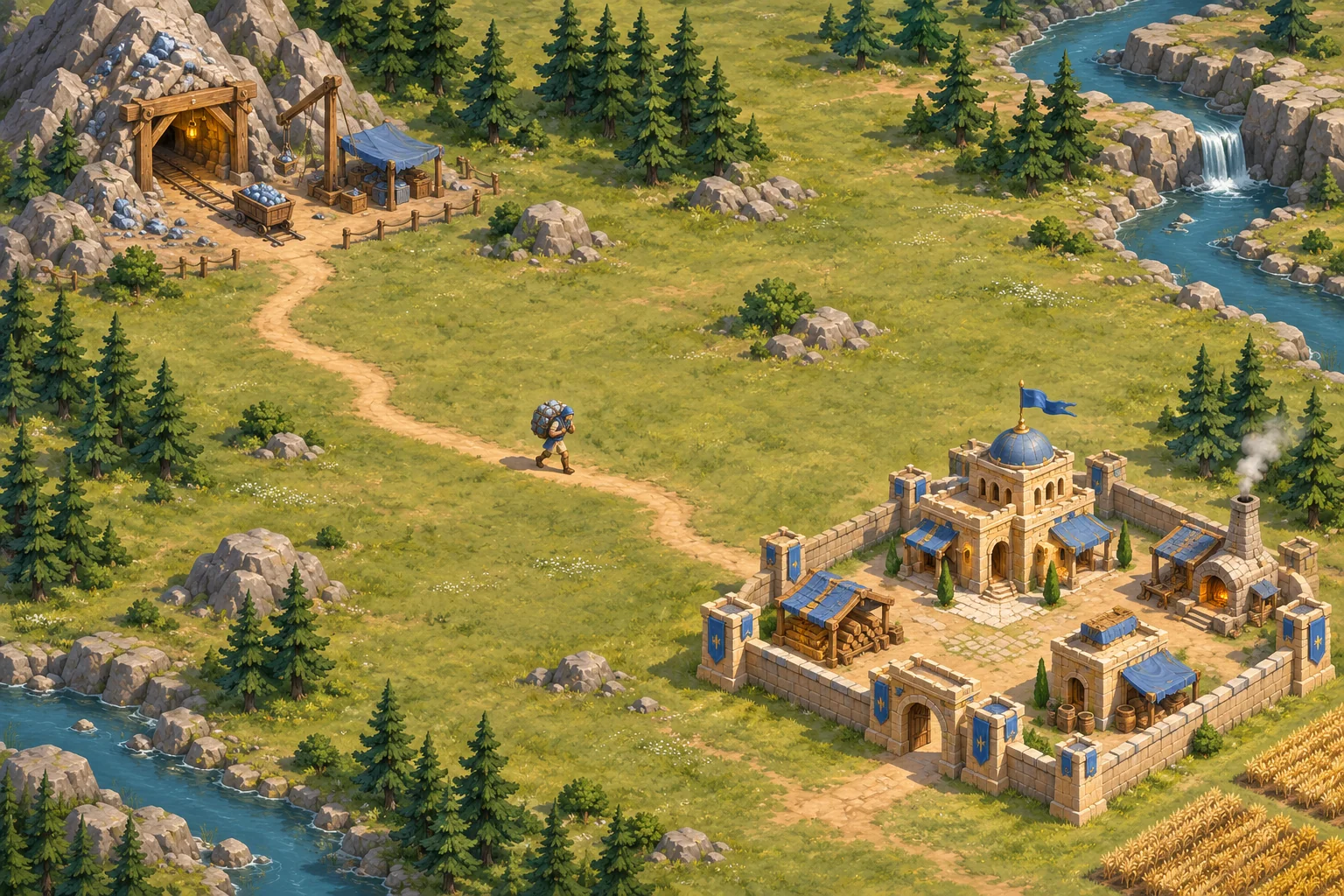
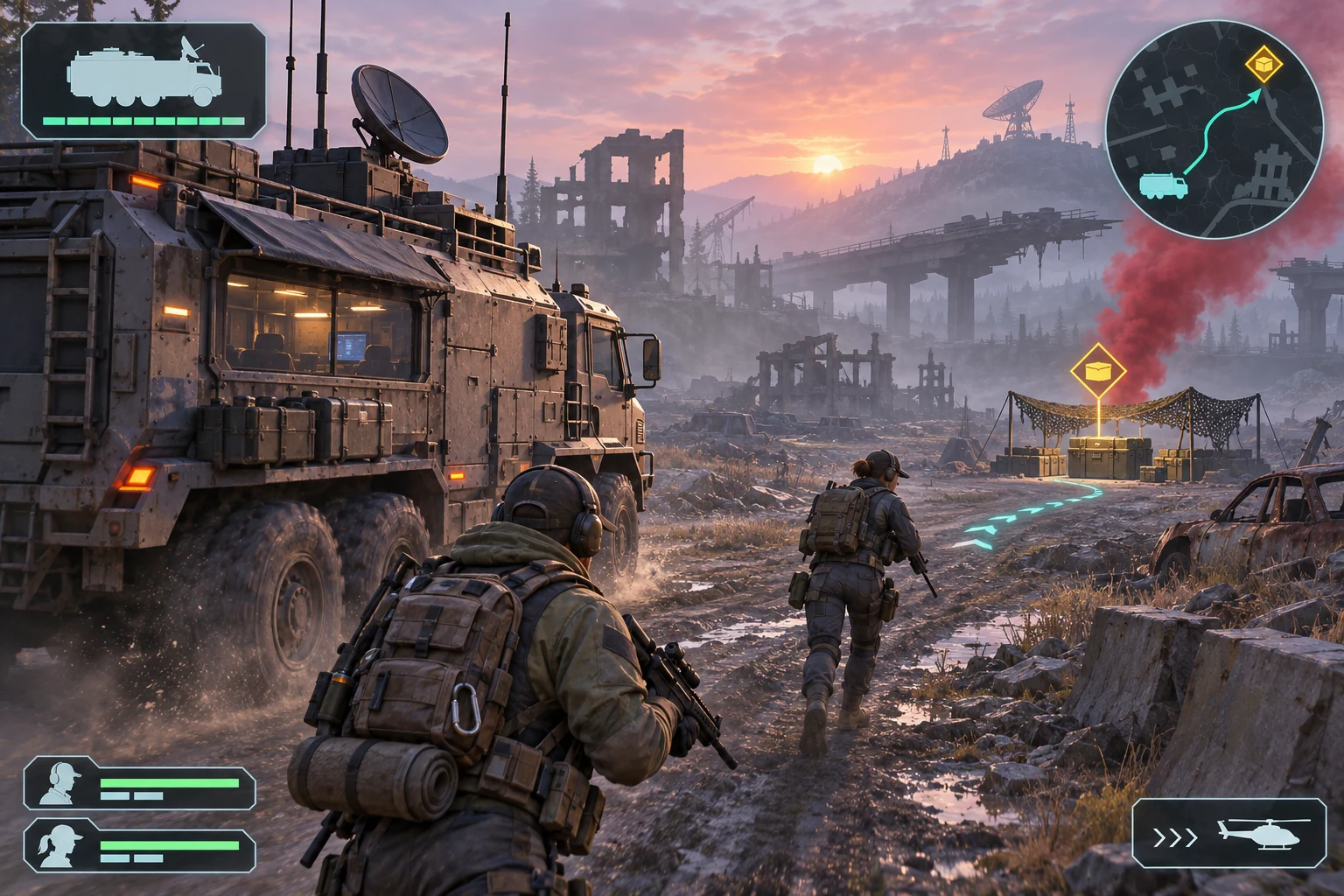
In fictional Relay March, an armored base travels through three fixed stops at x=0, x=6, and x=12. It waits 30 seconds at each rendezvous before moving on. The squad collects one data core at (4,2), returns to board before the first departure, then retrieves a second core at (8,2) during the stop at x=6. The extraction beacon sits at x=12. Keep the route and timing fixed. Report objective count, boarding status, missed-window behavior, and whether the full squad extracts. The base is both a moving safe point and a clock that changes how far the squad can range from it.
Give the moving base a route the squad can plan around
Set the base route to x=0 → x=6 → x=12, with a 30-second wait at each stop. Place the first data core at (4,2), the second at (8,2), and the final beacon at x=12. The squad starts beside the base with zero cores. Keep these positions and the schedule constant so each run tests the same decisions: how long to search, when to return, and whether to board before the convoy moves.
Represent the base as a clear state machine: parked, departing, traveling, and arrived. Show the next stop and remaining boarding time to the squad. When the base begins moving, anyone outside must either reach the next marked rendezvous or accept that the current objective window has passed. Godot Resources can hold authored route and encounter data; Relay March and its timings are fictional.
Tie each objective pickup to a rendezvous window
At x=0, the squad has 30 seconds to take the first core from (4,2) and board. If everyone returns before departure, the base carries the core to x=6. During the next 30-second stop, the squad can reach (8,2), secure the second core, and board again. The base then travels to x=12. Each pickup belongs to a distinct leg, so one missed window changes what the squad can recover on that run.
Test a late return as a separate case. If a player is still outside when the base departs, mark that player as left behind and prevent the full-squad extraction from passing. Do not silently teleport the player onto the base or extend the stop. Report whether the first or second core was secured, who boarded, and which rendezvous was missed.

Check the convoy arrival and squad extraction
The clean run collects both cores, boards at x=0 and x=6, then arrives at the beacon at x=12 with the full squad. Extraction succeeds only if every player is aboard or inside the beacon radius when the base reaches the final stop and both cores are secured. This gives the run a measurable finish condition rather than treating arrival alone as victory.
Repeat once with the first stop missed and once with a squad member absent at the final beacon. Record the base state, route position, core count, boarding roster, and extraction result for each attempt. The test checks whether the moving safe point creates readable time pressure while preserving a clear recovery rule. Relay March and all outcomes are fictional; no generated game build is claimed.

Give the AI a fixed moving-base extraction test
Create an extraction shooter in fictional Relay March. An armored base travels through stops x=0, x=6, and x=12, waiting 30 seconds at each. Place data cores at (4,2) and (8,2), and the final extraction beacon at x=12. The squad must collect one core on each leg and board before the base departs. Keep route, positions, and timing fixed. Report core count, boarding roster, missed rendezvous, base state, and whether the full squad extracts.
Test the clean route: collect the core at (4,2), board during the x=0 stop, collect the core at (8,2) during the x=6 stop, board again, then arrive at x=12 with the full squad and both cores. Test late boarding and one missing player as controls; neither should count as a successful full-squad extraction.
FAQ
How can a moving base shape an extraction shooter?
Make the base follow a visible route with timed stops that serve as safe points and departure deadlines. Place objectives along separate route legs so the squad must decide how far to search and when to return. Keep the schedule stable during a test so pressure comes from player choices.
What happens if a player misses the moving base?
Define a recovery rule before play. The player can try to reach the next marked rendezvous, while the team records the missed stop and whether full-squad extraction remains possible. Do not quietly teleport late players or extend the timer, because those changes hide the consequence of missing the route.
How should an extraction run be measured?
Record the base position and state, objectives secured, boarding roster at each stop, and final extraction result. Include a clean run and missed-window controls. This shows whether the route creates understandable time pressure and whether the squad completed the stated objective together.