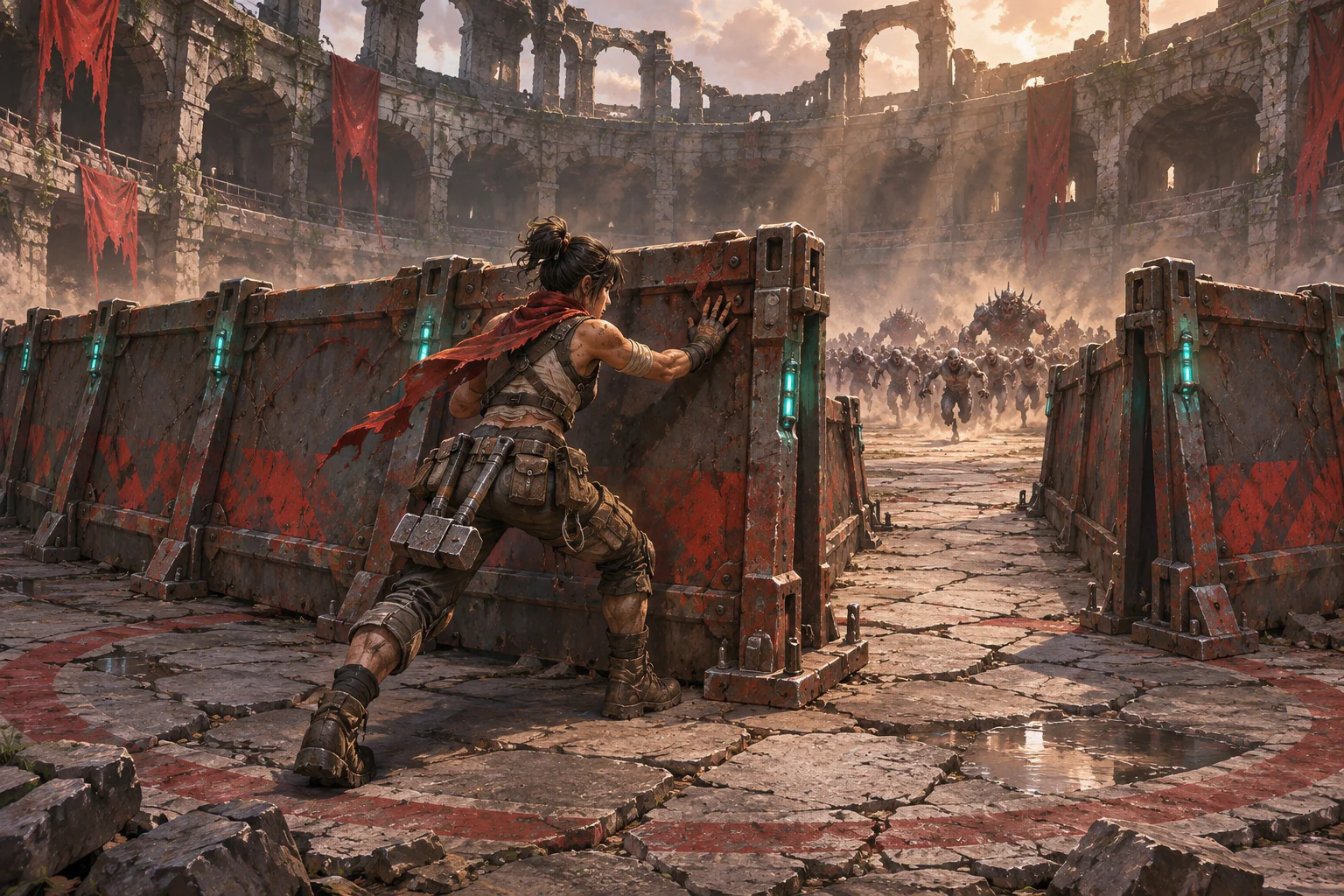
At Breakline Yard, the squad has ten plates and one extraction beacon. A barricade can block a direct firing lane, but a careless build can also seal the route out. That makes construction part of the encounter loop: spend materials, reshape risk, then decide whether the remaining path is worth taking. The arena should respond to what the player builds, not treat it as decoration.
Make construction change the encounter
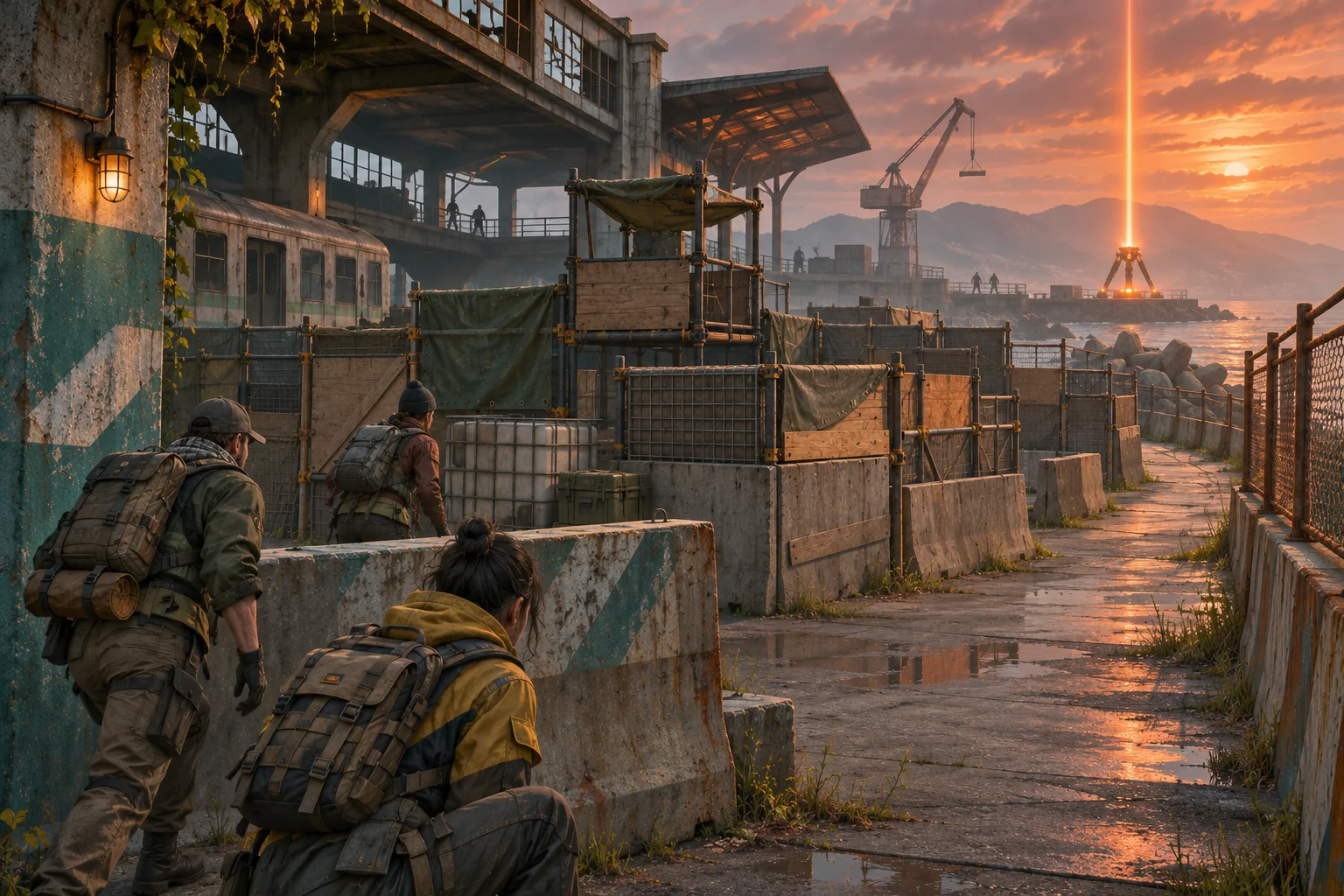
Start with an abstract 5×5 grid. Place the enemy at (0,2) and extraction at (4,2). One barricade at (2,2) blocks a straight line while a route remains around it. The numbers describe a fictional test layout, not a real combat scenario.
| Rule | Build cost | Effect |
|---|---|---|
| Modular barricade | 2 plates | Blocks movement and a straight sightline through its tile |
| Extraction beacon | Fixed at (4,2) | Ends the run when reached |
| Squad stock | 10 plates | Limits the amount of cover before the enemy phase |
Show the proposed build before spending plates. The player should see the tile cost, the line it blocks and the route that remains. A four-neighbor path check is enough for this small grid; later, a real game can account for doors, elevation and destructible cover.
Treat cover and escape as one decision
A wall is useful only if it changes risk without making extraction impossible. Build one piece at a time and recalculate both line of sight and route reachability. If a placement would close every path from the squad to the beacon, reject it and explain which cells cause the cutoff. Keep previously placed cover and unspent plates unchanged after a rejected build.
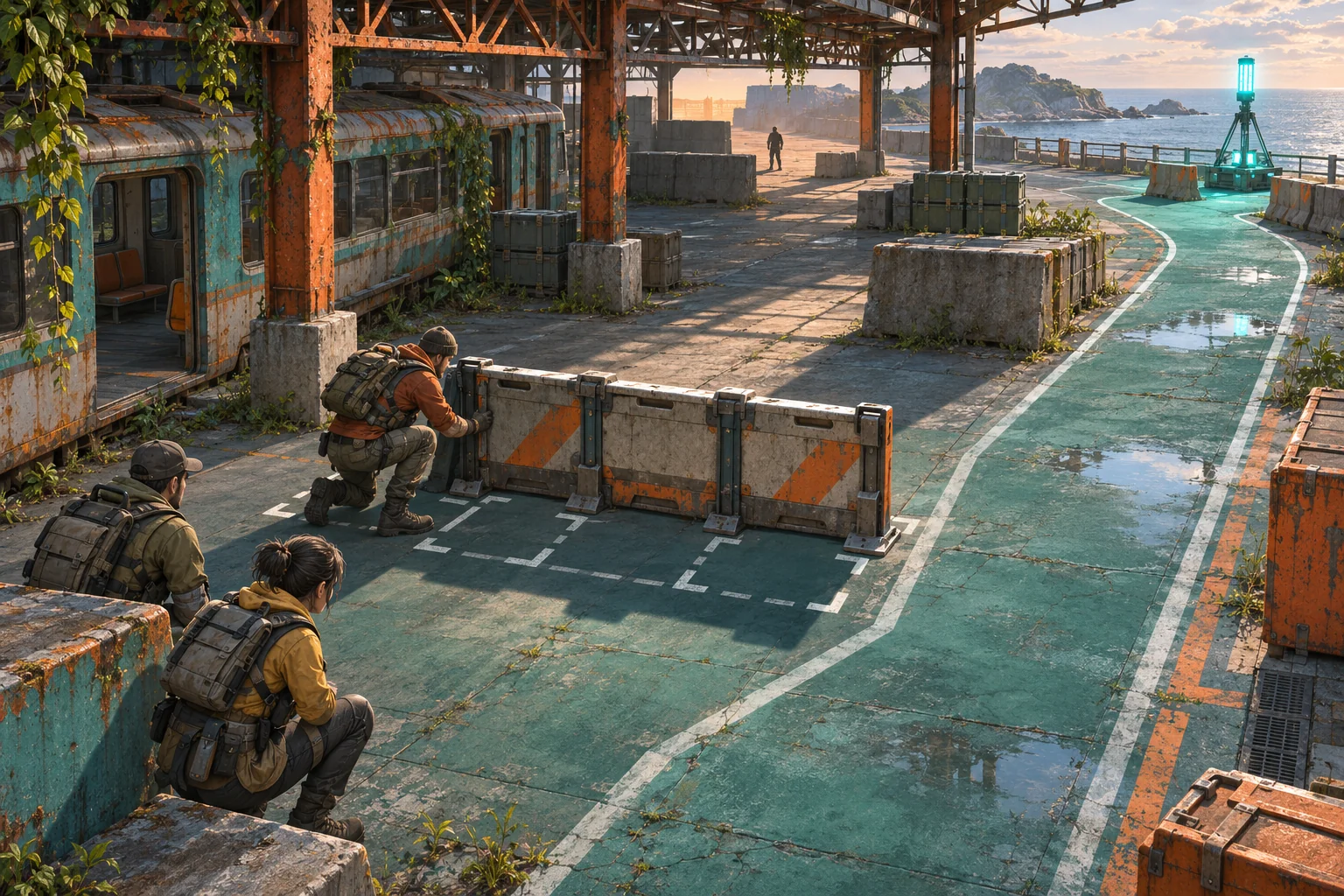
Track cover as a blocking tile with a visible durability value. When it is damaged or removed, update the sightline and path graph together. This avoids a confusing arena where enemies still see through a wall or a squad member gets trapped behind cover that the map treats as decoration.
Replay the same grid before tuning combat
The deterministic local grid replay used the same enemy, beacon and two builds. The first version treated cover as cosmetic: the center barricade did not block the shot, and even a full column across the grid was accepted. The revised rule blocked the direct sightline for the center tile, confirmed a route around it and rejected a full cutoff because no path reached extraction.
| Layout | Cosmetic-cover rule | Blocking-and-route rule |
|---|---|---|
| One center barricade | Shot remains open | Shot blocked; route remains |
| Full barrier column | Accepted | Rejected; no route |
The result verifies only grid occupancy, a straight horizontal sight check and four-direction reachability. It does not model aim, weapon behavior, player skill or a live match. Test durability and enemy response in a playable build after the construction rule is legible.

Start with one build phase
Ask an AI game maker for a small extraction encounter with a planning phase and one enemy phase. Keep the beacon fixed, the material count visible and the path check explicit. Once players understand why a barricade helps and when a build is rejected, add optional routes or changing objectives.
Create Breakline Extraction, a top-down extraction-shooter prototype on a 5×5 grid. Put the squad at (0,2), extraction at (4,2), and one abstract enemy at (0,2). Give the squad 10 plates; each barricade costs 2 and blocks movement plus straight sight through its tile. Preview each placement. Before accepting a build, confirm at least one four-direction path remains from the squad to extraction. After building, recalculate enemy line of sight. Reject a full barrier that cuts the route and explain why. Add cover durability, a visible extraction beacon and a reset for the same test layout.
Start an extraction-shooter prototype in SEELE
Frequently asked questions
Can players build the entire arena during combat?
They can, but begin with a short planning phase so the build has a readable cost and consequence. Resolve enemy sight after each accepted change and keep extraction reachability visible. If real-time construction is later added, preserve the same route validation and show a clear preview before materials are committed.
What should happen when construction blocks extraction?
Reject the placement before spending materials if it removes every valid route to the beacon. Identify the blocked cells and leave existing cover and inventory unchanged. If a later objective intentionally allows a one-way commitment, teach that rule separately and warn the squad before it becomes irreversible.
How do I know whether player-built cover is balanced?
Replay the same starting grid with the same enemy and beacon. Check whether cover changes a sightline, whether a route remains and how many plates the player spent. Then test enemy pressure in a playable build. The local grid model confirms spatial rules only; it cannot establish that a match feels fair or tense.